
Reviewed · LANGTANG VALLEY TREKS
Langtang Valley Trek
Langtang gives you a close-up Himalayan trek without the long flight or high-altitude commitment of some Nepal routes. You’ll spend eight days on foot, walking through mountain valleys, forests, yak pastures, and Tamang communities, with the trailhead reached by road from Kathmandu. I like the manageable altitude and the cultural side of the walk. I also like that a porter, sleeping bag, down jacket, and duffel bag can be provided if requested. The tradeoff is basic lodging, long walking days of six to seven hours, and a rough local bus ride to Syabrubesi.
This is a practical choice if you have limited time but still want a real Himalayan trek. The group can reach 15 people, though the two-person minimum means you should not expect a private trip unless you arrange one. Past groups have particularly valued guides such as Ram Krishna and Lochan Gurung, but you should confirm your assigned guide before departure.
In This Review
- Key points at a glance
- Why Langtang works well for a short Nepal trip
- The Kathmandu to Syabrubesi ride
- Walking 6 to 7 hours through the valley
- Teahouse nights and mountain meals
- Borrowed gear that can reduce your packing list
- Guides, porters, and the value of support
- A small group, but not necessarily a private trek
- What makes the route different from Everest or Annapurna
- What the $700 price really covers
- Safety, pace, and preparation
- Cancellation and planning details
- Should you book the Langtang Valley Trek?
- FAQ
- How long is the Langtang Valley Trek?
- Where does the trek begin?
- How many hours do I walk each day?
- What type of accommodation is included?
- Are meals included?
- Is a guide included?
- Is porter service included?
- Can I borrow trekking equipment?
- Is Kathmandu accommodation included?
- What happens if I need emergency evacuation?
- Can children join the trek?
- How many people can join one booking?
- What fitness level do I need?
- Can I cancel for a refund?
Key points at a glance
- A short road journey from Kathmandu: The route begins at Syabrubesi, making Langtang easier to reach than many longer Nepal treks.
- Seven nights in teahouses: Expect basic mountain lodging rather than hotel comfort, with meals provided during the trekking days.
- Six to seven hours of walking daily: You need moderate fitness and comfortable hiking clothes for sustained days on the trail.
- A strong cultural element: The route introduces you to Tamang culture, Tibetan influences, mountain lifestyles, and yak-grazing areas.
- Useful borrowed equipment: A sleeping bag, down jacket, and duffel bag are available on request and must be returned afterward.
- Porter support is included: The stated arrangement is one porter for every two trekkers, which keeps your daily load lighter.
Why Langtang works well for a short Nepal trip
Langtang Valley is a good middle ground. You get high Himalayan scenery and a genuine teahouse trek, yet the route starts with a relatively short drive from Kathmandu and does not reach the same extreme altitude as some famous Nepal treks.
That matters if you have only eight days. You spend less of your holiday getting to the starting point and more of it walking through the valley. You still need to work for the views, but the trip is designed for active people who want a serious outdoor experience without committing to a much longer expedition.
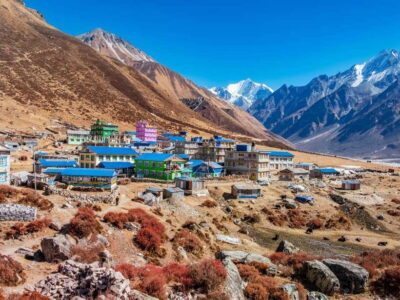
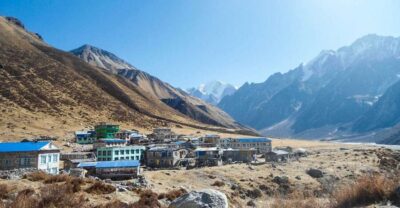
The scenery changes as you go. You might see wide mountain valleys, snow-capped peaks, waterfalls, forests, and high meadows where yaks graze. The appeal is not one single viewpoint. It is the steady change from lower settlements to a quieter mountain world.
The cultural side is just as important. Tamang communities have strong links with the Tibetan cultural sphere, and the trek gives you a chance to see local lifestyles alongside the mountain scenery. Your guide can help explain what you are seeing, which is one reason a local guide is more useful here than simply following a marked path alone.
More Langtang valley treks:
- Langtang Valley Trek
★ 5.0 · 140 reviews - Private 8 – Day Langtang Trekking
★ 5.0 · 29 reviews - Kathmandu: 6-Day Limitless Langtang Trek
★ 5.0 · 21 reviews
The Kathmandu to Syabrubesi ride
The trip includes transport between Kathmandu and Syabrubesi by local bus. This is not a luxury transfer, and you should set your expectations accordingly. The road journey is part of the practical reality of reaching the Langtang trailhead.
I would treat this as a day for patience rather than comfort. Roads in mountain regions can be slow, and the local bus format gives you less control over stops and space than a private vehicle. On the other hand, it keeps the tour price down and connects you with the same transport system used by local residents.
Pickup is offered, and the experience is near public transportation, which may help with the Kathmandu end of the trip. Confirm the exact pickup point and time when booking. Also leave some flexibility in your schedule around the bus journey, since mountain transport can take longer than a city transfer.
Walking 6 to 7 hours through the valley
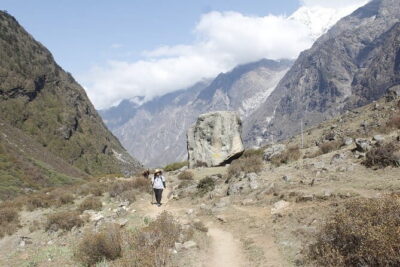
The main physical demand is simple: you walk for about six to seven hours each day. That does not mean six to seven hours of hard climbing every day, but it is still a full day outside, often on uneven mountain paths.
A moderate fitness level is required. You should be comfortable walking for several hours at home before you arrive, especially on hills or stairs. Proper hiking clothes are specifically advised, and good footwear matters even though personal trekking equipment is not included.
The benefit of this pace is that you see the valley gradually. You have time to notice changes in vegetation, settlements, river valleys, and mountain views. You are not being rushed from one quick photo stop to another.
The drawback is that a lower-altitude route is not the same as an easy stroll. Your legs may feel the repeated walking, and the basic teahouse setting means recovery is less polished than it would be in a lodge-based holiday. Plan to keep your personal bag light and use the porter service well.
Teahouse nights and mountain meals
Seven nights of accommodation are included in basic teahouses. This is one of the defining features of the trip, not just a place to sleep. Teahouses make the trek possible by providing simple rooms and communal mountain dining along the route.
You should expect functional accommodation. The supplied information does not promise private bathrooms, heating standards, or hotel-style facilities, so do not book this expecting city comforts. Bring the personal items you need for simple nights, and remember that laundry, telephone bills, bottled drinks, and bottled mineral water are extra.
Breakfast, lunch, and dinner are included during the trek according to the itinerary. That is a useful part of the price because buying every meal separately in remote mountain areas can make budgeting less predictable.
Lunch and dinner in Kathmandu are not included, and accommodation in Kathmandu is also outside the package. Breakfast is included, but you should check exactly which Kathmandu breakfast arrangements apply to your dates. Alcohol, cola, bottled drinks, laundry, telephone use, and other personal purchases are also your responsibility.
More treks starting in Kathmandu:
- Everest Base Camp Trek – 14 Days
★ 5.0 · 1,499 reviews - Everest Base Camp Trekking
★ 5.0 · 485 reviews - Nagarkot Sunrise View and Day Hiking from Kathmandu
★ 5.0 · 471 reviews - Annapurna Circuit Trek with Tilicho Lake
★ 5.0 · 368 reviews
Borrowed gear that can reduce your packing list
The option to borrow a sleeping bag, down jacket, and duffel bag is a real convenience. These items are available on request, not automatically guaranteed without asking, so make the request before departure.
The sleeping bag can save you from buying or carrying a bulky item for one trek. The down jacket is also useful in a mountain setting, where mornings and evenings can feel cold even when lower sections of the route are mild. The duffel bag works with the porter arrangement and can help keep your daypack smaller.
You still need personal trekking equipment. The package does not include your own clothing or personal gear, so plan for suitable hiking clothes and the equipment you normally need for an active mountain trip. Since the borrowed items must be returned, keep them in good condition and confirm the handover process with the operator.
Guides, porters, and the value of support
A licensed English-speaking guide and porter are included, along with their related expenses. The stated porter ratio is one porter for two trekkers, a helpful setup that avoids asking one porter to carry the luggage of a large group.
A guide adds practical value beyond showing the route. You can rely on local support while walking, ask about Tamang culture and mountain life, and get help with the rhythm of a long trekking day. One past guide named Ram Krishna was described as cheerful, caring, and especially attentive to a younger family member. Another guide, Lochan Gurung, was requested by returning clients on longer Nepal treks and was praised for looking after the group.
Those names come from previous company experiences, not a promise that one of them will lead your trip. Ask who your guide will be before you leave Kathmandu. That simple question helps you know what language support to expect and gives you a chance to discuss your pace, group needs, and equipment.
The guide and porters are also part of the human side of the trek. Proper tipping is not included, so budget for it separately. Tipping should reflect the quality of care and effort, and it is worth asking the operator for current local guidance.
A small group, but not necessarily a private trek
The maximum group size is 15 people, with a minimum of two people per booking. That is small enough for a guide to keep track of the group without creating the feel of a large coach tour.
Still, 15 is not a private group. Walking speed, fitness, and preferred rest stops can vary. Ask how the operator handles different paces, especially if you are traveling with a younger family member or are unsure about your mountain fitness.
The small-group format can also make the cultural side more pleasant. A smaller party is easier to manage in teahouses and less intrusive in village settings. You are more likely to have time to ask questions rather than simply follow a large crowd.
If you want a private trek, do not assume the maximum group size means you will be placed in a tiny party. The two-person minimum and 15-person maximum describe the booking range. Confirm the expected group size for your dates.
What makes the route different from Everest or Annapurna
Langtang is often appealing because it gives you a Himalayan experience in a tighter time frame. The trailhead is closer to Kathmandu, and the route does not go as high as some of Nepal’s best-known trekking circuits.
That does not make it less rewarding. You still get snow-capped mountain ranges, high valleys, yak meadows, and a strong sense of life beyond the cities. You also get a route where Tamang and Tibetan cultural influences form part of the experience, rather than treating the mountains as scenery alone.
The supplied customer accounts also include references to Annapurna trips with the same company. Those comments praise the guides and porters, but they do not describe this eight-day Langtang itinerary, so I would not use them as proof of identical trail conditions. The useful takeaway is narrower: the company has experience organizing Nepal treks, and the guide and porter service is a major part of the perceived value.
What the $700 price really covers
At $700 per person, the price includes more than the walking itself. You receive seven nights of basic teahouse lodging, transport between Kathmandu and Syabrubesi by local bus, trekking meals, a licensed English-speaking guide, porter service, National Park fees, TIMS fees, taxes, and handling charges.
That is a fair bundle for someone who wants help arranging the main practical pieces. The porter and included meals are especially useful because they reduce the amount you need to organize in advance. Borrowed gear can add more value if you would otherwise need to buy a sleeping bag or down jacket.
The price is not all-inclusive. You still pay for Kathmandu accommodation, Kathmandu lunches and dinners, personal insurance, emergency evacuation, personal trekking equipment, drinks, laundry, phone use, alcohol, bottled water, and tips.
Insurance deserves special attention. Emergency evacuation costs are not included, including helicopter rescue, and personal medical, accident, and rescue insurance is your responsibility. Do not treat a package price as a substitute for suitable insurance.
Safety, pace, and preparation
The company describes the trip as suitable for people with moderate physical fitness. That is a useful starting point, but you should still prepare for long days and basic mountain lodging.
The guides are there to support you, and one past account specifically praised a guide’s care around highland health and the sense of safety provided. That is encouraging, but no guide can remove every mountain risk. Your own insurance, sensible pacing, and willingness to tell the guide when you feel unwell remain important.
Pack clothing suitable for hiking and keep the daily load light. Use the porter service for the bulk of your belongings, while keeping essentials with you. If you need the sleeping bag, down jacket, or duffel bag, request them in advance rather than waiting until the trail begins.
Children must be accompanied by an adult. The booking requires at least two people, and the group cannot exceed 15. These rules make the trip better suited to active couples, friends, families with older children, and small groups than to someone seeking a solo independent trek.
Cancellation and planning details
You can cancel up to 24 hours before the experience begins for a full refund. Cancellations made less than 24 hours before the start time are not refunded, and changes inside that window are not accepted.
The cutoff uses local time, so check the time zone carefully if you are arranging the trip from abroad. Confirmation is provided at booking. I would also confirm the pickup details, group size, assigned guide, requested borrowed equipment, and what breakfast means in the Kathmandu portion before setting out.
Should you book the Langtang Valley Trek?
I would choose this trek if you want a real Nepal mountain route but have only eight days. The strongest reasons are the short access from Kathmandu, lower altitude compared with some other major treks, included teahouse meals and lodging, and the practical help of a guide and porter.
You should skip it if you want private bathrooms, flexible sightseeing days, luxury transport, or a relaxed walking schedule. Six to seven hours on foot is a serious commitment, and the local bus and basic teahouses require patience.
For the right person, $700 is a sensible price for an organized Himalayan trek. Confirm your guide, request the borrowed gear, buy rescue insurance, and budget for personal expenses and tips. If those details suit you, Langtang offers a compact, culturally focused way to see Nepal’s high mountains without spending weeks on the trail.
FAQ
How long is the Langtang Valley Trek?
The trek lasts approximately eight days and includes seven nights of teahouse accommodation during the walking portion.
Where does the trek begin?
Transport is provided from Kathmandu to Syabrubesi by local bus. Syabrubesi is the trailhead area for the trek.
How many hours do I walk each day?
You should expect to hike for about six to seven hours each day.
What type of accommodation is included?
The package includes seven nights in basic teahouses during the trek.
Are meals included?
Breakfast, lunch, and dinner are included during the trekking portion according to the itinerary. Lunch and dinner in Kathmandu are not included.
Is a guide included?
Yes. A licensed English-speaking trekking guide is included, along with the guide’s related expenses.
Is porter service included?
Yes. The stated arrangement provides one porter for every two trekkers.
Can I borrow trekking equipment?
A sleeping bag, down jacket, and duffel bag can be provided on request. These items must be returned after the trek.
Is Kathmandu accommodation included?
No. Accommodation in Kathmandu is not included in the $700 price.
What happens if I need emergency evacuation?
Emergency evacuation expenses, including helicopter rescue, are not included. You are responsible for arranging personal medical, accident, and rescue insurance.
Can children join the trek?
Yes, but children must be accompanied by an adult.
How many people can join one booking?
A minimum of two people is required per booking, and the maximum group size is 15 people.
What fitness level do I need?
The experience is intended for people with a moderate level of physical fitness who can manage six to seven hours of hiking each day.
Can I cancel for a refund?
You can receive a full refund if you cancel at least 24 hours before the experience start time. Cancellations made later are not refunded.
Recently added around Kathmandu
- Kathmandu : Swambhunath & Durbar Square Guided Half Day Tour★ 3.3 · 3 reviews
- Private Day Tour in Kathmandu Valley Rim with Bhaktapur Sightseeing★ 5.0 · 3 reviews
- From Kathmandu / Pokhara / Chitwan: River Rafting – 1 Day★ 4.6 · 3 reviews
- Nepali Cooking training & Cultural Homestay Experience★ 5.0 · 3 reviews
- Private 3-Hour Nagarkot Sunset Tour from Kathmandu★ 3.5 · 3 reviews
- From Kathmandu: Everest Base Camp Landing Helicopter Tour★ 5.0 · 3 reviews
- 4 UNESSCO World heritage sites of Kathmandu-private tour★ 5.0 · 3 reviews
- From Kathmandu Budget: 15 Day Everest Base Camp Trek★ 5.0 · 3 reviews
Langtang Valley Treks, compared.
Browse the lists this tour appears in