
Reviewed · LANGTANG VALLEY TREKS
Langtang Valley Trek
The Langtang Valley Trek takes you from Kathmandu to a remote mountain valley framed by Langtang Lirung, with Kyanjin Gompa at 3,870 meters as the high point of the route. I like the mix of forest trails, traditional villages, river crossings, and broad mountain views. I also like that the trek reaches a high Himalayan setting in only eight days, with teahouse lodging, meals, and porter support included.
The main drawback is the return route: after reaching Kyanjin Gompa, you walk back along much of the same trail. Lodging is basic, the bus to Syabrubesi can take about seven hours, and the optional Tsergo Ri climb makes for a very long day. You need a moderate level of fitness, and altitude deserves your full attention.
In This Review
- Key points to know before booking
- Why Langtang works so well for an eight-day trek
- Day 1: The seven-hour road to Syabrubesi
- Day 2: Forest paths to Lama Hotel
- Day 3: Reaching Langtang Village at 3,430 meters
- Day 4: Bridges and farmland to Kyanjin Gompa
- Day 5: Choosing Kyanjin Ri or Tsergo Ri
- Days 6 and 7: Returning through the same valley
- Day 8: Back to Kathmandu and Thamel
- What the $560 price really covers
- Guides, pacing, and group size
- The basic teahouse experience
- Who should book this trek
- Should you book the Langtang Valley Trek?
- FAQ
- How long is the Langtang Valley Trek?
- Where does the trek start?
- What time does the tour start?
- Is pickup available?
- How long is the bus ride to Syabrubesi?
- What is the highest overnight point on the itinerary?
- What are the summit options from Kyanjin Gompa?
- Is accommodation included?
- Are meals included?
- How many people can join the group?
- What fitness level is required?
- Can I cancel for a full refund?
Key points to know before booking
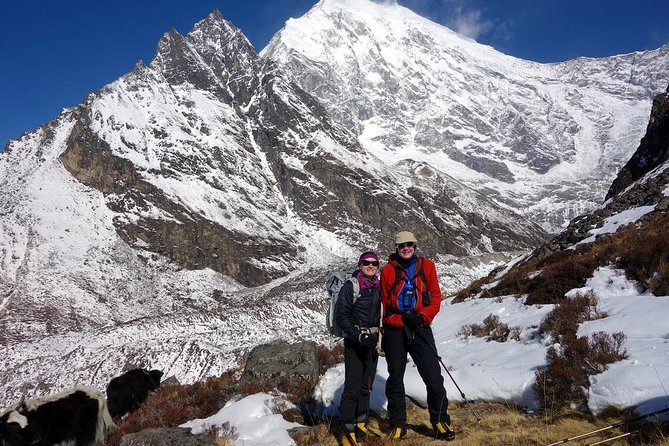
- Kyanjin Gompa is the trek’s high point: Reach the famous monastery area after four days of walking through forests, farms, bridges, and mountain villages.
- Two summit options on Day 5: Kyanjin Ri takes about three hours round trip and reaches 4,773 meters. Tsergo Ri takes seven to eight hours and reaches 4,984 meters.
- Porter support is shared: One porter is included for every two people, which helps reduce your load without providing a private porter for each trekker.
- Local buses keep the price down: Transport to and from Syabrubesi is included, but expect a long, road-bound day on both ends of the trek.
- Small group format: The maximum group size is 12 people, with pickup offered and a 6:45 am start time.
- Strong emphasis on staff care: Guides including Purna, Madan, Pralhad, and Ram have been praised for patience, help on difficult climbs, and good organization.
Why Langtang works so well for an eight-day trek
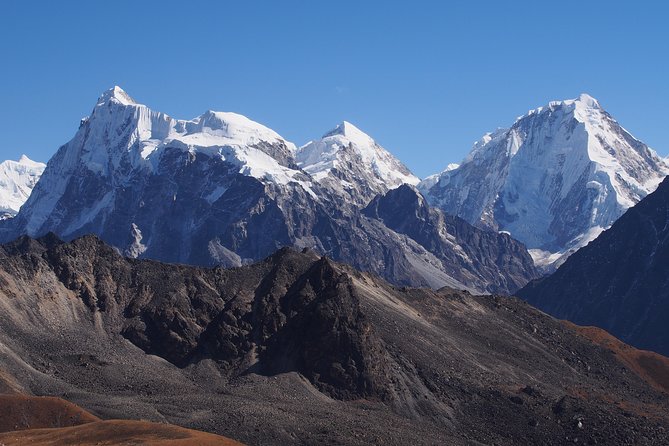
Langtang sits north of Kathmandu, close to the Tibetan border, and offers a direct route into a high mountain valley. You do not spend the first several days on a long approach march. Instead, the bus carries you to Syabrubesi, and the walking begins on Day 2.
That compact format is the trek’s biggest strength. You get forests of pine, oak, maple, alder, and rhododendron, then open meadows and snow-covered peaks without committing to a two-week expedition. Langtang Lirung, rising to 7,246 meters, dominates the views as you move up the valley.
I also like the change in scenery from day to day. Lower sections follow the Bhote Koshi and Langtang Khola through wooded country. Higher up, the trees thin out, farmland gives way to grassy ground, and the mountains feel much closer. The route is not just a march toward a viewpoint. Villages, suspension bridges, monasteries, and working mountain communities give it a human scale.
Langtang National Park is home to wildlife including wild boar, Himalayan black bears, ghoral, grey langur monkeys, leopards, musk deer, and the endangered red panda. You should not book this trek expecting guaranteed animal sightings. The value is in walking through protected forest where such wildlife still has a home.
More Langtang valley treks:
- Langtang Valley Trek
★ 5.0 · 140 reviews - Langtang Valley Trek
★ 5.0 · 50 reviews - Private 8 – Day Langtang Trekking
★ 5.0 · 29 reviews
Day 1: The seven-hour road to Syabrubesi
The first day is spent on a local bus from Kathmandu to Syabrubesi. The journey takes roughly seven hours, depending on traffic, and offers countryside views along the way.
This is practical rather than glamorous. A local bus gives you a closer look at daily life outside the capital, but road conditions and traffic can make the ride tiring. Pack water and keep a little patience handy. The included transport is a useful part of the $560 price, yet you should understand that the trek begins with a full day on the road.
The tour offers pickup, and the listed start time is 6:45 am. Confirm the exact meeting arrangement when you book, since an early start matters on a long transfer day.
Day 2: Forest paths to Lama Hotel
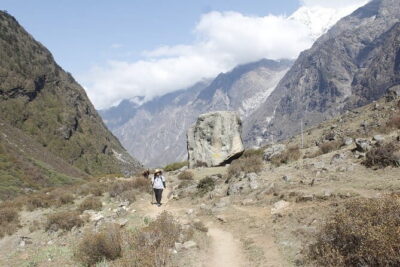
Walking starts on Day 2, with an easy to moderate route to Lama Hotel at about 2,500 meters. The trail uses riverbank paths, forest tracks, gentle inclines, suspension bridges, and well-defined sections of trail.
This is a good opening walk because it lets you settle into the pace before the larger altitude gains arrive. The forest provides shade and variety, with pine and other trees lining the route. You may also see giant beehives hanging in the woods, an unusual detail that adds interest to what could otherwise feel like a standard trekking day.
Do not read easy to moderate as effortless. You still walk for hours, and the trail includes some climbing. The benefit is that the route gives your body time to adjust while keeping the first day on foot manageable.
Day 3: Reaching Langtang Village at 3,430 meters
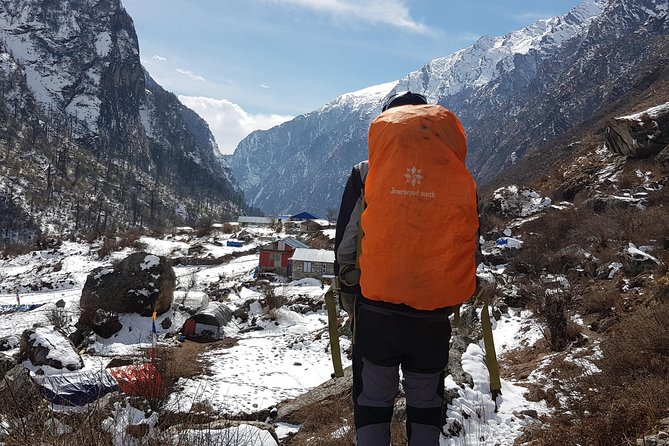
Day 3 takes about six and a half hours and climbs to Langtang Village at 3,430 meters. You continue through forest and along river trails before reaching grassy meadows and more open views of Langtang Lirung.
This is where the trek begins to feel properly high-altitude. The mountain views improve, but so does the need to watch your pace. Walk slowly, drink regularly, and tell your guide if you develop a headache or feel unwell. The itinerary calls for gentle inclines in places, but six and a half hours at increasing altitude is still a serious day.
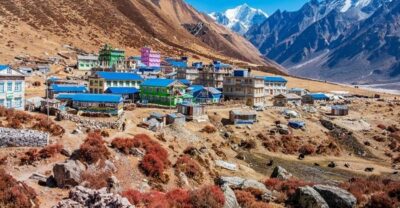
Langtang Village is an important overnight stop because it places you close to the upper valley and prepares you for Kyanjin Gompa the next day. Traditional settlements along this route help connect the scenery to local life. You are not simply moving through empty wilderness.
More treks starting in Kathmandu:
- Everest Base Camp Trek – 14 Days
★ 5.0 · 1,499 reviews - Everest Base Camp Trekking
★ 5.0 · 485 reviews - Nagarkot Sunrise View and Day Hiking from Kathmandu
★ 5.0 · 471 reviews - Annapurna Circuit Trek with Tilicho Lake
★ 5.0 · 368 reviews
Day 4: Bridges and farmland to Kyanjin Gompa
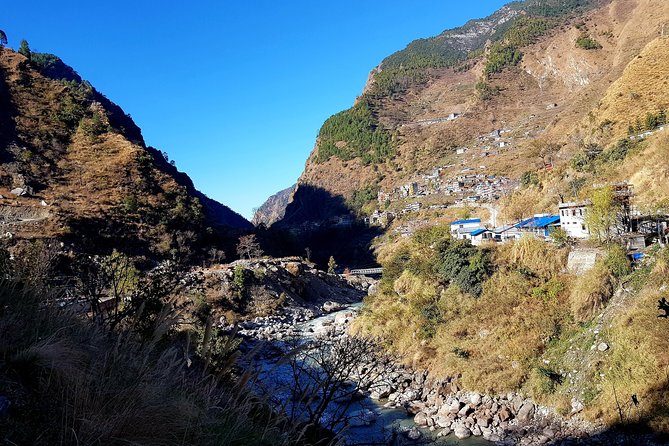
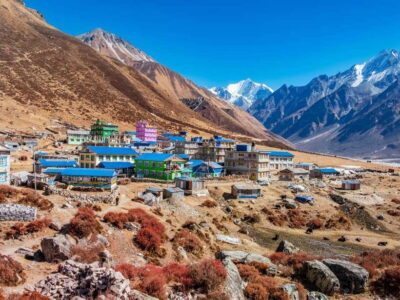
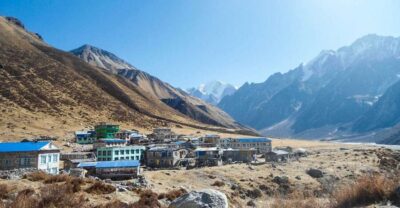
After about five hours of moderate walking, you reach Kyanjin Gompa, the famous monastery area of Langtang. The route crosses bridges, passes farmland, and follows gentle ascents with views toward Langshisha and Langtang Lirung.
This is one of the most satisfying days of the trek. The walk is shorter than the previous day, so you have more time to appreciate the changing surroundings. The arrival at Kyanjin Gompa also gives you a base for the next day’s optional climb.
Teahouse accommodation here is basic. That is part of the bargain. You are paying for shelter, meals, transport, and porter support rather than resort comfort. One person who took the route found the accommodation below a high standard, but still felt the scenery and overall experience made the effort worthwhile. I would make the same calculation: bring realistic expectations, and treat the teahouse as a warm place to eat, sleep, and recover.
Day 5: Choosing Kyanjin Ri or Tsergo Ri
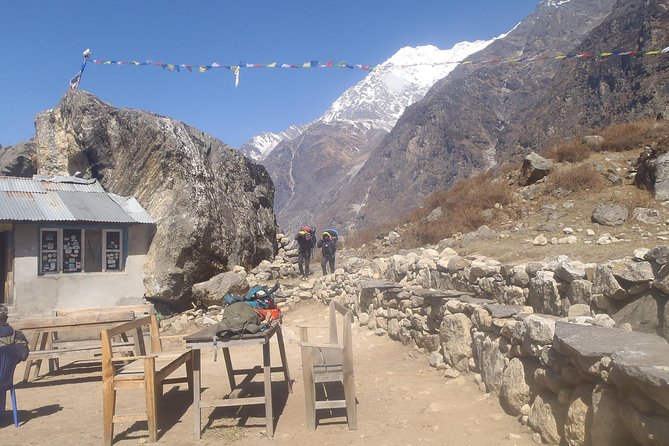
The fifth day gives you two choices, and the choice changes the character of the trek.
Kyanjin Ri takes about three hours round trip and reaches 4,773 meters. It is the shorter option and makes sense if you want a strong mountain viewpoint without turning the day into a major endurance test.
Tsergo Ri reaches 4,984 meters and takes roughly seven to eight hours round trip. It offers a more demanding day, with a longer climb and a higher top. Your group decides which option suits its pace and condition.
I appreciate having this choice because people in the same group may have different goals. A shorter climb can still provide a high viewpoint, while the longer route gives stronger hikers a bigger challenge. Still, neither option should be treated casually. You are already at high altitude, and a summit day can expose problems that were not obvious on the lower trail.
If anyone in your group has symptoms of altitude sickness, the priority should be rest and descent, not the higher viewpoint. The trip’s staff have earned praise for responding with care when a young trekker struggled at altitude. That is reassuring, but you should still arrive prepared to listen to your body.
Days 6 and 7: Returning through the same valley
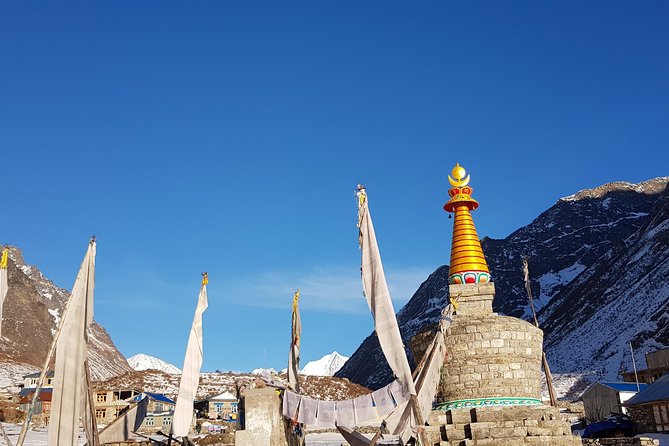
Day 6 retraces the route to Lama Hotel, taking about six hours through riverbank and forest trails. You get another look at the pine woods, suspension bridges, and valley contours, this time while descending.
The return walk is less novel, but it is not wasted time. Downhill movement can be hard on knees, and the six-hour distance still demands energy. Use trekking poles if you carry them, keep your footwear secure, and avoid racing downhill.
On Day 7, you continue down to Syabrubesi. The route includes gentle and some steep descents on well-defined paths. This is your final trekking day, and it gives you a night near the road before the return journey to Kathmandu.
The out-and-back design is the clearest weakness of this itinerary. You do not get a new route on the way down. The advantage is simplicity: the same trail reduces route complexity and brings you back to transport without adding extra trekking days.
Day 8: Back to Kathmandu and Thamel
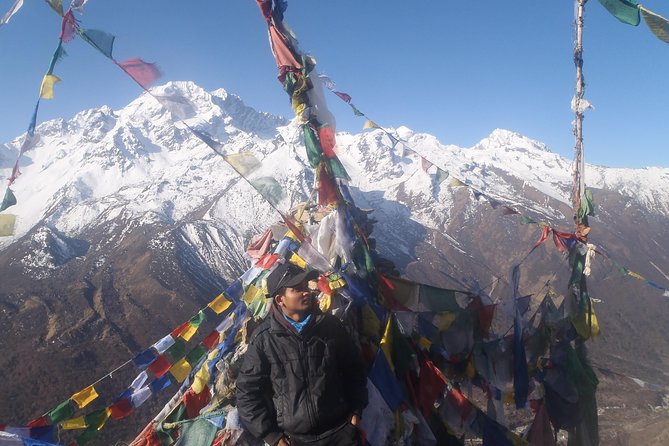
The final day uses another local bus to return to Kathmandu. The plan leaves time to shower, rest your legs, and walk around Thamel, perhaps with a massage after several days on foot.
That small touch makes sense. An eight-day trip can feel longer than the calendar suggests, especially with two long bus rides and a high-altitude summit option. The final evening is not a sightseeing-heavy finish. It is a recovery day, which is exactly what many people need.
What the $560 price really covers
At $560 per person, the package offers useful coverage for a short Himalayan trek. Included items are:
- Bus transport to and from Syabrubesi
- Teahouse accommodation
- One porter for every two participants
- All fees and taxes
- Seven breakfasts
- Eight lunches
- Seven dinners
The meal count fits the eight-day schedule: lunch is listed for all eight days, while breakfast and dinner are listed for seven. Beverages such as tea, coffee, and bottled water are not included, so set aside extra cash for drinks. Tips are also separate.
The porter arrangement is worth understanding. One porter serves two people, so you should pack with a shared load in mind rather than assuming someone will carry every item you bring. The guide and porter team can make a major difference on steep sections. Staff praised in past trips include Purna, Ram, Madan, Pralhad, Rupak, Naresh, and Kesab, though the exact team for your departure may differ.
The price is especially appealing if you value organization. Several trekkers found the pre-trip meeting, packing list, equipment rental options, and office communication useful. Those small preparations can save time and reduce stress before you leave Kathmandu.
Guides, pacing, and group size
The maximum group size is 12 people. That is small enough for a more personal trip, but it is not a private trek. Your pace will depend on the group, especially on the Kyanjin Ri or Tsergo Ri day.
The strongest staff praise centers on practical care. Guides have been described as responsive, flexible, energetic, and willing to help when a trekker struggled. One guide physically supported a 13-year-old for hours during difficult ascents. That does not replace your own preparation, but it shows the sort of support you should expect from a well-run departure.
Pacing matters more than speed in Langtang. The itinerary includes several long days, and the elevation rises quickly from the Kathmandu area to Langtang Village and Kyanjin Gompa. A moderate fitness level is required. You should be comfortable walking for around five to seven hours on mountain trails, with some steep sections and uneven ground.
The basic teahouse experience
Teahouse accommodation keeps the trek affordable and places you close to the route. It also means you should expect simple rooms and limited comfort rather than polished hotel service.
The supplied equipment and packing preparation are helpful advantages. Mosaic Adventure has provided free rental equipment selection and a packing list for some departures, which can be especially useful if you are coming to Nepal without a full trekking kit. Confirm exactly what rental gear is available before relying on it.
Food, breakfast, lunch, and dinner are included according to the package. Drinks are not. Carry enough personal spending money for beverages and tips, and remember that bottled water is an extra cost.
Who should book this trek
I would recommend this route to you if you want a genuine Himalayan walk but have only about a week of trekking time. It suits people who value mountain scenery, village paths, forest walking, and a clear itinerary more than luxury lodging or a constantly changing route.
It also works well for families with older children or teenagers who already have a moderate fitness base, provided the group takes altitude seriously. The story of a 13-year-old needing substantial assistance shows that age alone is not a fitness plan.
You may prefer another trek if you want private rooms, easy road access, guaranteed comfort, or a loop route with new scenery every day. The local buses and basic teahouses are central parts of this experience, not minor details.
Cancellation terms are favorable if you plan ahead. You can receive a full refund when you cancel at least six full days before the start time. A cancellation two to six days before departure receives 50 percent, while cancellation less than two full days before the start receives no refund. Changes follow the same time limits.
Should you book the Langtang Valley Trek?
I would book this trek if your priority is strong mountain scenery in a manageable eight-day package. The route reaches Kyanjin Gompa, offers two summit choices, includes transport and meals, and keeps the group capped at 12 people. The guide support is another real strength, especially if you are new to trekking in Nepal.
I would hesitate only if you dislike long bus rides, basic teahouses, or walking back over the same trail. Pack lightly, keep your expectations practical, and choose Kyanjin Ri rather than Tsergo Ri if you want a shorter summit day. At $560, the value is good for a structured trip that combines logistics, porter help, and access to one of Nepal’s most striking high valleys.
FAQ
How long is the Langtang Valley Trek?
The trek lasts approximately eight days, including bus journeys between Kathmandu and Syabrubesi.
Where does the trek start?
The walking portion starts in Syabrubesi after a local bus ride from Kathmandu.
What time does the tour start?
The listed start time is 6:45 am.
Is pickup available?
Yes, pickup is offered.
How long is the bus ride to Syabrubesi?
The local bus journey takes roughly seven hours, depending on traffic.
What is the highest overnight point on the itinerary?
Kyanjin Gompa is reached on Day 4, at an altitude of about 3,870 meters. Langtang Village is listed at 3,430 meters, and Lama Hotel at 2,500 meters.
What are the summit options from Kyanjin Gompa?
You can choose Kyanjin Ri, which is about a three-hour round trip and reaches 4,773 meters, or Tsergo Ri, which takes about seven to eight hours and reaches 4,984 meters.
Is accommodation included?
Yes, teahouse accommodation is included.
Are meals included?
Yes. The package includes eight lunches, seven dinners, and seven breakfasts. Beverages such as tea, coffee, and bottled water are not included.
How many people can join the group?
The maximum group size is 12 people. One porter is included for every two participants.
What fitness level is required?
A moderate physical fitness level is required. The itinerary includes walking days of about five to seven hours, with gentle and steep ascents and descents.
Can I cancel for a full refund?
Yes, if you cancel at least six full days before the experience start time. A cancellation two to six full days ahead receives a 50 percent refund, while cancellation less than two full days ahead is not refunded.
Recently added around Kathmandu
- Kathmandu : Swambhunath & Durbar Square Guided Half Day Tour★ 3.3 · 3 reviews
- Private Day Tour in Kathmandu Valley Rim with Bhaktapur Sightseeing★ 5.0 · 3 reviews
- From Kathmandu / Pokhara / Chitwan: River Rafting – 1 Day★ 4.6 · 3 reviews
- Nepali Cooking training & Cultural Homestay Experience★ 5.0 · 3 reviews
- Private 3-Hour Nagarkot Sunset Tour from Kathmandu★ 3.5 · 3 reviews
- From Kathmandu: Everest Base Camp Landing Helicopter Tour★ 5.0 · 3 reviews
- 4 UNESSCO World heritage sites of Kathmandu-private tour★ 5.0 · 3 reviews
- From Kathmandu Budget: 15 Day Everest Base Camp Trek★ 5.0 · 3 reviews
Langtang Valley Treks, compared.
Browse the lists this tour appears in