
Reviewed · WORKSHOPS
Knife (Khukuri) Making Workshop- Forge of the Gurkhas
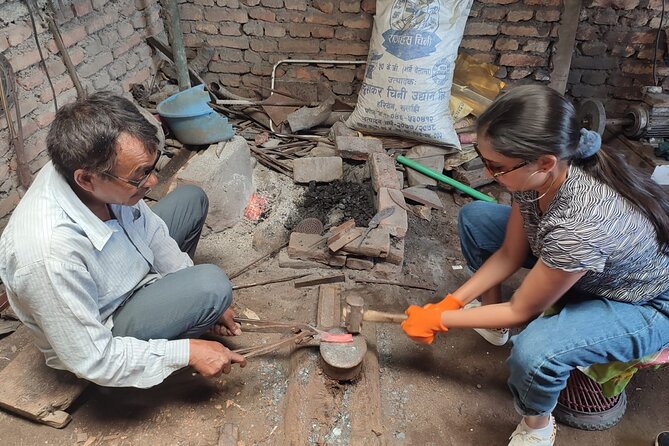
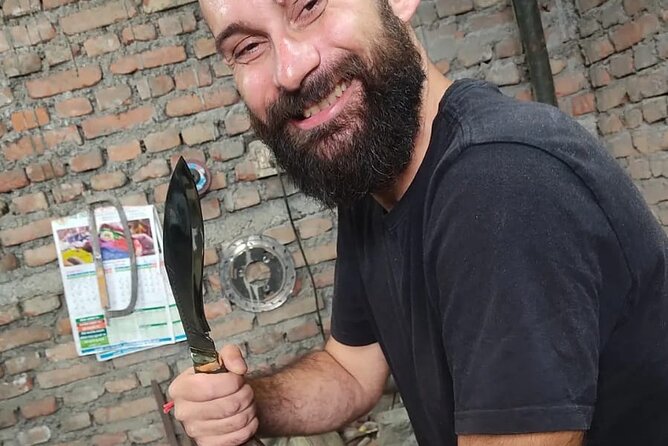
The most memorable part of this Kathmandu experience is watching a plain piece of steel become a real khukuri, Nepal’s famous curved knife. You work beside an experienced blacksmith, hammer the heated metal, help shape it, and finish with a sharp keepsake made partly by your own hands.
I like the visit to a working forge in a more rural part of Kathmandu, rather than a quick stop at a souvenir shop. I also like the small-group format, the friendly translation from guides such as Swoyam or Namrata, and the chance to meet the blacksmith’s family. The main catch is that safety limits how much of the dangerous grinding and heat work you can do yourself.
In This Review
- Key points before you book
- Why a khukuri means more than a souvenir
- Leaving central Kathmandu for the home forge
- Meeting Indra and seeing the forge in action
- Hammering the steel yourself
- Grinding, sparks, and the safety limit
- Buffing, polishing, and making the knife yours
- The guide makes the difference
- How long the four hours really feel
- Is $68 a fair price?
- What can go wrong, and how to avoid it
- Who will enjoy this workshop most
- Should you book the Forge of the Gurkhas?
- FAQ
- Where does the khukuri-making workshop take place?
- How long does the workshop last?
- What size knife is included?
- Can I make a larger khukuri?
- Will I make the entire knife myself?
- Is hotel pickup available?
- How many people can join the workshop?
- Who makes the khukuri?
- Can children take part?
- What is the cancellation rule?
Key points before you book
- A six-inch khukuri is included: The standard workshop produces a small blade that you can take home.
- You do the satisfying work: Hammering, early grinding, buffing, and polishing are part of your hands-on session.
- Indra is the central craftsman: He has decades of blacksmithing experience and works with assistants when needed.
- The setting feels personal: You visit a home workshop in a less central part of Kathmandu, not a polished tourist showroom.
- Pickup and a small group help: Hotel pickup is offered, and the maximum group size is five people.
- Allow about four to five hours: The process is slow by design, and children may lose patience before the knife is finished.
Why a khukuri means more than a souvenir
The khukuri is closely tied to Nepal and the Gurkha warrior tradition. It is also a practical tool used by hill communities for jobs such as shaping timber and cutting meat or vegetables.
Its curved, tempered-steel blade is known for being very sharp. Handles are commonly made from wood or buffalo horn, and the blade traditionally sits inside a wood-and-leather scabbard. A small notch near the handle has practical and symbolic meaning. It is said to help keep blood from reaching the handle, and it is also linked with the Hindu Trinity of Brahma, Vishnu, and Shiva.
You do not simply buy one of these knives from a shelf. You watch the form develop from raw metal, then take part in several steps yourself. That changes the souvenir from a purchase into a reminder of time spent with a Nepali craftsperson.
This is especially worthwhile if you have already seen Kathmandu’s main temples and markets and want an activity that connects you with everyday skill. The workshop offers a look at traditional work that is becoming less common, using a very direct method and a modest forge.
More workshops and classes in Kathmandu:
- Half day cooking class in Thamel kathmandu
★ 5.0 · 607 reviews - Kathmandu: Local Women-Led Nepali Cooking & Momo Class
★ 4.9 · 360 reviews - Kathmandu: Local Lead Nepali Cooking & Momo-Making Class
★ 5.0 · 212 reviews
Leaving central Kathmandu for the home forge
The experience usually begins with pickup from your hotel. Guides including Swoyam and Namrata have accompanied participants, helped with translation, and used the ride to explain Nepal and places to visit.
The workshop is in a more remote part of Kathmandu, sometimes described as a traditional village or a house in the hills. That journey is part of the appeal. You see more of the city’s outer neighborhoods and arrive at a family-run working space rather than a commercial craft center.
Do not expect a sleek classroom. This is a primitive, practical forge, with limited equipment and a setting that feels connected to local life. For some people, that is exactly the point. You see how much can be achieved with basic tools, hot metal, a hammer, and years of practiced movement.
The less polished setting can also mean less comfort and less visual order than you might expect from a standard cooking or craft class. If you prefer a tidy studio with a clear display area and a fixed timetable, this may feel rough around the edges. If you want to see the work in its ordinary setting, it is a strong match.
Meeting Indra and seeing the forge in action
At the workshop, the blacksmith demonstrates how the knife begins. Indra is described as having around 40 years or more of blacksmithing experience, and his hammer work is one of the memorable parts of the visit.
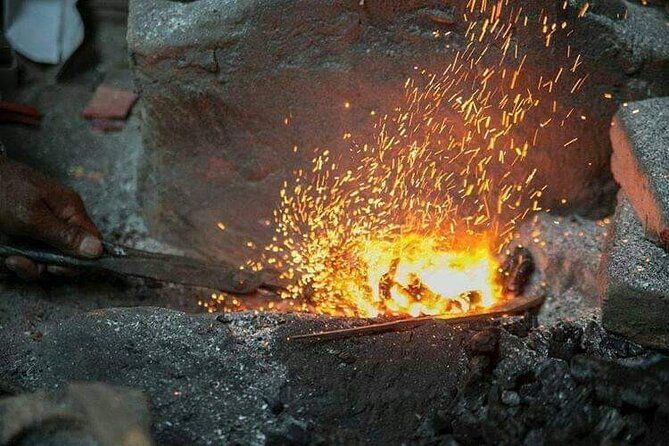
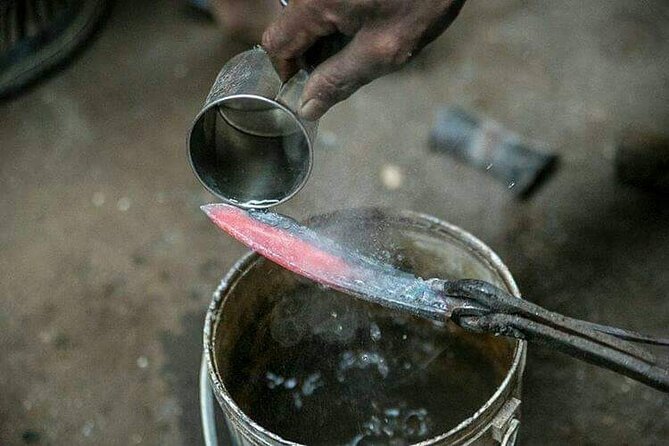
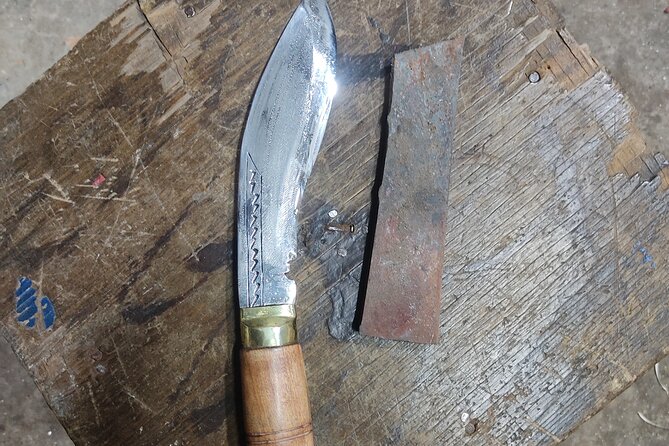
The raw material may include recycled steel, including old truck suspension springs. You begin with something that looks more like scrap than a finished blade. Under heat and repeated hammer blows, it is drawn out and shaped into the familiar khukuri curve.
Indra may work with an apprentice or family assistant. That matters because the process takes effort, and you can pause without stopping the whole session. The guide handles communication, explains what is happening, and helps you understand the cultural meaning of the knife as well as the mechanics.
The atmosphere is informal. Green tea may be offered, and some sessions have included lunch with the family. Lunch is not clearly presented as a standard part of every booking, so you should confirm it if that detail matters to you.
Hammering the steel yourself
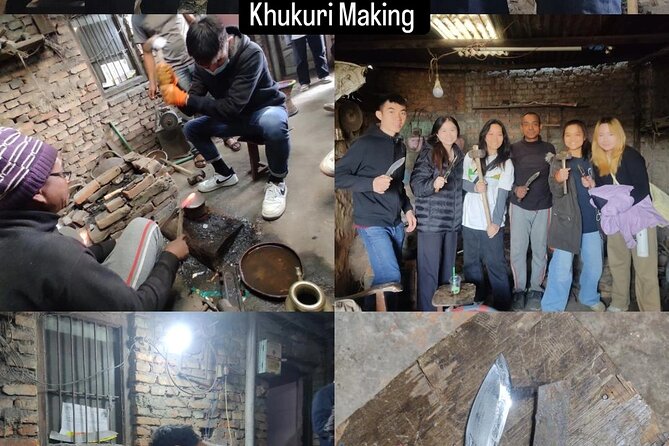
Hammering is the most physical part of the workshop and usually the moment when the activity becomes more than a demonstration. You help strike the heated metal under direction from the smith.
The work is not a quick hit-and-finish job. Shaping a blade takes control, timing, and repeated effort. You will not match the precision of a blacksmith who has done this for decades, but you can feel how the form develops and why the craft requires patience.
The assistant can help if you need a break. That is useful for families and for anyone unsure about handling hot metal or keeping up with the work. You should expect guidance rather than total independence. The host remains responsible for the critical stages, and the finished shape will be corrected as needed.
This balance works well for most people. You get genuine participation without being asked to perform a dangerous task without supervision. The tradeoff is that someone hoping to make every decision and complete every blow alone may find the experience less hands-on than expected.
A completely different sort of day in Kathmandu:
- Everest Base Camp Trek – 14 Days
★ 5.0 · 1,499 reviews - Private Kathmandu Sightseeing Tour | UNESCO World Heritage sites
★ 5.0 · 756 reviews - Everest Base Camp Helicopter Tour landing at Everest View Hotel
★ 5.0 · 668 reviews - Everest Base Camp Trekking
★ 5.0 · 485 reviews
Grinding, sparks, and the safety limit
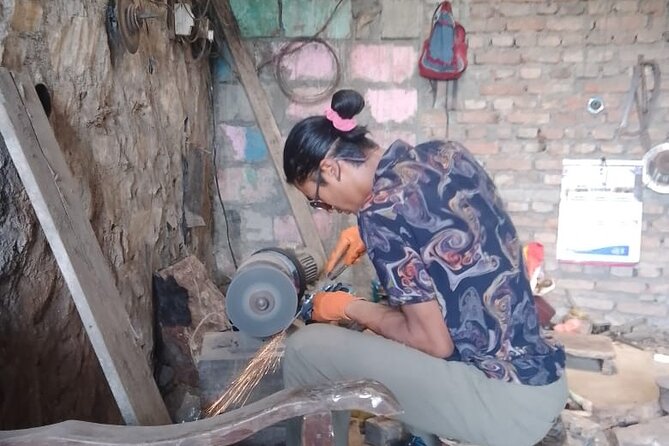
After hammering, the blade is ground to refine its shape and create a cutting edge. You may take part in the first grinding stage, but the host handles the more dangerous blade grinding for safety.
This is the point where you need to pay attention. Sparks can fly from the grinding wheel, and you are advised to keep clear during the host’s work. The knife becomes thinner, cleaner, and sharper through this stage, but it is not the time to stand close for a better photograph.
The safety rule is sensible, though it creates one of the workshop’s few limits. Some participants expect to do more of the grinding themselves and are disappointed when the blacksmith takes over. That does not mean the session lacks substance. It means the experience is built around supervised participation, not a do-it-yourself certification.
The division of work also protects the quality of the final knife. Indra’s experience matters most when setting the edge and correcting the blade. You help with the process, while he makes sure the object you carry home is usable.
Buffing, polishing, and making the knife yours
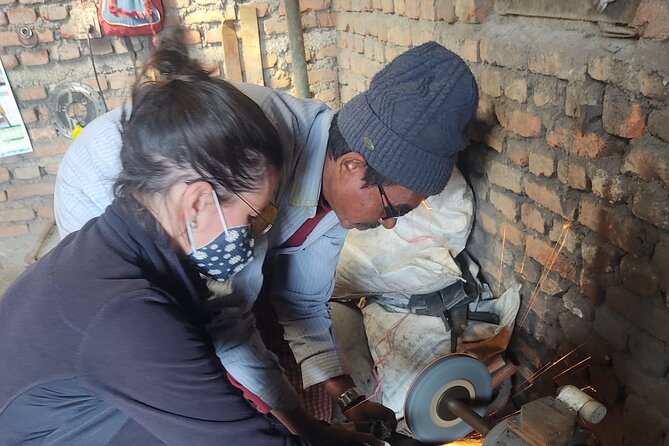
The final stages give the knife its finished appearance. You can take part in buffing and polishing, which removes the rough look left by the earlier work.
This is where the transformation is easiest to appreciate. The blade has gone from recycled metal to a curved, polished tool. Some sessions also allow personal touches, including simple personalization, though the exact options may vary.
The standard product is a small khukuri with a six-inch blade. One participant arranged to make a ten-inch version for an additional fee, so ask about size and cost before you begin if the standard blade feels too small.
The handle is typically wood or buffalo horn according to the description of the traditional knife. Individual finished handles may vary. You should also remember that the blade is genuinely sharp. Treat it as a working knife, not a harmless trinket, and pack it according to your airline and destination rules.
The guide makes the difference
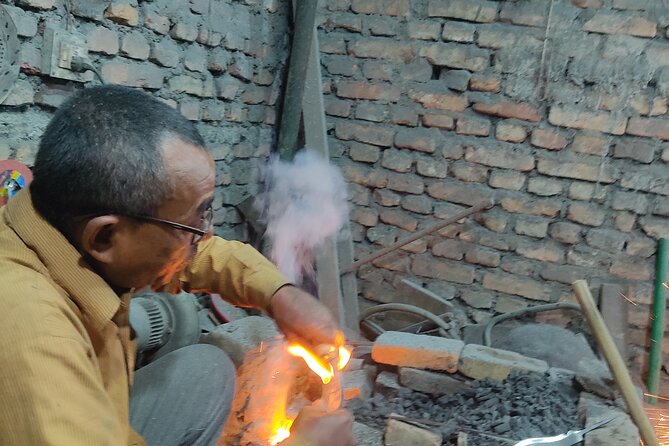
The blacksmith provides the craft, but the guide shapes the visit for an English-speaking visitor. Swoyam is described as friendly, chatty, and strong at translation. Namrata has also accompanied participants, coordinated transport, and helped with conversation during the work.
That support is important because a forge can otherwise be hard to follow. You want to know why the steel is heated, what each hammering stage achieves, and which part of the knife you are helping to make. A guide also lets you ask about Nepal, local places, and the meaning of the khukuri without interrupting the blacksmith’s concentration.
The best quality of the guiding is its personal tone. The visit can include time with the blacksmith’s family, tea, and ordinary conversation. It feels less like being moved through a series of displays and more like being welcomed into someone’s workday.
Guide assignments can change, so you should not book solely because you expect one particular person. Still, the combination of a translator and a patient craftsperson is a major reason this activity works for international visitors.
How long the four hours really feel
The advertised duration is about four hours, but sessions can run closer to four and a half or five hours, especially when more than one person is making a knife.
That extra time is not wasted. The knife passes through several slow steps, and the blacksmith needs time to heat, hammer, grind, and polish each blade. Rushing would weaken the experience and could reduce the quality of the result.
For one adult who enjoys practical work, the time should feel full rather than padded. For a family, the pace needs more thought. Two adults with children aged four and six found that the children ran out of patience before the process ended. If you bring young children, bring distractions and accept that they may not participate for the entire session.
The maximum group size is five. A small group gives you more contact with the smith and less waiting than a large class. It also means the workshop is not designed for a crowd or a party atmosphere.
Is $68 a fair price?
At $68 per person, the value depends on what you want from a Kathmandu souvenir.
A shop-bought khukuri may cost less, and you can purchase one quickly without giving up half a day. But this experience includes hotel pickup, a guide, time with an experienced blacksmith, supervised work, and a finished six-inch knife. You are paying for instruction and access to a real workshop as much as for the object itself.
I consider the price reasonable if you value cultural contact and hands-on work. The knife carries the memory of heating and hammering the metal, not just the name of a shop. It can also be a good choice for someone who has visited Nepal before and wants a less standard activity.
The value is weaker if you only want the cheapest blade or have a tight schedule. Four hours is a large block of time in Kathmandu, and the final product is small unless you arrange and pay for a larger size. Ask ahead about any extra charge for a ten-inch khukuri and about what is included in the final handle and scabbard.
What can go wrong, and how to avoid it
The main practical risk is not the forge itself. It is communication around pickup and cancellation.
Pickup is offered, but you need to provide a clear location and respond promptly to messages. A same-day booking with an unclear pickup point caused serious problems for one participant, especially because the workshop was far outside the city center. The provider states that cancellations must be made at least 24 hours before the start time for a full refund, and changes inside that window are not accepted.
There is also a small quality risk in handmade metalwork. Cracks can appear during the crafting process, even when they are not visible at first. The provider has offered to make and deliver a replacement in such cases, so report a problem before leaving or contact the operator quickly.
Finally, remember that participation is shared with the expert. You will help hammer, take part in early grinding, and polish the knife, but the host controls the dangerous and highly skilled stages. Book this as a guided craft session, not as a full blacksmith apprenticeship.
Who will enjoy this workshop most
I would choose this for you if you like practical activities, traditional crafts, and souvenirs with a story. It suits solo visitors, couples, small families with older children, and anyone interested in the Gurkha connection or Nepali village life.
It is also a good choice if you have already spent time in Thamel and want to see a quieter side of Kathmandu. The ride to the workshop, the family setting, and the basic forge provide a stronger sense of place than a standard retail stop.
You may want to skip it if you dislike heat, sparks, repetitive physical work, or rustic surroundings. It is not ideal for very young children unless an adult is prepared to supervise them and keep them occupied.
Before booking, confirm three things: your pickup point, the standard six-inch size, and any additional cost for a larger blade. Wear practical clothing, listen carefully during grinding, and plan enough time so you are not watching the clock.
Should you book the Forge of the Gurkhas?
Yes, if you want one of Kathmandu’s more personal craft activities and you are comfortable with a slow, partly supervised process. The strongest reasons to book are the chance to work with Indra, the direct contact with a family forge, the small group size, and the useful knife you take home.
I would not choose it solely for a bargain souvenir or a quick activity between sightseeing stops. But if you want to understand how a khukuri is made and leave Nepal with something you helped shape, $68 buys a memorable half-day and a far better story than simply picking up a knife in a shop.
FAQ
Where does the khukuri-making workshop take place?
The workshop takes place in Kathmandu, in a more remote part of the city near the hills or in a traditional village setting.
How long does the workshop last?
The activity is advertised as approximately four hours. Some sessions can take about four and a half to five hours, especially when more than one person is making a knife.
What size knife is included?
The standard workshop includes a small khukuri with a six-inch blade.
Can I make a larger khukuri?
A ten-inch khukuri has been available for an additional fee. Ask about the current price before starting.
Will I make the entire knife myself?
No. You participate in hammering, the first grinding, and final buffing and polishing. The host handles the most dangerous blade-grinding work and other skilled stages for safety and quality.
Is hotel pickup available?
Yes. Pickup is offered, but you need to provide a clear pickup location and respond to the provider’s messages in time.
How many people can join the workshop?
The maximum group size is five travelers.
Who makes the khukuri?
The principal blacksmith is Indra, who has about 40 years or more of experience. An apprentice or family assistant may also help during the session.
Can children take part?
Most travelers can participate, but very young children may lose patience during the four to five-hour process. Children aged four and six were reported to need distractions during the workshop.
What is the cancellation rule?
You can receive a full refund if you cancel at least 24 hours before the experience start time. Cancellations or changes made less than 24 hours in advance are not refunded or accepted.
Recently added around Kathmandu
- Kathmandu : Swambhunath & Durbar Square Guided Half Day Tour★ 3.3 · 3 reviews
- Private Day Tour in Kathmandu Valley Rim with Bhaktapur Sightseeing★ 5.0 · 3 reviews
- From Kathmandu / Pokhara / Chitwan: River Rafting – 1 Day★ 4.6 · 3 reviews
- Nepali Cooking training & Cultural Homestay Experience★ 5.0 · 3 reviews
- Private 3-Hour Nagarkot Sunset Tour from Kathmandu★ 3.5 · 3 reviews
- From Kathmandu: Everest Base Camp Landing Helicopter Tour★ 5.0 · 3 reviews
- 4 UNESSCO World heritage sites of Kathmandu-private tour★ 5.0 · 3 reviews
- From Kathmandu Budget: 15 Day Everest Base Camp Trek★ 5.0 · 3 reviews
Workshops, compared.

The best Private Nepali Cooking Class in Kathmandu
Read our review →
Browse the lists this tour appears in