
Reviewed · KATHMANDU UNESCO HERITAGE TOURS
Old Kathmandu Walking Tour, Historic World Heritage Durbar Square
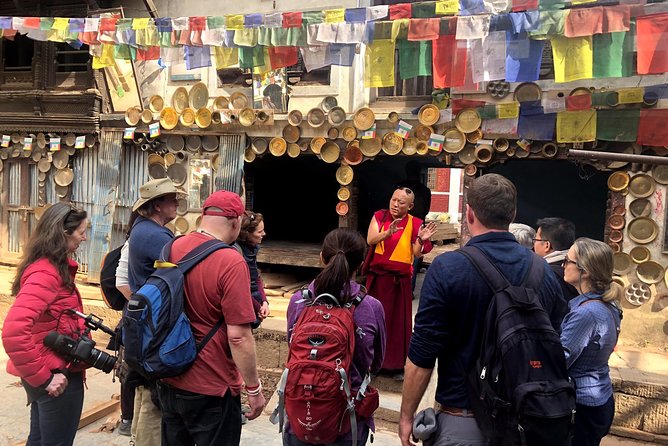
Kathmandu reveals itself best in its side lanes, where a small shrine may sit behind a market stall and an old monastery may hide behind an ordinary doorway. This 4 to 5 hour private walking tour takes you from Thamel through old Newar neighborhoods, Asan Market, Buddhist courtyards, Kathmandu Durbar Square, and the shrine of Kumari, the living goddess.
I like the way the route mixes major sights with places you could easily miss alone, especially Itum Bahal and the small Buddhist complex at Kathesimbu. I also like the relaxed finish at Cafe Mitra, where you can have tea or coffee and ask your guide about what you have seen.
The main consideration is cost at $28 per person, plus entry fees for Kathmandu Durbar Square and the listed Swayambhu Stupa charge. The route also involves steady walking through crowded, uneven old-city streets, so comfortable shoes and a little patience matter.
In This Review
- Key details of this Kathmandu walking tour
- Why this route gives you a better first look at Kathmandu
- Bikramshila Mahavihar and the story behind Thamel
- Asan Market, Kathmandu’s daily shopping street
- Janabaha Dyo and its 108 images of compassion
- Itum Bahal, an old monastery behind the city streets
- Kathmandu Durbar Square and the old royal center
- Kumari Chowk and the living goddess
- Kathesimbu, a smaller Buddhist stupa complex
- Tea at Cafe Mitra and time to ask questions
- Is $28 a fair price?
- Walking pace, timing, and what to bring
- Who will appreciate this tour most?
- Should you book the Old Kathmandu Walking Tour?
- FAQ
- Where does the Old Kathmandu Walking Tour start?
- What time does the tour begin?
- How long does the experience last?
- Is this a private tour?
- Is transportation included?
- Are entrance fees included?
- What is included at the end of the tour?
- Can I cancel for a full refund?
Key details of this Kathmandu walking tour
- Old Newar courtyards: Visit Bikramshila Mahavihar and Itum Bahal, two Buddhist sites that reveal the city beyond its headline sights.
- Asan Market: Walk through Kathmandu’s oldest living market, where daily shopping and religious commerce happen side by side.
- Kumari Chowk: Visit the home of Kumari, Nepal’s living goddess, and you may catch a brief appearance at the window.
- Private format: Only your own group takes part, with private transportation to the starting point if needed.
- Tea with your guide: End at Cafe Mitra in Thamel with coffee or tea and an informal conversation.
- Extra admission costs: Kathmandu Durbar Square and the listed Swayambhu Stupa fee are not included in the $28 price.
Why this route gives you a better first look at Kathmandu
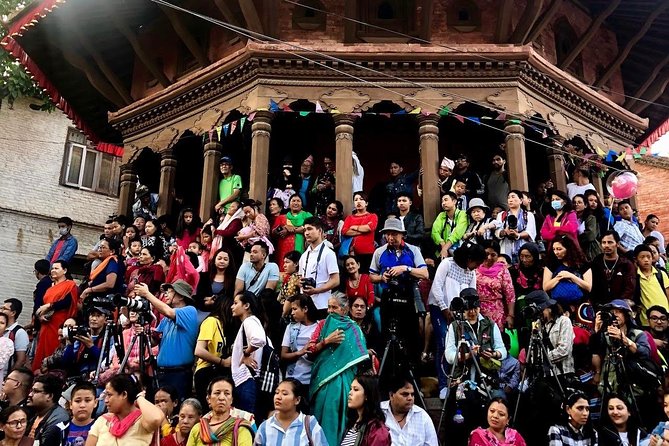
Kathmandu Durbar Square is the headline attraction, but it is not the whole story. The square shows royal architecture, carved windows, temples, and the Kumari Temple. The walk leading there explains how those monuments fit into the daily life of the old city.
You begin around Thamel, the main tourist district, but quickly move toward places tied to Kathmandu’s native Newar culture. That shift matters. You are not simply checking off a palace square. You are seeing how monasteries, shrines, shops, courtyards, and homes share the same tight urban space.
The private format is another advantage. The tour is designed for your group alone, rather than a large bus group. That gives you more room to stop for questions, adjust your pace, and spend extra time on a detail that catches your eye. The listed starting time is 9:00 a.m., a sensible choice for a morning route through the old city.
If you are staying in Thamel, pickup begins at your hotel lobby. If you are outside the main tourist area, private transport brings you to the start after about a 20-minute drive. At the end, the tour returns to Cafe Mitra in Thamel, with hotel drop-off possible if your hotel is within the provider’s service area.
More Durbar Square walks:
- Bhaktapur & Patan Durbar Square Day Tours
★ 5.0 · 122 reviews - Kathmandu Sunset Tour by Rickshaw Including Durbar Square Visit
★ 5.0 · 73 reviews - City tour of Bhaktapur and Patan Durbar Square
★ 4.5 · 20 reviews
Bikramshila Mahavihar and the story behind Thamel
The first stop is Bikramshila Mahavihar, also called Thambahil. This old Buddhist monument belongs to the Newar Buddhist tradition and is rarely visited by tourists. One especially useful detail here is the connection to Thamel itself: the tourist district takes its name from this historic monument.
That small fact gives the tour an early sense of place. Thamel is often treated as a base for hotels, restaurants, trekking shops, and souvenir stores. This stop reminds you that the area has older roots than its modern tourist identity suggests.
The visit lasts about 15 minutes and has no listed admission charge. Do not expect a large complex that takes hours to explore. Its value is in the local setting and the guide’s explanation of how Kathmandu’s religious and neighborhood life developed around such sites.
Asan Market, Kathmandu’s daily shopping street
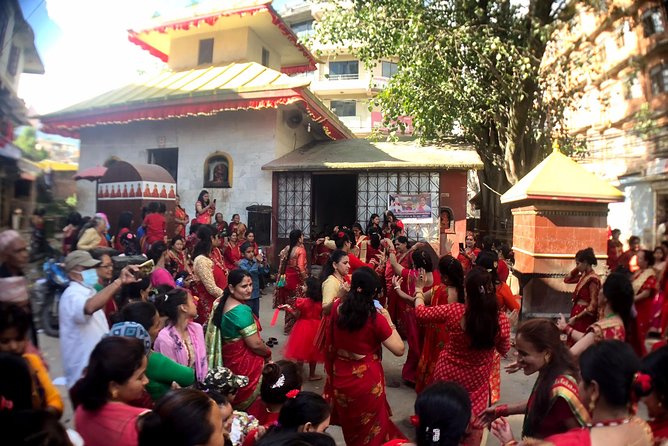
From Bikramshila Mahavihar, the route reaches Asan, described as Kathmandu’s oldest living market. This is one of the most useful stops for understanding ordinary city life. You may see goods for cooking, clothing, metalwork, household needs, and religious practice sold in the same area.
The stop is scheduled for about 15 minutes, so this is a quick introduction rather than a long shopping session. The market can feel tight and busy, and you will need to stay aware of people moving around you. That is part of the point, but it can be tiring if you prefer quiet sightseeing.
I like Asan because it connects the monuments to the people who still use the old center. A temple is not just a historic object here. It can sit beside a shop selling everyday goods, while people pass through on errands or stop to pray.
Keep your belongings secure and follow your guide’s lead through the lanes. The route is designed to show you the market, not to provide a dedicated shopping period, so ask before making purchases or lingering at a stall.
Janabaha Dyo and its 108 images of compassion
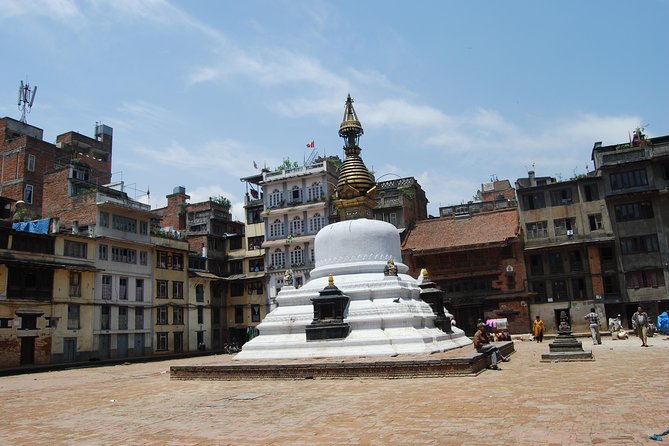
Janabaha Dyo, also called the Seto MachhindraNath Temple, introduces another important religious tradition. The shrine is linked with a native deity of Kathmandu and with the Buddhist figure Avalokitesvara, associated with compassion. The temple contains 108 engraved images representing different forms of Avalokitesvara.
The visit lasts around 15 minutes and admission is free. That may sound brief, but a guide can help you notice details that are easy to miss in a short visit, including the relationship between local Kathmandu worship and wider Buddhist traditions.
This is also a good point to remember that the tour is not organized around one single faith. Hindu temples and Buddhist shrines appear close together throughout the old city. The route treats that shared setting as a central part of Kathmandu, rather than separating the city into tidy religious categories.
More of the valley’s UNESCO heritage sites:
- Private Kathmandu Sightseeing Tour | UNESCO World Heritage sites
★ 5.0 · 756 reviews - Kathmandu: Full Day 7 UNESCO Tour with Lunch – Private/Group
★ 5.0 · 415 reviews - Kathmandu: Full Day Top 4 UNESCO Tour with Lunch – Private/Group
★ 5.0 · 269 reviews - UNESCO Seven World Heritage Tour in Kathmandu
★ 5.0 · 253 reviews
Itum Bahal, an old monastery behind the city streets
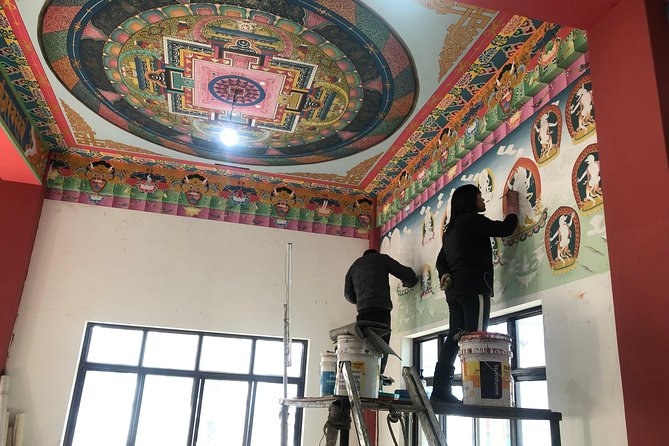
Itum Bahal receives about 30 minutes, making it one of the more substantial stops before Durbar Square. It was once one of the largest Buddhist monasteries in ancient Kathmandu. The remaining section of the original monastic complex includes old courtyards and areas connected with the goddess Tara.
This is the kind of place that rewards a guided visit. From the street, an old courtyard or monastery entrance may not explain itself. Once inside, you can better understand how religious buildings were arranged around shared spaces and how much of Kathmandu’s older life takes place just beyond the main street.
The longer stop also gives the morning a welcome change of pace after Asan and Janabaha Dyo. You move from public market streets into a more enclosed setting. It is a reminder that the city’s historic character is not limited to grand squares or famous monuments.
Because this is an active religious and community space, behave quietly and follow local instructions. The supplied information does not specify photography rules, so ask your guide before taking pictures.
Kathmandu Durbar Square and the old royal center
Kathmandu Durbar Square is the tour’s major landmark stop and lasts about 45 minutes. The square was the palace center of Nepal’s kings and is known for traditional Nepali art and architecture. Temples surround the old royal area, creating a dense collection of carved wood, brick, shrines, and palace buildings.
This is where the smaller stops pay off. After seeing working markets and Buddhist courtyards, you can view the royal square as part of the same urban culture rather than as an isolated monument. The square carries UNESCO World Heritage status and is one of Kathmandu’s essential sights.
Admission is not included. The exact fee is not supplied, so budget for an additional charge at the entrance. The tour price looks reasonable at $28 per person, but you should compare the total cost after adding the required admission.
The 45-minute visit gives you a useful overview, though it may feel short if you want to examine every courtyard and temple. That is a fair trade for a route that also includes several lesser-known sites. If you want a long, detailed architectural study of the square alone, a dedicated Durbar Square tour may suit you better.
Expect plenty to look at in a compact area. Stay close to your guide, especially if the square is crowded, and save questions for the places that interest you most. Guides such as Mahesh Shreshtha and Modo have been associated with especially clear, engaging explanations on this route.
Kumari Chowk and the living goddess
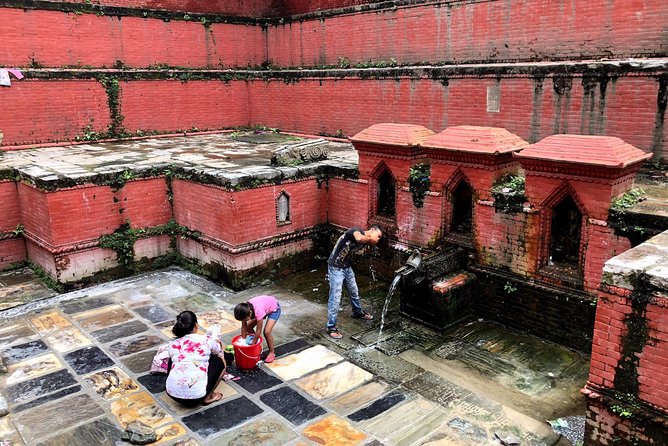
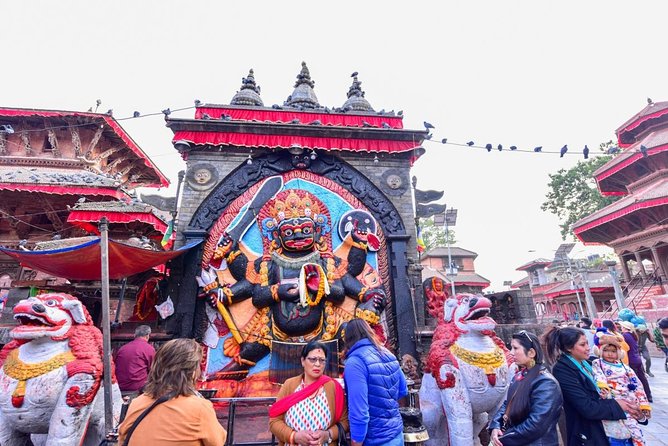
Within Durbar Square, Kumari Chowk is a key stop. The three-century-old building is the home of Kumari, the living goddess, and its carved architecture is an attraction in its own right.
The tour allows about 20 minutes here. If conditions are right, you may see Kumari appear at a window, but this is not guaranteed. Treat that possibility as a bonus rather than the main reason to book. The visit remains worthwhile for the building, the customs surrounding Kumari, and the guide’s explanation of the tradition.
The Kumari tradition can be difficult to understand without context. A local guide helps place the shrine within Nepal’s religious life and explains why this young goddess is treated with such respect. The stop also gives you a chance to see how living belief and historic architecture remain connected in Kathmandu.
Entry is not included, and the provided details list an admission charge for the Durbar Square premises and Kumari area. Since fees can change, check the current amount when booking or before the visit.
Kathesimbu, a smaller Buddhist stupa complex
After the Durbar Square area, the route continues through the old town to Kathesimbu, also called Dharmakirti Vihara. The complex contains a replica of Swayambhu Stupa, one of Nepal’s major Buddhist pilgrimage sites.
This stop helps keep the tour from becoming a palace-only outing. You return to Buddhist Kathmandu and see another religious complex woven into the city’s lanes. The provided schedule does not give a duration for this stop, so the exact amount of time may depend on the guide and the day’s pace.
The fee information deserves attention here. The tour details list the Swayambhu Stupa admission as not included, even though the route describes Kathesimbu as a replica complex. Ask the provider to clarify exactly which entrance fee applies to this stop. That small check can prevent confusion at the end of the morning.
Tea at Cafe Mitra and time to ask questions
The tour ends at Cafe Mitra on Thamel Marg, with about 30 minutes for coffee or tea and a casual conversation with your guide. This is more useful than it may sound. After several temples, markets, and courtyards, you have a chance to sort out what you saw and ask about customs, architecture, or local life.
I like this ending because it does not rush you directly back to a hotel or leave you standing at the final monument. You can use the conversation to clarify the difference between the Buddhist and Hindu sites, ask about the history of Thamel, or get practical suggestions for the rest of your time in Kathmandu.
Coffee and tea are included. Other food or drinks are not specified, so do not assume a meal is part of the experience.
Is $28 a fair price?
At $28 per person, this tour offers a good value if you want a private introduction to Kathmandu’s old center. You receive private transportation when pickup is needed, a local guide, the walking route, and tea or coffee at the end.
The price is less attractive if you plan to visit only Durbar Square and Kumari Chowk. In that case, you are paying for a wider route that may include more walking than you need. But the added monasteries, courtyards, market streets, and local shrines are exactly what give the experience its character.
Remember to add the admission costs that are not included. The tour’s full price is therefore higher than $28, though the extra charges are separate rather than hidden inside the advertised rate.
Walking pace, timing, and what to bring
The tour lasts roughly four to five hours and starts at 9:00 a.m. You should plan for a morning on foot, with private transport used to reach the starting point if your hotel is outside Thamel.
Wear comfortable shoes. The route passes through old streets and courtyards rather than wide, smooth promenades. A small bag is easier to manage in Asan Market and other narrow areas.
Bring water, although tea or coffee comes at the end. Dress respectfully for religious sites, and ask before photographing shrines, courtyards, priests, or the Kumari residence.
This is a private activity, so only your group participates. Most people can take part, but the supplied details do not provide a specific accessibility assessment. If you have mobility concerns, ask the provider about the walking surfaces and steps before booking.
Who will appreciate this tour most?
I would choose this tour for a first visit to Kathmandu, especially if you want the main historic square but also want to see how the old city functions beyond its famous monuments. It suits people who enjoy walking, local religious sites, markets, and small architectural details.
It is also a good fit for anyone who prefers a private guide. The format allows you to ask questions freely and spend more time on places that interest you. Guides such as Mahesh Shreshtha and Modo have been praised for explaining the city clearly and helping visitors notice details they might pass without help.
You may want a different plan if you dislike crowded markets, have difficulty walking for several hours, or want a slow visit focused only on royal architecture. The route covers a lot in one morning, and the schedule leaves limited time for extended shopping or long photography stops.
Should you book the Old Kathmandu Walking Tour?
Book it if you want one compact introduction to Kathmandu that combines Durbar Square’s major sights with the courtyards, shrines, markets, and monasteries that make the old city feel lived in. The private format, local guides, and tea at Cafe Mitra add useful personal attention without turning the morning into a formal lecture.
Before booking, confirm the current admission fees and ask how the Kathesimbu or Swayambhu Stupa charge is handled. If you are comfortable walking through busy old streets and paying a little extra for entry, this is a strong first-day choice at $28 per person. Free cancellation is available up to 24 hours before the start time, which gives you some flexibility if your plans change.
FAQ
Where does the Old Kathmandu Walking Tour start?
The listed meeting point is on Amrit Marg in Kathmandu. If you are staying in Thamel, pickup is offered from your hotel lobby. Participants outside the meeting-point area may be collected by private vehicle and taken to the starting point.
What time does the tour begin?
The tour starts at 9:00 a.m.
How long does the experience last?
The tour lasts approximately four to five hours.
Is this a private tour?
Yes. Only your own group participates in this private tour or activity.
Is transportation included?
Private transportation is included. Hotel pickup is offered in Thamel, and the provider can take participants to their hotels after the tour if they are within the applicable meeting-point area.
Are entrance fees included?
No. Entry fees for Kathmandu Durbar Square premises and the listed Swayambhu Stupa charge are not included. The exact amounts are not provided.
What is included at the end of the tour?
Coffee or tea at Cafe Mitra is included. The tour ends there in Thamel, where you can talk casually with your guide about the morning’s sights.
Can I cancel for a full refund?
Yes. You can cancel at least 24 hours before the local start time for a full refund. Changes or cancellations made less than 24 hours before the start time are not accepted for a refund.
More Walking Tours in Kathmandu
- Kathmandu Food and Drink Walking Tour
★ 5.0 · 266 reviews - Kathmandu: Food and Drink Walking Tour
★ 4.9 · 119 reviews - Walking Street Food Tour in Kathmandu
★ 5.0 · 111 reviews - Walking Food Tour in Hidden Local Eateries of Kathmandu
★ 5.0 · 40 reviews
More History Walks in Kathmandu
- Kathmandu Private Sightseeing Tour | UNESCO World Heritage Sites
★ 5.0 · 109 reviews - Kathmandu: Full Day Private Top 4 UNESCO Heritage Tour W/Lunch.
★ 5.0 · 86 reviews - Kathmandu World Heritage Tour
★ 5.0 · 74 reviews - Nagarkot Sunrise & Bhaktapur UNESCO Heritage Private Tour
★ 5.0 · 66 reviews
Recently added around Kathmandu
- Kathmandu : Swambhunath & Durbar Square Guided Half Day Tour★ 3.3 · 3 reviews
- Private Day Tour in Kathmandu Valley Rim with Bhaktapur Sightseeing★ 5.0 · 3 reviews
- From Kathmandu / Pokhara / Chitwan: River Rafting – 1 Day★ 4.6 · 3 reviews
- Nepali Cooking training & Cultural Homestay Experience★ 5.0 · 3 reviews
- Private 3-Hour Nagarkot Sunset Tour from Kathmandu★ 3.5 · 3 reviews
- From Kathmandu: Everest Base Camp Landing Helicopter Tour★ 5.0 · 3 reviews
- 4 UNESSCO World heritage sites of Kathmandu-private tour★ 5.0 · 3 reviews
- From Kathmandu Budget: 15 Day Everest Base Camp Trek★ 5.0 · 3 reviews
Kathmandu UNESCO Heritage Tours, compared.
Private Kathmandu Sightseeing Tour | UNESCO World Heritage sites
Read our review →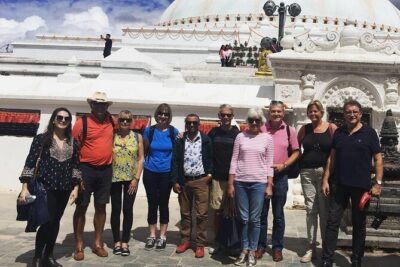
Full Day 7 UNESCO Tour with Lunch – Private/Group
Read our review →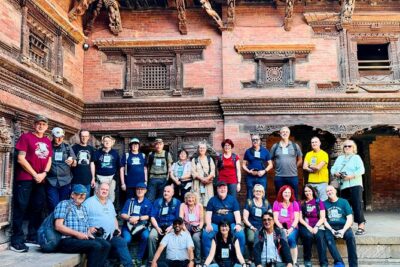
Full Day Top 4 UNESCO Tour with Lunch – Private/Group
Read our review →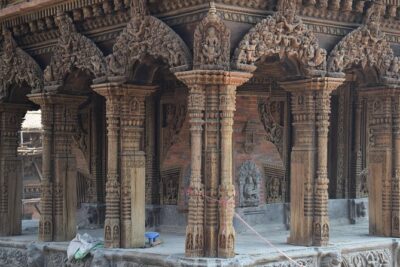
Full-Day 7 UNESCO Tour with Lunch – Private/Group
Read our review →
Kathmandu Private Sightseeing Tour | UNESCO World Heritage Sites
Read our review →Browse the lists this tour appears in