
Reviewed · KATHMANDU FOOD TOURS
Traditional Momo Making Class
Momos are Nepal’s great edible lesson: simple dough, a savory filling, and a folding technique that looks harder than it is. At the Women Led Namaste Cooking School in Thamel, local women chefs guide you through each step, with lead trainer Sushi named as a warm and capable instructor. You chop, knead, fill, fold, and eat.
I like the class for two clear reasons: you work with fresh local ingredients and Nepali spices, and you learn why momos matter at family celebrations as well as in daily life. The clean, bright kitchen and rooftop setting also make the lesson pleasant. One thing to plan for: the advertised time is 1.5 hours, but the session may run longer, especially when the group gets chatting.
In This Review
- Key points to know before booking
- Why a momo class fits a Kathmandu visit
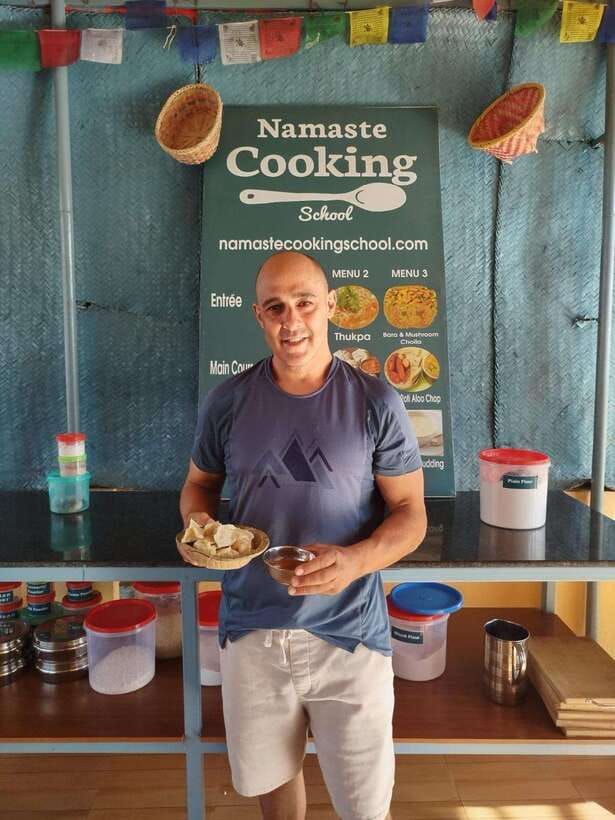
- Arriving at the Namaste Cooking School in Thamel
- Kneading the dough from scratch
- Preparing fillings with Nepali spices
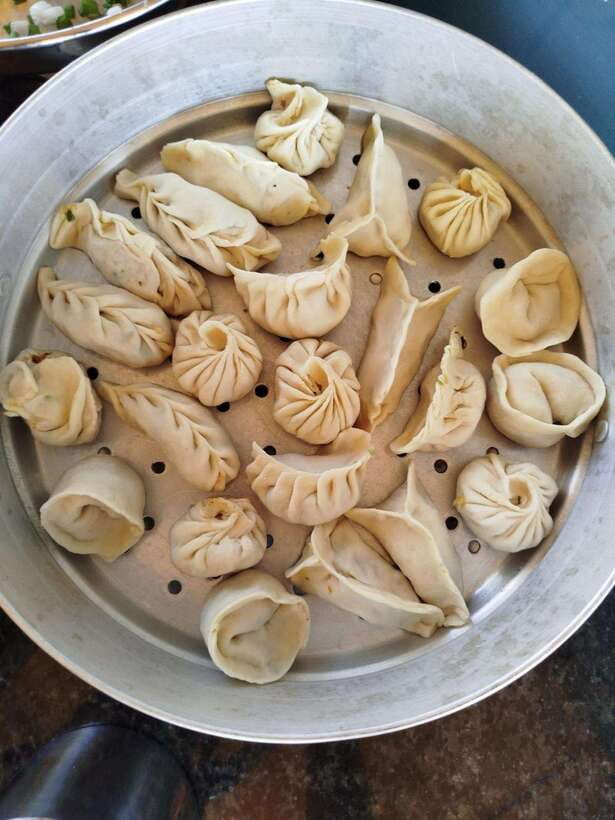
- Learning the folds and shapes
- Eating your handmade momos
- The people make the class work
- Is $15 good value?
- Timing, cancellation, and practical planning
- Who should book this momo class?
- Should you book the Namaste momo class?
- FAQ
- How long does the momo-making class last?
- Where does the class take place?
- Is the class taught in English?
- What is included in the price?
- Is hotel transportation included?
- Can I cancel for a full refund?
Key points to know before booking
- You make the entire momo: Start with dough, then prepare filling, shape dumplings, and cook them.
- Sushi may lead the class: She is identified as the lead trainer and teaches in English.
- The women-led format adds local context: The class connects cooking skills with Nepali family celebrations and everyday food.
- The kitchen is clean and bright: The rooftop setting gives the lesson a calm place to work.
- You eat what you make: The class finishes with a tasting of your handmade momos and welcome masala chai.
- Allow extra time: The stated duration is 1.5 hours, though one session lasted longer than planned.
Why a momo class fits a Kathmandu visit
You can eat momos all over Kathmandu without taking a class. They are easy to find, inexpensive, and served in many forms. That is exactly why learning to make them can be worthwhile: the dish is not locked away in a restaurant kitchen. It is part of ordinary Nepali life.
A cooking class gives you a closer look at the work behind a plate of dumplings. You see how the dough should feel, how much filling fits inside, and how a small change in the fold affects the final shape. Those are hard lessons to pick up from a menu.
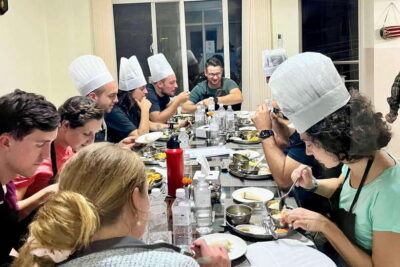
I also like the social side. This is not a lecture followed by a sample. You are expected to do the work yourself. The local women chefs show you the method, then let you chop, shape, and adjust your technique. That makes the class useful for a first-time cook and entertaining for someone who already spends time in the kitchen.
The cultural note matters, too. Momos are linked with Nepali celebrations, but they are not reserved for special occasions. Learning the dish in a women-led school gives you a more personal connection to the food than simply ordering another plate in Thamel.
More Kathmandu food walks:
- Kathmandu: Local Women-Led Nepali Cooking & Momo Class
★ 4.9 · 360 reviews - Kathmandu: Local Lead Nepali Cooking & Momo-Making Class
★ 5.0 · 212 reviews - Walking Street Food Tour in Kathmandu
★ 5.0 · 111 reviews
Arriving at the Namaste Cooking School in Thamel
The class takes place at the Women Led Namaste Cooking School in Thamel, Kathmandu. Hotel pickup and drop-off are not included, so you need to make your own way there and arrive about 10 minutes early.
That early arrival is practical, not fussy. Cooking classes work best when everyone begins together, and you may need a moment to get settled before the ingredients come out. Wear clothes and shoes that are comfortable for cooking. You do not need to dress formally for this activity.
The setting has received especially strong praise for being clean, bright, and quiet. The rooftop kitchen can be a welcome change from the crowded streets around Thamel. At the same time, Thamel itself is worth a walk before or after class. One family used the cooking lesson as part of an outing with an 11-year-old child, then suggested allowing time to explore the area nearby.
The language of instruction is English. That is useful for an involved lesson where you need to follow short demonstrations and ask questions while your hands are busy.
Kneading the dough from scratch
The class begins with the foundation of every momo: the dough. You learn how to combine and knead it rather than starting with wrappers bought in a shop.
This first stage looks basic, but it sets the tone for the whole lesson. A wrapper that is too thick can overpower the filling. One that is too thin may split. The point of working the dough yourself is to feel the texture and learn how it changes as you knead it.
You can expect the instructor to explain the process as you work. The class is designed for participation, so you are not simply watching Sushi or another chef make a perfect batch while you stand back. You handle the dough and get a chance to correct your technique.
That makes this a good activity for families. A child who likes hands-on tasks can take part in several stages, and folding the dumplings can be especially satisfying once the dough is ready. Keep in mind that chopping and kitchen work still require adult attention, even though the class suits younger participants who want to help.
Preparing fillings with Nepali spices
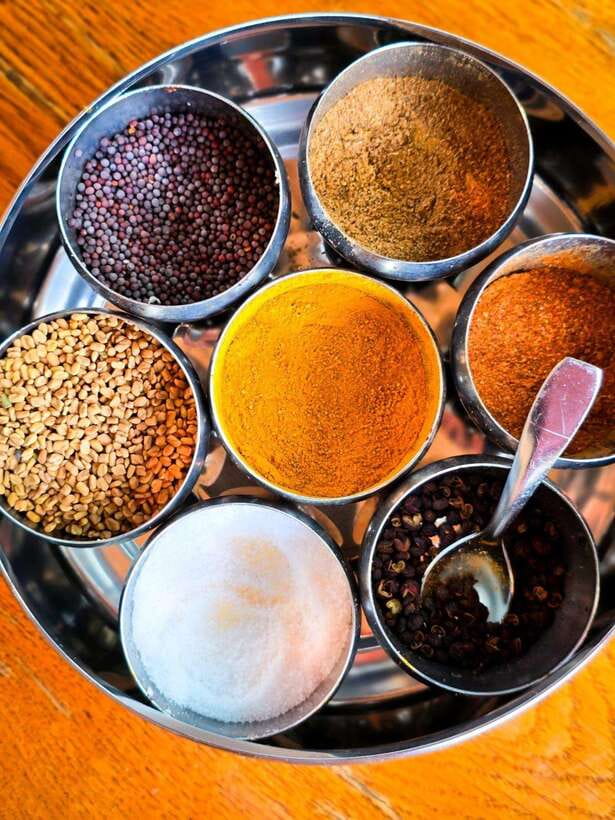
Next comes the filling. The ingredients are supplied as part of the class, and the school uses fresh, locally sourced produce along with authentic Nepali spices.
The precise filling can vary, but the important lesson is balance. You want enough seasoning to give the momo character without making the filling wet or overpowering. The chefs explain how the ingredients come together, and you prepare the mixture yourself.
This stage gives the class much of its local flavor. A cooking lesson can easily become a generic dumpling workshop if it focuses only on technique. Here, the use of Nepali spices and local ingredients keeps the food tied to Kathmandu rather than treating momos as a universal snack.
You also gain something practical for home cooking. One participant took the recipe back to Singapore after deciding that momos were far easier to make than expected. That is a useful sign for anyone who wants a souvenir that fits in a notebook rather than a suitcase.
Do not expect a long restaurant-style tasting menu. The focus is one beloved dish, prepared carefully from its basic parts. If you want a broad survey of Nepali cuisine, this is not that class. If you want to understand one important food properly, the narrow focus works in its favor.
More workshops and classes in Kathmandu:
- Half day cooking class in Thamel kathmandu
★ 5.0 · 607 reviews - Knife (Khukuri) Making Workshop- Forge of the Gurkhas
★ 5.0 · 143 reviews - Local Women Lead Nepali Cooking Class
★ 5.0 · 125 reviews - The best Private Nepali Cooking Class in Kathmandu
★ 5.0 · 83 reviews
Learning the folds and shapes
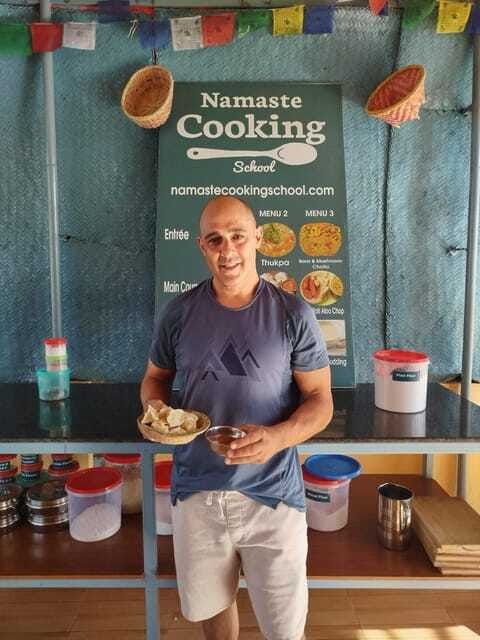
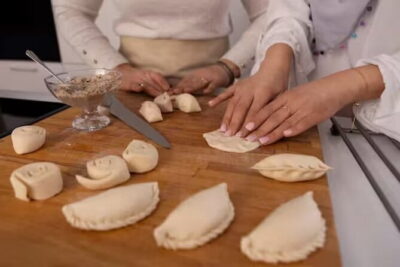
The most playful part of the session is shaping the momos. You place the filling in the dough, then learn how to fold the wrapper into traditional shapes.
This is where the class earns its hands-on character. The folds may look neat and effortless when an experienced cook does them, but your first attempts may be less tidy. That is normal. The aim is not to produce a perfect restaurant display. It is to understand the movement well enough to repeat it at home.
The instructors demonstrate and then allow you to try. The women chefs are described as friendly, patient, and able to explain the steps in English. That combination matters, because folding is easier to learn when you can ask for a correction right away.
There is also a light, social mood to the session. Music may be part of the fun, and one family even danced a little to traditional Nepali music during class. The lesson is still about food, but it is not a silent technical workshop.
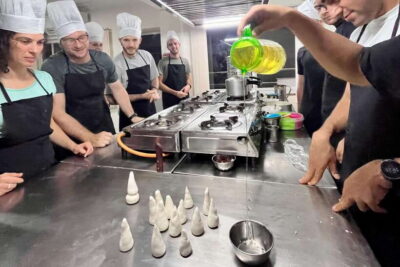
You should expect your group’s personality to affect the pace. A focused group may move through the steps quickly. A talkative group may take longer, share jokes, and turn the class into a relaxed afternoon. That can be a benefit if you enjoy meeting people, but it explains why the experience may exceed the stated 1.5 hours.
Eating your handmade momos
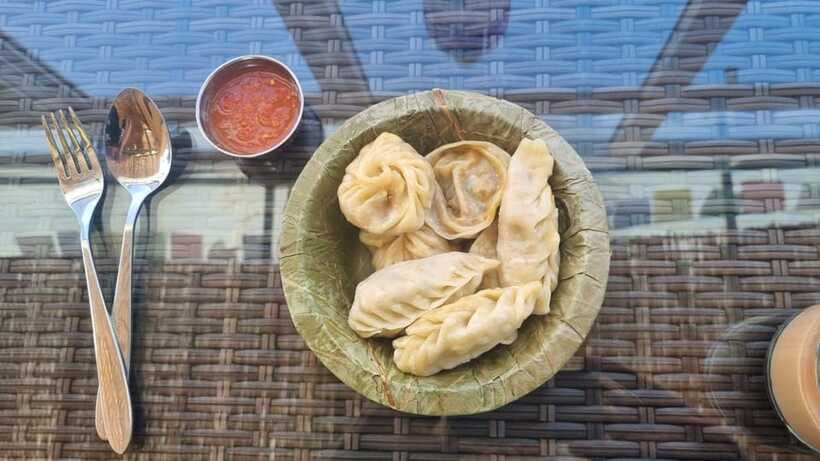
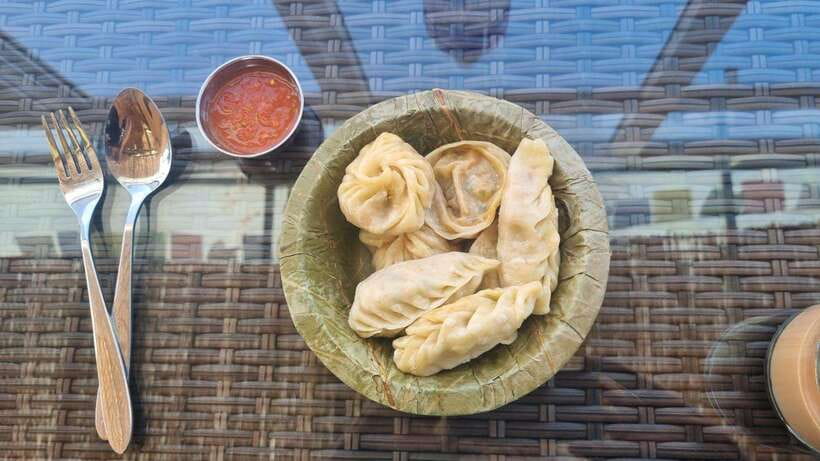
The final reward is simple: you eat the momos you prepared. The tasting is included, so there is no extra charge at the end for the food you made.
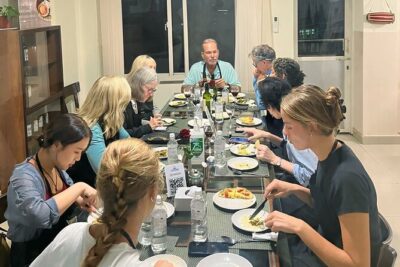
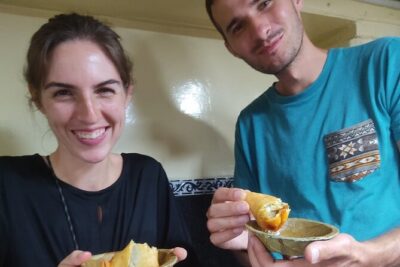
This is more satisfying than a standard restaurant meal because you know the work behind each dumpling. You have handled the dough, seasoned the filling, and tried to make the folds hold. Even imperfect shapes tend to taste good when they are fresh and shared at the table.
The class also includes a welcome masala chai. It is a small touch, but a useful one. You have something warm to drink when you arrive, and it helps set a hospitable tone before the cooking begins.
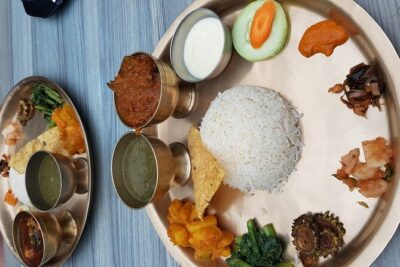
Do not book this expecting a full dinner. The included tasting is the food prepared during the lesson, not a larger Nepali feast. If you have a big appetite, plan another meal in Thamel afterward. That is easy to do, and it lets you turn the class into part of a larger food-focused afternoon.
The people make the class work
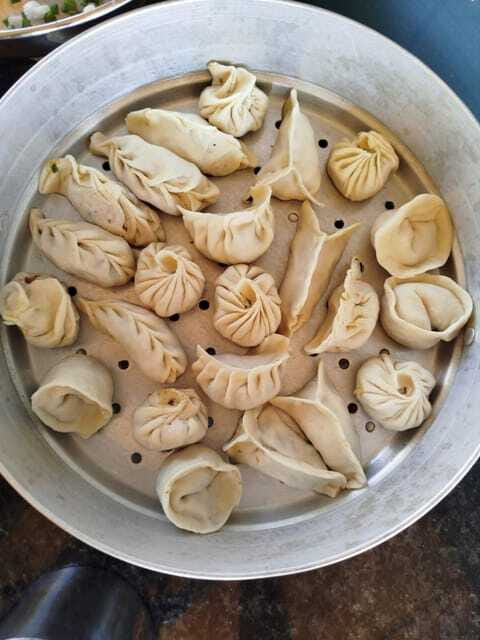
The strongest feature here is the teaching team. The class is led by local women chefs, with Sushi identified as the lead trainer. The emphasis is on doing the work yourself, not on watching a polished demonstration from a distance.
The instructors are also part of the cultural exchange. You learn how to make momos, but you also hear about their place in Nepali celebrations and home life. That personal connection gives the recipe more meaning.
English instruction is available, and the teaching team is described as comfortable explaining the process clearly. That is important for visitors who want to leave with a repeatable skill rather than a vague memory of stirring something in a bowl.
The atmosphere appears to be one of the class’s biggest strengths. The women are described as cheerful and fun, and the kitchen as clean and bright. A relaxed group can turn the class into an especially social experience, so this suits you if you like conversation and shared activities.
The tradeoff is that a warm, informal class does not always run like a stopwatch. If you have a flight, a fixed appointment, or a tight sightseeing plan, do not schedule the next activity immediately afterward.
Is $15 good value?
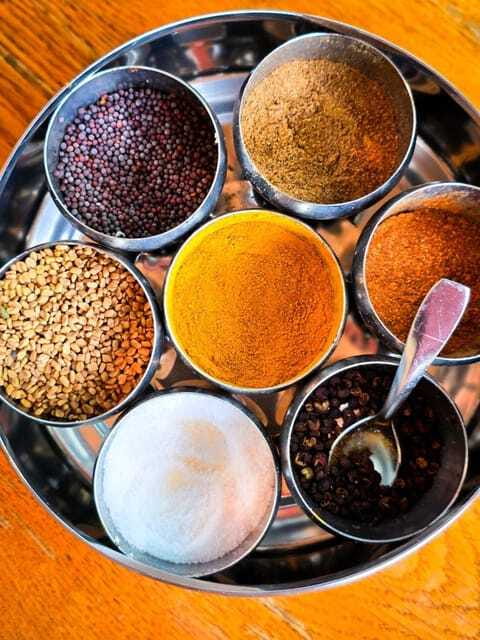
At $15 per person, this is a strong value for a 1.5-hour class. The price includes the ingredients, instruction from local chefs, the momos you prepare and eat, and welcome masala chai.
The value is not only in the meal. You are paying for a skill you can repeat, cultural background you would not get from a takeaway order, and time spent in a women-led local business. The recipe can travel home with you, and the technique does not require specialist equipment.
It is also a reasonable choice for families. An 11-year-old participant took part in chopping and became surprisingly good at folding. That suggests the class can hold a child’s attention better than a passive museum visit, though adults should remain responsible for kitchen safety.
The main limit is scope. This is one focused dish, not a full-day culinary course. You will not learn several Nepali recipes for the same price. You also pay for transport to and from Thamel yourself. Even with those limits, the low cost makes it easy to recommend for food lovers and curious first-time cooks.
Timing, cancellation, and practical planning
The published duration is 1.5 hours, and starting times depend on availability. Another description refers to a three-hour hands-on workshop, while a participant specifically noted that the class ran longer than the stated time. Since the information is not fully consistent, I would treat 1.5 hours as the scheduled minimum and leave extra time around it.
Arrive 10 minutes before the start. Wear comfortable clothing and shoes suitable for cooking, since you will be working with dough and ingredients rather than sitting through a demonstration.
Hotel pickup and drop-off are not included. Plan your own route to the school in Thamel and allow time to find the venue without rushing.
The booking terms are flexible. You can reserve now and pay later, and cancellation is free up to 24 hours before the start time for a full refund. If your Kathmandu plans are still changing, that option reduces the risk of booking too early.
Who should book this momo class?
I would choose this experience if you want a short, practical activity that connects food with local life. It suits solo visitors, couples, families, and anyone who likes to learn by doing.
It is especially good for you if:
- You want to cook with local instructors rather than only eat in restaurants.
- You enjoy social classes with room for conversation and humor.
- You would like to recreate a Nepali dish at home.
- You are staying in or near Thamel.
- You want an affordable activity that does not take up a full day.
- You are traveling with an older child who enjoys chopping, shaping, and making things.
I would think twice if you need a tightly timed activity or want a broad cooking course covering several dishes. The class may run longer than scheduled, and the emphasis stays firmly on momos.
Should you book the Namaste momo class?
Yes, if you want a friendly introduction to Nepali cooking at a modest price. The class gives you real kitchen work, clear English instruction, local women chefs, fresh ingredients, and a plate of momos you made yourself.
The best reason to book is the mix of technique and personal connection. You learn how the dumpling is built, then hear why it matters in Nepali celebrations and daily meals. Add the clean rooftop kitchen, masala chai, and the chance to meet Sushi and her teaching team, and you have more than a quick snack lesson.
Leave a little space in your schedule. Arrive early, wear practical clothes, and do not worry if your first folds look uneven. The point is to learn the method, enjoy the company, and leave Kathmandu knowing how to make one of Nepal’s most loved foods.
FAQ
How long does the momo-making class last?
The scheduled duration is 1.5 hours. The experience may run longer, especially if the group spends extra time talking and enjoying the session.
Where does the class take place?
It takes place at the Women Led Namaste Cooking School in Thamel, Kathmandu, in Nepal’s Bagmati Zone.
Is the class taught in English?
Yes. English is the listed language of instruction, and the local chefs guide you through the cooking steps in English.
What is included in the price?
The $15 price includes the 1.5-hour momo-making class, ingredients, guidance from local chefs, tasting of your handmade momos, and welcome masala chai.
Is hotel transportation included?
No. Hotel pickup and drop-off are not included, so you need to arrange your own transportation to and from the school.
Can I cancel for a full refund?
Yes. You can cancel up to 24 hours before the experience starts for a full refund. You can also reserve now and pay later.
Recently added around Kathmandu
- Kathmandu : Swambhunath & Durbar Square Guided Half Day Tour★ 3.3 · 3 reviews
- Private Day Tour in Kathmandu Valley Rim with Bhaktapur Sightseeing★ 5.0 · 3 reviews
- From Kathmandu / Pokhara / Chitwan: River Rafting – 1 Day★ 4.6 · 3 reviews
- Nepali Cooking training & Cultural Homestay Experience★ 5.0 · 3 reviews
- Private 3-Hour Nagarkot Sunset Tour from Kathmandu★ 3.5 · 3 reviews
- From Kathmandu: Everest Base Camp Landing Helicopter Tour★ 5.0 · 3 reviews
- 4 UNESSCO World heritage sites of Kathmandu-private tour★ 5.0 · 3 reviews
- From Kathmandu Budget: 15 Day Everest Base Camp Trek★ 5.0 · 3 reviews
Kathmandu Food Tours, compared.
Secret Food Tour – Food Bites and Sights Kathmandu 14+ Testings
Read our review →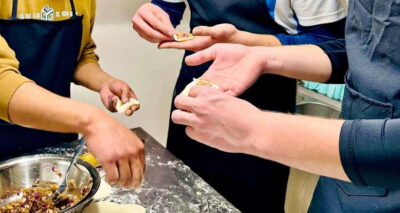
Browse the lists this tour appears in