
Reviewed · ANNAPURNA TREKS
11-Day Hike Tour to Annapurna Base Camp Bliss in Kathmandu
Annapurna Base Camp is the main event here: you walk into a huge mountain bowl at 4,130 meters, with Annapurna I, Machapuchare, Annapurna III, and Gangapurna rising around you. The route also adds Poon Hill, Gurung villages, rhododendron woods, and a soak at Jhinu hot springs, so you get more than a quick out-and-back to base camp.
I like the private format, which gives your guide room to adjust the pace and watch your condition. I also like the mix of flights, road transfers, and teahouse hiking, plus the personal support praised in bookings with guides such as Raju, Bishal, and Ramji. The catch is real: several days are listed at 12 hours, and the steep stone stairs and high altitude demand solid fitness.
In This Review
- Key points to know before you book
- The big appeal: a full Annapurna circuit in miniature
- Days 1 and 2: Kathmandu, Pokhara, and the trailhead
- Days 3 and 4: Ulleri stairs, Ghorepani, and Poon Hill sunrise
- Days 5 and 6: Chhomrong, Gurung culture, and the Modi Khola valley
- Day 7: Machapuchare and Annapurna Base Camp
- Days 8 and 9: Descending to Sinuwa and soaking at Jhinu Danda
- Day 10: Road travel and time in Pokhara
- Day 11: Flight back to Kathmandu and a last look at Thamel
- What the $1,300 price really needs to cover
- Who will enjoy this trek most
- Practical details before you commit
- Should you book the Annapurna Base Camp Bliss trek?
- FAQ
- Where does the Annapurna Base Camp trek begin?
- How high is Annapurna Base Camp?
- Is Poon Hill included in the route?
- How difficult is the trek?
- Are meals included?
- Is this a private tour?
- Can I cancel for a full refund?
- What happens if bad weather cancels the trek?
Key points to know before you book
- Poon Hill adds a superb sunrise viewpoint before the trail turns toward Annapurna Base Camp.
- The 3,300 stone steps to Ulleri are an early test of your legs and pacing.
- Annapurna Base Camp reaches 4,130 meters, so altitude and cold matter as much as distance.
- Private guiding and porter support can make a major difference on long days.
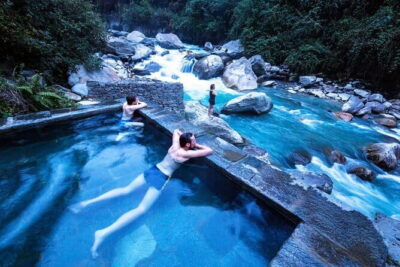
- Jhinu Danda hot springs offer a welcome rest after the steep descent from Chhomrong.
- The $1,300 price needs careful checking, since the supplied details list meals but do not spell out every transport, lodging, permit, or porter cost.
The big appeal: a full Annapurna circuit in miniature
This 11-day plan packs several of Nepal’s best-known mountain scenes into one route. You begin in Kathmandu, fly to Pokhara, walk through the lower Annapurna foothills, climb to Poon Hill, continue through Chhomrong and the Modi Khola valley, and reach Annapurna Base Camp.
You are not simply marching toward one viewpoint. The route changes character day by day. Lower sections bring villages, suspension bridges, and forest. Higher sections become rockier and more exposed, with fewer trees and much bigger mountain views.
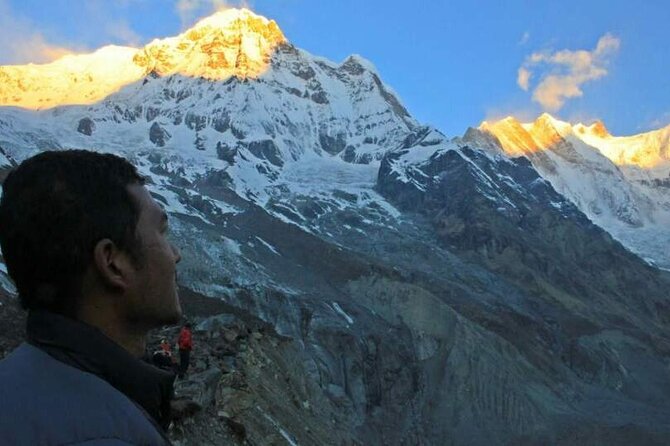
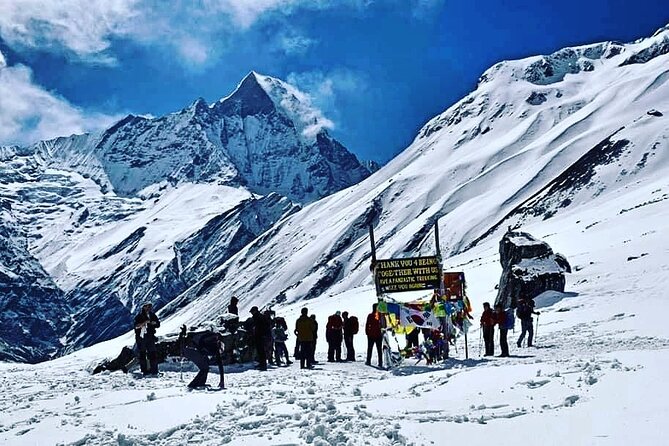
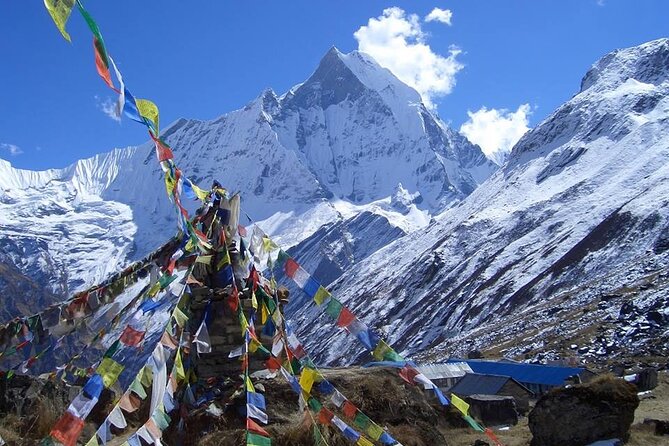
The final approach is especially dramatic. The trail leads toward Machapuchare Base Camp and then Annapurna Base Camp, where peaks form a broad amphitheater around you. Annapurna I reaches 8,091 meters, while Annapurna III, Gangapurna, and Machapuchare fill the skyline nearby.
I like that the itinerary includes Poon Hill before base camp. It gives you an early mountain viewpoint and helps make the trek feel like a journey through the region rather than a single destination with a long walk attached.
More Annapurna treks:
- Annapurna Circuit Trek with Tilicho Lake
★ 5.0 · 368 reviews - Annapurna base camp trek 5 Days
★ 5.0 · 252 reviews - Annapurna Base Camp Trek
★ 5.0 · 111 reviews
Days 1 and 2: Kathmandu, Pokhara, and the trailhead
Your arrival day is simple. An airport representative meets you at Tribhuwan International Airport and transfers you by private vehicle to your Kathmandu hotel. The start point is in Thamel, a useful base for markets, restaurants, trekking shops, and last-minute supplies.
The following morning begins with a transfer to Kathmandu’s domestic airport and a flight to Pokhara. The schedule allows time for breakfast in Pokhara if the flight is early, or at the hotel if your departure is later. Since the itinerary describes the day as roughly 10 hours, expect a full travel day rather than a lazy morning beside the lake.
From Pokhara, the route continues by road toward Nayapul and Tikhedhunga. Nayapul is a familiar access point for Annapurna treks, while Tikhedhunga is a small village in the Annapurna Conservation Area. These places matter because they mark the shift from city travel to foot travel.
The published schedule lists both Nayapul and Tikhedhunga on Day 2, with about four hours at each stop. That timing may depend on road conditions and the exact pickup point, so ask the operator for the confirmed transport plan before departure.
Days 3 and 4: Ulleri stairs, Ghorepani, and Poon Hill sunrise
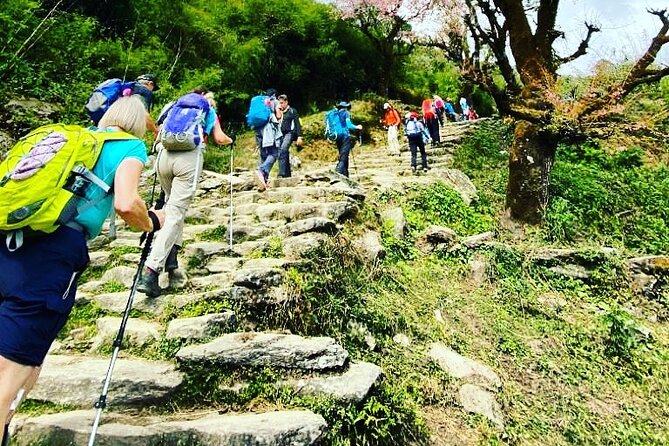
Day 3 brings one of the trek’s clearest physical warnings: the climb from Tikhedhunga toward Ulleri includes about 3,300 stone steps. They are steep and repetitive. I would treat this section as a pacing lesson. Short, steady steps are wiser than trying to race ahead early in the trip.
Ulleri is a traditional Magar village at about 2,080 meters. After the stairs, the route continues toward Ghorepani through changing forest. The listed hiking time is around five hours, but your actual day can vary with rest stops, weather, and group pace.
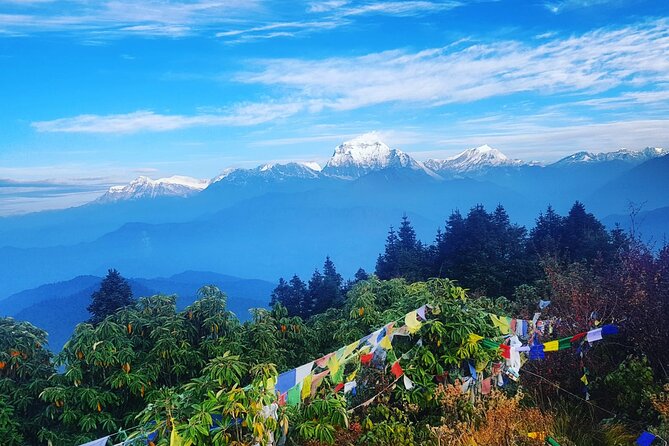
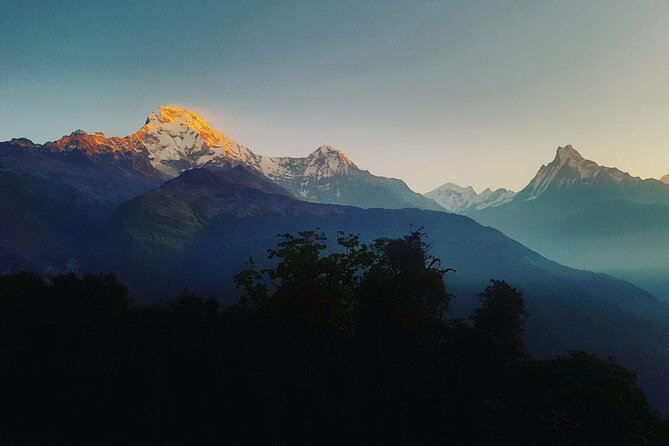
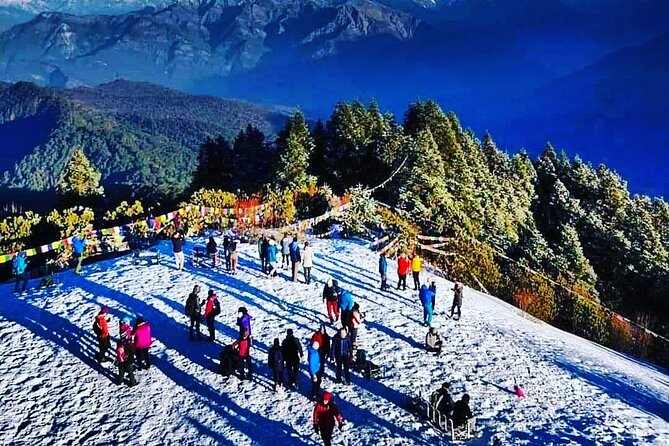
Poon Hill is the reward the next morning. It is known for views toward Annapurna and Machapuchare, and the itinerary specifically schedules an early walk for sunrise. This is one of the strongest parts of the plan because the viewpoint gives you a wide look at the mountain range before you move into narrower valleys.
After returning to Ghorepani for breakfast, you continue toward Tadapani through rhododendron forest and higher alpine terrain. The itinerary gives about five hours for Poon Hill and another four for Tadapani. That makes for an early start and a second walking stretch, so do not think of Poon Hill as a quick side trip.
Tadapani sits at about 2,590 meters. It is an important transition point: you have gained height, but you are not yet in the stark high-mountain zone around base camp. The forested route here offers a softer contrast to the rock and ice you will see later.
Days 5 and 6: Chhomrong, Gurung culture, and the Modi Khola valley
The route then moves through Chhomrong, one of the best-known villages on the Annapurna Base Camp trail. The village is associated with the Gurung people, and the itinerary calls attention to the chance to encounter Gurung culture along the way.
Chhomrong also marks a demanding change in the walking pattern. You descend toward Kimrung Khola, cross through Chuile, and then face more climbs and descents toward Sinuwa. The day is listed at up to 12 hours, which is a serious commitment even at moderate altitude.
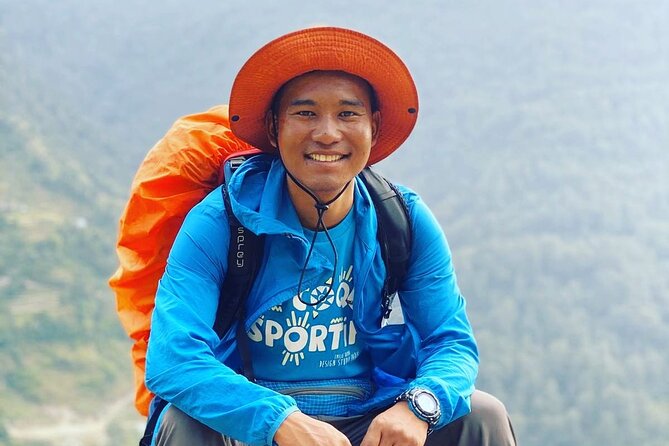
This is where private guiding has practical value. Guides named in past bookings, including Raju, Bishal, and Ramji, have been praised for planning, encouragement, and checking on physical condition. I would still confirm who will lead your particular departure, since the information does not guarantee one specific guide.
Day 6 continues through dense rhododendron forest beside the Modi Khola. The trail toward Deurali is rocky and climbs steadily. The forest can make this section feel sheltered and peaceful, but the long schedule remains the main concern.
A 12-hour day may be manageable for a fit hiker, yet it is not a casual walking holiday. Ask how the operator handles a slower pace, an illness, or a missed overnight stop. The supplied details say the activity is private, which should make adjustments easier, but the precise procedure is not explained.
More treks starting in Kathmandu:
- Everest Base Camp Trek – 14 Days
★ 5.0 · 1,499 reviews - Everest Base Camp Trekking
★ 5.0 · 485 reviews - Nagarkot Sunrise View and Day Hiking from Kathmandu
★ 5.0 · 471 reviews - Everest Base Camp Trekking – 13 Day
★ 5.0 · 365 reviews
Day 7: Machapuchare and Annapurna Base Camp
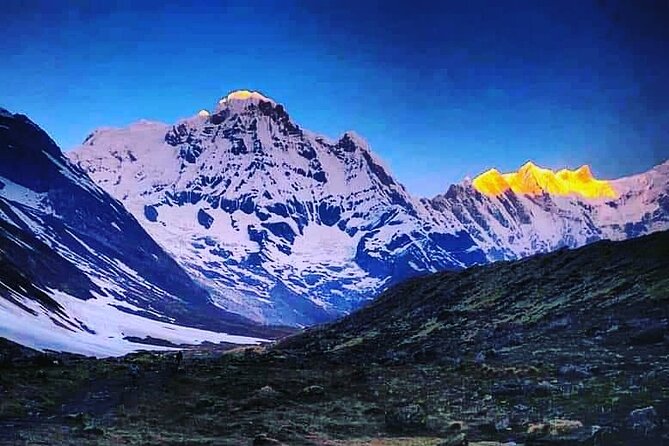
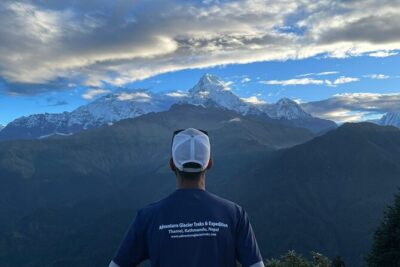
This is the high point of the trek, both in scenery and altitude. The route enters the Annapurna region with close views of Machapuchare, Annapurna III, Gangapurna, and Annapurna I.
The itinerary separates the wider Annapurna region from the base camp portion and gives up to 12 hours for the first section, followed by about six hours at Annapurna Base Camp. Read that carefully. This is not presented as a short final walk. It can be a long, demanding day with altitude, cold, and uneven ground all working against you.
Annapurna Base Camp sits at 4,130 meters. The reward is a ring of enormous peaks close around the camp. Machapuchare, also called Fishtail, is especially distinctive, while Annapurna I gives the setting its serious scale.
The plan includes an early morning walk around the base camp area for sunrise the next day. That is a smart feature. Morning light can transform the peaks, and you get a quiet chance to take in the setting before descending.
The data does not list a separate acclimatization day. For that reason, you should take altitude symptoms seriously and ask how the guide will respond if you feel unwell. A moderate fitness level is required, but fitness does not prevent altitude problems.
Days 8 and 9: Descending to Sinuwa and soaking at Jhinu Danda
After the sunrise walk, you return to the teahouse for breakfast and descend toward Sinuwa. The route is listed at around 12 hours, which may reflect the full movement from base camp through the valley rather than continuous walking. Even so, descending can be hard on knees and thighs after the summit section.
Sinuwa is a useful overnight point with teahouses. On a private trip, you can ask your guide to set a sensible pace and take breaks before fatigue turns into a problem.
Day 9 follows the trail back toward Chhomrong, then drops steeply to Jhinu Danda. The descent is described as extremely steep, so trekking poles are worth considering. A stick is not compulsory, and the operator says you can buy one in Thamel for roughly $3 to $20, but I would not dismiss the help it gives on long downhill sections.
Jhinu’s natural hot spring is the day’s fine payoff. After several days of climbing and descending, a warm soak beside the trail can feel far more useful than another viewpoint. Breakfast, lunch, and dinner are specifically included for this day.
Day 10: Road travel and time in Pokhara
From Jhinu Danda, you walk a short distance, take a vehicle, and drive back to Pokhara. The itinerary also lists Siwai as a stop and describes it as a road access point for the Annapurna Base Camp trail.
The schedule gives about 12 hours to the Pokhara portion and four hours to Siwai, so this is another long day on paper. The exact order is not perfectly clear in the supplied schedule, and road travel in the mountains can be slow. Confirm the pickup point, drive time, and hotel arrangement before you pay.
Once in Pokhara, you may have time for sights such as Devi’s Fall, the Peace Stupa, and boating on Phewa Lake. The plan also allows for an evening around the Lakeside area. That gives the tour a welcome change of rhythm after the high trail.
I like ending the hiking section in Pokhara rather than rushing straight back to Kathmandu. It gives you a chance to wash up, eat well, and enjoy a lower-altitude setting before the final flight.
Day 11: Flight back to Kathmandu and a last look at Thamel
The final day starts with a transfer to Pokhara’s domestic airport and a flight back to Kathmandu. The schedule describes the flight as taking about 25 minutes and leaves time to visit the local market in Ason and shop around Thamel.
Your airport transfer back to Kathmandu is part of the arrival service, while the exact return transfer should be confirmed. The tour ends back at the meeting point, so plan carefully if you have a same-day international departure.
The Ason and Thamel stop is useful for practical shopping, gifts, and a final meal. It also gives you a little breathing room after the trek instead of ending the trip at the airport gate.
What the $1,300 price really needs to cover
At $1,300 per person, this is not a bare trail-only outing. The plan covers 11 breakfasts, 11 lunches, and 10 dinners, along with airport pickup and a private group arrangement. It also includes the Annapurna Base Camp admission listed in the details.
That can be fair value if the price also covers your hotels, teahouse accommodation, domestic flights, ground transport, permits, guide, and porter. But those items are not fully itemized in the supplied information. I would ask for a written list before booking, especially for flights between Kathmandu and Pokhara and the return road journey.
The private format is the strongest value point. You are not sharing the pace with a large mixed group, and the guide can focus on your condition. Past bookings have included porters such as Sandesh and Ishor, but porter service should be confirmed for your departure rather than assumed.
Meals are included, which reduces daily budgeting worries. You should still clarify drinks, snacks, hot showers, charging, and any personal equipment costs, since they are not stated.
Who will enjoy this trek most
This trip suits you if you want a serious mountain walk with a guide, not a resort-style holiday with a few easy hikes. You need moderate physical fitness and the willingness to handle steep stairs, rocky trails, long days, and altitude.
It can also suit a first-time trekker if you prepare properly and work closely with the guide. One first-time participant described being worried about strength and altitude before going, then completing the trip with encouragement and support from the guide and porter. That does not make the route easy, but it shows how much good pacing and steady support can matter.
I would be cautious if you dislike early starts, long walking days, basic mountain accommodation, or uncertain road schedules. I would also avoid treating the 11-day label as a guarantee of 11 relaxed days. The itinerary includes multiple 12-hour blocks.
Practical details before you commit
Pickup is offered, confirmation is provided at booking, and the activity is private for your group. The meeting point is in Thamel, Kathmandu, and the route is near public transportation.
The tour requires good weather. If poor weather cancels the activity, you can choose another date or receive a full refund. You can cancel for a full refund up to 24 hours before the start time. Changes or cancellations inside that window are not accepted.
Before departure, confirm these points in writing:
- The exact guide and porter assigned to you
- Which flights, vehicles, permits, and hotels are included
- How the operator responds to altitude sickness
- The expected walking time on the 12-hour days
- The meeting time for each domestic flight
- What happens if weather delays the route
Should you book the Annapurna Base Camp Bliss trek?
I would book this tour if you want a private, guided route that combines Poon Hill, Gurung villages, Annapurna Base Camp, and Jhinu hot springs in one compact Nepal trip. The high praise for planning and personal care from guides such as Raju, Bishal, and Ramji is encouraging, and the private format adds useful flexibility.
I would not book it without clarifying the inclusions. At $1,300, the value can be strong, but only if transport, accommodation, permits, guide, and porter costs are covered as expected. Prepare for the Ulleri stairs, respect the altitude, and treat the long walking days as a real challenge. If those conditions suit you, this is a rewarding route with a fine balance of mountain views, village life, and hard-earned achievement.
FAQ
Where does the Annapurna Base Camp trek begin?
The activity begins in Kathmandu, with a meeting point in Thamel. Airport pickup is offered from Tribhuwan International Airport.
How high is Annapurna Base Camp?
Annapurna Base Camp is at an altitude of 4,130 meters.
Is Poon Hill included in the route?
Yes. The itinerary includes an early morning visit to Poon Hill for mountain views and sunrise, followed by Ghorepani and Tadapani.
How difficult is the trek?
The activity requires moderate physical fitness. The route includes about 3,300 stone steps to Ulleri, steep descents, rocky trails, altitude, and several days listed at up to 12 hours.
Are meals included?
Yes. The package includes 11 breakfasts, 11 lunches, and 10 dinners.
Is this a private tour?
Yes. Only your group participates in the activity.
Can I cancel for a full refund?
You can cancel at least 24 hours before the experience start time for a full refund. Cancellations or changes made less than 24 hours in advance are not accepted.
What happens if bad weather cancels the trek?
If poor weather causes cancellation, you are offered another date or a full refund.
Recently added around Kathmandu
- Kathmandu : Swambhunath & Durbar Square Guided Half Day Tour★ 3.3 · 3 reviews
- Private Day Tour in Kathmandu Valley Rim with Bhaktapur Sightseeing★ 5.0 · 3 reviews
- From Kathmandu / Pokhara / Chitwan: River Rafting – 1 Day★ 4.6 · 3 reviews
- Nepali Cooking training & Cultural Homestay Experience★ 5.0 · 3 reviews
- Private 3-Hour Nagarkot Sunset Tour from Kathmandu★ 3.5 · 3 reviews
- From Kathmandu: Everest Base Camp Landing Helicopter Tour★ 5.0 · 3 reviews
- 4 UNESSCO World heritage sites of Kathmandu-private tour★ 5.0 · 3 reviews
- From Kathmandu Budget: 15 Day Everest Base Camp Trek★ 5.0 · 3 reviews
Annapurna Treks, compared.
Kathmandu to Annapurna Base Camp (ABC) 5-Day Trek
Read our review →
Browse the lists this tour appears in