
Reviewed · ANNAPURNA TREKS
Annapurna Base Camp Trek 12 Days
Annapurna Base Camp gives you a rare Himalayan payoff without requiring a month in the mountains. In 12 days, this private trek combines a Poon Hill sunrise, traditional mountain villages, suspension-bridge trails, and the high amphitheater of Annapurna Base Camp.
I like two things right away: the package covers the practical pieces, including permits, teahouse lodging, meals on trek, water-purification tablets, and transport between Kathmandu and Pokhara. I also like the guide support. Prajil, Bhairas Tamang, Deepak, Somnath Tripathi, Uttar, and Buddha are named by former participants for kindness, good pacing, problem-solving, and attention to tired walkers.
The main catch is that this is still a serious mountain trek. You need moderate fitness, early starts, long uphill sections, and patience with local buses and basic teahouse comforts. The $800 price is attractive, but porter service, insurance, drinks, snacks, and some meals are extra.
In This Review
- Key points at a glance
- What the 12-day Annapurna Base Camp trek is really like
- Day 1: A soft landing in Kathmandu
- Day 2: Kathmandu to Pokhara by tourist bus
- Day 3: Pokhara to Nayapul and the first trail
- Day 4: Village trails and Tadapani views
- Day 5: Poon Hill sunrise and the road to Tadapani
- Day 6: Tadapani downhill, Chhomrong, and Sinuwa
- Day 7: Sinuwa to Bamboo, Deurali, and higher country
- Day 8: Machhapuchhre Base Camp to Annapurna Base Camp
- Day 9: Sunrise at base camp and the return to Sinuwa
- Day 10: Sinuwa to Siwai and back toward Pokhara
- Day 11: Pokhara to Kathmandu and a farewell dinner
- Day 12: Airport drop-off and departure
- What the $800 price covers
- Guides, group style, and support
- Who should book this trek
- Small practical details that matter
- Should you book the Annapurna Base Camp trek?
- FAQ
- How long does the Annapurna Base Camp trek take?
- What is the price per person?
- Is airport pickup included?
- What transport is included?
- Are meals included?
- Are accommodation and permits included?
- Is a trekking porter included?
- What fitness level is required?
- What is the cancellation policy?
Key points at a glance
- Poon Hill before breakfast: A 45-minute to one-hour climb leads to sunrise over a broad collection of Himalayan peaks.
- A full Annapurna circuit in miniature: The route links Kathmandu, Pokhara, Ghorepani, Tadapani, Chhomrong, Sinuwa, Deurali, and Annapurna Base Camp.
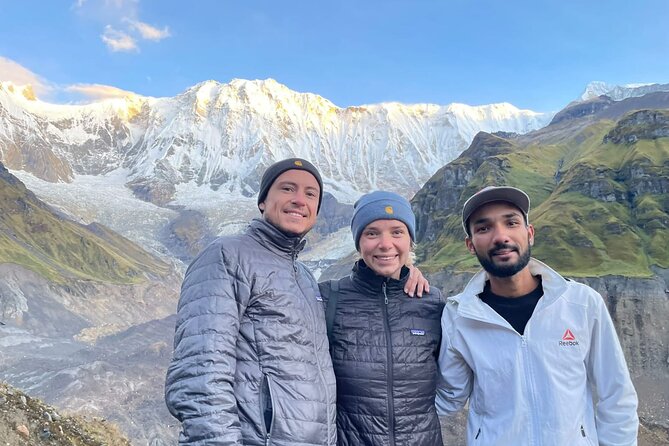
- Strong guide attention: Named guides such as Prajil and Bhairas Tamang are praised for steady pacing, humor, safety, and checking on tired walkers.
- Useful inclusions: ACAP, TIMS, local permits, meals during the trek, teahouse rooms, transport, airport transfers, and water purification are included.
- Private group format: Only your own group participates, giving the guide more room to adjust the pace and handle small problems.
- Budget-friendly, with extras: The $800 fare covers a lot, but insurance, porter help, drinks, Wi-Fi, personal purchases, and tips are not included.
What the 12-day Annapurna Base Camp trek is really like
This is an organized Himalayan trek rather than a sightseeing trip with a few mountain walks. You move through several climates and types of terrain, from Kathmandu’s streets to Pokhara’s lakeside setting, then into stone steps, forest paths, farmland, high ridges, and a stark mountain basin.
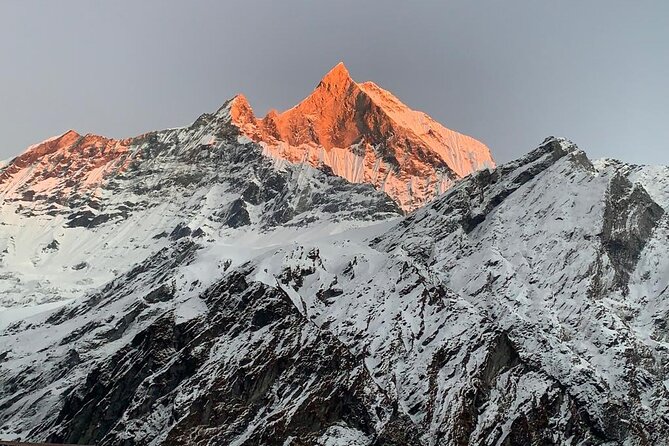
The route reaches Annapurna Base Camp after passing Machhapuchhre Base Camp. That final approach is the trip’s big prize: tall peaks surround the basin, and the scenery changes quickly as the trees thin out. You also get the bonus of Poon Hill, one of the best-known sunrise viewpoints in the region.
The company describes the trip as a private activity, so your group is not mixed with strangers during the trek. That matters on a route where walking speed can vary. A good guide can stop when someone is tired, shorten a day when conditions require it, and keep the group together without trying to match the pace of a larger crowd.
More Annapurna treks:
- Annapurna Circuit Trek with Tilicho Lake
★ 5.0 · 368 reviews - Annapurna base camp trek 5 Days
★ 5.0 · 252 reviews - Annapurna Base Camp Trek
★ 5.0 · 111 reviews
Day 1: A soft landing in Kathmandu
Your trip begins with an airport pickup at Tribhuvan International Airport. The team takes you to your hotel, and the sensible plan is to keep this day light.
Use the time to rest, sort your trekking clothes, and check that you have the essentials. The operator recommends spending part of the day preparing for the trek. That is sound advice, since the next morning begins early.
Airport pickup and the first night’s accommodation are included. Your international flight, Nepal entry visa, and personal purchases are not.
Day 2: Kathmandu to Pokhara by tourist bus
The guide meets you at your hotel or hostel at 6:30 a.m. You walk to Sorakhutte tourist bus station and leave Kathmandu at 7:00 a.m. The published plan mentions a stop around Malekhu before continuing toward Pokhara.
This is a long ground-transfer day, not a trekking day. A tourist bus is a practical way to keep the package price down, but it will not feel as quick or private as flying or hiring a car. Bring small snacks and keep your water handy, since lunch and dinner in Pokhara are not part of the package.
Pokhara is the natural pause between city and trail. You spend the night there, and the next morning begins with breakfast before the mountain transfer.
Day 3: Pokhara to Nayapul and the first trail
After breakfast, your guide arranges transport to the bus park. From there, you take a shared local bus or jeep toward Nayapul, the stated trekking start point. A separate private vehicle is included for the Pokhara to trailhead transfer, although the day’s description also refers to shared local transport, so you should confirm the exact arrangement before departure.
The drive takes about an hour and a half. Once on foot, the route leads toward the first mountain village and teahouse stop. This is when the trip changes character. Roads and vehicles give way to walking trails, local sounds, farm plots, animals, and the first broad views of the Annapurna range.
Do not judge your fitness by this first stretch. The following days include much more climbing, and a calm pace now helps you enjoy the trek later.
More treks starting in Kathmandu:
- Everest Base Camp Trek – 14 Days
★ 5.0 · 1,499 reviews - Everest Base Camp Trekking
★ 5.0 · 485 reviews - Nagarkot Sunrise View and Day Hiking from Kathmandu
★ 5.0 · 471 reviews - Everest Base Camp Trekking – 13 Day
★ 5.0 · 365 reviews
Day 4: Village trails and Tadapani views
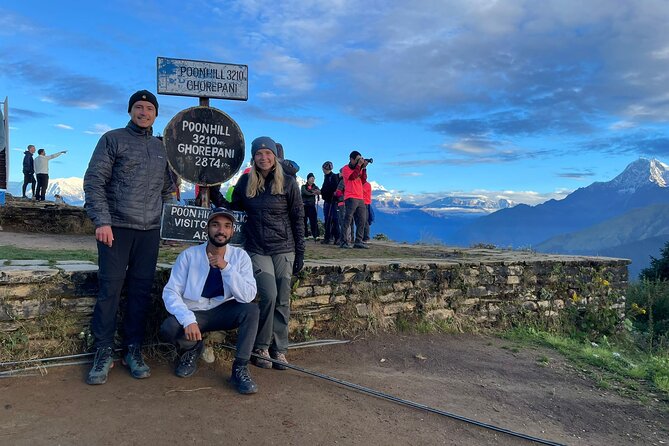
The morning begins with the sounds of mountain life: donkeys, goats, hens, and dogs. That detail tells you more about the route than a polished brochure can. You are moving through working villages, not a sealed-off resort.
Breakfast comes with mountain views, and the day continues through the Annapurna region toward Tadapani. The route brings a mix of forest, stone paths, and village scenery. Tadapani is important because it prepares you for the famous early morning at Poon Hill while giving you a high mountain setting of its own.
The accommodation is in a local teahouse. Eleven nights of accommodation are included across the trip, but you should expect simple rooms rather than hotel comforts. Tea and coffee are included during the trek, while extra drinks and Wi-Fi cost more.
Day 5: Poon Hill sunrise and the road to Tadapani
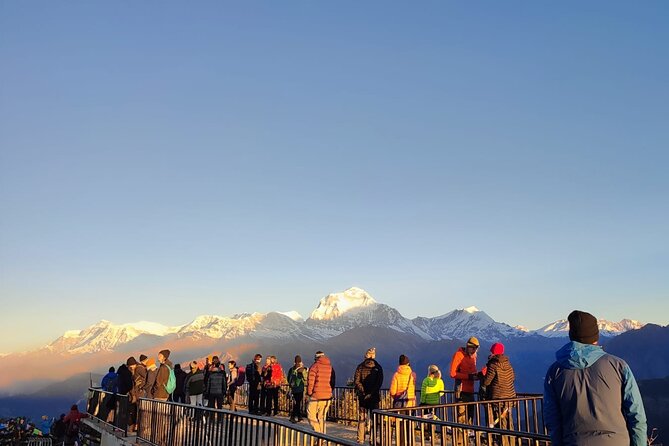
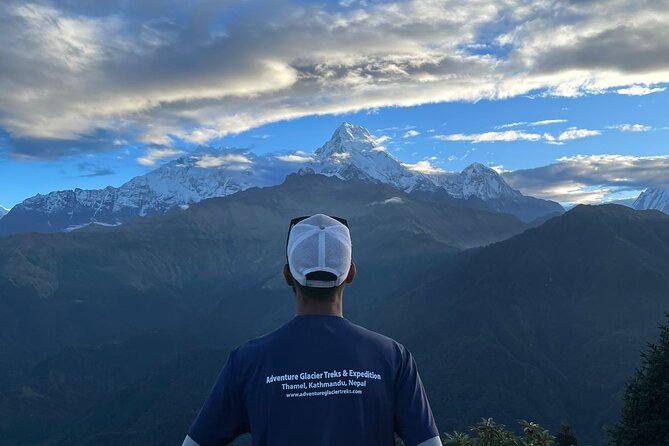
This is one of the hardest mornings to resist, even if the alarm comes early. You climb for roughly 45 minutes to one hour to Poon Hill Viewpoint for sunrise.
The viewpoint is known for its wide Himalayan panorama, with 18 peaks described as countable from the lookout. Weather controls the show, so clear skies are never guaranteed. Still, the early climb is worthwhile because the light changes quickly across the snow peaks, and the viewpoint gives you a broad sense of the range before the route turns deeper into the valley.
After Poon Hill, the trek continues toward Tadapani. This day mixes stairs and mountain paths with memorable views, but it is not a casual walk. Early starts, cold air, and the climb to the viewpoint can catch up with you by afternoon.
Pack warm layers where you can reach them easily. You do not want to empty your bag beside the trail while everyone waits for your fleece.
Day 6: Tadapani downhill, Chhomrong, and Sinuwa
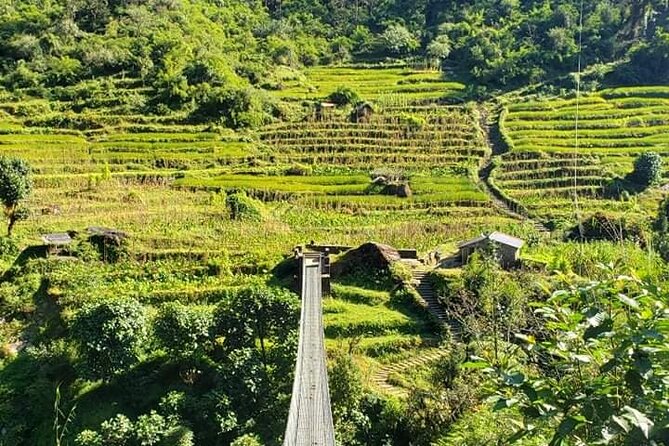
The route turns downhill from Tadapani toward Sinuwa. It is described as an easier day because of the descent, but downhill stone steps can be tough on knees and ankles.
Chhomrong is a key village on the route. It offers views toward Modi Khola and Chhomrong Khola, and it is a useful point for understanding the valley ahead. From there, you continue to Sinuwa, a small settlement with a quieter mountain feel.
This is a good day to notice how the trek changes. You are no longer simply collecting viewpoints. The trail is carrying you into the approach valley for Annapurna Base Camp, and the mountains begin to feel less like a distant backdrop and more like the walls of your route.
Day 7: Sinuwa to Bamboo, Deurali, and higher country
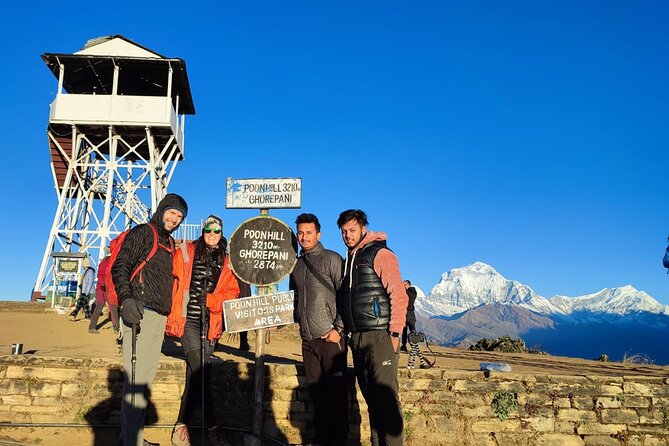
Sinuwa provides another chance to see the sun rise over the Himalayas. After breakfast, the trail climbs toward Deurali, with about an hour and a half needed to reach Bamboo.
The route becomes more demanding as you gain height. Forested sections, rough paths, and repeated climbing make this a day for patience. You may find the guide’s pacing especially valuable here. Several named guides, including Prajil and Bhairas Tamang, are praised for stopping when someone becomes tired and checking that the group is all right.
Bamboo and Deurali mark a more remote section of the walk. Services remain tied to local teahouses, and personal extras cost more. Meals on trek are included, but snacks, bottled water, soft drinks, beer, juice, and Wi-Fi are your responsibility.
Day 8: Machhapuchhre Base Camp to Annapurna Base Camp
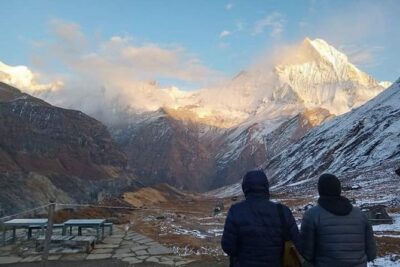
This is the destination day. You continue beyond Machhapuchhre Base Camp toward Annapurna Base Camp, surrounded by some of the Himalayas’ most dramatic peaks.
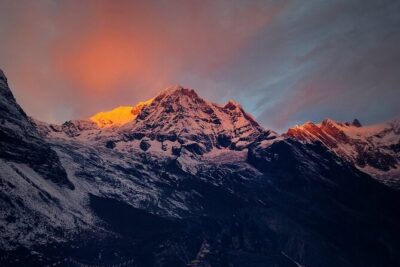
The scenery becomes more open and stark as you approach the base camp. The route’s appeal is not only the final sign or viewpoint. It is the sense of entering a mountain bowl, with peaks rising around you and the trail narrowing the outside world to snow, rock, weather, and careful footsteps.
The trip description calls the scenery enticing, but you should keep expectations realistic. Conditions can be cold, trails can be rugged, and visibility can change. A clear morning may bring an unforgettable panorama, while cloud can hide much of it. The guide cannot control the weather, but experienced route management matters on this day.
Day 9: Sunrise at base camp and the return to Sinuwa
If the weather is clear, you watch sunrise from Annapurna Base Camp. This is a strong reason to spend the night there instead of rushing up for a brief photo stop.
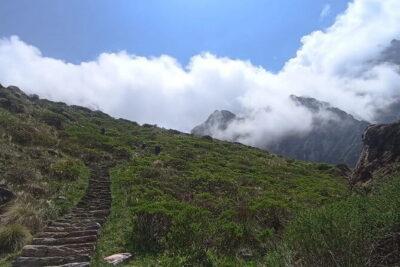
After breakfast, you retrace the route toward Sinuwa. The return includes rugged trails, sparsely forested areas, and high hills with wide plant-covered slopes. Do not assume the downhill direction makes this day effortless. Descending for hours can be tiring, especially after the summit day and a cold night.
Your meals during the trekking portion are covered, including breakfast, lunch, and dinner on the specified trek days. Kathmandu and Pokhara lunches and dinners are not included, so budget for those separately.
Day 10: Sinuwa to Siwai and back toward Pokhara
The final walking day takes about two hours from Sinuwa to Siwai, according to the schedule. The route climbs toward Chhomrong before continuing through views of mountains, waterfalls, and farmland.
A private vehicle takes you from the trek ending point to Pokhara. This transfer is valuable after several days on foot. It also gives you a clear finish to the mountain section, rather than leaving you to arrange transport from a remote trail end.
Pokhara is a pleasant place to recover, but the package does not include lunch or dinner there. The city’s lakeside setting makes a relaxed evening possible, though your exact free time depends on the road and trail conditions.
Day 11: Pokhara to Kathmandu and a farewell dinner
After breakfast, you leave Pokhara for Kathmandu by tourist bus. The package includes the ground transfer in both directions, which keeps the overall cost under control but requires another long road day.
Once back in Kathmandu, the rest of the day is free for rest or shopping. A farewell dinner is planned for the evening. That closing meal gives the trip a social finish after the quiet rhythm of the mountains.
The schedule is tight. You have little spare time for delays, so a flexible attitude helps. Nepal’s roads and mountain conditions can affect timing, and the itinerary should be treated as an organized plan rather than a minute-by-minute promise.
Day 12: Airport drop-off and departure
The final morning is for your onward flight. The team drops you at the airport and ends the service there.
Departure transfer is included. The listed end meeting point is in Kathmandu at Cooperative Department, Deurali Club, so confirm the final airport arrangements and pickup details with the operator before your flight.
What the $800 price covers
At $800 per person, the package offers solid value if you want one company to handle the main logistics. Included are airport transfers, tourist-bus transport between Kathmandu and Pokhara, 11 nights of accommodation, an experienced guide, trekking meals, tea and coffee, trekking maps, water-purification drops or tablets, and the required ACAP, TIMS, and local permits.
Government taxes, VAT, and official expenses are also included. That reduces the chance of unpleasant permit or administration surprises during the trek.
The price does not cover international flights, a Nepal visa, travel and health insurance, emergency rescue or evacuation coverage, porter service, tips, personal snacks, drinks, Wi-Fi, bottled water, or lunch and dinner in Kathmandu and Pokhara.
Insurance deserves special attention. The operator specifically says you need coverage for emergency rescue and evacuation. This is not a place to cut corners. A low tour price is only useful if your wider trip budget also allows for proper mountain insurance.
Guides, group style, and support
The strongest human part of this experience is the guide service. Prajil is praised for helping with arrangements, bringing snacks for tea time, and adding humor to the walk. Bhairas Tamang is praised for good pacing, care, and stopping when someone is tired. Deepak is also singled out for making the trek special, while Somnath Tripathi is described as well prepared and able to deal with problems.
That does not guarantee a particular guide for your departure. Ask who will lead your group before you go, and confirm whether a porter is included or needs to be added. A porter is optional, but carrying less can make a noticeable difference on the long stair sections.
The private format suits couples, families, and friends who want the walk to match their own pace. It may cost more than joining a large group in some settings, but here the listed per-person price remains modest for the services included.
Who should book this trek
I would suggest this route to anyone who wants a classic Nepal mountain experience with a clear structure and a moderate fitness requirement. It suits people who like walking through villages and forests, sleeping in basic teahouses, and accepting changing weather as part of the deal.
You should be comfortable with early starts, uneven trails, uphill climbs, downhill steps, and limited personal comforts. This is not the right choice if you want private hotel rooms every night, a relaxed sightseeing schedule, or transport all the way to the viewpoints.
The route also works well for first-time Himalayan trekkers who want guide support. You still need to prepare, but the company handles permits, meals, accommodation, transfers, and route organization.
Small practical details that matter
Confirmation is provided at booking. The experience is near public transportation, and service animals are allowed. The stated fitness level is moderate, but you should ask the operator for current walking-hour and elevation details before paying, since those specifics are not supplied here.
Free cancellation is available if you cancel at least 24 hours before the local start time. Changes or cancellations inside that window are not accepted for a refund.
Bring layers, comfortable walking shoes, personal snacks, and money for drinks and meals outside the trek. Most of all, keep some patience in reserve for the bus rides and mountain weather.
Should you book the Annapurna Base Camp trek?
Book it if you want a well-supported 12-day route with Poon Hill, Annapurna Base Camp, permits, meals, lodging, and transport handled for you. The $800 price is appealing, and the repeated praise for guides such as Prajil and Bhairas Tamang gives the package a reassuring human side.
Pause before booking if you need a porter, premium accommodation, private road transport throughout, or a flexible schedule with spare days. Add insurance, personal spending, porter fees, tips, and Kathmandu and Pokhara meals to the advertised price before comparing it with other treks.
For a fit walker who values mountain scenery, local villages, and careful guide support over luxury, this is a sensible Annapurna choice.
FAQ
How long does the Annapurna Base Camp trek take?
The experience lasts approximately 12 days, including arrival and departure days in Kathmandu, transport between Kathmandu and Pokhara, the trek, and airport transfers.
What is the price per person?
The listed price is $800 per person.
Is airport pickup included?
Yes. Arrival and departure airport transfer services are included.
What transport is included?
Ground transport between Kathmandu and Pokhara by tourist bus is included. Transport between Pokhara and the trek start point, and from the trek ending point back to Pokhara, is also included through the stated vehicle services.
Are meals included?
Breakfast, lunch, and dinner are included during the trekking portion, along with tea and coffee. Lunch and dinner in Kathmandu and Pokhara are not included.
Are accommodation and permits included?
Yes. The package includes 11 nights of accommodation, ACAP, TIMS, local permits, applicable fees, government taxes, and VAT.
Is a trekking porter included?
No. Porter service is not included, but you can request or arrange one separately if needed.
What fitness level is required?
The stated requirement is a moderate level of physical fitness. The trek includes uphill and downhill mountain trails, early starts, and rugged sections.
What is the cancellation policy?
You can receive a full refund if you cancel at least 24 hours before the local start time. Cancellations or changes made less than 24 hours before the start are not accepted for a refund.
Recently added around Kathmandu
- Kathmandu : Swambhunath & Durbar Square Guided Half Day Tour★ 3.3 · 3 reviews
- Private Day Tour in Kathmandu Valley Rim with Bhaktapur Sightseeing★ 5.0 · 3 reviews
- From Kathmandu / Pokhara / Chitwan: River Rafting – 1 Day★ 4.6 · 3 reviews
- Nepali Cooking training & Cultural Homestay Experience★ 5.0 · 3 reviews
- Private 3-Hour Nagarkot Sunset Tour from Kathmandu★ 3.5 · 3 reviews
- From Kathmandu: Everest Base Camp Landing Helicopter Tour★ 5.0 · 3 reviews
- 4 UNESSCO World heritage sites of Kathmandu-private tour★ 5.0 · 3 reviews
- From Kathmandu Budget: 15 Day Everest Base Camp Trek★ 5.0 · 3 reviews
Annapurna Treks, compared.
Kathmandu to Annapurna Base Camp (ABC) 5-Day Trek
Read our review →
Browse the lists this tour appears in