
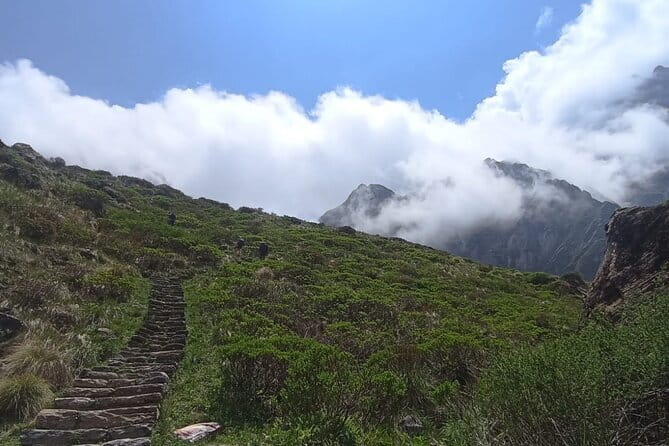
Reviewed · ANNAPURNA TREKS
Annapurna Base Camp Trek
The big draw here is the route itself: you walk from warm river valleys into the high Himalaya, passing Gurung villages, rhododendron forests, suspension bridges, and the great amphitheater of Annapurna Base Camp. Poon Hill sunrise adds a second mountain viewpoint before the trail reaches its main prize.
I like the small group limit of 10, which gives your guide room to adjust the pace and answer questions. I also like the practical setup: meals on the trail, teahouse beds, Kathmandu and Pokhara hotels, airport pickup, and shared transport are bundled together. The tradeoff is real physical effort, with 4 to 7 hours of walking per day, steep stone steps, and high-altitude conditions.
In This Review
- Key points to know
- Why this 14-day route works so well
- Kathmandu arrival and the road to Pokhara
- From Nayapool to Ghorepani through village country
- Poon Hill sunrise at 3,210 meters
- Tadapani, Gurjung, and Chhomrong
- Bamboo, Dovan, and the quieter upper trail
- Deurali to Machhapuchhre Base Camp
- Annapurna Base Camp and the sunrise return
- Chhomrong, Jhinu Danda, and the hot springs
- The long road back through Malekhu
- Guides, group size, and the human side of the trek
- What the $925 price really covers
- Who should book this trek
- Should you book the Annapurna Base Camp trek?
- FAQ
- How long is the Annapurna Base Camp trek?
- Where does the experience begin?
- How many people can join the group?
- What level of fitness is required?
- Are meals included?
- Where do you stay during the trek?
- Is airport pickup included?
- Can you cancel for a full refund?
Key points to know
- Poon Hill comes before base camp: The 3,210-meter viewpoint gives you a strong early mountain morning and a fine reason to carry a camera.
- The group stays small: A maximum of 10 people allows more personal attention than a large trekking convoy.
- Meals are covered on the trail: Breakfast, lunch, and dinner are included for the trekking portion, though Kathmandu and Pokhara dinners and lunches are not.
- Teahouse nights are part of the experience: You sleep in simple mountain lodgings rather than resort-style hotels once walking begins.
- The route reaches two major mountain stages: Machhapuchhre Base Camp comes first, followed by Annapurna Base Camp and its sunrise.
- Hot springs soften the return: A stop near Jhinu Danda gives you the chance to bathe in natural pools beside the Modi River.
Why this 14-day route works so well
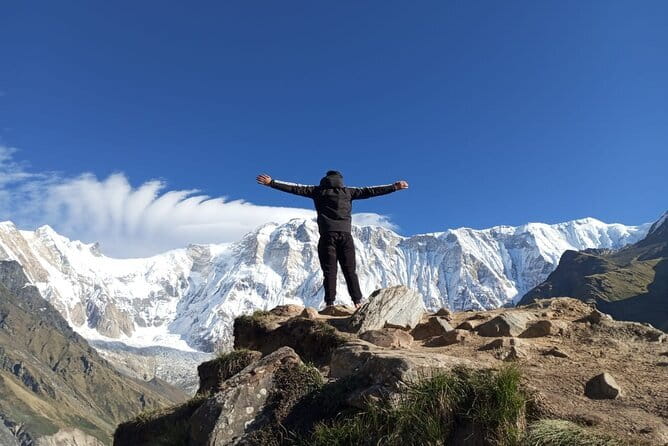
Annapurna Base Camp is a strong choice if you want a serious Himalayan trek without signing up for a month-long expedition. The route takes you through a changing series of places, from Kathmandu streets and Pokhara roads to forest trails and a high mountain basin surrounded by peaks.
You are not simply driven to a viewpoint and shown a mountain. You walk toward the mountains, one village and one staircase at a time. That slow approach gives the scenery room to change. Lower sections feel wooded and settled. Higher sections feel more open, colder, and more exposed.
The plan also includes Poon Hill, which adds a second major viewpoint. That matters because the walk to base camp is not just a long march toward one final sight. You get an early sunrise stop at 3,210 meters, then several days of forest and village walking before reaching Machhapuchhre Base Camp and Annapurna Base Camp.
More Annapurna treks:
- Annapurna Circuit Trek with Tilicho Lake
★ 5.0 · 368 reviews - Annapurna base camp trek 5 Days
★ 5.0 · 252 reviews - Annapurna Base Camp Trek
★ 5.0 · 111 reviews
Kathmandu arrival and the road to Pokhara
Your trip begins at Tribhuvan International Airport, where an airport representative meets you and arranges a private tourist vehicle to the hotel in Thamel. That first transfer is useful after a long flight, particularly if this is your first visit to Nepal and you do not want to sort out transport on arrival.
The first day is deliberately light. You can rest, recover from the flight, or visit the company office to go over the plan. That flexibility is welcome, since arriving in Kathmandu can be tiring even before the trek begins.
On the second day, you ride by tourist bus from Kathmandu to Pokhara, a journey of about 200 kilometers that takes roughly six hours. Lunch is taken along the way. The road trip is not a quick hop, so you should treat this as a full travel day rather than a sightseeing day.
Pokhara provides a gentler pause before the walking starts. You spend the night in a guesthouse, and lunch and dinner here are not included. Budget for those meals separately. The tour does include some food in Kathmandu and Pokhara, but the supplied details specifically exclude lunch and dinner in both cities, so you should confirm exactly which city meals are covered before departure.
From Nayapool to Ghorepani through village country
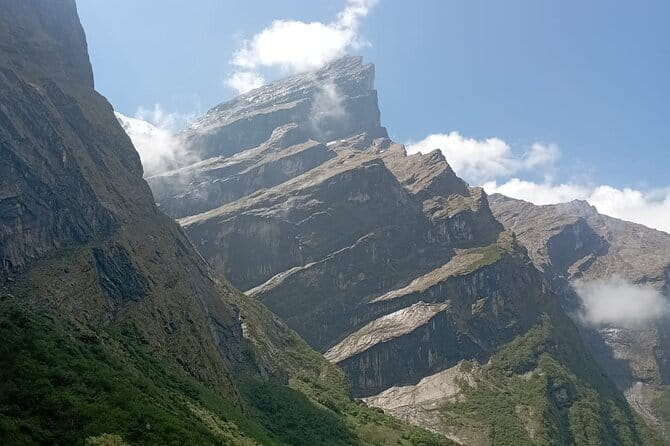
The trek begins after about an hour of driving from Pokhara to Nayapool. From there, the trail follows the Modi River and reaches Birethani, where small teahouses appear along the route.
This opening section gives you an immediate feel for village life on the trail. You are walking through inhabited country, not an empty wilderness, and teahouses provide regular places to pause. The setting is also a useful warm-up for your legs before the route becomes more demanding.
The next stage includes the climb from Ulleri toward Ghorepani. The trail passes through rhododendron and oak forests, with the ascent becoming gentler after Ulleri as you continue toward Banthanti and then Ghorepani.
Ghorepani is an important stop because it links the main Annapurna Base Camp route with Poon Hill. The village is popular for good reason, but that popularity can mean a busier feel than the quieter sections farther up. You are trading a little solitude for one of the route’s best mountain viewpoints.
Poon Hill sunrise at 3,210 meters
The walk to Poon Hill takes about 45 minutes and begins early. At 3,210 meters, the viewpoint is the highest point you have reached so far, and the short climb can feel sharper than its distance suggests.
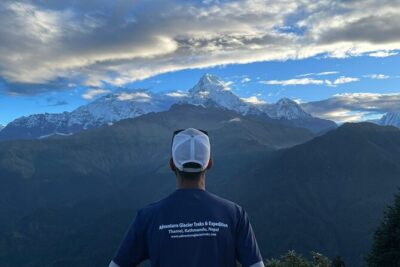
This is the photographer’s stop. The viewpoint gives you a broad mountain panorama, including views toward the Dhaulagiri, Machhapuchhre, and Annapurna peaks mentioned in the trip feedback. Clear skies are never guaranteed, but when the weather cooperates, the early light is one of the most memorable parts of the route.
I like the placement of Poon Hill in the schedule. It gives you a clear reward near the start of the trek, while also introducing you to altitude before the route rises higher. Still, do not mistake the short viewpoint walk for an easy day overall. The wider day continues through mountain terrain and eventually toward Tadapani.
More treks starting in Kathmandu:
- Everest Base Camp Trek – 14 Days
★ 5.0 · 1,499 reviews - Everest Base Camp Trekking
★ 5.0 · 485 reviews - Nagarkot Sunrise View and Day Hiking from Kathmandu
★ 5.0 · 471 reviews - Everest Base Camp Trekking – 13 Day
★ 5.0 · 365 reviews
Tadapani, Gurjung, and Chhomrong

After Tadapani, the trail drops gradually through rhododendron forest. You cross the Kimsung River and climb toward Gurjung, a Gurung village, before continuing toward Chhomrong.
This section has a good mix of forest, river crossings, village views, and mountain backdrops. Chhomrong spreads across a hillside with views toward the Annapurna peaks and Machhapuchhare. It is one of the more scenic settlements on the route, but it also marks a serious change in the walking rhythm.
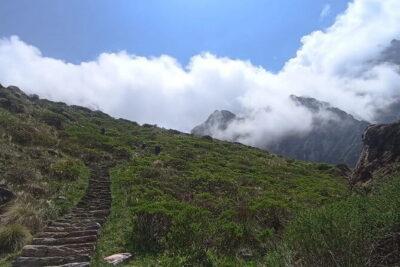
From Chhomrong, stone steps drop to the Chhomrong Khola. You cross a suspension bridge, then climb steeply to Sinuwa. That up-and-down pattern is typical of Himalayan trails. A place that looks close on the map may still require a long climb because the trail follows the shape of the valleys.
You should be ready for steps. The route is moderate in the broad sense, but moderate does not mean flat or easy. Your guide can help manage the pace, and the small group size should make it easier to take sensible breaks without holding up a large party.
Bamboo, Dovan, and the quieter upper trail
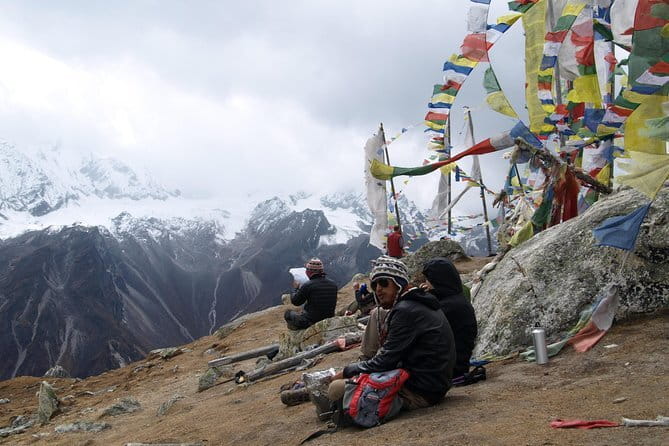
From Sinuwa, the trail continues through jungle toward Bamboo. You get a short walk along the forest, an easy downhill section, and then more climbing and descending as the route moves deeper into the valley.
The stop at Dovan leads into the walk toward Himalaya. This section passes through bamboo and rhododendron forests and includes stretches where the surroundings feel quieter. Near a temple, the walk is described as a low-noise section, so you should follow the guide’s instructions and keep the mood respectful.
The forest is not just scenery. It shades parts of the trail and gives you a cooler setting before the higher, more exposed stages. It also makes the route feel varied. You are not looking at the same view for two weeks. The trail keeps changing underfoot and overhead.
At these higher teahouse stops, simple accommodation is part of the deal. The package includes teahouse lodging, but you should not expect city-hotel comfort. Rooms and facilities are basic, and the attraction is being close to the trail and the mountains rather than having a long list of amenities.
Deurali to Machhapuchhre Base Camp
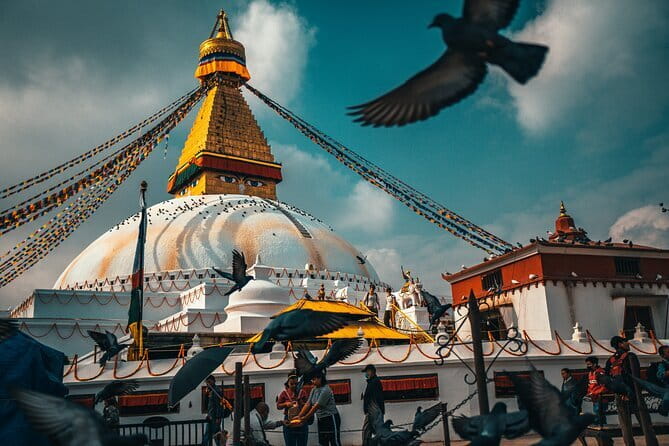
From Deurali, the trail crosses a river bed before a tiring climb toward Machhapuchhre Base Camp. The approach is more demanding, and the high-altitude setting makes each uphill section feel slower.
Machhapuchhre Base Camp is a major visual moment. Mountains surround you, with views toward Annapurna, Machhapuchhre, Gangapurna, and Himchuli. The name can be slightly confusing because this is not a permitted summit base for climbing Machhapuchhre. Here, it is a high stopping point on the route toward Annapurna Base Camp.
This is where your guide’s role becomes especially important. The route is managed for you, from finding the right trail to helping with teahouse arrangements, but you still need to pay attention to how your body feels. The tour is intended for people with moderate physical fitness, not for someone hoping to stroll through the Himalaya with no preparation.
Annapurna Base Camp and the sunrise return
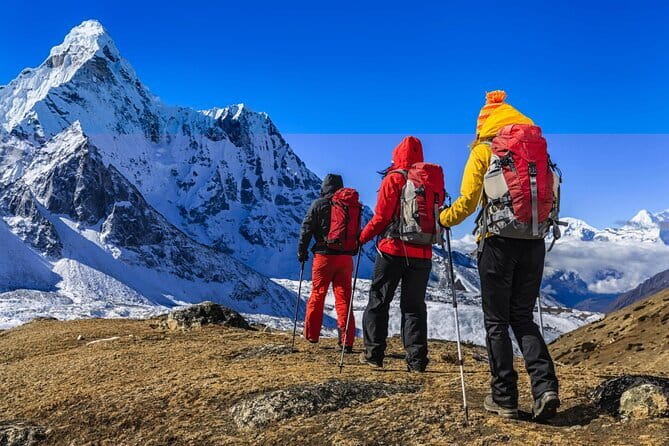
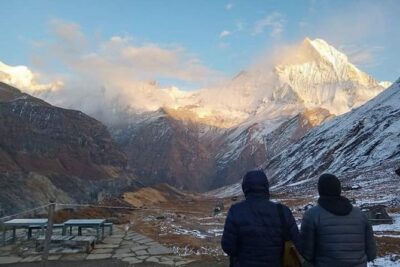
The walk from Machhapuchhre Base Camp to Annapurna Base Camp is the high point of the trip. The route leads into the mountain basin, where peaks surround you on all sides.
The plan includes time to see sunrise from ABC. That timing makes sense. Morning light can give the peaks a sharper shape, and the experience of waking high in the mountains is part of what you are paying for. Weather remains the wild card, so keep expectations flexible. The mountains do not promise a clear forecast simply because your booking is confirmed.
After the sunrise, you retrace the route through Machhapuchhre Base Camp, Deurali, Himalaya, and Bamboo, continuing as far as Sinuwa. Most of this return is downhill, which feels easier in one way but can be hard on knees and feet. Descending steep steps after a long high-altitude day is not a free rest day.
The return route is familiar, but it is not dull. You see the same valley from a different direction and notice how quickly the mountain setting changes as you lose altitude.
Chhomrong, Jhinu Danda, and the hot springs
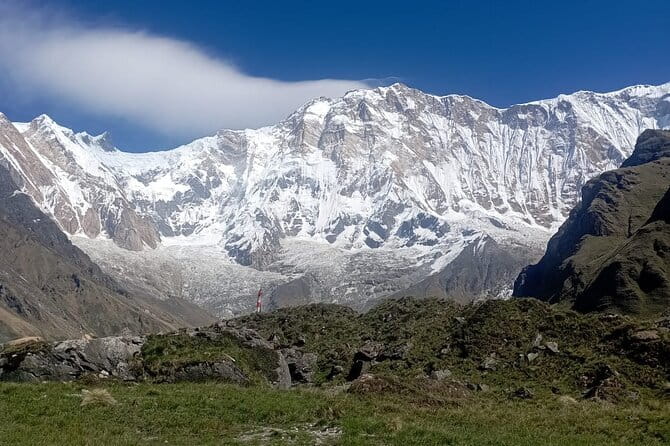
The next stage brings you back to Chhomrong for lunch. The hillside village again provides views of Annapurna and Machhapuchhare, but after the high basin, it also feels like a return to a more settled part of the trail.
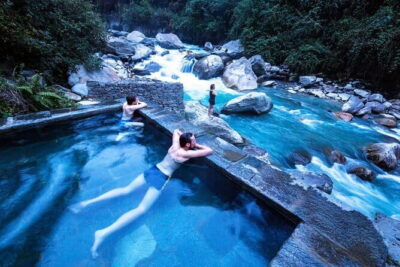
From there, the route continues to Jhinu Danda. The main attraction is the natural hot spring beside the Modi River, about a 20-minute walk from the hotel. After several days of steep climbs and descents, a warm bath is a useful reward, not just a sightseeing extra.
The hot spring is one of the most practical highlights of the whole plan. It gives you a chance to relax your legs before leaving the trail. Bring suitable bathing clothes and keep your expectations simple, since this is a natural pool setting rather than a polished spa.
The long road back through Malekhu
The final road journey includes a lunch stop in Malekhu, known for fish and fish products. The stop lasts about 30 minutes, so think of it as a practical break rather than a full visit.
The drive itself is part of the cost of covering Nepal’s distances. You should expect the last days to feel less scenic and more logistical than the trekking stages. That is normal for a route beginning and ending around Kathmandu while also including Pokhara.
On the final day, the vehicle passes Pashupatinath Temple, where you can stop briefly for photographs. The stop is listed as about five minutes, and admission is not included. This is a quick orientation point, not a full temple visit, so do not plan your day around an extended exploration there.
Guides, group size, and the human side of the trek
The maximum group size is 10, and that is one of the best features for a route with this much walking. A small party can move at a more practical pace, and you have a better chance to ask questions about the peaks, villages, and route.
Several guides are named in the supplied trip feedback, including Krishna, Tulsi, Suvi, and Anil, with Sumon mentioned as a porter and Arjun praised for clear communication before the trek. These names show the range of the Green Valley Nepal team, but they do not guarantee who will lead your departure. Ask for your guide’s name and role before you leave.
The most useful theme in the feedback is care from airport arrival through departure. That matters for a first Himalayan trek. One person also changed plans and added a porter after feeling unwell on arrival, which is a good reminder that you should speak up early if you need extra support.
A porter is not specifically listed as included in the supplied package. Ask about porter arrangements, pricing, and baggage limits before booking if you do not want to carry your own pack.
What the $925 price really covers
At $925 per person, the value depends on how much help you want with the moving parts. The price includes accommodation, a professional guide, taxes and handling charges, round-trip shared transfers, 13 breakfasts, 10 lunches, and 10 dinners.
It also covers the airport pickup, the Kathmandu to Pokhara transport arrangement, the Pokhara stay, teahouses on the trail, and the return transport structure. Paying for these items separately would take time and would require you to coordinate several different providers.
The price does not cover lunch and dinner in Kathmandu and Pokhara. The five-minute Pashupatinath stop also does not include admission. You should budget for those extras, plus personal drinks and any porter arrangement if needed.
For a guided 14-day trek with a group capped at 10, the package offers solid practical value. The main question is not simply cost. It is how much you value having someone organize accommodation, meals, transfers, and route decisions while you concentrate on walking.
Who should book this trek
I would recommend this experience to an active visitor who wants a structured route with strong mountain scenery and does not want to arrange every teahouse and transfer alone. It also suits a first-time Himalayan hiker who wants a guide nearby and a defined schedule.
You should be comfortable walking 4 to 7 hours a day and handling steep sections, stone steps, suspension bridges, and high altitude. The supplied information calls for moderate physical fitness, so this is not a good fit if you are seeking a gentle sightseeing holiday.
The small group can work well for solo participants, couples, and friends who want company without joining a huge party. Children must be accompanied by an adult. Since the experience depends on good weather, keep some flexibility in your wider Nepal plans.
You can cancel for a full refund up to 24 hours before the start time. Cancellations or changes inside that 24-hour window are not refunded or accepted. If poor weather forces cancellation, you are offered another date or a full refund.
Should you book the Annapurna Base Camp trek?
Book it if you want the full progression from Nepal’s cities to mountain villages, forests, Poon Hill, Machhapuchhre Base Camp, and Annapurna Base Camp. The included meals, teahouses, transport, and small group remove much of the planning work.
Think twice if you dislike basic lodging, long road transfers, steep steps, or fixed daily walking. Also confirm the exact meals, guide assignment, and porter options before paying.
For an active visitor who wants a supported Himalayan trek at a clear package price, this is a well-balanced choice. The route delivers more than one big view, and the hot springs, village stops, and forest sections help make the long walk feel like a journey rather than a single mountain photo stop.
FAQ
How long is the Annapurna Base Camp trek?
The experience lasts approximately 14 days, including arrival in Kathmandu, the road journey to Pokhara, trekking days, the return journey, and the final Pashupatinath Temple photo stop.
Where does the experience begin?
The meeting point is Tribhuvan International Airport in Kathmandu, Nepal. An airport representative meets you and arranges a private tourist vehicle to the hotel.
How many people can join the group?
The group has a maximum of 10 participants. This is intended to provide more personal attention from the professional guide.
What level of fitness is required?
You should have moderate physical fitness. The trek involves about 4 to 7 hours of walking each day, with steep climbs, descents, stone steps, and high-altitude sections.
Are meals included?
Breakfast is included 13 times, while lunch and dinner are included 10 times each. Lunch and dinner in Kathmandu and Pokhara are not included.
Where do you stay during the trek?
Accommodation in Kathmandu and Pokhara is provided in hotels or guesthouses, while trekking nights are in teahouses. Accommodation is included according to the planned schedule.
Is airport pickup included?
Yes. Airport pickup from Tribhuvan International Airport and round-trip shared transfers are included.
Can you cancel for a full refund?
Yes. You can cancel at least 24 hours before the experience start time for a full refund. Cancellations or changes made within 24 hours are not accepted, and poor-weather cancellations offer a different date or a full refund.
Recently added around Kathmandu
- Kathmandu : Swambhunath & Durbar Square Guided Half Day Tour★ 3.3 · 3 reviews
- Private Day Tour in Kathmandu Valley Rim with Bhaktapur Sightseeing★ 5.0 · 3 reviews
- From Kathmandu / Pokhara / Chitwan: River Rafting – 1 Day★ 4.6 · 3 reviews
- Nepali Cooking training & Cultural Homestay Experience★ 5.0 · 3 reviews
- Private 3-Hour Nagarkot Sunset Tour from Kathmandu★ 3.5 · 3 reviews
- From Kathmandu: Everest Base Camp Landing Helicopter Tour★ 5.0 · 3 reviews
- 4 UNESSCO World heritage sites of Kathmandu-private tour★ 5.0 · 3 reviews
- From Kathmandu Budget: 15 Day Everest Base Camp Trek★ 5.0 · 3 reviews
Annapurna Treks, compared.
Kathmandu to Annapurna Base Camp (ABC) 5-Day Trek
Read our review →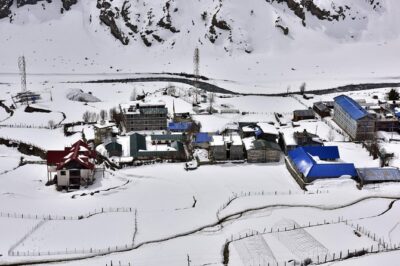
Browse the lists this tour appears in