
Reviewed · ANNAPURNA TREKS
Annapurna Base Camp Trek
Annapurna Base Camp gives you a lot of Nepal in 11 days: a long scenic bus ride, high mountain trails, stone stairways, Gurung villages, a famous sunrise at Poon Hill, and the quiet drama of the Annapurna Sanctuary. The trek reaches Annapurna Base Camp before turning back through forest and hill country.
I like the practical setup. Airport pickup, permits, 10 nights of lodging, meals, guide services, and Kathmandu to Pokhara transport are bundled together, so you do not have to arrange each moving part. I also like the small group limit of 10, which should make the walking pace and daily decisions easier to manage.
The main catch is that this is a serious walking holiday, not a sightseeing trip with a few pleasant strolls. Expect steep stone steps, long days of up to seven hours, basic guesthouses, and changing conditions at altitude. You need moderate fitness and proper travel insurance.
In This Review
- Key points to know before booking
- What the $785.72 price really covers
- Kathmandu to Pokhara by river country
- Nayapul and the first village paths
- Ulleri, Banthanti, and the stone-step test
- Poon Hill sunrise and the Himalayan view
- Forest trails toward Chhomrong
- Entering the Annapurna Sanctuary
- The return through Dovan and Bamboo
- Nayapul to Kathmandu, with one last long road day
- Group size, guide support, and physical demands
- What to pack and what to budget
- Who should book this Annapurna trek?
- Should you book it?
- FAQ
- How long does the Annapurna Base Camp trek last?
- Where does the trek start?
- What is the maximum group size?
- Is transportation from Kathmandu to Pokhara included?
- Are meals included?
- Is accommodation included?
- Are permits included?
- Is a porter included?
Key points to know before booking
- Poon Hill sunrise adds a second great mountain viewpoint before you reach Annapurna Base Camp.
- The group is limited to 10 people, a useful size for a multi-day trek.
- Guide Indra has been praised for route, terrain, and weather advice, especially for first-time high-altitude hikers.
- Kathmandu, Pokhara, and the Annapurna trail are combined in one 11-day plan.
- A sleeping bag, down jacket, trekking map, conservation permits, and TIMS arrangements are included, when needed.
- Porters cost an additional $20 per day, and tips, drinks, insurance, visas, and personal spending are extra.
What the $785.72 price really covers
At $785.72 per person, this trek offers solid value if you want a guided, organized route rather than a do-it-yourself walk. The price includes transportation between Kathmandu and Pokhara by tourist bus, airport pickup and drop-off, a guide, 10 nights of accommodation, listed meals, taxes, and the permits needed for the Annapurna Conservation Area and TIMS system.
That bundle matters in Nepal. The trek moves through several overnight stops, and a guide helps with route choices, daily timing, guesthouse arrangements, and changing mountain conditions. You also avoid buying or carrying certain bulky items, since a sleeping bag, down jacket, and trekking map can be provided and returned after the walk.
The price does not cover everything. You must pay for your Nepal entry visa, international flights, personal expenses, alcoholic and nonalcoholic drinks, desserts, guide and driver tips, and travel insurance. A porter is optional at $20 per day, but that cost can become important if you do not want to carry your own pack for long uphill stretches.
The meal wording lists eight dinners, nine lunches, and ten breakfasts. That suggests most meals on the walking portion are covered, but you should confirm exactly which meals are included on the first and final travel days. Budget for drinks and snacks, too. Tea, bottled water, and other purchases are not included in the stated price.
More Annapurna treks:
- Annapurna Circuit Trek with Tilicho Lake
★ 5.0 · 368 reviews - Annapurna base camp trek 5 Days
★ 5.0 · 252 reviews - Annapurna Base Camp Trek
★ 5.0 · 111 reviews
Kathmandu to Pokhara by river country
Your starting point is Tribhuvan International Airport in Kathmandu, with a listed start time of 7:15 a.m. Airport pickup is included, which is useful after a long flight and removes one early concern in a new city.
The first major transfer takes about seven hours by tourist bus toward Pokhara. The road follows the Trisuli and Marsyangdi rivers, with views of settlements, steep hills, and water used for rafting. Ganesh Himal and Manaslu may appear along the way, although mountain visibility depends on weather.
This is not a quick shuttle. Seven hours on a Nepal road can feel long, but it gives you a first look at the country beyond Kathmandu. You see how villages, river corridors, and mountain roads fit together before walking begins. Malekhu appears as a stop on the first day, though the main purpose of the day is reaching Pokhara.
Pokhara gives you a useful pause before the trail. The town is the gateway to the Annapurna region and offers a change from Kathmandu’s dense urban setting. The plan includes time to explore both cities, although the exact sightseeing schedule is not detailed, so I would treat those visits as lighter city time rather than full guided tours.
Nayapul and the first village paths
After breakfast in Pokhara, the group drives about 90 minutes to Nayapul. From there, you begin walking toward Tikhedunga, passing through Birethanti at about 1,065 meters and continuing to Tikhedunga at about 1,577 meters.
This opening walk is a good introduction to the trek. You move from road travel into footpaths, village life, and the first steady changes in height. The four-hour walking day is shorter than some later sections, giving you time to adjust to the rhythm of walking, eating, and sleeping in mountain lodges.
Do not mistake the first day for a flat warm-up. The route has uphill sections, and the trail surface can vary. Keep your day pack light, carry water, and avoid racing ahead. A gradual start is useful because the coming days bring much longer stair climbs.
Ulleri, Banthanti, and the stone-step test
The next stretch climbs steeply for about two hours before easing somewhat through Ulleri, at roughly 2,070 meters, and Banthanti. The total walking time is listed at about six hours.
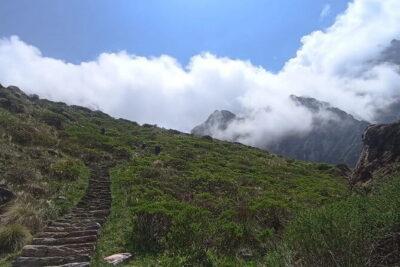
This is where the trek begins to feel properly physical. Stone stairways are a defining feature of the route, and the climb toward Ulleri can test your legs early. The reward is a more open mountain setting, with views that improve as you gain height. Rhododendron and oak forest add shade and color along parts of the trail.
The guide’s role becomes useful here. Indra, one guide named in the tour feedback, was praised for advising on routes, terrain, and weather. That kind of practical judgment matters more than a constant stream of facts when you are deciding how slowly to climb, when to stop, and how to respond to changing conditions.
More treks starting in Kathmandu:
- Everest Base Camp Trek – 14 Days
★ 5.0 · 1,499 reviews - Everest Base Camp Trekking
★ 5.0 · 485 reviews - Nagarkot Sunrise View and Day Hiking from Kathmandu
★ 5.0 · 471 reviews - Everest Base Camp Trekking – 13 Day
★ 5.0 · 365 reviews
Poon Hill sunrise and the Himalayan view
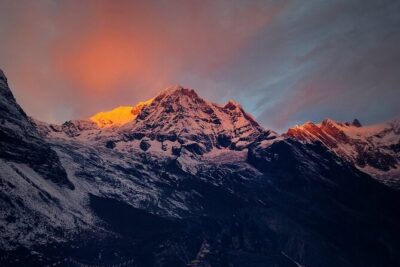
Poon Hill is one of the strongest parts of the route. You rise early for the viewpoint at about 3,232 meters, where the sunrise can reveal Dhaulagiri, Tukuche Peak, Nilgiri, Varaha Shikhar, Annapurna I, and Annapurna South.
The early start is worth taking seriously. This is a cold, uphill viewpoint visit before breakfast, and cloud can affect what you see. Still, the chance to watch morning light reach across several major Himalayan peaks gives the trek a memorable high point before the route reaches base camp.
Poon Hill also makes this plan more varied than a simple out-and-back to Annapurna Base Camp. You get a grand mountain panorama from a ridge viewpoint, then later enter a narrower sanctuary setting surrounded by peaks. The combination gives you two different ways to experience the Annapurna range.
Take only what you need for the viewpoint, but bring warm layers. A down jacket is included when necessary, and this is the sort of morning when it can earn its place in your pack.
Forest trails toward Chhomrong
After Ghorepani, the route descends gently through rhododendron, oak, and other forest. Birdsong and shaded paths replace the open summit view, making this a quieter part of the trek. The walking time is about five hours on one listed section.
The route then continues through more demanding ups and downs toward Chhomrong. One section descends on stone steps for about an hour and a half, crosses the Chhomrong Khola by suspension bridge, and climbs again. The exact daily stop names can feel a little confusing in the supplied schedule, but the physical pattern is clear: you lose height, cross the river, and then regain it.
Chhomrong is an important approach point for the sanctuary. From here, the valley widens and the trail gives a sense that the major mountain destination is drawing closer. You can also see gates marking the entrance to the sanctuary area.
This portion is a reminder that Himalayan trekking is not simply a steady climb. Trails rise and fall, and a downhill morning may still lead to a tiring uphill afternoon. Good pacing matters more than speed.
Entering the Annapurna Sanctuary
Beyond Chhomrong, the route becomes more enclosed and mountain-focused. The trail continues toward the sanctuary, crossing avalanche-prone sections and moving through forested terrain before reaching the higher lodges.
The day toward the base camp area is listed at about six hours. As you gain height, the scenery becomes more dramatic, but the air is thinner and the walking pace should slow. You should follow the guide’s advice, drink regularly, and tell the guide if you feel unwell.
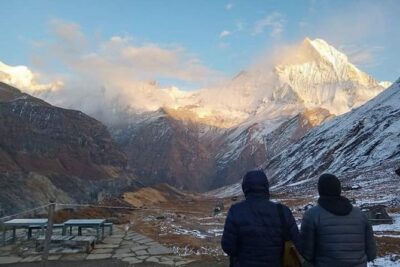
Annapurna Base Camp is not just a final checkbox. It is the point where the surrounding peaks feel close on every side. The plan allows time to visit the base camp and take in the Himalayan views before beginning the return walk.
That timing is sensible. You get a proper look around rather than arriving, taking one photograph, and immediately leaving. Weather can shift quickly, so the view may vary, but the setting itself is the main reward of the trek.
The return through Dovan and Bamboo
After the base camp visit, you retrace part of the route toward Dovan. The return day is listed at about six hours, followed by another section through Bamboo and forest.
The descent is easier on your lungs but not always on your knees. Long stone steps can be hard work in reverse, especially after several days of walking. Rhododendron, oak, and bamboo forests soften the route, and the changing vegetation helps mark your move back toward lower ground.
One later walking day is listed at about six hours and includes a steep uphill section of roughly an hour after Bamboo. This is another reason not to assume the return is effortless. You still have climbs, even after leaving the highest point behind.
The guesthouse nights are part of the experience. They keep the trip organized and remove the need to decide where to sleep each evening, but you should expect simple mountain accommodation rather than hotel comfort. Bring realistic expectations about shared facilities, limited personal space, and the value of packing light.
Nayapul to Kathmandu, with one last long road day
The final walking section descends toward Birethanti, where you stop for lunch, then continues for about 30 minutes to Nayapul. From there, road transport takes you back toward Pokhara or onward as arranged by the program.
Day 11 begins with a 7 a.m. tourist bus to Kathmandu after breakfast. The drive takes about seven hours and passes satellite towns, rural settlements, rivers, and roadside life.
This final road day can be tiring, especially after a demanding trek. It is also a useful last look at Nepal’s changing scenery. The schedule favors simplicity: walk out, return by road, and finish in Kathmandu rather than adding another complicated transfer.
Airport drop-off is included, which helps if your international departure follows soon after. I would still check the timing carefully and allow plenty of room between the end of the organized program and your flight.
Group size, guide support, and physical demands
The maximum group size is 10. That is large enough to meet other hikers but small enough for a guide to keep track of the group on narrow paths and during long walking days.
The tour requires a moderate level of physical fitness. The stated walking times range from four to seven hours, with steep climbs, descents, suspension bridges, stone stairs, and high-altitude sections. You do not need to be a technical mountaineer, but you do need to prepare for repeated uphill and downhill walking.
The guide is provided, with salary, food, drinks, accommodation, transport, and insurance covered for the guide. Guide Indra received particular praise for careful advice about routes, terrain, and weather. If you are new to high-altitude trekking, that practical help can make the experience less stressful.
A porter is not included. You can hire one for $20 per day if you need help with luggage. Even if you use a porter, keep essential layers, water, medication, documents, and valuables in your own day pack.
What to pack and what to budget
The supplied sleeping bag and down jacket reduce the amount of specialist gear you need to buy. You still need sturdy walking shoes or boots, warm layers, rain protection, a hat, gloves, sun protection, and a comfortable day pack.
Budget extra for:
- Nepal entry visa fees
- Travel insurance, which is compulsory
- Drinks, desserts, and personal purchases
- Tips for the guide and driver
- A porter, if required
- International flights
The tour includes conservation permits and TIMS arrangements, which are useful savings in both time and paperwork. It also includes all fees and taxes listed by the operator.
Who should book this Annapurna trek?
I would choose this trip if you want a guided introduction to one of Nepal’s best-known mountain routes and prefer a fixed plan. It suits people who like active holidays, do not want to arrange guesthouses and permits themselves, and value having transport between Kathmandu, Pokhara, and the trail handled for them.
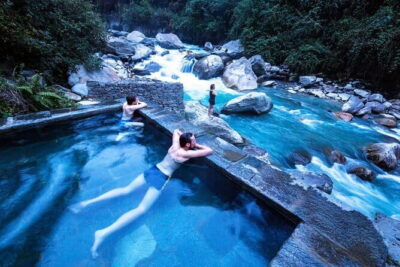
It is also a good fit if you want more than a single mountain viewpoint. Poon Hill supplies a sunrise panorama, while Annapurna Base Camp provides a closer sanctuary setting. Gurung villages, forest paths, rivers, and hot spring time add variety to the walking days.
I would think twice if you dislike long bus rides, basic lodging, early mornings, or steep stairs. The schedule is active, and the seven-hour days can be demanding. You should also be comfortable with a group format and shared decisions about pace and daily movement.
The experience carries a 4.9 rating from 81 ratings and a 99 percent recommendation rate. One detailed account rated it four out of five and singled out guide Indra’s attention to route, terrain, and weather. That combination suggests strong satisfaction, while the less-than-perfect individual score is a useful reminder that weather, fatigue, road conditions, and basic accommodation can shape the experience.
Should you book it?
Book this Annapurna Base Camp trek if you want a well-organized 11-day mountain holiday with the major logistics covered and a small group of no more than 10. At $785.72, the package is appealing because it combines transport, lodging, meals, permits, guide support, and equipment loans.
Before paying, confirm the exact meal schedule, the sleeping arrangements, the airport transfer details, and the daily stops, since some parts of the program are described broadly. If you have moderate fitness, pack sensibly, buy proper insurance, and accept that the mountains set the timetable, this is a practical way to reach Annapurna Base Camp without managing every detail yourself.
FAQ
How long does the Annapurna Base Camp trek last?
The experience lasts approximately 11 days, including transport between Kathmandu and Pokhara and the walking sections in the Annapurna region.
Where does the trek start?
The listed meeting point is Tribhuvan International Airport in Kathmandu, Nepal. The stated start time is 7:15 a.m., and airport pickup is included.
What is the maximum group size?
The group can include up to 10 travelers.
Is transportation from Kathmandu to Pokhara included?
Yes. Tourist bus transportation from Kathmandu to Pokhara and back to Kathmandu is included.
Are meals included?
The listed inclusions cover eight dinners, nine lunches, and ten breakfasts. Alcoholic drinks, nonalcoholic drinks, and desserts are not included.
Is accommodation included?
Yes. The price includes 10 nights of accommodation.
Are permits included?
Yes. Annapurna Conservation permits and TIMS are included, along with all fees and taxes listed in the inclusions.
Is a porter included?
No. A porter is optional and costs $20 per day. The guide, guide-related expenses, sleeping bag, down jacket, and trekking map when needed are included.
Recently added around Kathmandu
- Kathmandu : Swambhunath & Durbar Square Guided Half Day Tour★ 3.3 · 3 reviews
- Private Day Tour in Kathmandu Valley Rim with Bhaktapur Sightseeing★ 5.0 · 3 reviews
- From Kathmandu / Pokhara / Chitwan: River Rafting – 1 Day★ 4.6 · 3 reviews
- Nepali Cooking training & Cultural Homestay Experience★ 5.0 · 3 reviews
- Private 3-Hour Nagarkot Sunset Tour from Kathmandu★ 3.5 · 3 reviews
- From Kathmandu: Everest Base Camp Landing Helicopter Tour★ 5.0 · 3 reviews
- 4 UNESSCO World heritage sites of Kathmandu-private tour★ 5.0 · 3 reviews
- From Kathmandu Budget: 15 Day Everest Base Camp Trek★ 5.0 · 3 reviews
Annapurna Treks, compared.
Kathmandu to Annapurna Base Camp (ABC) 5-Day Trek
Read our review →
Browse the lists this tour appears in