
Reviewed · ANNAPURNA TREKS
Annapurna base camp -9 days
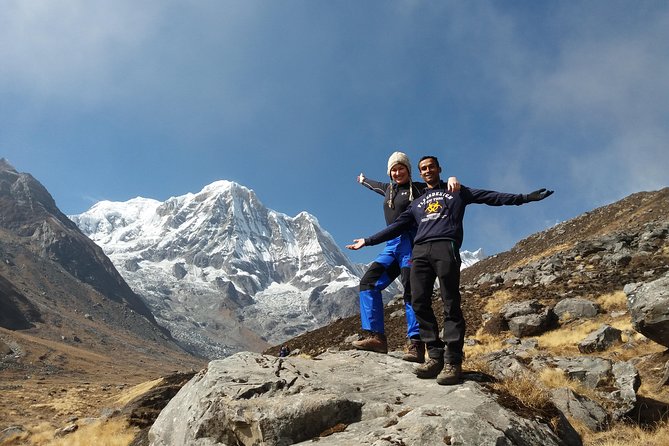
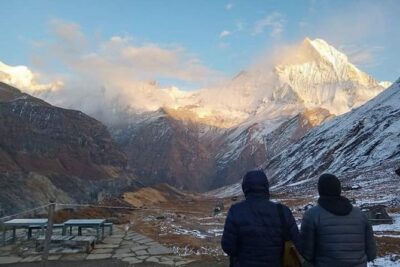
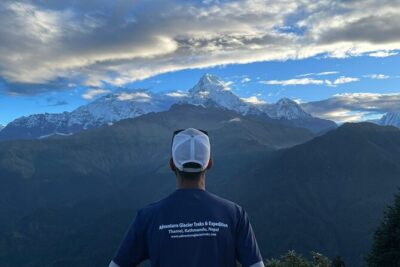
Annapurna Base Camp gives you a lot in nine days: high mountain views, Gurung villages, rhododendron forest, hot springs, and a sunrise inside the Annapurna Sanctuary. The route moves from Pokhara’s foothills into a stark bowl ringed by Himalayan peaks, with Machhapuchhre, Annapurna South, and Hiunchuli providing the visual drama.
I like the way the package bundles the practical pieces: permits, meals, accommodation, guide costs, a first-aid kit, sleeping bag, and down jacket. I also like the private format, since your group can set a sensible pace and make small itinerary changes. The main caution is that this is a serious walking trip, not a sightseeing holiday. Long stair sections, altitude, basic teahouse conditions, and the extra $220 porter charge all deserve attention before you book.
In This Review
- Key points to know before booking
- What the $693.34 price really covers
- Day 1: Kathmandu arrival and the Poon Hill question
- Day 2: Phedi to Dhampus, your first mountain views
- Day 3: Landrung, Jhinudanda, and the first long stair sections
- Day 4: Chhomrong to the Seti River and Sinuwa
- Day 5: Machhapuchhre Base Camp and the sacred valley
- Day 6: Annapurna Base Camp inside the Sanctuary
- Day 7: Sunrise over the Annapurna Mountain Range
- Day 8: Chhomrong and the hot springs at Jhinu
- Day 9: Nayapul to Pokhara and the end of the trail
- The private-guide advantage
- Food, lodging, and useful equipment
- Who should book this trek?
- Should you book the Annapurna Base Camp trek?
- FAQ
- Is airport pickup included?
- Is transport between Kathmandu and Pokhara included?
- Are meals included during the trek?
- Is a porter included in the price?
- What fitness level is required?
- Can I cancel for a full refund?
Key points to know before booking
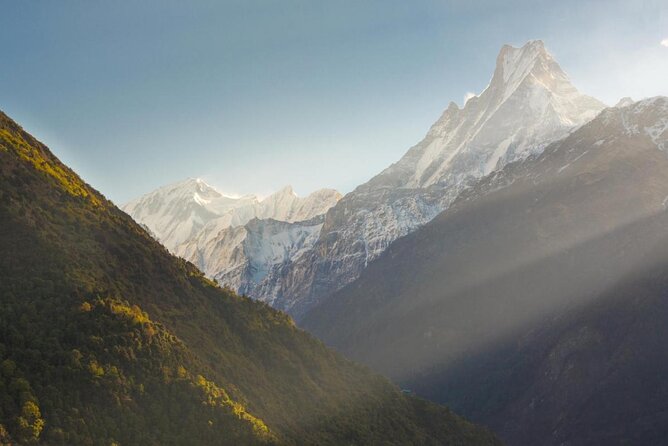
- Machhapuchhre Base Camp leads into the Annapurna Sanctuary, where the trees thin out and the mountains close around you.
- Dhampus and Landrung bring the cultural side of the trek, with Gurung and Magar villages, terraces, and local paths.
- The package includes meals, permits, guide expenses, transport, and trekking gear, but not Kathmandu accommodation and food.
- The private-trip format can help with timing, and guide Binod has adjusted one trek from nine days to eight for a traveler’s schedule.
- Jhinu offers a natural hot spring stop, a welcome reward after several days of mountain walking.
- A porter costs an additional $220 per person, so the advertised $693.34 price is not the full cost if you want porter support.
What the $693.34 price really covers
At $693.34 per person, this trek offers good value if you use most of the included services. You receive airport pickup and drop-off in a private vehicle, transport between Kathmandu and Pokhara by tourist bus, a licensed English-speaking trekking guide, permits, accommodation, three meals a day during the package, and guide insurance and transport.
You also receive a returnable down jacket and sleeping bag. That matters because warm mountain gear can add a surprising amount to your packing list and budget. The guide carries a first-aid medical kit, another useful inclusion on a route where you may be several hours from road access.
The price becomes less attractive if you need to add many extras. Porter service costs $220 per person. An optional flight between Kathmandu and Pokhara costs extra, and you must also pay for international airfare, visa charges, personal insurance, hot showers, phone use, laundry, drinks, snacks, tips, and possible emergency transport.
Kathmandu accommodation and food are also excluded, despite the package including nine nights of accommodation and nine breakfasts, lunches, and dinners. Read that wording carefully: it appears to cover the trekking package, not your time in Kathmandu. Ask the operator to confirm exactly which nights are included and where they fall in the schedule.
A welcome or farewell dinner in a cultural restaurant in Kathmandu is included. That is a pleasant extra, but it does not replace ordinary meals or a hotel stay in the city.
More Annapurna treks:
- Annapurna Circuit Trek with Tilicho Lake
★ 5.0 · 368 reviews - Annapurna base camp trek 5 Days
★ 5.0 · 252 reviews - Annapurna Base Camp Trek
★ 5.0 · 111 reviews
Day 1: Kathmandu arrival and the Poon Hill question
The published schedule begins with airport pickup at Tribhuvan International Airport at 6:30 am. A private vehicle takes you to your hotel, but the package itself is described as starting on the second day after arrival.
There is a planning wrinkle here. Day 1 is labeled Poon Hill and lists six hours, while the description also says this day covers arrival and hotel transfer. Poon Hill is not otherwise explained in the supplied schedule, so you should confirm the exact first trekking day before paying for flights. This may be a display error or a variation in how the days are counted.
That small detail matters. A nine-day Himalayan trek needs clean timing, especially if your international flight arrives late, your bags are delayed, or you need a rest period before walking. The operator requires every participant’s passport name, number, expiry date, and country at booking, so have those details ready.
Day 2: Phedi to Dhampus, your first mountain views
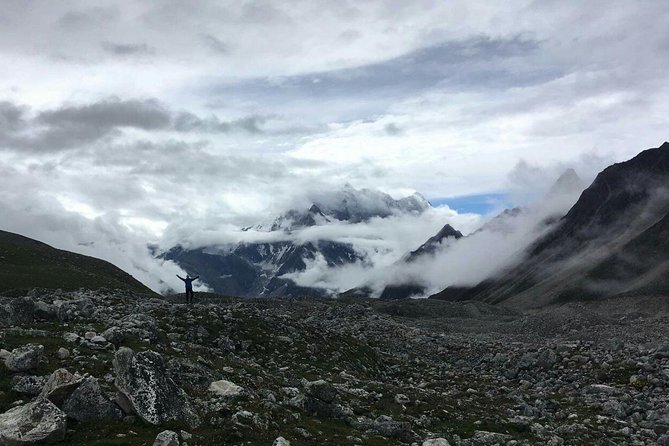
The trek properly gets moving with a drive from Pokhara to Phedi. From there, you walk uphill to Dhampus, a pleasant Gurung village with views toward Hiunchuli, Annapurna South, and Machhapuchhre, also called Fishtail.
This is a good opening stage because you get the cultural feel of the middle hills before moving into higher country. Dhampus is not just a place to sleep. It gives you an early sense of how villages, terraces, forests, and mountain routes fit together.
The walking time is listed as about four hours. That sounds manageable, but mountain hours include stairs, rest stops, photographs, and changes in footing. If you are new to trekking, use this first day to settle into a steady pace rather than racing ahead.
Day 3: Landrung, Jhinudanda, and the first long stair sections
The route heads through oak forest and terraced fields toward Landrung. The village is associated with Gurung, Magar, and Brahmin communities, giving this stage a useful cultural mix as well as scenery.
From Landrung, the path continues down toward Jhinudanda and the Chhomrong area. The schedule lists about five hours of walking. The key point is the pattern: you descend, then you climb again. Annapurna trekking is famous for this up-and-down rhythm, so do not judge the route only by distance.
The accommodation stop is described as Chhomrong Cottage. Teahouse rooms can be clean and comfortable, but conditions are simpler than in a city hotel. One useful advantage of a private trip is that your guide can help manage the daily pace and lodging choices. Guides named Binod and Sona have been associated with this program, although assignments can vary, so request a preferred guide if that matters to you.
A completely different sort of day in Kathmandu:
- Everest Base Camp Trek – 14 Days
★ 5.0 · 1,499 reviews - Private Kathmandu Sightseeing Tour | UNESCO World Heritage sites
★ 5.0 · 756 reviews - Everest Base Camp Helicopter Tour landing at Everest View Hotel
★ 5.0 · 668 reviews - Half day cooking class in Thamel kathmandu
★ 5.0 · 607 reviews
Day 4: Chhomrong to the Seti River and Sinuwa
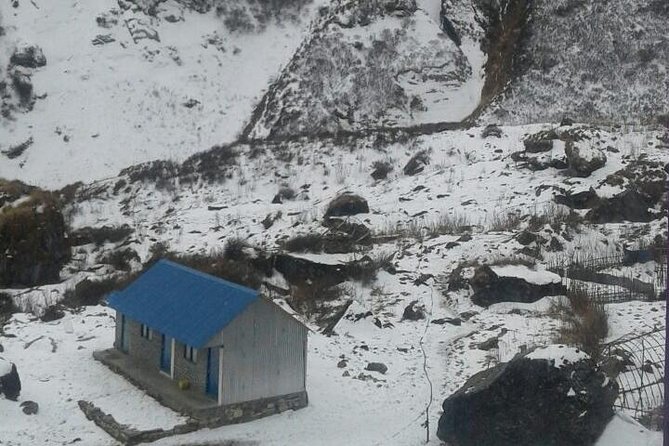
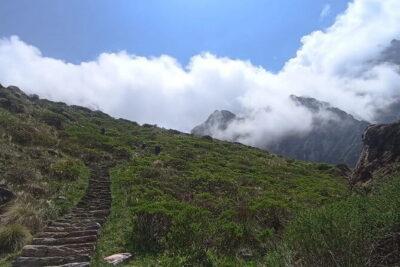
From Chhomrong, you cross a bridge and climb toward Sinuwa Danda. The trail then enters thick rhododendron forest and continues toward Khuldighar before dropping down a long, steep stone staircase.
This is one of the days where your legs get a clear vote. The listed walking time is five hours, but steep steps can make the route feel longer than the clock suggests. Good footwear and trekking poles would be sensible choices, though poles are not listed as included.
The scenery changes in useful stages. You move from settled villages and cultivated slopes into forest, then toward a more enclosed mountain route. The Seti River stop gives the day a clear natural marker, but the route’s real character comes from the forest and stone steps.
Day 5: Machhapuchhre Base Camp and the sacred valley
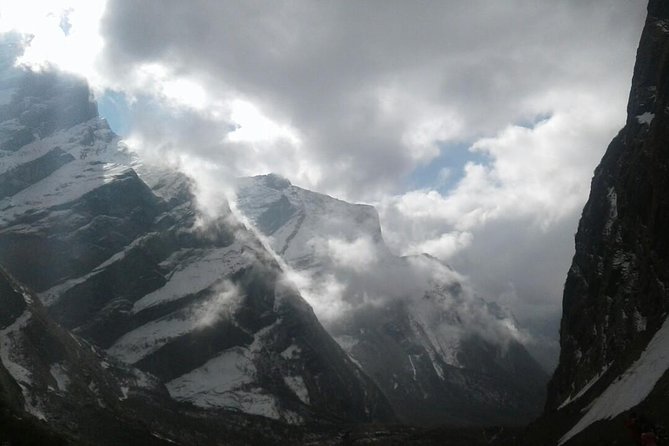
A gradual ascent beside the Madi River leads through a sacred valley. Meat and fish are not allowed in this section because of Buddhist and Hindu beliefs. You continue through bamboo trees toward Machhapuchhre Base Camp, with about six hours of walking listed for the day.
This is an important transition. The route is no longer mainly about village life. You are moving into a more alpine setting, and vegetation becomes less dense as the trail rises.
The food restriction is worth knowing in advance. It is part of the cultural setting, not merely a menu limitation, so approach it with respect. If you have dietary needs, tell the operator before departure.
Machhapuchhre Base Camp is a major visual and emotional point on the route. The mountain is one of Nepal’s most recognizable peaks, and the surrounding valley begins to feel enclosed by high summits. The accommodation will be basic, and cold conditions are more likely here than in the lower villages. The supplied down jacket and sleeping bag become especially useful at this stage.
Day 6: Annapurna Base Camp inside the Sanctuary
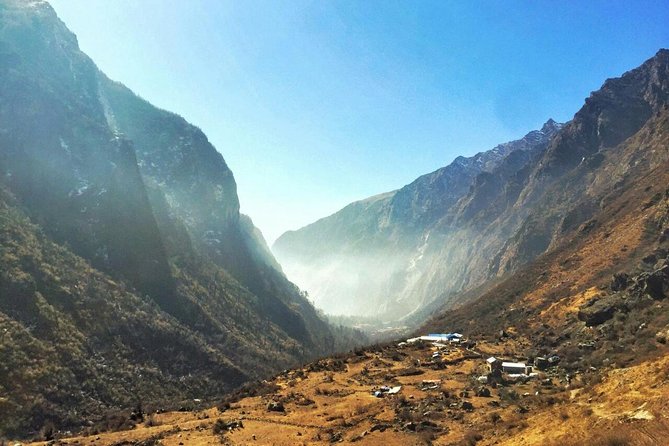
After leaving Machhapuchhre Base Camp, the trees disappear and the route enters the Annapurna Sanctuary. The description calls this area a desert wilderness, a fitting contrast to the lower forested sections.
You walk for about five hours, surrounded by the Annapurna range. This is the central goal of the trek, but it is also the part where altitude and weather can have the greatest effect on your comfort. The itinerary is fixed at nine days, yet a private guide can help you respond to conditions and your own pace.
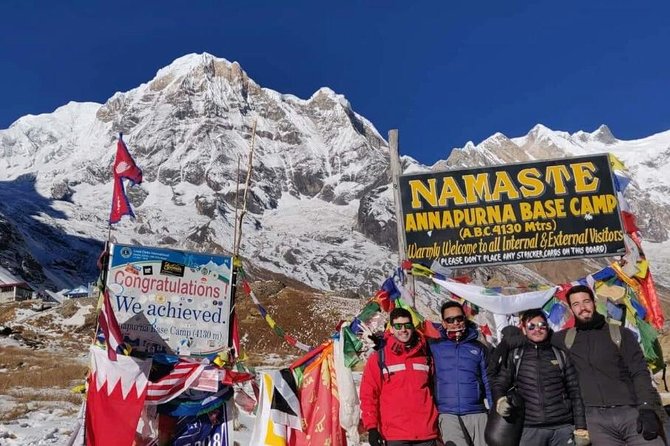
Annapurna Base Camp is valuable because the setting changes so sharply in a short period. Earlier days are shaped by villages, terraces, rivers, and forest. Here, the open ground and high peaks take over. Hiunchuli and Annapurna South are among the views highlighted for the trip, while Machhapuchhre gives the approach its distinctive profile.
You should not expect city comforts at base camp. This is a mountain stop, and warmth, rest, and a sensible pace matter more than polished facilities. Carry water, keep your warm layer handy, and follow your guide’s advice if you feel unwell.
Day 7: Sunrise over the Annapurna Mountain Range
The day begins with an early wake-up call for sunrise in the Annapurna Sanctuary. This is one of the strongest reasons to accept the early starts on the trek. Morning light can make the surrounding peaks look entirely different from the previous afternoon.
After sunrise, you descend along the Modi Khola River toward Bamboo Hut. The walking time is about six hours. Descending is not automatically easy: long downhill sections can be hard on knees, especially after sleeping at a high elevation.
This stage also brings back the vegetation. The return toward Bamboo is a gradual change from open mountain country to forest. It gives you a strong sense of how quickly the Annapurna environment shifts with altitude.
Day 8: Chhomrong and the hot springs at Jhinu
You begin with an uphill walk to Sinuwa, then descend to the Chhomrong Khola River. Another climb brings you to Chhomrong before the final descent to Jhinu, with about six hours on foot.
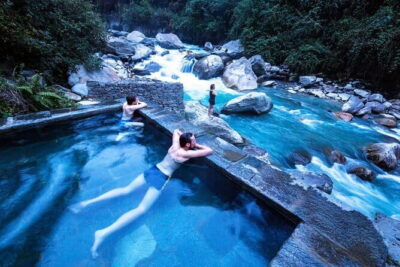
This is another classic Annapurna day: climb, drop, climb again, then descend. The hot springs at Jhinu provide the obvious reward. A soak can be exactly what tired legs need, though hot water, towels, and related personal costs are not specifically listed as included.
The route’s appeal here is not just the spring. Jhinu gives the trek a softer ending after the high, stark setting of base camp. You are back among villages and river valleys, yet the mountain experience is still close behind you.
Day 9: Nayapul to Pokhara and the end of the trail
The final trekking day follows an easy descent to the Modi Khola River and continues to Nayapul. From Nayapul, a private car takes you to Pokhara in about one and a half hours.
The walking time is listed as five hours. Once you reach the road, the trip shifts quickly from foot travel to vehicle travel. The package then includes your transfer to Kathmandu, with the main description specifying a tourist bus between Kathmandu and Pokhara. The day-by-day description only details the return to Pokhara, so confirm the precise timing of the Pokhara to Kathmandu transfer.
This final day works well for people who want a defined finish rather than an open-ended trek. You reach the trailhead, return to Pokhara, and continue with organized transport. If you have a flight from Kathmandu soon after the trek, build in extra time rather than connecting too tightly.
The private-guide advantage
This is a private activity, so only your group participates. That is useful on a route where people walk at different speeds and where weather or fatigue can change the day’s feel.
The guides connected with this program include Binod and Sona, and porters have included Rajendra, Rahul, and Bikash. You should treat those names as examples, not guarantees, and ask who is assigned to your departure.
The strongest practical benefit is personal attention. A guide can help with route decisions, meals, accommodation, and the rhythm of the day. One guide, Binod, has adjusted a trek to eight days to fit a traveler’s travel plans and included an extra night near the hot springs. That suggests some flexibility, but you should agree on any changes before setting out.
Porter support is not included in the headline price. If you add the $220 porter option, clarify how much of your luggage the porter will carry and what day-to-day items you need to keep in your own daypack.
Food, lodging, and useful equipment
Breakfast, lunch, and dinner are listed for all nine days. Food in mountain lodges is functional rather than fancy, and the package gives you the benefit of having meals arranged instead of negotiating each stop yourself.
Accommodation is included for nine nights, but the wording around Kathmandu needs clarification. Ask for the exact hotel and teahouse nights included, especially if your arrival and departure dates fall outside the trekking schedule.
The down jacket and sleeping bag are returnable after the trek. That is a meaningful cost saving, though you still need suitable walking clothes, footwear, rain protection, personal medication, and a small bag for daily use.
A guide carries a first-aid medical kit, but you must arrange your own travel and medical insurance. Emergency expenses, including a chartered helicopter, are excluded. This is not a minor footnote in Nepal. Insurance should specifically cover trekking at the elevations on your route and emergency evacuation.
Who should book this trek?
You should consider this trip if you want a classic Annapurna route with a guide, organized meals, permits, transport, and a private group. It suits people with moderate physical fitness who are comfortable walking several hours a day and handling repeated climbs and descents.
It is also a good fit if you value cultural contact as much as mountain scenery. Dhampus, Landrung, Chhomrong, and Jhinu bring village life into the trip, while the Sanctuary and base camp provide the high mountain goal.
This is less suitable if you want luxury accommodation, short walks, or complete control over your own schedule. You should also think twice if you have not prepared for stairs and altitude, or if you do not want to arrange insurance and pay for personal extras.
Cancellation is free with at least 24 hours’ notice before the local start time. Changes or cancellations inside that window are not accepted for a refund.
Should you book the Annapurna Base Camp trek?
I would book this trek if you want a well-supported route to Annapurna Base Camp without arranging every permit, meal, transfer, and sleeping detail yourself. The $693.34 starting price is attractive because it includes the guide, food, permits, transport, and useful cold-weather gear.
Before booking, I would confirm four things in writing: the confusing Poon Hill and arrival schedule, the exact nine included nights, the name of your guide, and the full cost with porter service. If those details are clear, this is a strong choice for a first Himalayan trek, especially for a private group that wants mountain views, village culture, and a guide who can adjust the pace.
FAQ
Is airport pickup included?
Yes. Airport pickup and drop-off at Tribhuvan International Airport are included in a private vehicle. The listed meeting point is Tribhuvan Airport in Kathmandu, with a stated start time of 6:30 am.
Is transport between Kathmandu and Pokhara included?
Yes. Tourist bus transport from Kathmandu to Pokhara and back to Kathmandu is included. An optional flight is available at an additional cost.
Are meals included during the trek?
Yes. The package lists nine breakfasts, nine lunches, and nine dinners. Food and accommodation in Kathmandu are not included.
Is a porter included in the price?
No. Porter service is listed separately at $220 per person. The package does include the guide’s transportation, food, accommodation, and insurance.
What fitness level is required?
A moderate physical fitness level is required. Walking days are listed at roughly four to six hours, with steep ascents, descents, and long stone stair sections.
Can I cancel for a full refund?
Yes, if you cancel at least 24 hours before the experience start time. Cancellations or changes made less than 24 hours in advance are not accepted for a refund.
Recently added around Kathmandu
- Kathmandu : Swambhunath & Durbar Square Guided Half Day Tour★ 3.3 · 3 reviews
- Private Day Tour in Kathmandu Valley Rim with Bhaktapur Sightseeing★ 5.0 · 3 reviews
- From Kathmandu / Pokhara / Chitwan: River Rafting – 1 Day★ 4.6 · 3 reviews
- Nepali Cooking training & Cultural Homestay Experience★ 5.0 · 3 reviews
- Private 3-Hour Nagarkot Sunset Tour from Kathmandu★ 3.5 · 3 reviews
- From Kathmandu: Everest Base Camp Landing Helicopter Tour★ 5.0 · 3 reviews
- 4 UNESSCO World heritage sites of Kathmandu-private tour★ 5.0 · 3 reviews
- From Kathmandu Budget: 15 Day Everest Base Camp Trek★ 5.0 · 3 reviews
Annapurna Treks, compared.
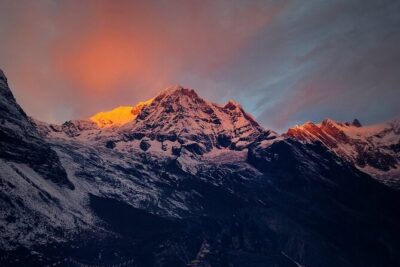
Kathmandu to Annapurna Base Camp (ABC) 5-Day Trek
Read our review →
Browse the lists this tour appears in