
Reviewed · ANNAPURNA TREKS
Annapurna Base Camp Trek – 10 Days
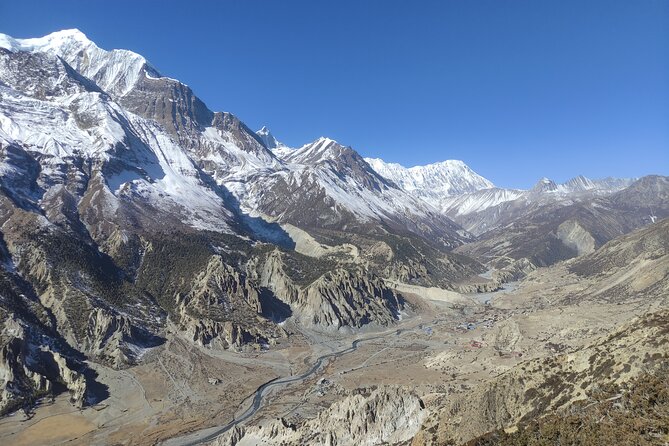
The main attraction here is the walk into the Annapurna Sanctuary, where village paths, stone stairways, rhododendron woods, river crossings, and high mountain views lead to Annapurna Base Camp at 4,130 meters. You begin and end in Kathmandu, spend time in Pokhara, and sleep in simple tea houses along the route.
I like the way this package takes care of the awkward pieces: airport transfers, Kathmandu and Pokhara hotels, tourist buses, trekking accommodation, permits, and a licensed guide. I also like the human side of the trip. Guides and porters named in the experience include Santosh, Raju Simkhada, Dibo, and Varat, with repeated praise for friendly support, good humor, and care on difficult days.
The main caution is the altitude. The route reaches 13,550 feet, and weather can change sharply. You need moderate fitness, proper insurance, and a serious conversation with your doctor before booking. The published schedule also has a few unclear entries, so confirm the exact transport and daily plan before you pay.
In This Review
- Key points to know before booking
- What the $699 price really covers
- Kathmandu arrival, Thamel, and the first night
- The Kathmandu to Pokhara transfer
- Ghandruk to Chhomrong: village paths and stone steps
- Chhomrong to Sinuwa: the famous 2,500-step climb
- Sinuwa to Machhapuchhre Base Camp and ABC
- The return through Bamboo and Jhinu Danda
- Nayapul, Pokhara, and time by Phewa Tal
- Returning to Kathmandu and leaving Nepal
- Guides, group size, and the personal side of the trek
- Fitness, insurance, permits, and what to pack
- Should you book the Annapurna Base Camp trek?
- FAQ
- How long is the Annapurna Base Camp trek?
- What is the highest point reached?
- Is airport pickup included?
- How many nights are spent in tea houses?
- Are Kathmandu and Pokhara hotels included?
- Is transport between Kathmandu and Pokhara included?
- Is transport between Pokhara and Nayapul included?
- Are meals included?
- Do I need travel insurance?
- What is the cancellation policy?
Key points to know before booking
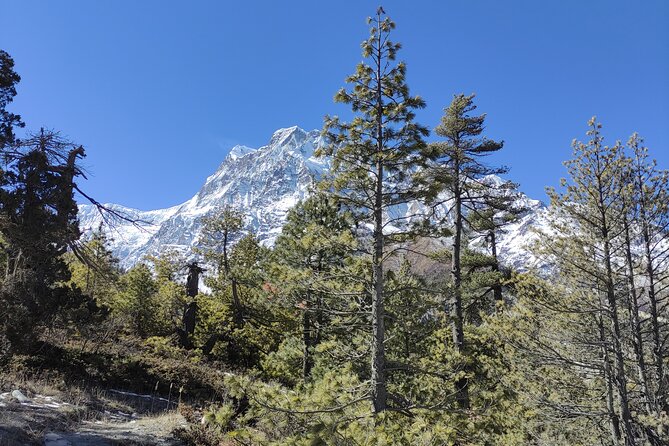
- Annapurna Base Camp at 4,130 meters: The trek finishes in one of Nepal’s best-known high mountain settings, reached on foot through the Annapurna Conservation Area.
- Six nights in tea houses: Expect basic mountain accommodation rather than hotel comfort, with meals and facilities becoming simpler as you go higher.
- Pokhara is part of the package: The route includes time around Phewa Tal, with Sarangkot and the Pokhara Lakeside area listed as additional stops.
- A small private group: Your booking can include up to 12 people, and only your group takes part in the activity.
- Licensed guide support: The guide’s food, accommodation, insurance, salary, equipment, transport, and local taxes are included.
- Extra costs are easy to miss: Lunch and dinner in Kathmandu and Pokhara are excluded, as are gratuities. The listed estimates are $150 for those meals and $50 for tips.
What the $699 price really covers
At $699 per person, this is a useful package for someone who wants the main arrangements handled in one go. The price includes airport pickup and drop-off, two nights in Kathmandu, two nights in Pokhara, six nights in tea houses, breakfast, Kathmandu to Pokhara transport by luxury tourist bus, and private car transport between Pokhara and Nayapul.
You also get a government-licensed trekking guide, the guide’s expenses, a first-aid kit, a company T-shirt, government taxes, VAT, service charges, and a farewell dinner with a cultural show. Those inclusions matter because transport and guide costs can quickly become confusing on a Nepal trek.
The price is not all-inclusive. Lunch and dinner in Kathmandu and Pokhara are outside the package, with an estimated extra cost of $150 per person. Gratuities are listed at $50 per person. The package also does not say that personal trekking gear is included, though equipment can be bought or rented in Kathmandu with help from the guide.
That makes the realistic budget at least $899 per person before personal purchases, assuming the listed $150 meal estimate and $50 gratuity. You should also carry money for drinks and other personal expenses during the trek unless the operator confirms they are covered.
For a private group of up to 12, the arrangement offers good value if you want a guide and preplanned transport. It may be less attractive if you already have trekking gear, know the route, and prefer to arrange tea houses and buses yourself.
More Annapurna treks:
- Annapurna Circuit Trek with Tilicho Lake
★ 5.0 · 368 reviews - Annapurna base camp trek 5 Days
★ 5.0 · 252 reviews - Annapurna Base Camp Trek
★ 5.0 · 111 reviews
Kathmandu arrival, Thamel, and the first night
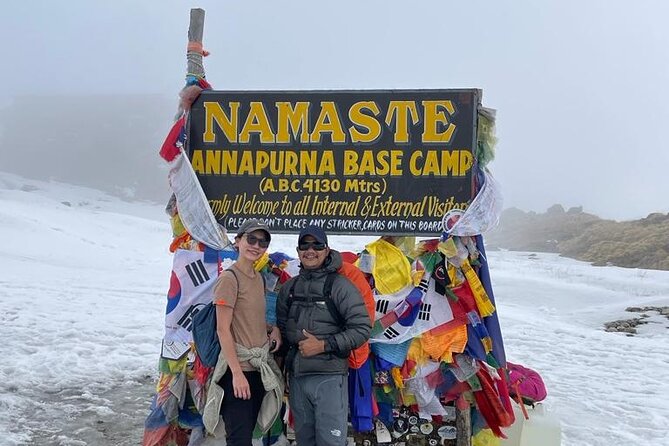
Your first day begins with an airport greeting at Tribhuvan International Airport. A staff member takes you to your hotel, and you meet the guide. This is useful after a long flight, especially if Kathmandu is new to you.
Thamel is listed as part of the first day. It is a practical place to sort out last-minute items, exchange money, and get used to the city, though the schedule does not explain exactly how much guided time is planned there. Kathmandu Durbar Square and Pashupatinath Temple also appear in the day’s entries.
The next day includes references to Swayambhunath and Chandragiri Hills, but the itinerary also describes an early departure toward Pokhara and Nayapul. This is one of the details I would clarify in writing. Ask the company which Kathmandu sights are actually included, and whether they occur before the Pokhara transfer or belong to an alternate schedule.
The Kathmandu to Pokhara transfer
The journey to Pokhara is by tourist bus and is described as an early start. The route follows a river with mountain and countryside views, making the ride part of the Nepal experience rather than just a way to reach the trailhead.
You should expect a full travel day rather than a quick hop. The package calls the bus luxurious, but mountain roads and long journeys can still be tiring. If comfort and time matter to you, ask whether a private vehicle or flight can replace the bus, and what extra charge would apply. The supplied details only confirm the tourist bus.
Pokhara gives you a gentler setting before the trek. Phewa Tal, the lakeside area, and Sarangkot are listed as stops. This is a good place to enjoy open views and prepare for walking, but the schedule does not spell out how much sightseeing time is guaranteed.
Ghandruk to Chhomrong: village paths and stone steps
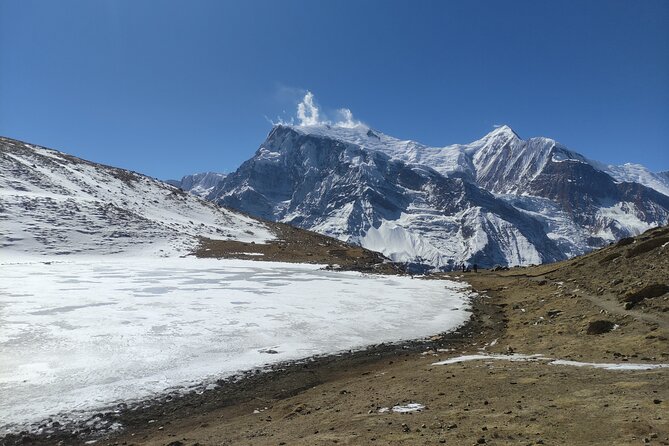
The detailed route begins around Ghandruk, an ethnic village known in the program for its traditional culture and mountain setting. From there, you follow a trail through woodlands and rhododendron-covered sections toward Chhomrong.
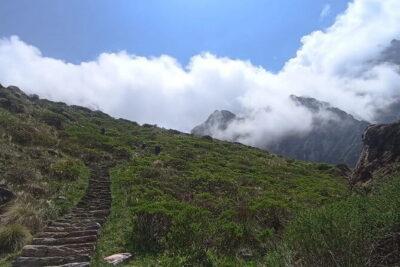
This is not an easy stroll. The route includes steady climbs, descents, uneven ground, and many stone steps. Chhomrong is an important stop because it gives you a strong first taste of the Annapurna foothills while keeping you within village life rather than moving straight into a remote high camp.
The combination of villages and forest is one of the trip’s strengths. You see more than a line of mountain peaks. You walk through areas where local homes, farms, trails, and small lodges form part of the experience.
The drawback is that the itinerary gives limited information about walking hours, distance, and elevation gain for each day. Those numbers are important when you judge your fitness. Ask for the expected hours and overnight elevations before departure.
More treks starting in Kathmandu:
- Everest Base Camp Trek – 14 Days
★ 5.0 · 1,499 reviews - Everest Base Camp Trekking
★ 5.0 · 485 reviews - Nagarkot Sunrise View and Day Hiking from Kathmandu
★ 5.0 · 471 reviews - Everest Base Camp Trekking – 13 Day
★ 5.0 · 365 reviews
Chhomrong to Sinuwa: the famous 2,500-step climb
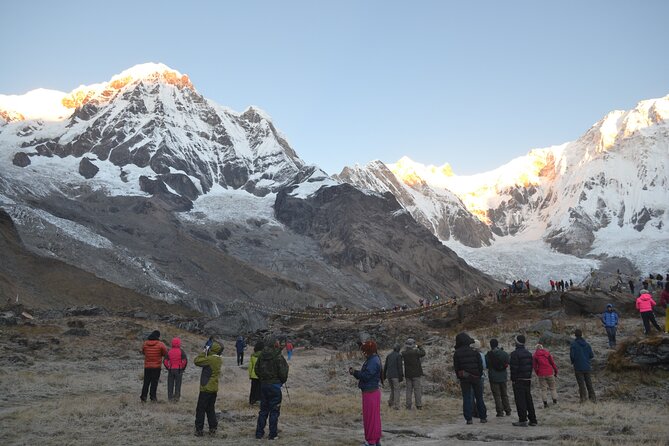
The route continues toward the Chhomrong Khola, crosses the river, and climbs about 2,500 stone steps to Sinuwa. This is a day when a steady pace matters more than speed.
The steps provide a clear test of your legs, and the trail can feel demanding even before the route reaches its highest point. You can expect mountain views along the way, but the physical work is the main story here.
Sinuwa is also an important point in the route because the environment begins to feel more enclosed and remote as you move toward the sanctuary. The accommodation remains in tea houses, so pack with simple sleeping arrangements and limited comforts in mind.
A guide is particularly useful on this part of the trek. The package includes basic first-aid support, and the listed leaders have first-aid training and knowledge of nearby medical facilities. That does not replace travel insurance or medical preparation, but it adds practical support when the trail gets difficult.
Sinuwa to Machhapuchhre Base Camp and ABC
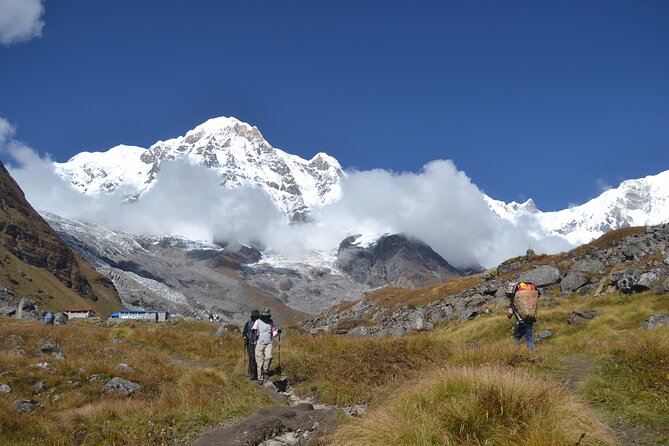
The central trekking days follow the river toward Bagar, then continue toward Machhapuchhre Base Camp before reaching Annapurna Base Camp. The route is described as a gradual climb at first, followed by a more strenuous section.
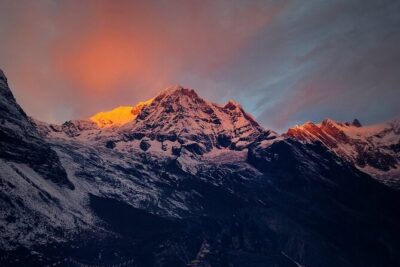
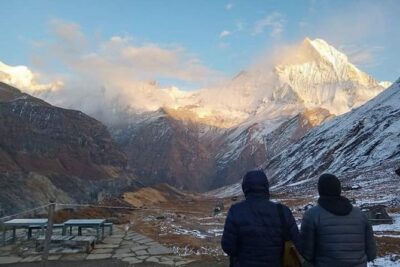
This is the part of the trip that justifies the name. You move from forest and villages into the high mountain setting of the Annapurna Sanctuary. The mountain range and the Annapurna region receive dedicated stops, and the aerial views promised in the highlights become most meaningful here.
At 4,130 meters, ABC is high enough that altitude must be treated seriously. Fitness alone does not guarantee that you will feel well. Headaches, fatigue, and other altitude effects are possible, and the supplied advice recommends speaking with a doctor before departure.
Weather can also change quickly. The information for the trek warns of extreme variations, so you need warm layers, rain protection, sturdy footwear, and a flexible attitude. The exact gear list is not provided, but the company says necessary trekking equipment can be rented or purchased in Kathmandu with help from the guide.
The reward is a rare sense of arrival: you have walked through villages, forests, river valleys, and steep stone trails to reach a high Himalayan base camp. The experience is physical, but it also connects the mountain scenery with daily life in the lower villages.
The return through Bamboo and Jhinu Danda
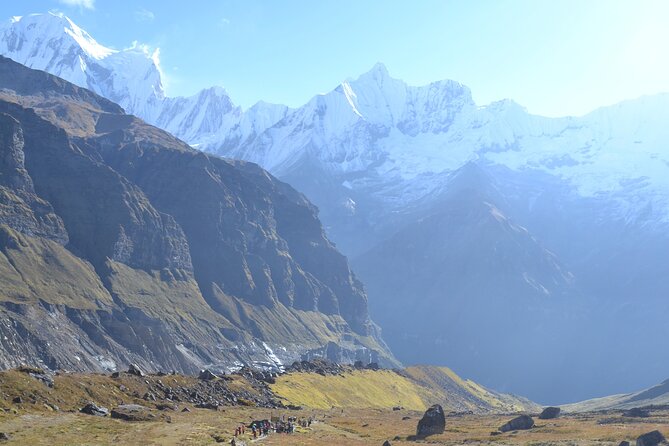
After ABC, you retrace your steps toward Bamboo. The route passes back through the sanctuary, with wet ground and smaller bridges along the trail. Returning by the same general route means you see familiar places from a different direction, though it also means there is less route variety than on a loop trek.
From Bamboo, the trail climbs toward Kuldighar, descends to the Chhomrong Khola, then climbs the stone steps toward Chhomrong again. This repeated up-and-down pattern can surprise you. Reaching the base camp is not the end of the physical effort.
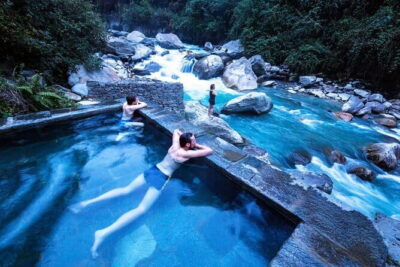
The route then continues toward Jhinu Danda. Jhinu is presented as the next major stop, but the supplied information does not clearly state whether a hot spring visit is included. Do not assume that every attraction associated with Jhinu is part of the guided schedule. Confirm the plan if that matters to you.
Nayapul, Pokhara, and time by Phewa Tal
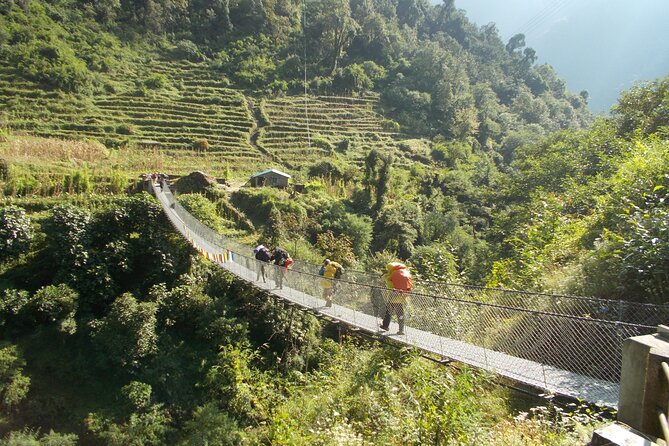
From Jhinu Danda, you walk through countryside toward Nayapul. The final stretch includes farms, rice fields, and distant views of the Annapurna Mountains. It offers a quieter finish than a sudden road pickup at a high trail point.
A private car takes you between Pokhara and Nayapul. That is a worthwhile inclusion because it avoids relying on a local transfer after several tiring trekking days.
Back in Pokhara, Phewa Tal and the Lakeside area give you time to rest. Sarangkot is also listed, though the exact timing is not clear. The lake setting makes a pleasant contrast with the stone paths and cold high-altitude nights.
Returning to Kathmandu and leaving Nepal
The schedule includes a return from Pokhara to Kathmandu by tourist bus. Patan Durbar Square is listed in the Kathmandu Valley section, along with Garden of Dreams and Narayanhiti Palace Museum on the final day.
Here again, the timing needs confirmation. One entry refers to returning on the 11th day even though the package is sold as a 10-day trip. The practical question is simple: ask for a corrected day-by-day schedule showing where you sleep each night and which sightseeing stops are included.
On departure day, staff take you to Tribhuvan International Airport and assist with final arrangements. Airport transfers are included at both ends, which is a useful service in a city where getting to the airport can take longer than expected.
Guides, group size, and the personal side of the trek
This is a private activity, with a maximum of 12 people per booking. That size should allow for a more personal pace than a large commercial group, though your walking speed will still affect the day.
The package lists English-speaking guide service as standard. A guide in another language costs an additional $200 per group. The information names Santosh, Raju Simkhada, Dibo, and Varat in connection with the guiding and porter team. It does not promise that one particular person will lead your departure, so ask who is assigned before you go.
The strongest theme in the available feedback is personal care. Santosh is described as friendly and helpful, while Raju and Santosh are remembered for humor, thoughtfulness, shared meals, singing, and dancing during the long route. Those details matter on a trek because a good support team helps turn hard walking into a shared experience.
The arrangement includes the guide’s insurance, equipment, salary, food, drinks, accommodation, transport, and local taxes. Porters are referred to in the experience, but porter arrangements for your own luggage are not clearly detailed. Confirm the baggage allowance and who carries your main pack.
Fitness, insurance, permits, and what to pack
You need moderate physical fitness. The route includes uneven trails, repeated climbs, river crossings, and roughly 2,500 stone steps in one section. It is not suitable if you expect an easy sightseeing holiday.
Medical and rescue cover is essential. Travel insurance that includes medical expenses and emergency repatriation is required, and you must show proof to the tour leader on the first day.
For permits, the company asks for a clear color passport copy, a passport valid for at least six months, two passport photographs, your occupation, and your home address. Extra luggage can be left at the company office or hotel and collected after the trek.
The minimum age is seven, but the altitude and long walking days mean that age alone does not tell you if the trip is suitable. Families should judge each child’s fitness and altitude tolerance carefully.
Should you book the Annapurna Base Camp trek?
Book this trek if you want a guided route with airport transfers, hotels, tea houses, transport, and basic support arranged in advance. It suits couples, solo participants who want a private group setting, and first-time Nepal trekkers who prefer not to coordinate every permit and vehicle themselves.
I would pause if you need a precise daily timetable, guaranteed sightseeing stops, private rooms, or a highly polished hotel experience on the trail. Tea houses are practical and local, but they are not a substitute for city accommodation.
At $699, the package offers solid value once you understand the added meal and gratuity costs. Before booking, get the corrected itinerary, assigned guide, daily walking hours, porter details, gear list, and final meal costs in writing. If those points are clear and you are ready for 4,130 meters, this is a strong way to reach Annapurna Base Camp without handling every moving part alone.
FAQ
How long is the Annapurna Base Camp trek?
The experience is sold as a 10-day trip, including Kathmandu, Pokhara, the trek, return transport, and airport departure assistance.
What is the highest point reached?
The route reaches Annapurna Base Camp at approximately 4,130 meters, or 13,550 feet, above sea level.
Is airport pickup included?
Yes. Airport transfers from and to Tribhuvan International Airport are included.
How many nights are spent in tea houses?
The package includes six nights in tea-house accommodation during the trek.
Are Kathmandu and Pokhara hotels included?
Yes. The package includes two nights in Kathmandu and two nights in Pokhara in three-star hotels with breakfast.
Is transport between Kathmandu and Pokhara included?
Yes. Kathmandu to Pokhara and the return journey are listed as transport by luxury tourist bus.
Is transport between Pokhara and Nayapul included?
Yes. Pokhara to Nayapul and the return journey are listed as private car transfers.
Are meals included?
Breakfast is included, along with dinner as specified and a farewell dinner with a cultural show. Lunch and dinner in Kathmandu and Pokhara are excluded, with an estimated extra cost of $150 per person.
Do I need travel insurance?
Yes. You must have insurance covering medical expenses and emergency repatriation, and proof must be shown to the tour leader on the first day.
What is the cancellation policy?
You can receive a full refund if you cancel at least 24 hours before the experience start time. Cancellations or changes made within 24 hours are not accepted for a refund.
Recently added around Kathmandu
- Kathmandu : Swambhunath & Durbar Square Guided Half Day Tour★ 3.3 · 3 reviews
- Private Day Tour in Kathmandu Valley Rim with Bhaktapur Sightseeing★ 5.0 · 3 reviews
- From Kathmandu / Pokhara / Chitwan: River Rafting – 1 Day★ 4.6 · 3 reviews
- Nepali Cooking training & Cultural Homestay Experience★ 5.0 · 3 reviews
- Private 3-Hour Nagarkot Sunset Tour from Kathmandu★ 3.5 · 3 reviews
- From Kathmandu: Everest Base Camp Landing Helicopter Tour★ 5.0 · 3 reviews
- 4 UNESSCO World heritage sites of Kathmandu-private tour★ 5.0 · 3 reviews
- From Kathmandu Budget: 15 Day Everest Base Camp Trek★ 5.0 · 3 reviews
Annapurna Treks, compared.
Kathmandu to Annapurna Base Camp (ABC) 5-Day Trek
Read our review →
Browse the lists this tour appears in