
Reviewed · ANNAPURNA TREKS
Annapurna Base Camp Trek
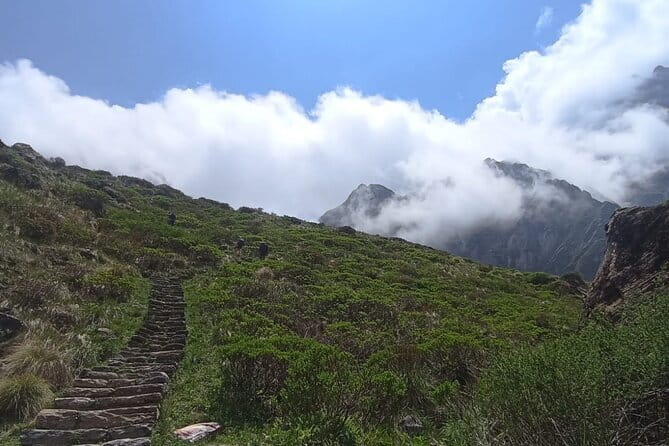
The finest part of the Annapurna Base Camp Trek is the changing scenery. You begin among terraced farms and Gurung villages, pass through cool forest, and finish beneath Annapurna South, Hiunchuli, Machhapuchhre, and glacier country. The route gives you a real mountain journey without requiring a long expedition.
I like the full-service setup: meals, permits, transport, and seven nights of trekking accommodation are included. I also like the people-centered guiding. Guides including Suraj, Anos, and Laku are named by the company, and their work centers on pacing, meals, lodging, and adjusting the route to suit the group.
The main caution is the physical demand. This is rated moderate, but several days involve long climbs, steep steps, and extended walking. The 4:45 a.m. start, changing weather, and basic paid extras such as hot water, showers, charging, and bottled water all deserve a place in your planning.
In This Review
- Key points to know before booking
- Why this seven-day route works
- Day 1: Ghandruk starts the walk among farms and peaks
- Day 2: Chhomrong brings the first serious climbs
- Day 3: Sinuwa, bamboo, and the Modi River gorge
- Day 4: The sanctuary opens around Annapurna Base Camp
- Day 5: Sunrise at base camp, then a long return
- Day 6: Chhomrong and the hot spring at Jhinu Danda
- Day 7: Siwai to Pokhara closes the loop
- Guides, porters, and the value of local support
- What the $699.67 price really covers
- Who should book this Annapurna trek?
- Booking details and cancellation terms
- FAQ
- Where does the Annapurna Base Camp Trek take place?
- How long is the trek?
- What time does the activity start?
- Is pickup offered?
- Is this a private activity?
- What meals are included?
- Is accommodation included?
- Are trekking permits included?
- Is travel insurance included?
- What happens if bad weather cancels the trek?
- Should you book it?
Key points to know before booking
- Ghandruk gives you a gentle scenic beginning: The first walking day starts in a Gurung village setting, with terraced fields and Annapurna views before the harder sections arrive.
- The route passes through Chhomrong and Sinuwa: These villages and ridges break up the climb and lead you toward the Modi River gorge and sanctuary.
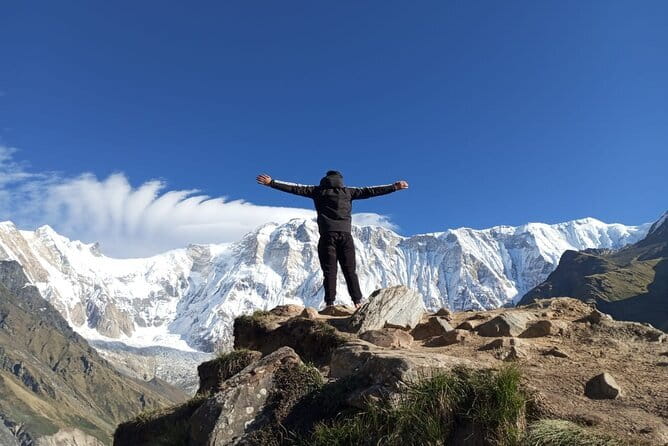
- Annapurna Base Camp is the clear high point: You reach the mountain bowl beneath Annapurna South, Machhapuchhre, and Hiunchuli, with sunrise as a major reward.
- Jhinu Danda adds a change of pace: The return route includes access to a hot spring, giving your legs a welcome rest after the base camp push.
- The price covers the basics that matter: At $699.67 per person, you receive meals, accommodation, permits, a licensed guide, and ground transport.
- You have a private trip, but not necessarily a solo trip: Only your booked group participates, and the operator can combine small parties when arranged that way.
Why this seven-day route works
Annapurna Base Camp is a strong choice if you want a compact Himalayan trek with a clear goal. The route does not simply march toward one viewpoint. It moves through farms, settlements, forests, river valleys, and open mountain country, so the scenery changes often enough to keep each day distinct.
You start from Kathmandu as the listed location, but the walking itinerary begins beyond Pokhara. The first transport links Pokhara with the trailhead area around Nayapul, Syauli Bazar, or Samrung Khola, depending on the route arrangements. Ground transportation is included for the outward journey from Pokhara and the return from Samrung Khola to Pokhara.
That split matters. You are not paying only for a guide on the path. You are also paying for the practical pieces that can be awkward to arrange independently, including permits, local transfers, and food over the week.
The advertised price is $699.67 per person. For a seven-day trek with three meals each day, seven nights of accommodation, seasonal fruit, an Annapurna Conservation Area Permit, and a TIMS card, that is a useful package. You still need to budget for travel and rescue insurance, drinks, phone calls, laundry, battery charging, bottled water, hot water, showers, and tips for your guide.
More Annapurna treks:
- Annapurna Circuit Trek with Tilicho Lake
★ 5.0 · 368 reviews - Annapurna base camp trek 5 Days
★ 5.0 · 252 reviews - Annapurna Base Camp Trek
★ 5.0 · 111 reviews
Day 1: Ghandruk starts the walk among farms and peaks
After an overnight stay in Pokhara, you drive beyond the city after breakfast to begin walking. The first stop is Ghandruk, a well-known Gurung village area with views toward the Annapurna range and Machhapuchhre, the mountain often called Fish Tail.
The first walking section takes about four hours and ten minutes. That is a sensible opening day for a seven-day route. You get a taste of the mountain path without immediately facing the longest uphill sections.
Ghandruk is valuable because it gives the trek a human setting. Terraced fields and village paths make the beginning feel connected to local life rather than like a simple approach march through empty hills. The mountain views are already part of the day, but the setting remains warm and lived in.
The transport can make this day feel longer than the walking time suggests. You should treat the morning as a combined road and trail day, not as four relaxed hours from a city hotel. Still, beginning near Ghandruk helps keep the route focused and leaves the major ascent for later.
Day 2: Chhomrong brings the first serious climbs

From Ghandruk, the path first follows a gradual section before climbing to Kimrong Danda, a ridge with a short break. From there, you descend through cooler forest toward the Kimrong River and continue toward a farm village before reaching Chhomrong.
The listed schedule is about 15 hours, which is unusually long when compared with the other walking times. The itinerary details suggest a demanding full day with repeated uphill and downhill sections, but you should confirm the exact daily timing with the operator before setting out. This is the day when a moderate rating begins to feel real.
Chhomrong is an important point on the route because it links the lower villages with the forested approach to the Annapurna sanctuary. The day gives you a good sample of what trekking here means: a downhill section is not always rest, since it is often followed by another climb.
I would pay close attention to your guide’s pace here. Suraj is specifically associated with keeping energy high while checking that the group is comfortable, and Anos is noted for careful attention to planning and daily needs. A good guide is useful on a route where the rhythm matters as much as the distance.
Day 3: Sinuwa, bamboo, and the Modi River gorge
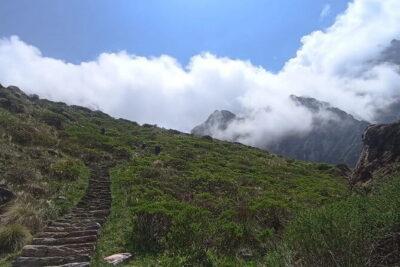
The path leaves Chhomrong by descending to a bridge, then climbs toward Sinuwa Danda. From this ridge, the trail enters thick forest and winds through a series of ups and downs toward Bamboo, beside the Modi River gorge.
The stated duration is about 14 hours, so you should expect another substantial day. The route description emphasizes forest, bridges, ridges, and river country rather than broad mountain views. That change is part of the appeal, but it also means the day can feel enclosed and physically steady.
Sinuwa marks a useful transition. Below it, the route has more farms and village scenery. Beyond it, the forest and gorge draw you farther into the sanctuary. The quiet woodland sections provide shade and a different mood from the open terraced hills around Ghandruk.
Bamboo is a practical stopping point in the route, but do not expect the same range of comforts you might find in Pokhara. Accommodation is included, while hot water, showers, charging, bottled water, and similar services cost extra. Carry some local currency for these small expenses, since they can add up during a week.
More treks starting in Kathmandu:
- Everest Base Camp Trek – 14 Days
★ 5.0 · 1,499 reviews - Everest Base Camp Trekking
★ 5.0 · 485 reviews - Nagarkot Sunrise View and Day Hiking from Kathmandu
★ 5.0 · 471 reviews - Everest Base Camp Trekking – 13 Day
★ 5.0 · 365 reviews
Day 4: The sanctuary opens around Annapurna Base Camp
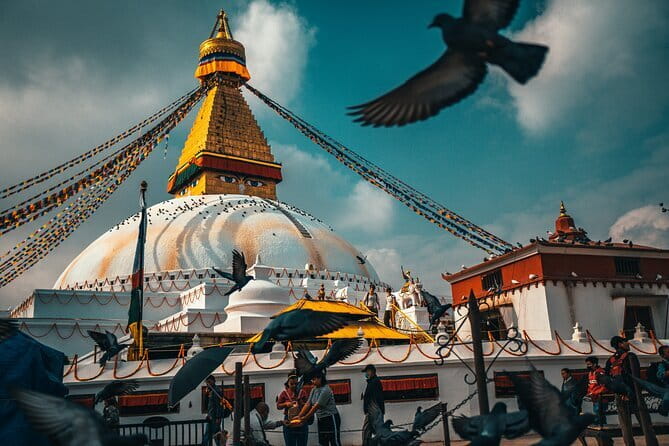
The fourth day leads past the Himalaya Hotel and the large Hinko Cave, with Annapurna South and Hiunchuli rising above the route. The trail then continues toward the base camp area, following the valley and moving closer to the main objective.
The itinerary gives this day about 13 hours, another demanding figure. The exact walking rhythm can vary with weather, group pace, and trail conditions, so ask your guide to clarify how much of this time is expected on foot. This is the day when you want an early start, steady breaks, and no rush for photographs.
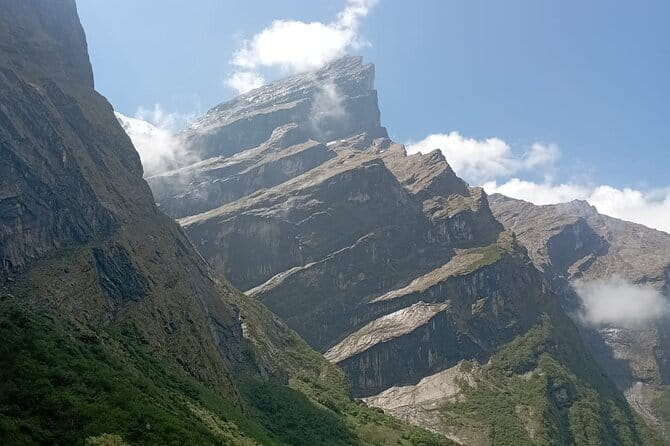
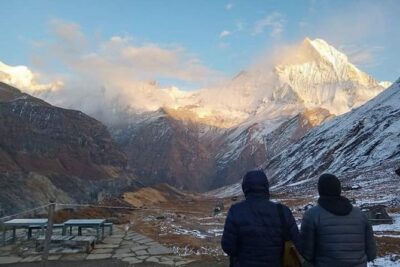
The Hinko Cave is an interesting natural marker, but the real change comes in the scale of the surroundings. Forest gives way to more open mountain views, and the peaks feel much closer. Annapurna South, Hiunchuli, and Machhapuchhre shape the approach, while the sanctuary gathers the route into a dramatic mountain bowl.
This is also where a flexible guide matters. One group had its route adjusted to better match its needs, and that kind of practical judgment is worth more than a rigid promise to follow every step exactly. Weather and energy can affect the best plan, so direct communication with Anos, Suraj, Laku, or the assigned guide is important.
Day 5: Sunrise at base camp, then a long return
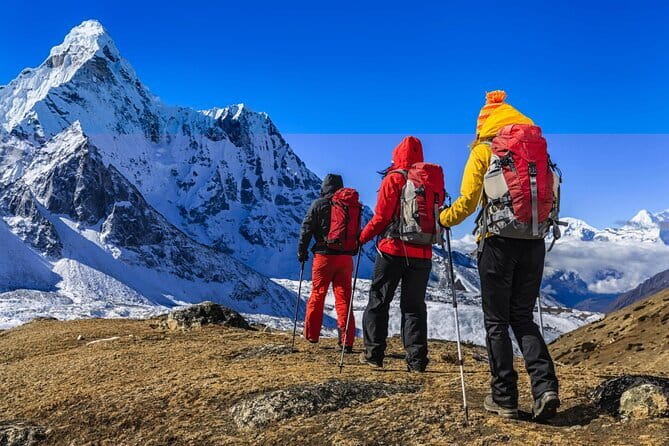
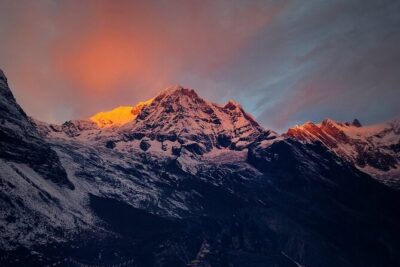
The high point of the trek is time at Annapurna Base Camp. You are surrounded by major peaks and glaciers, with Annapurna South, Machhapuchhre, and Hiunchuli forming the main visual drama. Sunrise is the special moment, so have warm clothing and a camera ready before daylight.
The return begins after the base camp visit. The route descends for nearly six hours, with some short uphill stretches, eventually reaching Bamboo and then the taller tree lines and greener vegetation below.
The itinerary lists only two hours for this stop, but its description refers to a much longer descent. That mismatch is worth clarifying before you book or during your pre-trek briefing. In practical terms, this should be treated as a long mountain day, not an easy morning followed by a short stroll.
The descent is hard in its own way. Knees and feet take more strain than they did on the way up, and tired legs can make small downhill steps surprisingly slow. The included meals are especially useful here. Breakfast, lunch, dinner, and seasonal fruit mean you do not need to organize your own food supply each day, though bottled water and hot drinks remain personal expenses.
Day 6: Chhomrong and the hot spring at Jhinu Danda
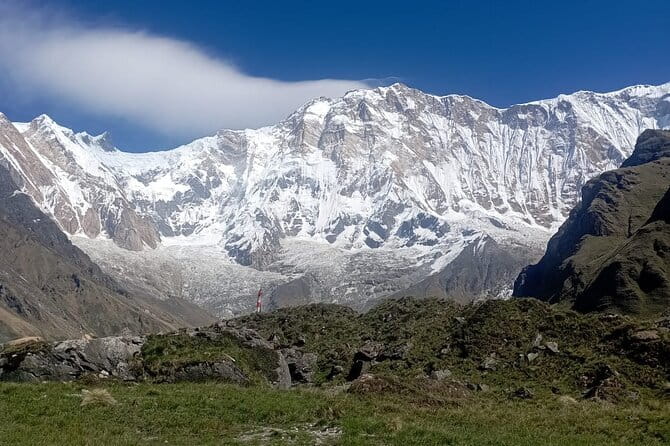
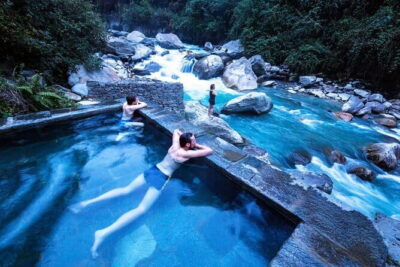
The return route heads back toward Chomrong with more uphill and downhill walking. From the Chomrong hilltop, you take a different trail to Jhinu Danda, a pleasant ridge village with broad mountain views and access to a hot spring.
Jhinu gives the trip a welcome change of tone. After the concentrated mountain scenery around base camp, a hot spring offers a simple way to relax and mark the shift from the high route toward the road. It is one of the most useful touches in the itinerary because it gives tired legs something other than another viewpoint.
The listed stop time is about two hours, but the route itself includes the return to Chomrong and the walk to Jhinu. Ask your guide how the day is divided. The terrain still includes climbs, so the hot spring is not a substitute for a light day.
Jhinu also makes the return feel less like retracing every step. You see another village and use a fresh section of trail before the final transport. Laku is one guide named for this seven-day route, and the company advises requesting a preferred guide and porters ahead of time during the busy hiking season.
Day 7: Siwai to Pokhara closes the loop
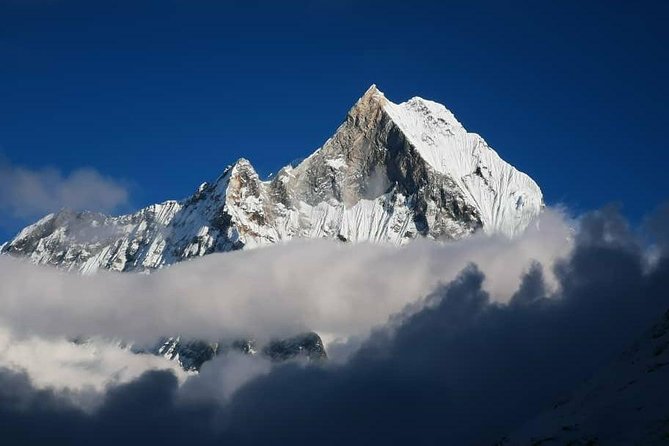
The final trekking day takes about four hours to Siwai, followed by roughly two hours by road to Pokhara. The path descends through warmer, lower farm areas, where the vegetation and temperature feel different from the sanctuary.
The final stop is listed as Pokhara Museum, with about 30 minutes shown. The meaningful part of this day is not the museum time but the return to town. After a week of mountain paths, the road ride restores access to ordinary city comforts and gives you a chance to look back at how much the scenery changed.
Transportation from the return point to Pokhara is included. That is a real convenience. Organizing a vehicle after a long trek can be tiring, and having the transfer included gives the final day a clear finish.
Guides, porters, and the value of local support
The trip includes a government-licensed mountain guide. The named guides connected with this route include Suraj, Anos, and Laku. Their roles go beyond pointing out the trail. You need help with timing, meals, accommodation, group pace, and route choices when conditions or energy levels change.
Suraj is described as attentive to planning, meals, and accommodation, while Anos is associated with careful, dedicated support. Laku is praised as friendly and helpful, with porters Sonam and Necha also named for taking good care of the group. These details matter because a week on foot is shaped by small daily decisions.
This is a private activity, meaning only your booked group participates. That gives you more control than a large scheduled group, but it does not mean the route will always be a one-to-one trip. Small parties may be combined by arrangement, so confirm the expected group size and request preferred staff in advance if that is important to you.
What the $699.67 price really covers
The package includes:
- Breakfast, lunch, and dinner throughout the trek
- Seven nights of accommodation on the route
- A licensed mountain guide
- Annapurna Conservation Area Permit and TIMS card
- Ground transport from Pokhara toward the trail and from Samrung Khola back to Pokhara
- Seasonal fruit
The value is strongest if you want a managed trek rather than a loose collection of bookings. Permits and meals are already handled, and transport is included at both ends of the walking route.
The price does not include travel or rescue insurance. It also excludes bar bills, phone calls, laundry, battery recharge, bottled water, hot water, showers, and guide tips. Those are not surprising exclusions, but you should plan for them rather than treating the advertised price as your complete Nepal budget.
Who should book this Annapurna trek?
I would recommend this trip to you if you want a seven-day Himalayan goal and have moderate physical fitness. It suits people who prefer a local guide, included meals, arranged transport, and a clear route rather than making every decision on their own.
It is also a good fit if you value changing scenery. Ghandruk’s farms, Chhomrong’s ridges, Sinuwa’s forest, the Modi River gorge, the sanctuary peaks, and Jhinu’s hot spring give the week a strong sense of progression.
I would hesitate if you want short, easy walks or a flexible holiday with no early starts. The 4:45 a.m. meeting time, long listed days, steep ups and downs, and extra charges for basic comforts require preparation. Service animals are allowed and the activity is near public transportation, but the moderate fitness requirement remains the key practical issue.
The company has a five-star rating from 59 ratings and a 100 percent recommendation figure. Those numbers point to a strong record, especially for guiding and organization, but they do not remove the need to ask about the precise daily timetable, accommodation, group size, and assigned guide before paying.
Booking details and cancellation terms
Confirmation is provided at booking. The activity starts at 4:45 a.m., and pickup is offered, so confirm the exact pickup point and time in advance.
You can cancel for a full refund up to 24 hours before the experience starts. Changes or cancellations inside that 24-hour window are not accepted for a refund. If poor weather causes cancellation, you are offered another date or a full refund. The same applies if the minimum number of participants is not met.
FAQ
Where does the Annapurna Base Camp Trek take place?
The experience is listed in Kathmandu, Nepal, while the walking itinerary begins beyond Pokhara and includes Ghandruk, Chhomrong, Sinuwa, Annapurna Base Camp, Jhinu Danda, Siwai, and Pokhara.
How long is the trek?
The experience lasts approximately seven days.
What time does the activity start?
The listed start time is 4:45 a.m.
Is pickup offered?
Yes, pickup is offered.
Is this a private activity?
Yes. Only your booked group participates in the activity, although small parties may be combined by arrangement.
What meals are included?
Breakfast, lunch, and dinner are included during the trek. The package also includes seasonal fruit.
Is accommodation included?
Yes. Seven nights of accommodation on the trek are included.
Are trekking permits included?
Yes. The Annapurna Conservation Area Permit and TIMS card are included.
Is travel insurance included?
No. Travel and rescue insurance are not included and must be arranged separately.
What happens if bad weather cancels the trek?
You are offered a different date or a full refund if poor weather causes cancellation. A different date, different experience, or full refund is also offered if the minimum number of participants is not met.
Should you book it?
Book this trek if you want the main Annapurna sanctuary experience in a compact week, with food, permits, transport, accommodation, and local guiding arranged for you. The route has a satisfying arc, from Gurung villages and terraced fields to a sunrise at base camp and a hot spring stop on the way back.
Before booking, confirm the daily walking times, since several itinerary durations do not match their descriptions. Then request your preferred guide, ask about the group size, buy rescue insurance, and budget for showers, charging, water, and tips. If you are ready for long days and early mornings, the $699.67 package offers a practical way to reach one of Nepal’s great mountain destinations without handling every detail yourself.
Recently added around Kathmandu
- Kathmandu : Swambhunath & Durbar Square Guided Half Day Tour★ 3.3 · 3 reviews
- Private Day Tour in Kathmandu Valley Rim with Bhaktapur Sightseeing★ 5.0 · 3 reviews
- From Kathmandu / Pokhara / Chitwan: River Rafting – 1 Day★ 4.6 · 3 reviews
- Nepali Cooking training & Cultural Homestay Experience★ 5.0 · 3 reviews
- Private 3-Hour Nagarkot Sunset Tour from Kathmandu★ 3.5 · 3 reviews
- From Kathmandu: Everest Base Camp Landing Helicopter Tour★ 5.0 · 3 reviews
- 4 UNESSCO World heritage sites of Kathmandu-private tour★ 5.0 · 3 reviews
- From Kathmandu Budget: 15 Day Everest Base Camp Trek★ 5.0 · 3 reviews
Annapurna Treks, compared.
Kathmandu to Annapurna Base Camp (ABC) 5-Day Trek
Read our review →
Browse the lists this tour appears in