
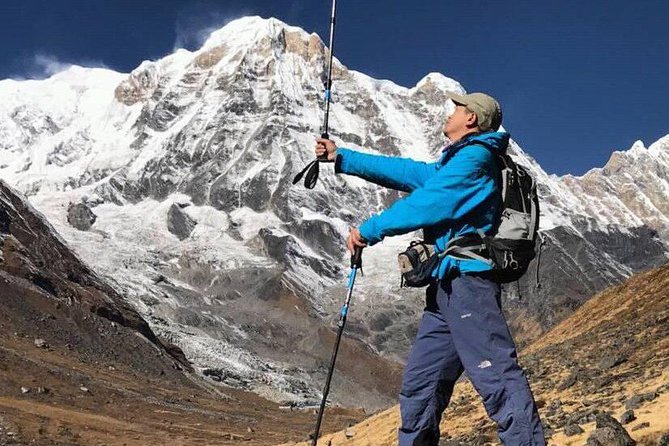
Reviewed · ANNAPURNA TREKS
Annapurna Base Camp Trekking
Annapurna Base Camp is the prize here, but the route gives you much more than a single mountain viewpoint. Over 12 days, you travel from Kathmandu to Pokhara, climb through Ghorepani and Poon Hill, pass beneath Machhapuchhre, and reach ABC at 4,130 meters before descending to Jhinu Danda’s hot springs.
I like the practical setup: a licensed guide, porter, first aid kit, sleeping bag, down jacket, permits, and tea house lodging are included. I also like the mix of major sights and small villages, especially Poon Hill at sunrise and the final soak at Jhinu.
The main catch is the price structure. At $749.90, the package covers many important trekking costs, but you still pay for breakfast, lunch, dinner, drinks, and hotels in Kathmandu and Pokhara. The 12-day schedule also includes two long bus rides, each around seven to eight hours.
In This Review
- Key points to know before booking
- What the $749.90 price really covers
- Day 1 in Kathmandu: airport pickup and a useful briefing
- Day 2: the long road from Kathmandu to Pokhara
- Day 3: Birethanti, Ulleri, and Ghorepani
- Day 4: Poon Hill sunrise and the trail to Tadapani
- Day 5: forest paths through Chuile to Sinuwa
- Day 6: Sinuwa to Deurali
- Day 7: Machhapuchhre Base Camp and Annapurna Base Camp
- Day 8: the long descent from ABC to Bamboo
- Day 9: Bamboo to Jhinu Danda
- Day 10: hot springs, the trail end, and Pokhara
- Day 11: the eight-hour bus back to Kathmandu
- Day 12: airport transfer and departure
- What the guide and porter arrangement adds
- Who should book this Annapurna trek
- Final call: good value for the right kind of trekker
- FAQ
- How long is the Annapurna Base Camp trek?
- What is the price of the tour?
- Is this a private tour?
- Are Kathmandu and Pokhara hotels included?
- Are meals included during the trek?
- Are drinks included?
- Is a trekking guide included?
- Is a porter included?
- What trekking equipment is provided?
- Are permits included?
Key points to know before booking
- Poon Hill adds a sunrise viewpoint before the trail turns toward Annapurna Base Camp.
- The highest point is 4,130 meters, with Machhapuchhre Base Camp at about 3,700 meters on the way.
- A guide and shared porter service are included, with one porter assigned for every two trekkers.
- Trekking gear is supplied, including a duffle bag, sleeping bag, down jacket, map, and first aid kit.
- Meals are not included, so budget separately for food, bottled drinks, and other beverages.
- The private format suits a small party, since only your own group takes part.
What the $749.90 price really covers
For a 12-day trek, $749.90 can be a fair price if you value having the main logistics arranged before you arrive. The package includes the tourist bus from Kathmandu to Pokhara and back, private transfers to and from the trail, tea house accommodation during the trek, trekking permits, government fees, a licensed English-speaking guide, and a porter.
The gear package also saves you from buying or renting everything in Nepal. You can use a duffle bag, sleeping bag, and down jacket, and you receive a trekking map, T-shirt, first aid support, and trip achievement certificate. Staff wages, food, equipment, insurance, and transport for the trekking team are included in the agency service charge.
But do not read the price as all-inclusive. You pay for breakfast, lunch, and dinner during the trek, plus water, soft drinks, juice, and other cold drinks. Hotels in Kathmandu and Pokhara are also excluded, as is a porter for a solo participant.
That distinction matters. Food costs build over several trekking days, and higher settlements often have fewer choices and higher prices. The package is best viewed as a guided trekking framework with substantial logistics covered, not a full holiday package from airport to airport.
More Annapurna treks:
- Annapurna Circuit Trek with Tilicho Lake
★ 5.0 · 368 reviews - Annapurna base camp trek 5 Days
★ 5.0 · 252 reviews - Annapurna Base Camp Trek
★ 5.0 · 111 reviews
Day 1 in Kathmandu: airport pickup and a useful briefing
Your first day is deliberately light. A representative meets you at Tribhuvan International Airport and transfers you to your hotel. Later, you attend a pre-trip meeting with the trek leader.
This briefing is an important part of the trip. You can use it to confirm the departure time, check your equipment, and ask how the daily stages are organized. Since the trek reaches 4,130 meters, this is also the right moment to make sure your clothing and sleeping gear are suitable.
The airport transfer is included, but your Kathmandu hotel is not. You should arrange that cost separately before you arrive.
Day 2: the long road from Kathmandu to Pokhara
The bus leaves at about 7:00 a.m. and takes roughly seven hours. The route follows one of Nepal’s scenic river corridors toward Pokhara, a city at about 820 meters beside Phewa Lake and backed by the Annapurna and Dhaulagiri ranges.
This is not a quick transfer. A seven-hour bus ride can feel tiring before the walking even begins, so keep the day’s purpose clear: you are moving from the capital to the trekking base. The tourist bus is included, which removes the need to arrange a separate connection, but you should expect a full road day rather than an afternoon of sightseeing.
Pokhara Lakeside is the main base for trekkers and provides a softer transition between city travel and the trail. The schedule information places both Pokhara and Kathmandu entries under Day 2, but the practical sequence is the morning departure from Kathmandu followed by arrival in Pokhara.
Day 3: Birethanti, Ulleri, and Ghorepani
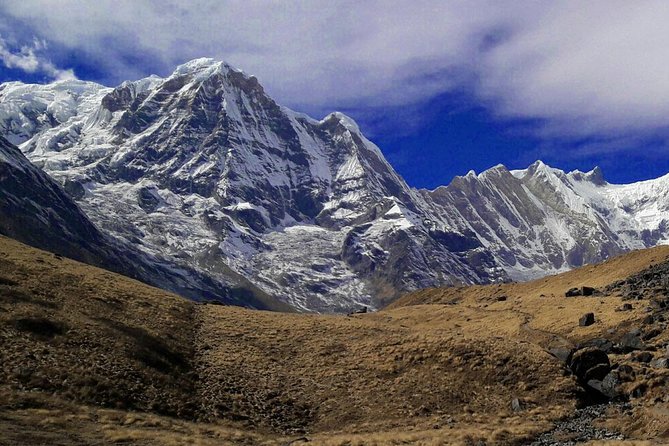
From Pokhara, a private vehicle takes you toward the trailhead around Nayapul and Birethanti. The starting area is about 827 meters above sea level. From there, the walking begins toward Tikhedhunga and Ulleri.
The first trek day is short in distance but not easy in effort. The climb from Tikhedhunga, around 1,480 meters, to Ulleri includes a sustained ascent. You then continue through Nangethanti, a small rest settlement at roughly 2,460 meters, before reaching Ghorepani at about 2,874 meters.
Ghorepani is one of the best-known stops in the Annapurna region, and it earns that status because it sits at the junction of important mountain routes. The day combines road transfer, a serious climb, and a high village finish. You should not treat it as a gentle warm-up.
Tea house accommodation is included during the trek. Food is not, so you will need to buy your meals at the stopping points.
More treks starting in Kathmandu:
- Everest Base Camp Trek – 14 Days
★ 5.0 · 1,499 reviews - Everest Base Camp Trekking
★ 5.0 · 485 reviews - Nagarkot Sunrise View and Day Hiking from Kathmandu
★ 5.0 · 471 reviews - Everest Base Camp Trekking – 13 Day
★ 5.0 · 365 reviews
Day 4: Poon Hill sunrise and the trail to Tadapani
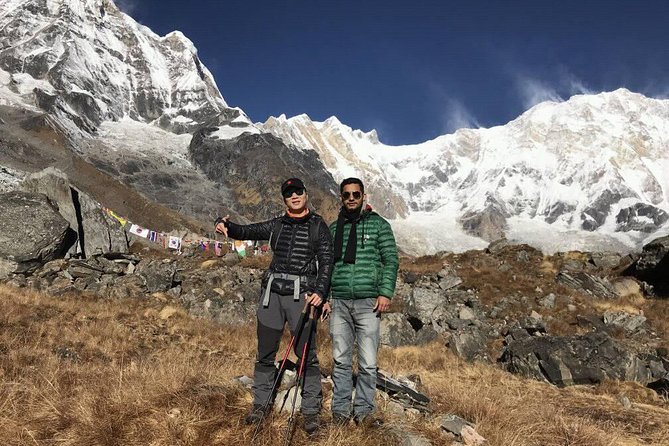
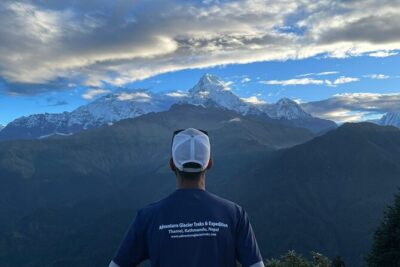
The pre-dawn walk from Ghorepani to Poon Hill takes about 45 minutes. At 3,210 meters, the viewpoint offers broad mountain views toward Annapurna, Dhaulagiri, and Machhapuchhre. Sunrise is the reason for the early start, so this is one of the few parts of the schedule where an alarm before daylight has a clear payoff.
After returning from Poon Hill, you continue to Tadapani. The day’s walking is listed at about seven hours, making it one of the fuller stages. Tadapani sits around 2,630 meters and is known for views of Machhapuchhre, Annapurna South, and Hiunchuli.
I like this section because it gives you a major viewpoint before the route narrows into the Annapurna Base Camp approach. The drawback is the timing. You climb Poon Hill early, then still have a long walking day ahead, so rest and sensible pacing matter.
Day 5: forest paths through Chuile to Sinuwa
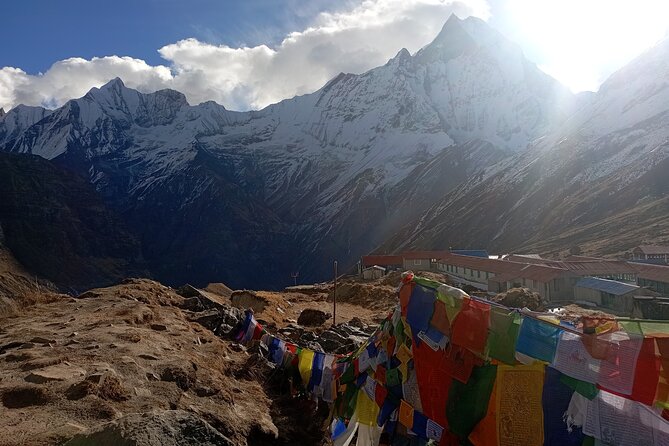
The route passes through Chuile, a quiet village at around 2,300 meters, surrounded by forest and terraced fields. The stage ends at Sinuwa, around 2,340 meters, after about seven hours of walking.
Sinuwa is split into Lower Sinuwa and Upper Sinuwa, only a short distance apart in altitude. It is an important trail point because the route from here leads deeper into the Annapurna Sanctuary.
This is the kind of day that shows why the trip is not simply a march from one famous viewpoint to another. You move through smaller settlements and wooded sections, with the pace set by the guide and the condition of the group. The scenery changes gradually rather than arriving as one dramatic stop.
Day 6: Sinuwa to Deurali
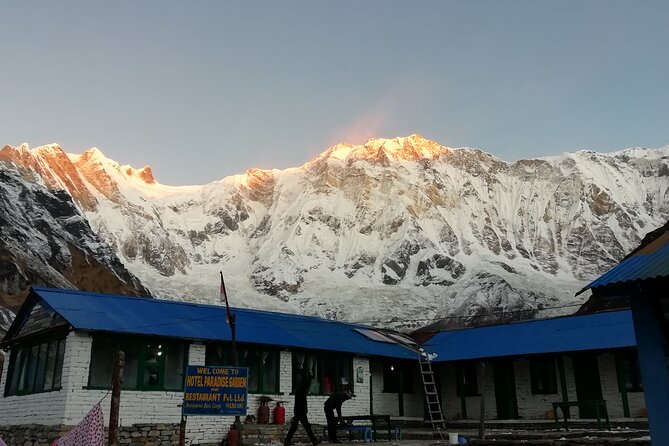
You continue from Sinuwa toward the higher settlements of the route. The schedule allows about six hours to Sinuwa and another five hours toward Deurali, with the route described through Chhomrong, Himalaya, and Deurali depending on the exact starting point.
The altitude rises from roughly 2,340 meters to Himalaya at about 2,890 meters and then Deurali at approximately 3,174 meters. At this stage, the mountain setting becomes more serious, and daily progress is shaped by climbs rather than road access.
A guide is especially useful here because the schedule has several named points and some route descriptions begin from different villages. Your guide can clarify the actual start and finish for your group each morning. The provided first aid kit and trained trekking staff add practical value, though you still need a moderate level of physical fitness.
Day 7: Machhapuchhre Base Camp and Annapurna Base Camp
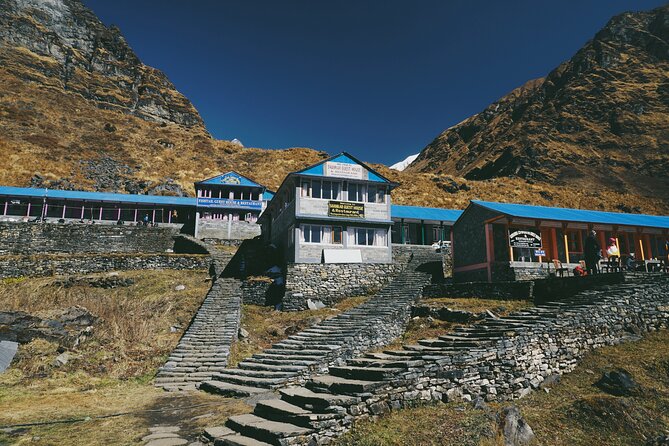
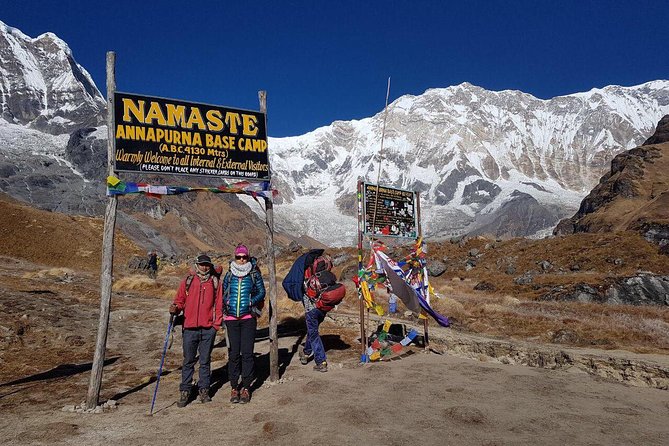
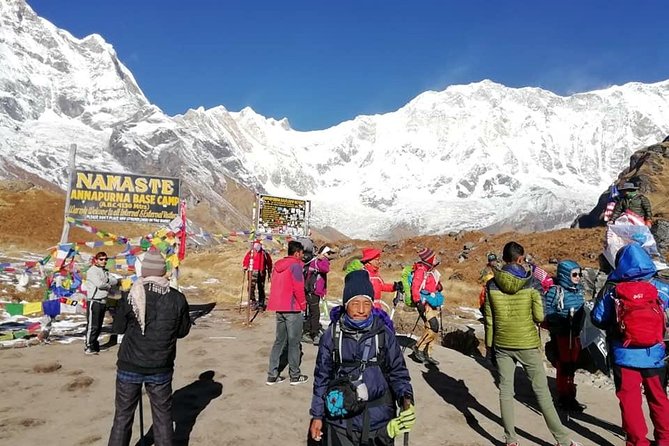
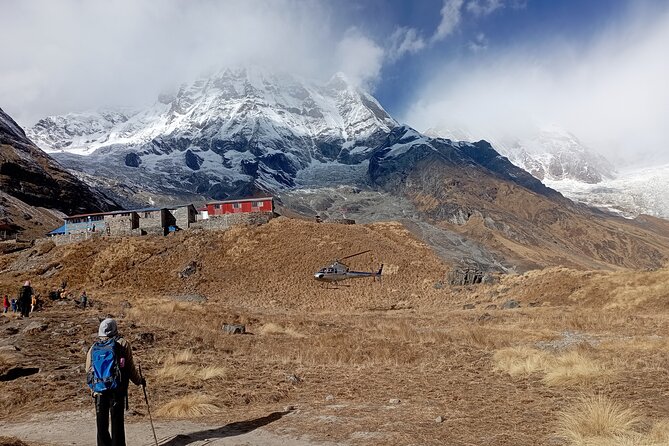
This is the central day of the trek. From Deurali or the Himalaya area, you climb toward Machhapuchhre Base Camp, usually called MBC, at about 3,700 meters. From there, the trail continues to Annapurna Base Camp at 4,130 meters.
The walking time is listed at around six hours. The route enters the high mountain basin of the Annapurna Sanctuary, where the surrounding peaks become the focus rather than distant scenery. ABC sits at about 13,550 feet, and reaching it is the defining achievement of the trip.
The mountain views are the reward, but the altitude is the serious part. You should follow your guide’s pace and pay attention to how you feel. The tour requires moderate physical fitness, and this is the day when that requirement becomes most obvious.
MBC is not just a passing label on the schedule. It gives you a clear intermediate goal before ABC and helps break up the climb. Reaching ABC after passing through MBC also makes the final arrival feel earned rather than rushed.
Day 8: the long descent from ABC to Bamboo
After the high point, you descend from ABC at 4,130 meters to Bamboo at about 2,350 meters. The day is listed at roughly seven hours, and it can be demanding in a different way from the climb.
The major benefit of this descent is that you leave the highest sleeping altitude behind. The cost is tired legs. A downhill stage of this length still requires steady effort, particularly after the previous day’s ascent.
Bamboo is a useful overnight stop in the Annapurna Sanctuary. You can expect the route to feel more wooded and enclosed again as you lose altitude. The change from high basin to forested trail gives the return journey its own character rather than making it a simple reverse of the climb.
Day 9: Bamboo to Jhinu Danda
The trek continues down from Bamboo to Jhinu Danda, a village at about 1,780 meters. The walking time is around five hours, so this is shorter than the ABC stage and the descent to Bamboo.
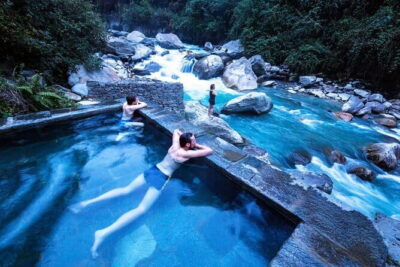
Jhinu is known for its natural hot springs, which give the village a clear purpose for trekkers coming down from the sanctuary. The setting makes the stop feel like a reward at the right point in the route.
The schedule identifies the hot spring admission as not included. Bring separate money for that visit. Since the trek package excludes drinks as well, you should also plan for those purchases along the route.
Day 10: hot springs, the trail end, and Pokhara
The morning includes about an hour at Jhinu Danda’s hot spring area, followed by roughly five hours of trekking toward Siwa or Ghandruk Phedi. The exact endpoint depends on the route chosen.
From there, the transfer takes you back to Pokhara Lakeside. This creates a satisfying final trekking day: a downhill walk, a warm-water stop, and a return to the city beside Phewa Lake.
The schedule lists admission to Pokhara as included, while accommodation in Pokhara is not. Make sure you know where you will sleep that night and whether the cost is already arranged separately.
Day 11: the eight-hour bus back to Kathmandu
The return journey covers about 200 kilometers and takes around eight hours by tourist bus. Pokhara sits at about 820 meters, while Kathmandu is around 1,350 meters, so the day is a long road transfer with a gradual change in altitude.
This is a practical close to the trek, but it is not a sightseeing day. If you have an important international flight soon after, the next day is safer than trying to combine the bus ride with a departure. The itinerary provides airport transfer on Day 12, but it does not state a flight time or a guaranteed buffer.
Day 12: airport transfer and departure
Your final day includes a transfer to Tribhuvan International Airport. The listed airport activity lasts about an hour and is included in the package.
The airport transfer is convenient, especially after a demanding trek, but the package ends with departure. If you plan to stay in Kathmandu longer, you will need to arrange your own hotel and onward plans.
What the guide and porter arrangement adds
You receive one licensed, English-speaking trekking guide and a porter for every two trekkers. Staff salaries, food, equipment, insurance, and transportation are covered, so the team is not an informal add-on that you must organize separately.
A porter for two people is a normal shared arrangement, but it is worth understanding before you pack. If you are traveling alone, a porter is not included. The package does include a duffle bag, which helps keep your personal luggage separate from what you carry during the walking days.
One detailed experience praised the patience and care of guide Avi and porter Robin during a Poon Hill and ABC trek. That account specifically highlighted their effort to support safety and comfort. Staff can make a major difference on a route with long climbs, changing altitudes, and several overnight stops, though the exact guide assigned to your departure may differ.
Who should book this Annapurna trek
I would recommend this trip to you if you want the major Annapurna Base Camp route arranged in advance and prefer a private group rather than a large shared departure. The inclusion of permits, buses, trail transfers, tea houses, guide service, porter support, and cold-weather equipment removes a long list of tasks.
It also suits you if you want more than ABC itself. Poon Hill adds a famous sunrise, Tadapani brings more mountain views, and Jhinu gives you a hot spring stop on the way down.
You should think twice if you dislike long road rides, want meals included, or expect comfortable city hotels to be part of the price. The schedule includes a seven-hour bus journey to Pokhara and an eight-hour return trip, while the trek has several stages of five to seven hours.
The itinerary is also not aimed at a relaxed walking holiday. The altitude reaches 4,130 meters, and the route includes a hard early climb from Tikhedhunga toward Ulleri, a long stage after the Poon Hill sunrise, and a demanding approach through Deurali and MBC.
Final call: good value for the right kind of trekker
Book this tour if you want a guided private ABC trek with Poon Hill included, and if you are comfortable paying separately for meals, drinks, and city hotels. The strongest value comes from the support system: permits, tea houses, staff, transfers, and trekking gear are all handled for you.
Skip it if you need a fully inclusive package or want to avoid long bus travel. For a fit trekker who values direct support, a clear route, and a mix of mountain highlights and village stops, this is a well-balanced 12-day plan. The rating is 5 out of 5 from 38 ratings, with a 100 percent recommendation rate, and the most useful praise centers on patient guide and porter support from Avi and Robin.
Free cancellation is available up to 24 hours before the local start time. After that point, refunds and changes are not accepted.
FAQ
How long is the Annapurna Base Camp trek?
The tour lasts approximately 12 days, including airport transfers, bus journeys between Kathmandu and Pokhara, trekking days, and the return to Kathmandu.
What is the price of the tour?
The listed price is $749.90 per person.
Is this a private tour?
Yes. Only your own group participates in the private tour or activity.
Are Kathmandu and Pokhara hotels included?
No. Accommodation in Kathmandu and Pokhara is not included.
Are meals included during the trek?
No. Breakfast, lunch, and dinner during the trek are not included.
Are drinks included?
No. Water, soft drinks, juice, and other cold drinks are excluded.
Is a trekking guide included?
Yes. The package includes one licensed, English-speaking trekking guide.
Is a porter included?
Yes, one porter is included for every two trekkers. A porter for a solo traveler is not included.
What trekking equipment is provided?
You can use a duffle bag, sleeping bag, and down jacket during the trek. The package also includes a first aid kit, trekking map, T-shirt, and trip achievement certificate.
Are permits included?
Yes. The TIMS permit and Annapurna Conservation Area Permit are included, along with government taxes and agency service charges.
Recently added around Kathmandu
- Kathmandu : Swambhunath & Durbar Square Guided Half Day Tour★ 3.3 · 3 reviews
- Private Day Tour in Kathmandu Valley Rim with Bhaktapur Sightseeing★ 5.0 · 3 reviews
- From Kathmandu / Pokhara / Chitwan: River Rafting – 1 Day★ 4.6 · 3 reviews
- Nepali Cooking training & Cultural Homestay Experience★ 5.0 · 3 reviews
- Private 3-Hour Nagarkot Sunset Tour from Kathmandu★ 3.5 · 3 reviews
- From Kathmandu: Everest Base Camp Landing Helicopter Tour★ 5.0 · 3 reviews
- 4 UNESSCO World heritage sites of Kathmandu-private tour★ 5.0 · 3 reviews
- From Kathmandu Budget: 15 Day Everest Base Camp Trek★ 5.0 · 3 reviews
Annapurna Treks, compared.
Kathmandu to Annapurna Base Camp (ABC) 5-Day Trek
Read our review →
Browse the lists this tour appears in