
Reviewed · EVEREST BASE CAMP TREKS
Everest Base Camp Trek | Deluxe Lodges | Both Way Helicopter Ride
The clever idea here is simple: walk into Everest country and fly out. In 10 days, you follow the classic route through Sherpa villages, reach Everest Base Camp, climb Kala Patthar for sunrise, then avoid the long return trek with a helicopter flight. For anyone short on time, that saves several days without cutting out the main sights.
I like the two acclimatization days, one in Namche Bazaar and one in Dingboche. I also like the practical package: airport transfers, permits, meals, a licensed guide, porters, sleeping bags, and down jackets are covered. The main concern is the pace. Ten days is demanding at high altitude, and helicopter schedules can change with weather, so you need strong fitness, travel insurance, and some flexibility.
In This Review
- Key points before you book
- Why the 10-day route works for some trekkers
- Arrival in Thamel and the first night
- The helicopter to Lukla and the walk to Phakding
- Hillary Bridge and the first views near Namche
- Namche Bazaar and the first acclimatization day
- Tengboche Gompa and Pangboche
- Dingboche and the second acclimatization climb
- Lobuche and the memorials at Thukla
- Gorakshep and Everest Base Camp
- Kala Patthar sunrise and the helicopter return
- What the staff and package add
- Food, accommodation, and what you pay extra
- Who should book this Everest trek
- FAQ
- How long is the Everest Base Camp experience?
- Where does the tour start and end?
- Is airport pickup included?
- Are the helicopter flights private?
- What accommodation is provided in Kathmandu?
- What accommodation is used during the trek?
- Are meals included?
- Is travel insurance included?
- Can I cancel for a full refund?
- Should you book it?
Key points before you book
- Helicopter in and out: Fly from Kathmandu to Lukla, then return from the Everest Base Camp area by shared helicopter after the Kala Patthar visit.
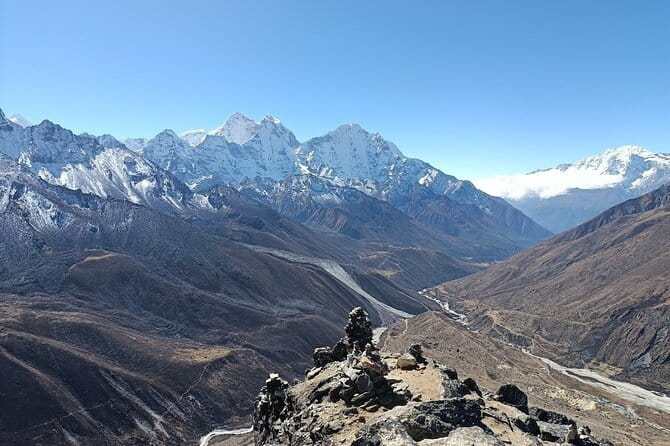
- Classic high points: Walk through Namche Bazaar, Tengboche, Dingboche, Lobuche, and Gorakshep before reaching Base Camp.
- Two acclimatization days: Rest and climb high in Namche and Dingboche rather than pushing upward every day.
- Deluxe lodge plan: Sleep in twin-share, best-available lodge rooms, with 10 breakfasts and eight lunches and dinners included.
- Helpful staff structure: A government-licensed guide leads the trek, with one porter for every two people.
- Important extra costs: Drinks, snacks, Kathmandu lunches and dinners, international airfare, visa fees, and rescue insurance are not included.
Why the 10-day route works for some trekkers
A standard Everest Base Camp trek often takes longer because the walk back from Gorakshep is slow and the body needs time to adjust to altitude. This plan trims the return by using a helicopter, giving you more time for the route into the Khumbu while keeping the overall trip to about 10 days.
That efficiency comes with a tradeoff. You still gain altitude quickly, and the itinerary includes long walking days. The program lists a strong fitness level as a requirement, and that is worth taking seriously. The helicopter makes the trip shorter, but it does not make the uphill walking easier.
The price is $3,332 per person. That is a substantial outlay, yet much of the expensive and complicated work is bundled in: shared helicopter flights, Kathmandu accommodation, trekking lodges, food, permits, staff wages, equipment, transfers, and emergency coordination. You are paying for time saved as much as for transport.
I would compare the price with a longer lodge trek plus separate return flights. The helicopter return is the feature that changes the value calculation. If you have limited vacation time, it may be worthwhile. If you have more time and want a slower trip, a conventional return trek could offer better value.
More ways to trek to Everest Base Camp:
- Everest Base Camp Trek – 14 Days
★ 5.0 · 1,499 reviews - Everest Base Camp Helicopter Tour landing at Everest View Hotel
★ 5.0 · 668 reviews - Everest Base Camp Trekking
★ 5.0 · 485 reviews
Arrival in Thamel and the first night
Your trip begins with a private airport pickup in Kathmandu. A representative meets you at Tribhuvan International Airport and takes you by car or van to the hotel in Thamel, the city’s main tourist district.
The first night is not glamorous sightseeing time. It is your buffer after an international flight. Use it to rest, check your gear, and confirm the morning departure details. The package includes two nights in a three-star Kathmandu hotel with breakfast, one before and one after the trek.
The company also provides a duffel bag, trail map, T-shirt, warm down jacket, and sleeping bag rated to minus 20 degrees Celsius. The jacket and sleeping bag are loaned equipment, so you return them after the trip. The stated luggage allowance is 10 kilograms for a large bag and 5 kilograms for a handbag.
That limit matters. You will want warm layers, gloves, sun protection, personal medication, and sturdy walking clothing, but you should avoid packing as if you were moving house. Your porter team carries the main bag, yet the weight allowance still applies.
The helicopter to Lukla and the walk to Phakding
The early helicopter flight to Tenzing-Hillary Airport in Lukla takes about 45 minutes. It is a scenic start, with views toward Everest and Kanchenjunga when conditions allow. Lukla is the gateway to the Khumbu, and landing there puts you straight into the mountain route.
After a short pause, you begin walking toward Phakding. The first day on foot is intentionally gentle, following the Dudh Koshi River and allowing your body to begin adjusting. That is useful because the altitude will become a much bigger issue later.
The schedule describes the Phakding portion as a long stop, which likely reflects the overnight trek structure rather than 16 hours of continuous walking. Confirm the exact meeting and departure times with the operator before you go. Helicopter operations depend on weather, and early starts are normal in the mountains.
Hillary Bridge and the first views near Namche
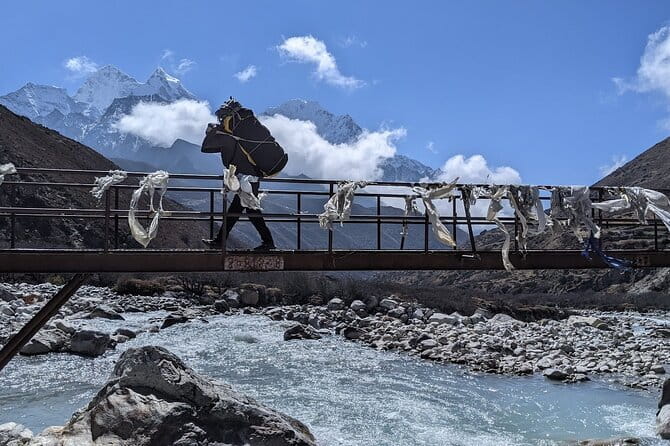
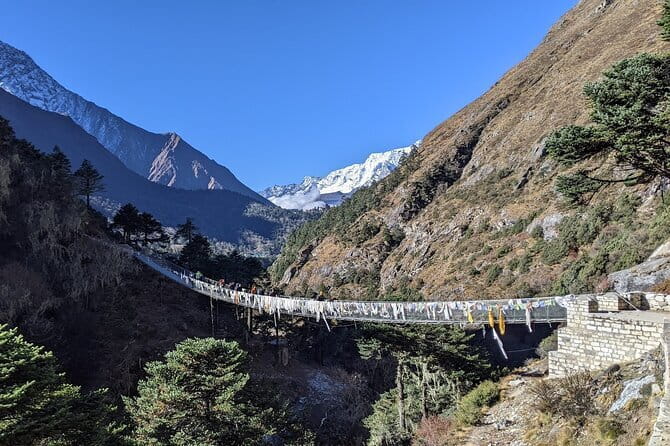
The route from Phakding follows pine forest and the Dudh Koshi River toward Monjo and the entrance area for Sagarmatha National Park. You cross suspension bridges, including the famous Hillary Bridge, and pass through small settlements such as Benkar.
The day ends with the steep climb to Namche Bazaar. This is the first serious test of the trek. The trail gains height, and you may feel the difference in your breathing even if you are otherwise fit.
Then the reward arrives: Everest begins to appear above the Lhotse and Nuptse range. Namche itself is the largest settlement on this part of the route, with markets, restaurants, massage centers, and spas. The package includes lodge accommodation and meals, but not every personal purchase or snack.
More treks starting in Kathmandu:
- Nagarkot Sunrise View and Day Hiking from Kathmandu
★ 5.0 · 471 reviews - Annapurna Circuit Trek with Tilicho Lake
★ 5.0 · 368 reviews - Everest Base Camp Trekking – 13 Day
★ 5.0 · 365 reviews - Everest Base Camp Trek -14 Days
★ 5.0 · 321 reviews
Namche Bazaar and the first acclimatization day
The fourth day is set aside for acclimatization. Rather than spending the whole day lying in bed, you hike toward Syangboche and the Hotel Everest View, at about 3,880 meters.
The idea is to climb higher during the day and sleep lower in Namche. This climb high, sleep low pattern gives your body a better chance to adjust. It also makes the acclimatization day feel like a real mountain outing instead of a forced rest stop.
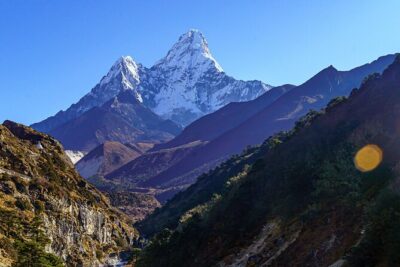
The Hotel Everest View offers broad views toward Everest, Ama Dablam, Lhotse, and nearby peaks. A coffee stop there is not included in the package, so budget for it separately. The hotel is a viewpoint and refreshment stop, not simply another place to pass through.
Afterward, you return to Namche for several hours. This is a good day to organize your pack, inspect your feet, and ask your guide about the next stages. Guides named in the supplied feedback include Tika, Pramod, and Rabin, with Shiba handling communication for at least one group. The company has also been described as flexible about walking speed and personal travel style, but you should discuss your limits early.
Tengboche Gompa and Pangboche
From Namche, the route heads toward Tengboche. You continue beside the Dudh Koshi before crossing a suspension bridge and entering the Imja Khola Valley.
Tengboche Gompa is one of the spiritual highlights of the trek. The stop gives the route more meaning than a simple march toward a famous viewpoint. You are moving through a living Sherpa region, where monasteries, prayer traditions, and mountain communities remain part of daily life.
The following day brings Pangboche and its Buddhist monastery. The walk offers views of Ama Dablam and Lhotse, and the itinerary allows about five hours for the day. At this altitude, five hours can feel much longer if you rush, so keep your pace steady and let the guide set a sensible rhythm.
The lodge system is basic by city standards, even with the deluxe label. Rooms are twin-share and described as the best available lodges. The word deluxe should not lead you to expect a full-service mountain hotel. It means a more comfortable lodge arrangement within a remote trekking route, not luxury facilities at every stop.
Dingboche and the second acclimatization climb
Dingboche is the second acclimatization base. The plan again uses a higher daytime climb followed by a lower sleeping point.
This day is important. You are now much higher, and altitude symptoms can appear even in people who are fit and experienced. The tour supplies first-aid kits and an oximeter for the staff and group, but equipment does not replace careful decisions. Tell your guide promptly if you develop a headache, unusual fatigue, nausea, or breathing trouble.
The point of this day is not to win a race. It is to let your body work at altitude before the final push toward Lobuche, Gorakshep, and Base Camp. The views around Dingboche include Ama Dablam and other major peaks, so the rest day still feels rewarding.
Lobuche and the memorials at Thukla
The walk to Lobuche is relatively light in distance but significant in altitude gain. The trail climbs toward the broad valley of Dughla and then passes the memorial area near Thukla.
These memorials honor climbers and Sherpas who died on Himalayan expeditions. It is a quiet, serious part of the route. Take your time here. The mountains are spectacular, but the memorials remind you that Everest is not a simple sightseeing backdrop.
The itinerary allows a long day overall, despite describing the trek as light. That tells you to prepare for an early start, slow progress, and plenty of time on uneven ground. Good boots, layered clothing, and a small daypack are more useful than fancy extras.
Gorakshep and Everest Base Camp
From Lobuche, you walk for about four hours across glacier terrain to Gorakshep. This is the last settlement before the Base Camp area and your high-altitude overnight point.
After a break, the route continues to Everest Base Camp. The walk can feel rough and tiring, with rocky ground and changing conditions. Base Camp itself is seasonal and expedition-focused, so do not expect a permanent town or a grand built attraction.
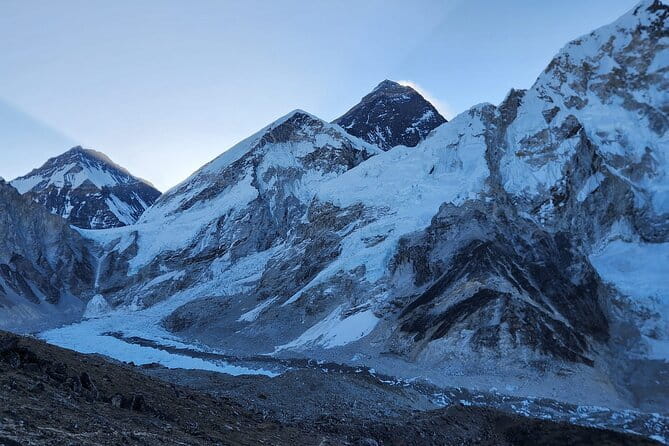
The value is in reaching the foot of the route used by Everest expeditions and seeing the Khumbu scenery up close. The itinerary includes the Base Camp visit, but it does not promise a view of the summit from Base Camp itself. For the broadest Everest panorama, Kala Patthar the next morning is the key stop.
Meals are included during the trekking days, with eight breakfasts and eight lunches and dinners listed, plus the Kathmandu breakfasts. Drinks and snacks are extra. At altitude, you may want additional hot drinks or packaged food, so carry some spending money in Nepalese rupees.
Kala Patthar sunrise and the helicopter return
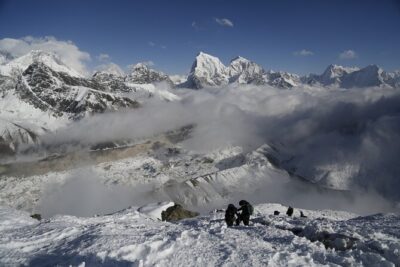
The final morning begins before sunrise with a climb to Kala Patthar. This is the viewpoint day: Everest, Nuptse, Lhotse, Ama Dablam, and the surrounding peaks can catch the first light.
The climb is short in calendar terms but hard on the body. You are at high altitude, and the early cold can make the ascent feel tougher. Keep your expectations practical. The itinerary promises the sunrise outing and panoramic views, but mountain weather can limit visibility.
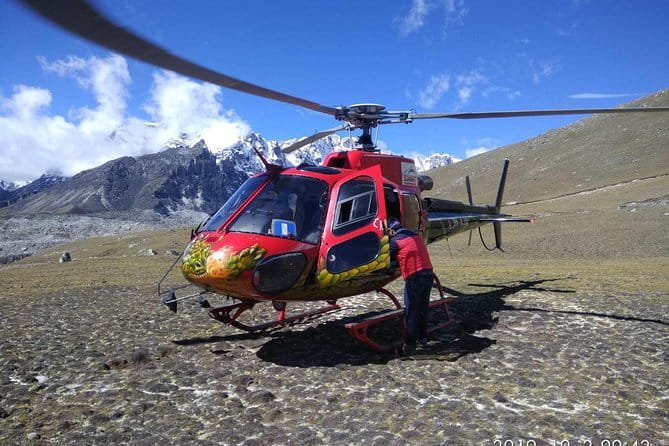
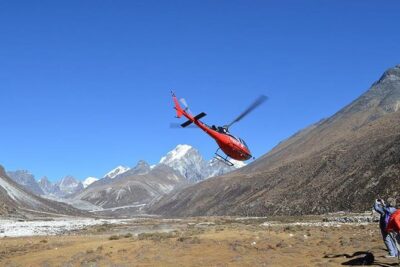
After Kala Patthar, the helicopter return begins from the Gorakshep or Everest Base Camp area to Lukla, with the package also listing helicopter transport from Lukla to Kathmandu. The flight is shared, not private. Confirm the exact sequence because the published information describes both the Gorakshep to Lukla sector and the wider Lukla to Kathmandu return.
This is the trip’s biggest practical advantage. You do not repeat the long trail through Lobuche, Dingboche, Tengboche, Namche, and Phakding. You get back to Kathmandu much sooner, assuming weather and flight operations cooperate.
What the staff and package add
A government-licensed guide leads the trek, and one porter is assigned for every two people. Staff accommodation, wages, food, transport, equipment, and accident insurance are included for the guide and porters.
That arrangement matters on a route where local knowledge affects safety and comfort. The strongest personal feedback centers on guides being attentive, encouraging, flexible, and focused on safety. Tika and Pramod are specifically named for their guiding, while Rabin is praised for his work on a shorter Everest trek. Shiba is noted for clear communication before the trip.
You should still ask who your guide will be before departure. Names are not guaranteed in the supplied details, and guide assignments can change. Ask about the daily walking plan, altitude symptoms, helicopter timing, and what happens if weather delays the return.
Emergency and rescue coordination is included, but rescue and evacuation insurance up to 5,500 meters is not. You must arrange suitable travel insurance yourself. This is not an optional detail for a high-altitude trek.
Food, accommodation, and what you pay extra
The package covers the main meals during the trek, lodge accommodation, permits, and national park fees. It also includes a farewell dinner in a traditional Nepali cultural restaurant and an achievement certificate.
You pay separately for all beverages and snacks, lunches and dinners in Kathmandu, international flights, Nepal entry visa costs, and services not listed. The price also does not include travel insurance.
At $3,332, this is not a bargain-basement trek. The shared helicopter flights account for much of the cost, while the guided service and equipment reduce the amount of planning you must do yourself. The strongest value comes if your schedule makes a long return trek impossible.
The private-tour format is another benefit. Only your group participates, rather than joining a large mixed party. That can make it easier to adjust the pace, though the itinerary still has fixed altitude and flight constraints.
Who should book this Everest trek
I would recommend it to a fit person with limited time who wants the classic Everest route, reliable staff support, and a helicopter exit. It also suits someone who prefers a private group and wants permits, meals, lodges, porters, and airport transfers arranged in one package.
I would hesitate to recommend it to a first-time high-altitude walker who expects an easy holiday. The route includes steep climbs, glacier terrain, cold mornings, and rapid altitude gain. The helicopter saves time, not effort.
You should also consider a longer itinerary if you want more rest days or more room for weather delays. The 10-day schedule is attractive, but its tight timing means you need to accept changes if flights are delayed or conditions turn poor.
Booking is flexible under the stated policy: you can cancel at least 24 hours before the start time for a full refund. Changes or cancellations inside that window are not accepted for a refund.
FAQ
How long is the Everest Base Camp experience?
The planned duration is approximately 10 days, including arrival in Kathmandu, the trek, Kala Patthar, and helicopter return arrangements.
Where does the tour start and end?
It starts at Life Himalaya Trekking on Narsingh Chowk Marg in Kathmandu and ends back at the meeting point.
Is airport pickup included?
Yes. Private airport pickup and drop-off by car or van are included.
Are the helicopter flights private?
No. The included helicopter flights are shared flights.
What accommodation is provided in Kathmandu?
The package includes two nights in a three-star Kathmandu hotel with breakfast, one night before and one night after the trek.
What accommodation is used during the trek?
You stay in twin-share, best-available lodge accommodation along the route.
Are meals included?
Yes. The package lists 10 breakfasts, eight lunches, and eight dinners. Beverages and snacks are not included, and Kathmandu lunches and dinners are also extra.
Is travel insurance included?
No. You must arrange travel insurance that covers rescue and evacuation up to 5,500 meters.
Can I cancel for a full refund?
You can cancel at least 24 hours before the experience start time for a full refund. Cancellations or changes made less than 24 hours before the start are not accepted for a refund.
Should you book it?
Book this trek if you value time saved, private guiding, and a helicopter return more than the lowest possible price. The route includes the major Everest Base Camp highlights, two acclimatization days, practical equipment, and strong staff support.
Before paying, confirm the guide’s name, the exact helicopter sectors, luggage limits, and the plan for bad weather. If you are fit, prepared for cold and altitude, and willing to pay for a faster exit, this is a well-organized way to reach Everest Base Camp without spending weeks walking back.
More Helicopter Tours in Kathmandu
- Everest Base Camp Helicopter Tour landing at Hotel Everest View
★ 5.0 · 218 reviews - Everest Base Camp Trek with Helicopter Return from Gorakshep to Lukla
★ 5.0 · 161 reviews - Everest Base Camp helicopter tour with landing
★ 5.0 · 61 reviews - Everest Base Camp Helicopter Tour with Hotel Everest View Landing
★ 5.0 · 52 reviews
Recently added around Kathmandu
- Kathmandu : Swambhunath & Durbar Square Guided Half Day Tour★ 3.3 · 3 reviews
- Private Day Tour in Kathmandu Valley Rim with Bhaktapur Sightseeing★ 5.0 · 3 reviews
- From Kathmandu / Pokhara / Chitwan: River Rafting – 1 Day★ 4.6 · 3 reviews
- Nepali Cooking training & Cultural Homestay Experience★ 5.0 · 3 reviews
- Private 3-Hour Nagarkot Sunset Tour from Kathmandu★ 3.5 · 3 reviews
- From Kathmandu: Everest Base Camp Landing Helicopter Tour★ 5.0 · 3 reviews
- 4 UNESSCO World heritage sites of Kathmandu-private tour★ 5.0 · 3 reviews
- From Kathmandu Budget: 15 Day Everest Base Camp Trek★ 5.0 · 3 reviews
Everest Base Camp Treks, compared.
Everest Base Camp Helicopter Tour landing at Everest View Hotel
Read our review →
Everest Base Camp Helicopter Tour landing at Hotel Everest View
Read our review →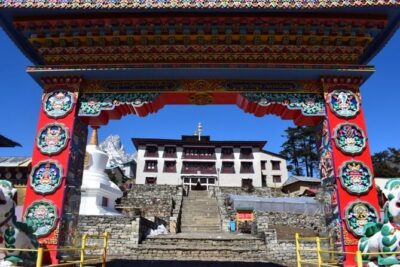
Browse the lists this tour appears in