
Reviewed · EVEREST BASE CAMP TREKS
Everest Base Camp trek with Helicopter return 9 days
Everest Base Camp by foot and helicopter is a smart compromise for a short Nepal visit. You get the hard-earned approach through Sherpa villages, forests, suspension bridges, and high mountain valleys, then skip the long walk back with a helicopter from Gorakshep. The nine-day plan still reaches Kala Patthar at 5,644 meters, the best viewpoint on the route.
I like the built-in acclimatization day in Namche Bazaar, and I like that the price covers the major moving parts: Lukla flights, permits, guide, porter, meals, and private ground transfers. The catch is the pace. Seven full days in the mountains leave little room for weather delays or a slow adjustment to altitude, and the helicopter return depends on safe flying conditions.
In This Review
- Key points to know before booking
- Why the helicopter return makes sense
- What the $3,888 price really covers
- Day 1: A soft landing in Kathmandu
- Day 2: Lukla and the first walk to Phakding
- Day 3: Namche Bazaar through forest and bridges
- Day 4: Namche acclimatization and Khumjung
- Day 5: Kyangjuma and the first big mountain views
- Day 6: Tengboche, forest, and a high monastery setting
- Day 7: Dingboche and the Khumbu Glacier zone
- Day 8: Lobuche to Gorak Shep and Everest Base Camp
- Day 9: Kala Patthar, helicopter to Lukla, and Kathmandu
- Guides, porters, and the human side of the trek
- Who should choose this nine-day plan
- Booking details worth checking
- Should you book it?
- FAQ
- How long is the Everest Base Camp helicopter return trek?
- What is the highest point reached?
- Is the helicopter flight included?
- Are airport transfers included?
- Are meals included during the trek?
- Is travel insurance included?
- Is this a private tour?
- What is the cancellation policy?
Key points to know before booking
- A foot-first Everest experience: You walk the classic route from Lukla rather than simply flying to Base Camp.
- Namche acclimatization included: The rest day gives your body time to adjust while you visit Khumjung and the Everest View Hotel area.
- Kala Patthar is the high point: The early climb brings the trip’s finest mountain views, but it is also the most demanding morning.
- Helicopter from Gorak Shep to Lukla: You avoid the long descent, though weather can affect the flight.
- Practical costs are mostly covered: Meals, permits, guide service, porter support, flights, and private airport transfers are included.
- Private group format: Only your own party takes part, which can make the walking rhythm easier to manage.
Why the helicopter return makes sense
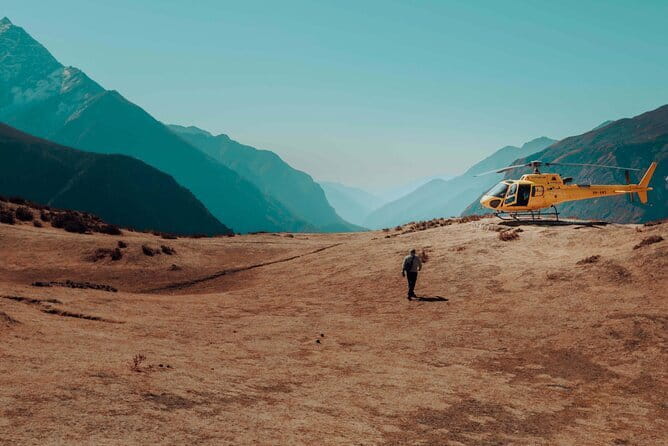
The traditional Everest Base Camp trek takes much longer because you walk back down the same valleys. This version keeps the approach, then replaces the return with a helicopter flight from Gorak Shep to Lukla. That saves days and spares your knees from a long descent.
You still experience the central character of the Khumbu region. You walk past rhododendron and magnolia forests, cross high bridges, enter Namche Bazaar, pass monasteries and Sherpa settlements, and follow the rough ground near the Khumbu Glacier. This is not a sightseeing flight with a short walk attached. You earn the approach on foot.
The route is described as moderate, but that word needs context. You are walking at altitude, with the highest sections above 5,000 meters. The path becomes more remote and steep after Dingboche, and day eight is listed at about eight hours. A good basic fitness level matters, along with patience and a willingness to walk slowly.
More ways to trek to Everest Base Camp:
- Everest Base Camp Trek – 14 Days
★ 5.0 · 1,499 reviews - Everest Base Camp Helicopter Tour landing at Everest View Hotel
★ 5.0 · 668 reviews - Everest Base Camp Trekking
★ 5.0 · 485 reviews
What the $3,888 price really covers
At $3,888 per person, this is not a low-cost teahouse trek. It is priced as a private, tightly scheduled package with air connections and a helicopter leg. The value depends on what you want to avoid arranging yourself.
The package includes private vehicle transfers to and from the airport, the Kathmandu to Lukla and Lukla to Kathmandu flights, an experienced guide, one porter for every two people, trekking permits, government charges, and a first aid kit. An oximeter is used twice daily to check pulse, oxygen saturation, and heart rate. That medical check is a useful safety habit at altitude, though it does not replace travel insurance or sound judgment.
Eight breakfasts, eight lunches, and eight dinners are included. Tea house hot showers and phone charging cost extra, generally about $2 to $5. You also pay for drinks, desserts, personal expenses, tips, your Nepal visa, international airfare, and travel and medical insurance.
The helicopter is the major value question. If avoiding the long return walk is important, the added cost may feel worthwhile. If you enjoy a slower journey and want to keep the budget down, a longer standard trek may suit you better. Ask for a precise breakdown of the helicopter arrangements before paying, especially how weather delays are handled.
Day 1: A soft landing in Kathmandu
Your airport team meets you at the international terminal, takes you to the hotel in a private car, and helps with bags and check-in. After the journey, you have time to rest before meeting the core team.
This first evening matters because the following morning begins early. Use it to check your clothing, day pack, water, and documents. The included airport assistance is especially useful if you arrive tired or late, but lunch and dinner in Kathmandu are not covered.
The trip is private, so your group is not mixed with a larger public departure. That gives you more control over breaks and walking speed, although the fixed air schedule still limits flexibility.
Day 2: Lukla and the first walk to Phakding
The morning flight from Kathmandu to Lukla is short and offers mountain views. At Tenzing Hillary Airport, porters join the group and the trek begins.
The first walking day is relatively brief, listed at about four hours. The route leads from Lukla toward Phakding, giving you a gentler introduction before the higher stages. You are not yet at the dramatic, barren high country. The early trail has village life, planted fields, and wooded sections.
Lukla flights can shape the whole schedule, so keep your plans after the trek flexible. The package includes the domestic flights, but mountain weather can still affect timing. Confirm the current flight plan and any backup arrangements with Adventure Master Trek.
More treks starting in Kathmandu:
- Nagarkot Sunrise View and Day Hiking from Kathmandu
★ 5.0 · 471 reviews - Annapurna Circuit Trek with Tilicho Lake
★ 5.0 · 368 reviews - Everest Base Camp Trekking – 13 Day
★ 5.0 · 365 reviews - Everest Base Camp Trek -14 Days
★ 5.0 · 321 reviews
Day 3: Namche Bazaar through forest and bridges
From Phakding, the trail follows rhododendron and magnolia forest toward Toktok, listed at 2,760 meters. The route then continues through villages including Bengkar and Monjo, with bridge crossings along the way.
The day is listed at about six hours and brings your first serious gain toward Namche Bazaar. Monjo is associated with the entrance to the Sagarmatha region, and the route gradually feels more like a mountain journey than a village walk.
Namche is the Khumbu’s main trading town and the practical center of the early trek. Expect a more demanding finish as the path climbs toward the settlement. Walk slowly here. The point is not to win the day, but to arrive ready for the next stage.
Day 4: Namche acclimatization and Khumjung
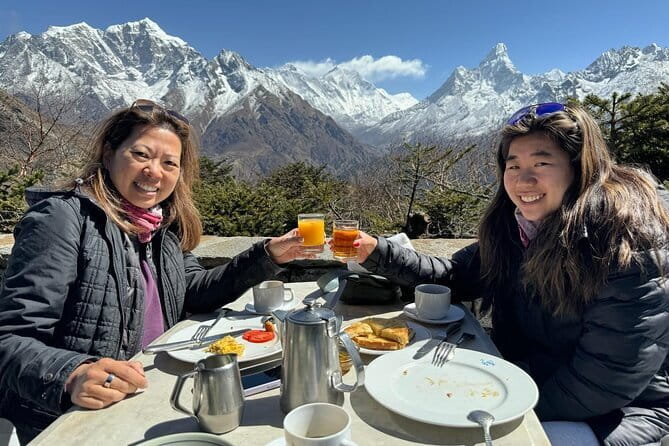
The itinerary keeps a rest day in Namche, but rest does not mean sitting indoors all day. The plan includes a walk toward Khumjung and the Syangboche airstrip, with time around the Everest View Hotel area. The day is listed at about five hours.
This is one of the best design choices in the schedule. You gain altitude during the day, then return to sleep in Namche rather than moving higher immediately. That gives your body a better chance to adjust.
The walk also gives you mountain views without the pressure of a full trekking day. You might use the time to ask your guide about pace, hydration, and symptoms to watch for. The twice-daily oximeter checks add useful information, but tell your guide promptly if you feel unwell. Numbers alone do not tell the whole story.
Day 5: Kyangjuma and the first big mountain views
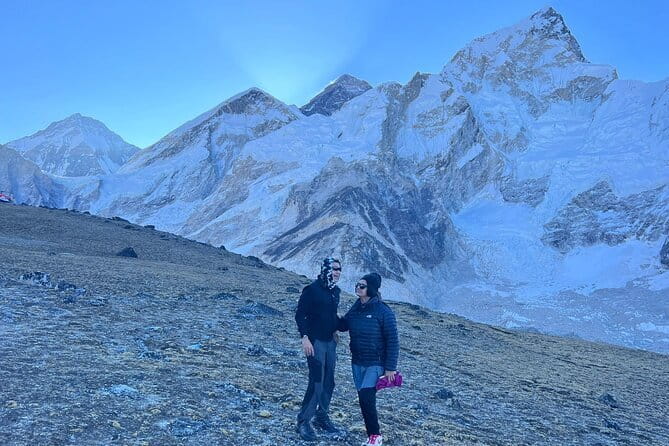
The trail leaves Namche and climbs through green foothills toward Kyangjuma at about 3,550 meters. This section is listed at roughly five hours.
The route offers broad mountain views and a mix of uphill and downhill walking. That repeated rhythm can be harder than the distance suggests, especially as the air gets thinner. Keep your day pack light and resist the urge to hurry during clear stretches.
Kyangjuma is an important transition point. The route is moving away from the lower wooded country and toward the higher valleys around Tengboche and Dingboche. You can expect the scenery to open up, but the trail also begins to feel more exposed and demanding.
Day 6: Tengboche, forest, and a high monastery setting
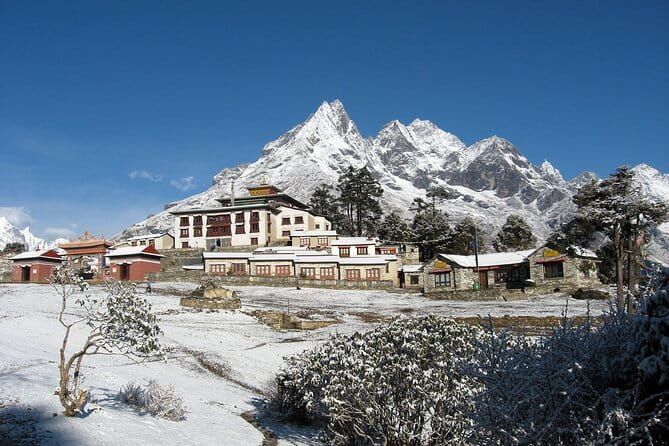
This day centers on Tengboche and includes an early start for sunrise. After breakfast, the trail descends through rhododendron forest toward Deboche at 3,320 meters. The walk is listed at about five hours.
The movement through forest gives the day texture. You may find musk deer, blue sheep, and Himalayan monal in the area, though wildlife sightings are never guaranteed. The scenery changes quickly, from wooded slopes to wide mountain views.
Tengboche is one of the route’s important cultural stops. Even when the walking schedule is tight, allow yourself time to notice the monastery setting and the surrounding peaks. The descent to Deboche can be welcome after the climb, but remember that you will have to regain some height later.
Day 7: Dingboche and the Khumbu Glacier zone
The plan describes a long day around the Khumbu Glacier, with about six hours of walking. From Dingboche, at roughly 4,410 meters, the route climbs a ridge and opens views toward Cholatse and Tawache.
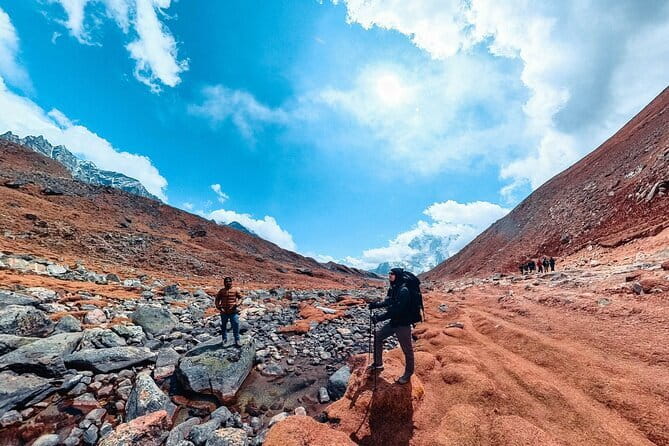
This is where the trek changes character. Above Dingboche, the path becomes steeper, more remote, and less forgiving of a rushed pace. The air is thin, the ground is rough, and small inclines can feel surprisingly serious.
The glacier area gives you the raw mountain scenery people associate with Everest. It is not a polished viewpoint or a simple photo stop. You are walking through a high, rocky environment where weather and altitude deserve respect.
The itinerary’s stop labels compress several high-country movements, so confirm your exact overnight location for this night. Knowing whether the group sleeps in Dingboche, Lobuche, or another settlement helps you judge the day’s real walking time.
Day 8: Lobuche to Gorak Shep and Everest Base Camp
This is the big day, listed at about eight hours. From Lobuche, you follow the broad valley toward Gorak Shep, with the rocky route becoming steeper as you gain height.
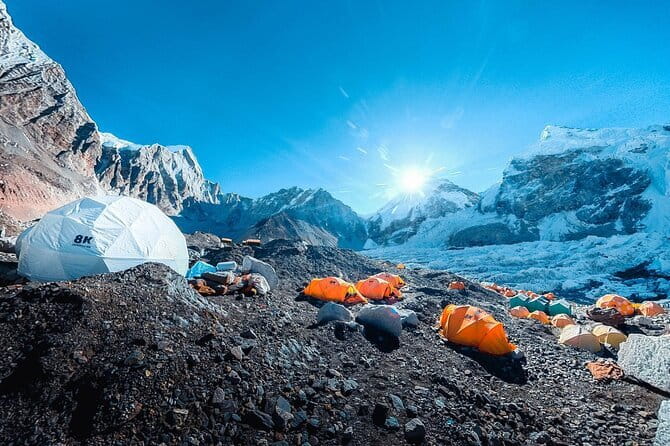
After reaching Gorak Shep, you continue toward Everest Base Camp and then return along the path. The Base Camp area is the emotional goal of the trek, but it is not the highest point. Kala Patthar on the following morning gives the better overall view of Everest and the surrounding peaks.
The return to Gorak Shep makes this day physically demanding. You are walking at high altitude, and the out-and-back route means the day is longer than a simple arrival at Base Camp. Keep your expectations realistic. The achievement is reaching the site safely, not racing there.
Accommodation and meals are arranged through tea houses, with breakfast, lunch, and dinner included. Hot showers and charging are available at extra cost, around $2 to $5. At this altitude, simple comforts can feel expensive, but a hot shower or charged phone may be worth the price.
Day 9: Kala Patthar, helicopter to Lukla, and Kathmandu
The final morning begins with the climb to Kala Patthar above Gorak Shep. The trail is well used and easy to follow, but the altitude makes it difficult. The itinerary lists about six hours for the day.
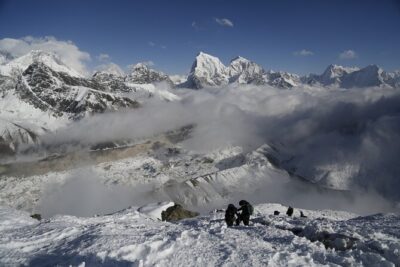
An early start is planned for the golden morning light. From the top, you get the wide mountain view that the Base Camp trail itself cannot provide. This is the trip’s highest point, and the climb should be taken slowly, with warm clothing and enough water.
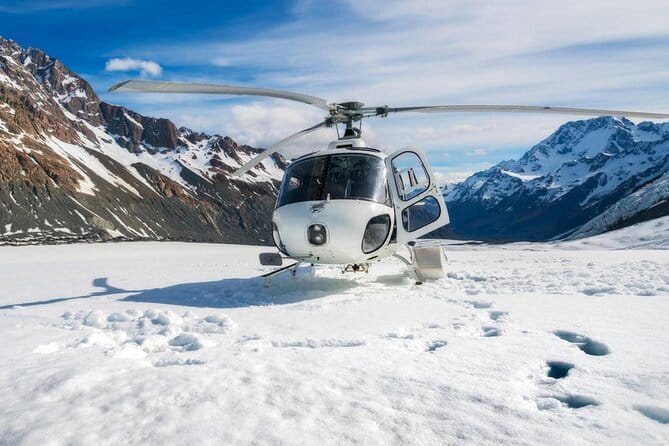
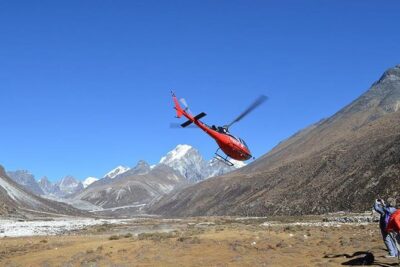
After Kala Patthar, the helicopter carries you from Gorak Shep to Lukla. From there, the included flight takes you back to Kathmandu. This is an efficient finish, but helicopters need suitable weather. Ask your operator what happens if the flight cannot operate on the planned day. A weather delay could affect onward international plans, so do not schedule a tight international connection immediately afterward.
Guides, porters, and the human side of the trek
The company assigns an expert mountain guide and covers the guide’s salary, food, lodging, transport, and insurance. One porter is provided for every two people. That arrangement lets you walk with a lighter day pack while keeping the porter load more reasonable than a one-porter-per-person model.
Several names appear in the company’s wider Nepal work, including Raj, Ramesh, Sital, and Ganesh. Raj is associated with making the trek process efficient, while Ramesh is praised for steady support on an Everest trek. Your guide for this departure may be someone else, so ask for the assigned guide’s name, experience, and language ability before departure.
The strongest pattern in the company’s service is hands-on organization. Airport pickup, hotel check-in help, guide support, and transport are all built into the experience. That matters in Nepal, where flight changes and mountain logistics can quickly become confusing.
Tipping is expected and is not included. Carry enough Nepalese rupees for tips and personal purchases, but the exact amount should be discussed with the operator before departure.
Who should choose this nine-day plan
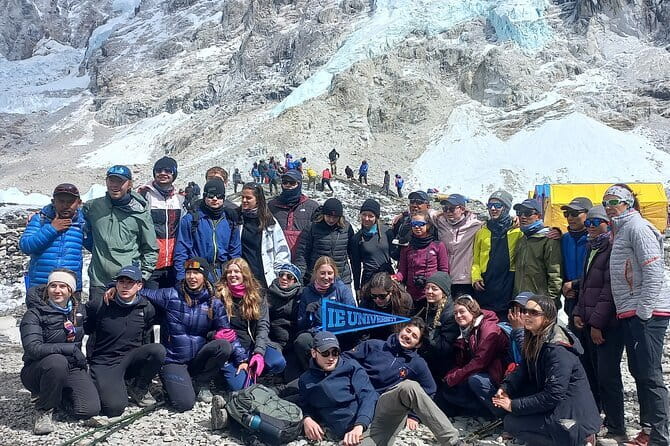
I would recommend this trek to you if you have limited holiday time, want to reach Everest Base Camp on foot, and place a real value on avoiding the long return route. It also suits a private family or friend group that wants a fixed plan with guide and porter support.
You should be comfortable with long walking days and high altitude. A moderate fitness level is required, but fitness alone cannot guarantee a smooth trek. The route’s highest sections are physically serious, and the schedule offers less spare time than a longer itinerary.
This is not the best fit if you want a relaxed village-to-village holiday, dislike early starts, or need a guaranteed return time. It is also a poor match if you have no travel and medical insurance. The package specifically excludes both.
Service animals are allowed, and the activity is near public transportation in its broader Kathmandu arrangements. Still, this remains a rugged mountain trek, not an easy-access sightseeing tour.
Booking details worth checking
Confirmation is provided at booking, and free cancellation is available if you cancel at least 24 hours before the local start time. A cancellation within 24 hours is not refundable, and late changes are not accepted.
Before you commit, confirm the exact tea house nights, the daily walking hours, the helicopter schedule, baggage limits, and the plan for bad weather. Also ask which costs are paid directly in Kathmandu and which are handled by the operator.
The listed price is per person, and the activity is private. That can be good value for a family or small group because you are paying for dedicated support rather than joining a large departure.
Should you book it?
Book this Everest Base Camp trek if you want the classic walking route but cannot spare the time for a return trek. The Namche acclimatization day, included permits and meals, porter support, medical checks, and helicopter exit make the package practical and easy to manage.
Think twice if you want maximum flexibility or the lowest possible cost. Nine days is a tight schedule, day eight is long, and both Lukla flights and the helicopter depend on mountain weather. For the right person, though, this plan gives you the essential Everest approach without making you spend another week walking back down.
FAQ
How long is the Everest Base Camp helicopter return trek?
The experience lasts approximately nine days. You spend seven full days in the mountains and return toward Kathmandu by helicopter and domestic flight on the final day.
What is the highest point reached?
The route reaches Kala Patthar at 5,644 meters, or 18,519 feet. The climb takes place early on day nine from Gorak Shep.
Is the helicopter flight included?
Yes. The helicopter flight from Gorak Shep to Lukla is included, along with the Kathmandu to Lukla and Lukla to Kathmandu flights.
Are airport transfers included?
Yes. Ground travel, including airport transfers, is provided in a private car. The airport team also helps with hotel check-in and luggage on arrival.
Are meals included during the trek?
Eight breakfasts, eight lunches, and eight dinners are included. Food in Kathmandu at lunchtime and in the evening is not included.
Is travel insurance included?
No. You must arrange your own travel and medical insurance. International airfare and a Nepal visa are also excluded.
Is this a private tour?
Yes. Only your own group participates in the activity. A guide and one porter for every two people are included.
What is the cancellation policy?
You can receive a full refund if you cancel at least 24 hours before the local start time. Cancellations or changes made within 24 hours are not accepted and are not refundable.
More Helicopter Tours in Kathmandu
- Everest Base Camp Helicopter Tour landing at Hotel Everest View
★ 5.0 · 218 reviews - Everest Base Camp Trek with Helicopter Return from Gorakshep to Lukla
★ 5.0 · 161 reviews - Everest Base Camp helicopter tour with landing
★ 5.0 · 61 reviews - Everest Base Camp Helicopter Tour with Hotel Everest View Landing
★ 5.0 · 52 reviews
Recently added around Kathmandu
- Kathmandu : Swambhunath & Durbar Square Guided Half Day Tour★ 3.3 · 3 reviews
- Private Day Tour in Kathmandu Valley Rim with Bhaktapur Sightseeing★ 5.0 · 3 reviews
- From Kathmandu / Pokhara / Chitwan: River Rafting – 1 Day★ 4.6 · 3 reviews
- Nepali Cooking training & Cultural Homestay Experience★ 5.0 · 3 reviews
- Private 3-Hour Nagarkot Sunset Tour from Kathmandu★ 3.5 · 3 reviews
- From Kathmandu: Everest Base Camp Landing Helicopter Tour★ 5.0 · 3 reviews
- 4 UNESSCO World heritage sites of Kathmandu-private tour★ 5.0 · 3 reviews
- From Kathmandu Budget: 15 Day Everest Base Camp Trek★ 5.0 · 3 reviews
Everest Base Camp Treks, compared.
Everest Base Camp Helicopter Tour landing at Everest View Hotel
Read our review →
Everest Base Camp Helicopter Tour landing at Hotel Everest View
Read our review →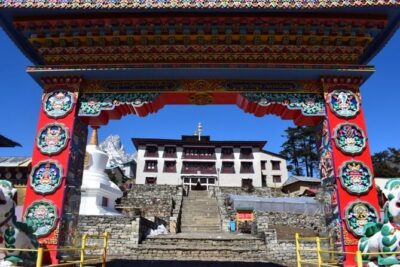
Browse the lists this tour appears in