
Reviewed · EVEREST BASE CAMP TREKS
Everest Base Camp with Gokyo Lake 17 Days
The real prize here is the Gokyo to Everest route, not simply reaching Base Camp. You cross the high Cho La Pass, see sacred Gokyo Lake, climb Gokyo Ri, and then enter the Khumbu valley toward Everest. That gives you a bigger slice of the region than the standard out-and-back trail.
I like the practical package: guides, porters, permits, meals, and trekking lodges are included, and the route has a proper acclimatization day in Namche. I also like the human side. Guides named in the service record include Pemba, Pasang, and Dawa, while the porter team is described as friendly and helpful. The main caution is clear: this is a demanding high-altitude trek, with Cho La Pass at 5,420 meters and only one planned day for the Everest Base Camp or Kala Patthar visit.
In This Review
- Key points to know before booking
- Why the Gokyo and Everest combination works
- Days 1 to 4: Kathmandu, Lukla, Phakding, and Namche
- Days 5 to 7: Dole, Machhermo, and Gokyo Lake
- Day 8: Gokyo Ri and the move to Thagnak
- Day 9: Cho La Pass at 5,420 meters
- Days 10 to 12: Lobuche, Gorak Shep, and the Everest goal
- Days 13 to 17: Tengboche, Lukla, and Kathmandu
- What the $1,480 price covers
- Meals, lodging, and group size
- Who should book this trek
- Practical questions to settle before departure
- Should you book the Everest Base Camp and Gokyo Lake trek?
- FAQ
- Where does the Everest Base Camp and Gokyo Lake trek begin?
- How long is the trek?
- What level of fitness is required?
- Is accommodation included?
- Are meals included?
- Is a guide and porter included?
- Are permits included?
- Does the itinerary include Everest Base Camp and Kala Patthar?
- What is not included in the price?
- What is the cancellation policy?
Key points to know before booking
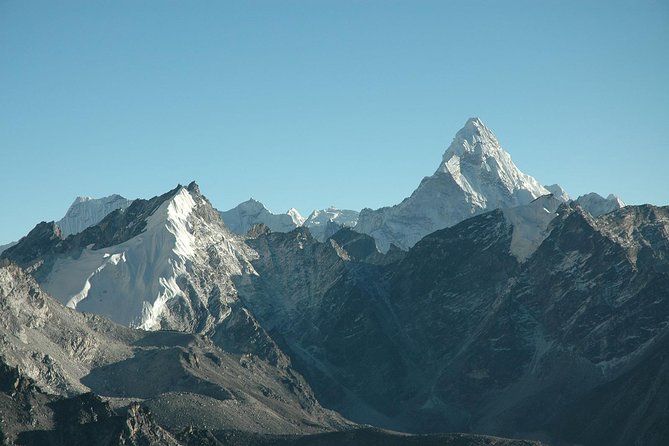
- Gokyo Lake and Gokyo Ri: You get the sacred lake system and a high viewpoint before joining the Everest route.
- Cho La Pass at 5,420 meters: This is the toughest section and the main reason the trek needs good fitness and preparation.
- Everest Base Camp or Kala Patthar: Day 12 allows for one of these morning outings, not clearly both.
- 17-day structure: The detailed plan runs from arrival in Kathmandu to departure, though the advertised duration is listed as approximately 14 to 19 days.
- Extensive inclusions: Lodging, trekking meals, guide, porter support, permits, TIMS card, airport transfers, and domestic transport are covered.
- Small upper limit, not a private trek: The maximum group size is 18, so ask about your actual group before paying.
Why the Gokyo and Everest combination works
Many people picture Everest Base Camp as one famous destination. In practice, the route matters just as much as the endpoint. This trek approaches the Everest region through Gokyo, then crosses Cho La Pass before continuing to Lobuche and Gorak Shep.
That route gives you several distinct settings. You begin with the lower valleys around Lukla and Phakding, reach the trading town of Namche Bazaar, follow the Gokyo valley, cross a high pass, and finish among the stark moraines and peaks near Everest Base Camp.
I like that variety. Gokyo adds a quieter, more scenic side of Khumbu, while the later section delivers the classic Everest experience. You do not spend the whole trek retracing the same path.
The tradeoff is effort. The Cho La crossing is not a casual scenic walk. At 5,420 meters, it is higher than any point on the standard Everest Base Camp route. The itinerary gives you several acclimatization opportunities, but altitude remains the serious concern. You need a moderate level of physical fitness at minimum, and you should be comfortable walking for multiple hours on mountain trails.
More ways to trek to Everest Base Camp:
- Everest Base Camp Trek – 14 Days
★ 5.0 · 1,499 reviews - Everest Base Camp Helicopter Tour landing at Everest View Hotel
★ 5.0 · 668 reviews - Everest Base Camp Trekking
★ 5.0 · 485 reviews
Days 1 to 4: Kathmandu, Lukla, Phakding, and Namche
Your first day begins with airport pickup in Kathmandu and transfer to a three-star city hotel. The package provides twin-sharing accommodation with breakfast, so you have a simple base before the trek begins.
Day 2 takes you to Lukla, followed by a trek to Phakding at 2,620 meters. The listed walking time is not provided for this day, but the route is intended as the first trekking stage rather than a major altitude push. Breakfast, lunch, and dinner are included on trekking days.
The Lukla flight is an important part of the schedule. The itinerary includes flights between Kathmandu and Lukla as planned transportation, but mountain flights can affect timing. I would keep some flexibility around this portion of the trip and confirm with the operator exactly how flight changes are handled.
On Day 3, you walk to Namche Bazaar at 3,420 meters. This is a major step up from Phakding and one of the more demanding early days. Namche is the main settlement of the Khumbu region, and its position makes it the natural place to pause and adjust to the altitude.
Day 4 is an acclimatization and exploration day in Namche. That rest day is valuable. It does not mean you must stay in bed, but it gives your body time to adjust before the route climbs higher. I would treat this as essential rather than optional padding.
Days 5 to 7: Dole, Machhermo, and Gokyo Lake
The route leaves the main Everest trail on Day 5 and climbs to Dole at 4,110 meters. The expected walking time is about six hours. This is a meaningful altitude gain, so the day may feel harder than the distance suggests.
Day 6 continues to Machhermo at 4,410 meters. The listed walking time is three to five hours, making it shorter than the Dole stage. That helps, but you are now well above 4,000 meters, where even a moderate walk can feel slow.
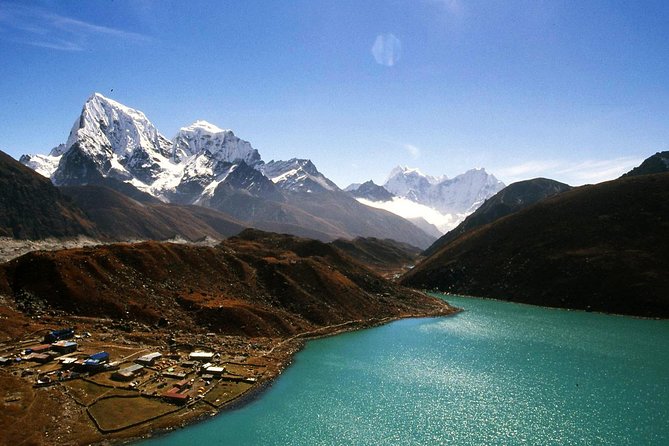
Day 7 brings you to Gokyo at 4,760 meters. This is one of the signature stops of the entire trip. Gokyo Lake is considered sacred, and the setting gives you a different view of the Everest region from the more familiar trail through Tengboche and Dingboche.
The high elevation means you should not expect a relaxed lakeside holiday. You will be sleeping at nearly 4,800 meters, and the cold, thin air can affect rest. The tour provides trekking lodge accommodation, meals, and tea or coffee, but lodge standards in the mountains are practical rather than luxurious.
Day 8: Gokyo Ri and the move to Thagnak
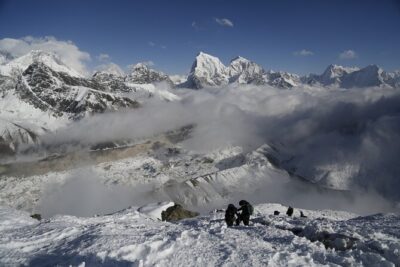
Day 8 starts with a hike to Gokyo Ri, followed by a trek to Thagnak at 4,678 meters. Gokyo Ri is the high viewpoint that makes the Gokyo side especially worthwhile. From here, you get broad mountain views and a strong sense of how the valley fits into the surrounding peaks.
The route then drops slightly to Thagnak. That small decrease in sleeping altitude does not make the day easy, because the Gokyo Ri climb adds work before you continue along the trail.
I would pay close attention to the pacing here. The plan places the viewpoint hike and the move to the next lodge on the same day. That is efficient, but it leaves less room for a slow morning or a weather delay. Ask the guide how the day is normally paced for your group.
A completely different sort of day in Kathmandu:
- Private Kathmandu Sightseeing Tour | UNESCO World Heritage sites
★ 5.0 · 756 reviews - Half day cooking class in Thamel kathmandu
★ 5.0 · 607 reviews - Nagarkot Sunrise View and Day Hiking from Kathmandu
★ 5.0 · 471 reviews - Kathmandu: Full Day 7 UNESCO Tour with Lunch – Private/Group
★ 5.0 · 415 reviews
Day 9: Cho La Pass at 5,420 meters
Cho La Pass is the defining challenge of the trek. You cross at 5,420 meters, then continue to Dzonglha at 4,840 meters. This is the highest pass on the stated route and the section most likely to test your fitness, balance, and response to altitude.
You should book this trek because you want the pass, not simply tolerate it as a necessary link. The reward is a more varied route into the Everest region, but the cost is a tougher day than the standard Base Camp itinerary.
The package supplies a guide, guide insurance, meals, accommodation, and porter support. Those services matter most here. A guide can help with route decisions and pace, while a porter can carry the main baggage so you walk with a lighter daypack.
Still, included support does not remove the physical demand. The tour description calls for moderate fitness, but I would interpret that seriously. Prepare for sustained uphill and downhill walking, uneven ground, and long days at altitude.
Days 10 to 12: Lobuche, Gorak Shep, and the Everest goal
From Dzonglha, Day 10 takes you to Lobuche at 4,940 meters. The following day continues to Gorak Shep at 5,147 meters. These are high, stark settlements, and the route becomes more about endurance than comfort.
Gorak Shep is the launch point for the final morning outing. On Day 12, the itinerary says you hike either to Everest Base Camp at 5,365 meters or to Kala Patthar at 5,550 meters, then descend to Pheriche at 3,950 meters.
That wording deserves attention. Everest Base Camp and Kala Patthar offer different experiences. Base Camp is the famous mountaineering destination, while Kala Patthar is the higher viewpoint. The plan says either one, so do not assume both are included in the morning. Ask before booking which option your guide normally chooses and whether the decision depends on weather, fitness, or timing.
The descent to Pheriche is a welcome change after the high nights around Gorak Shep. Even so, it is a long day because the morning excursion is followed by a substantial drop in elevation.
Days 13 to 17: Tengboche, Lukla, and Kathmandu
Day 13 takes you to Tengboche at 3,860 meters. Tengboche is known for Khumbu’s major monastery, one of the cultural highlights named for this route. After the demanding high pass and Everest section, this stop adds a spiritual and cultural layer to the trek.
Day 14 continues to Monjo at 2,635 meters, and Day 15 brings you back to Lukla at 2,840 meters. The route is now lower, but downhill walking can still be tiring on knees and feet. Your porter arrangement remains useful through this stage.
Day 16 is the flight back to Kathmandu, with breakfast and dinner included. Day 17 is departure, with breakfast listed. Airport pickup and departure transfers are part of the package, which simplifies the start and finish.
The detailed schedule is 17 days, but the advertised duration says approximately 14 to 19 days. That difference is worth clarifying. The extra range may reflect flight conditions, route changes, or the operator’s general scheduling language, but the supplied plan itself is a 17-day outline.
What the $1,480 price covers
At $1,480 per person, the value depends on how fully you use the included services. The package covers city accommodation in a three-star hotel on a twin-sharing basis, trekking lodges, meals during the trek, guide and porter costs, trekking permits, the TIMS card, airport transfers, transport, and the planned Kathmandu to Lukla flights.
It also includes a sleeping bag and down jacket if you need them, plus first-aid supplies, a T-shirt, and a trip certificate. A cultural show and farewell dinner are included in Kathmandu.
That is a strong list for the price. You are not paying only for a guide and a route plan. You are also covering the basic logistics that can become expensive or stressful in Nepal, especially permits, local transport, porters, and mountain accommodation.
The exclusions are equally important. International airfare, travel insurance, extra meals in Kathmandu, entrance fees, personal spending, bar bills, and tips for the trekking crew are not included. You should also budget for any drinks, snacks, charging, or other personal costs during the trek, since those are not specifically covered.
The guide and porter setup is one porter for every two people, according to the package. That is a useful arrangement, but pack responsibly. Do not assume a porter should carry every item you might want for a 17-day trip.
Meals, lodging, and group size
Breakfast, lunch, and dinner are provided during the trekking section, with tea or coffee included. In Kathmandu, breakfast is included at the city hotel, while extra meals are your responsibility except for the special cultural program and farewell dinner.
The accommodation is practical. You get a twin-sharing three-star hotel in Kathmandu and trekking lodges on the trail. If you expect private rooms, hotel-style bathrooms, or broad dining choices at high altitude, this package may feel basic.
The maximum group size is 18. That is not a private experience, though it is still small enough to be manageable compared with a large commercial departure. Group size affects pace, room arrangements, and how quickly decisions can be made on difficult days, so ask for the expected number rather than relying only on the maximum.
The named guides connected with the service include Pemba, Pasang, and Dawa. Pemba and Pasang are specifically associated with friendly, helpful guiding, while Dawa is noted for guide service on another Nepal trek. You should request a guide by name if one is important to you, but do not assume a particular person is guaranteed unless the operator confirms it.
Who should book this trek
This route suits you if you want more than the standard Everest Base Camp trail. Gokyo Lake, Gokyo Ri, Cho La Pass, Tengboche monastery, and the Everest section create a fuller circuit-style experience.
It is a good match for someone who:
- Has a moderate level of physical fitness
- Can handle several hours of mountain walking
- Wants a guided trek with porter support
- Values included meals and permits
- Is willing to sleep in simple trekking lodges
- Wants both Gokyo and the Everest region
- Can accept some uncertainty around high-altitude transport and the Base Camp or Kala Patthar choice
It is less suitable if your priority is a short, easy mountain holiday or a guaranteed luxury standard. The price is fair because the service is broad, but the route itself remains physically serious.
Practical questions to settle before departure
I would ask four things before making the final payment. First, confirm what happens if the Lukla flight is delayed. Second, ask whether Day 12 means Base Camp or Kala Patthar, and how that choice is made.
Third, confirm the actual group size and whether a private departure is available. Fourth, ask exactly what sleeping bag and down jacket rental or provision means, including whether you must request those items in advance.
The cancellation terms are flexible if your plans change early. You can cancel at least 24 hours before the local start time for a full refund. Changes or cancellations within 24 hours are not accepted for a refund.
Should you book the Everest Base Camp and Gokyo Lake trek?
I would book this trek if you want the broader Everest experience, not just a photograph at Base Camp. The Gokyo lakes and Gokyo Ri add variety, while Cho La Pass gives the trip its real mountain challenge.
The $1,480 package offers good practical value because it includes the guide, porter arrangement, permits, meals, lodging, transfers, and planned domestic transport. Just go in with realistic expectations: the accommodation is simple, the route is demanding, the group can reach 18 people, and the itinerary leaves the final Base Camp or Kala Patthar choice unclear.
If those conditions suit you, this is a strong choice for a supported high-altitude trek through some of Nepal’s most famous country.
FAQ
Where does the Everest Base Camp and Gokyo Lake trek begin?
The experience begins in Kathmandu, Nepal, with airport pickup and transfer to a hotel.
How long is the trek?
The detailed itinerary covers 17 days, from arrival in Kathmandu through departure. The stated duration is approximately 14 to 19 days.
What level of fitness is required?
A moderate level of physical fitness is required. The route includes several long walking days and reaches Cho La Pass at 5,420 meters.
Is accommodation included?
Yes. The package includes a three-star Kathmandu hotel in a twin-sharing room with breakfast, plus trekking lodge accommodation during the mountain route.
Are meals included?
Breakfast, lunch, and dinner are included during the trekking portion as specified in the itinerary. Breakfast is included in Kathmandu, while extra Kathmandu meals are not included.
Is a guide and porter included?
Yes. The guide’s salary, accommodation, meals, and insurance are included. One Sherpa porter is provided for every two people to carry baggage.
Are permits included?
Yes. The package includes trekking permits and the TIMS card, which is the Trekking Information Management System card.
Does the itinerary include Everest Base Camp and Kala Patthar?
Day 12 states that you hike to either Everest Base Camp or Kala Patthar. The supplied schedule does not clearly promise both, so confirm the choice with the operator before booking.
What is not included in the price?
International airfare, travel insurance, tips for the trekking crew, extra Kathmandu meals, bar bills, personal expenses, and entrance fees are excluded.
What is the cancellation policy?
You can receive a full refund if you cancel at least 24 hours before the experience start time. Cancellations or changes made less than 24 hours before the start are not accepted for a refund.
Recently added around Kathmandu
- Kathmandu : Swambhunath & Durbar Square Guided Half Day Tour★ 3.3 · 3 reviews
- Private Day Tour in Kathmandu Valley Rim with Bhaktapur Sightseeing★ 5.0 · 3 reviews
- From Kathmandu / Pokhara / Chitwan: River Rafting – 1 Day★ 4.6 · 3 reviews
- Nepali Cooking training & Cultural Homestay Experience★ 5.0 · 3 reviews
- Private 3-Hour Nagarkot Sunset Tour from Kathmandu★ 3.5 · 3 reviews
- From Kathmandu: Everest Base Camp Landing Helicopter Tour★ 5.0 · 3 reviews
- 4 UNESSCO World heritage sites of Kathmandu-private tour★ 5.0 · 3 reviews
- From Kathmandu Budget: 15 Day Everest Base Camp Trek★ 5.0 · 3 reviews
Everest Base Camp Treks, compared.
Everest Base Camp Helicopter Tour landing at Everest View Hotel
Read our review →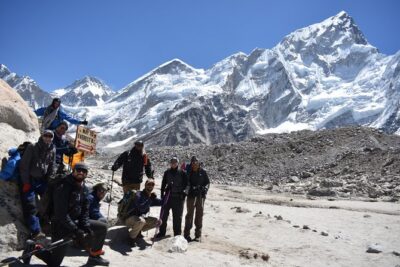
Everest Base Camp Helicopter Tour landing at Hotel Everest View
Read our review →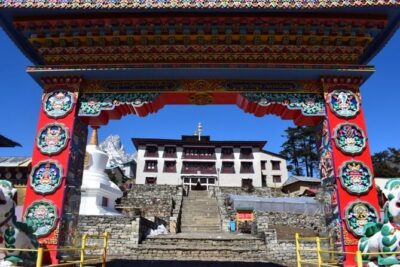
Browse the lists this tour appears in