
Reviewed · HIKING & TREKKING
Everest Basecamp Trek: 14 days
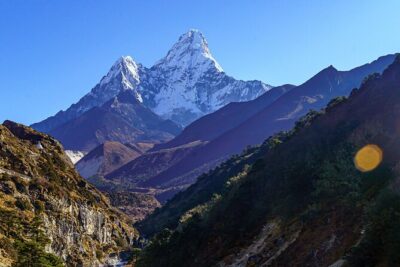
Everest Base Camp is not just a mountain viewpoint. It is a demanding walk through Sherpa villages, prayer flags, suspension bridges, Buddhist monasteries, and thin Himalayan air, ending beside the Khumbu Glacier. This 14-day trek gives you time to reach the world’s highest peak without rushing every high-altitude section.
I like the built-in rest days at Namche Bazaar and Dingboche, plus the practical support of a first-aid-trained guide and one porter for every two clients. I also like that permits, Lukla flights, meals, guesthouses, and airport transfers are included. The main drawback is the physical demand: you need moderate fitness, and flights to Lukla can be affected by conditions or airport changes.
In This Review
- Key details before you book
- What the $1,650 price really covers
- Days 1 and 2: From Thamel to the Lukla runway
- Days 3 and 4: Namche Bazaar and the first acclimatization stop
- Days 5 and 6: Tengboche Gompa and the Sherpa heart of the route
- Day 7: Nangkartshang Peak and a useful pause
- Day 8: Across bare ground toward Lobuche
- Day 9: Gorak Shep and Everest Base Camp
- Day 10: Kala Patthar before sunrise
- Days 11 and 12: Retracing the trail to Namche and Lukla
- Days 13 and 14: Back to Kathmandu and departure
- Who should choose this Everest Base Camp trek?
- Should you book it?
- FAQ
- Where does the Everest Base Camp trek begin?
- Are flights between Kathmandu and Lukla included?
- How many nights are spent in Kathmandu?
- What accommodation is provided during the trek?
- Are meals included?
- Is travel insurance included?
Key details before you book
- Lukla flights are included: Your round-trip airfare from Kathmandu to Lukla is part of the package, though the departure airport may be Kathmandu or Manthali depending on flight status.
- Two high-altitude rest days help: You have an acclimatization day in Namche Bazaar and another in the Dingboche area, including a short hike toward Nangkartshang Peak.
- Kala Patthar is the best Everest view: The pre-sunrise walk gives you the closest mountain panorama on this route.
- Sherpa culture is part of the route: Thamel, Namche Bazaar, Tengboche Gompa, Pangboche, and the mountain villages each offer a different look at life in the Khumbu.
- The $1,650 price covers major essentials: Permits, domestic flights, 13 nights of accommodation, meals on the trek, guides, porters, and transfers are included.
- This is a private trip: Only your own group takes part, which allows the walking pace and daily routine to stay more personal.
What the $1,650 price really covers
At $1,650 per person, this trek offers solid value if you want the major arrangements handled in advance. The package includes private transportation, all airport transfers in a tourist vehicle, trekking permits, round-trip flights between Kathmandu and Lukla, two hotel nights in Kathmandu with breakfast, and 11 nights in twin-sharing guesthouses in the Everest region.
During the trek, you receive breakfast for all 14 days, 11 lunches, and 11 dinners. An experienced, government-licensed, English-speaking guide accompanies you, with first-aid training listed as part of the service. Porters carry luggage at a ratio of one porter for every two people.
That last point matters. You still carry a daypack, but you do not need to haul all your clothing and equipment up every climb. For a high-altitude walk, reducing that load can make the difference between a hard day and an unpleasant one.
The price does not include lunch and dinner in Kathmandu, drinks, bottled or boiled water, international airfare, airport departure tax, travel insurance, emergency evacuation cover, or tips. These are not minor details. Water costs add up over nearly two weeks, and high-altitude evacuation insurance is essential rather than optional in spirit, even though it is not included in the package.
The listed rating is 5 out of 5 from four ratings. That is an encouraging signal, though the small number means I would still read the inclusions carefully and ask about current flight arrangements before paying.
More treks starting in Kathmandu:
- Everest Base Camp Trek – 14 Days
★ 5.0 · 1,499 reviews - Everest Base Camp Trekking
★ 5.0 · 485 reviews - Nagarkot Sunrise View and Day Hiking from Kathmandu
★ 5.0 · 471 reviews
Days 1 and 2: From Thamel to the Lukla runway
Your arrival begins at Tribhuvan International Airport in Kathmandu. A member of Iconic Holiday Nepal meets you in the terminal with a sign showing your name and the company name, then transfers you to your hotel in Thamel.
Thamel is Kathmandu’s main tourist center, with travel offices, restaurants, hotels, nightclubs, and shops selling last-minute trekking supplies. You have about four hours here on the first day. That is enough time to eat, walk around, check gear, and adjust to the city before the mountain section begins.
Do not treat Thamel as a calm introduction. It is busy, noisy, and useful. You can make final purchases here, but the short visit means you should arrive with your important footwear and clothing already sorted.
On Day 2, you fly to Lukla early in the morning. The flight may leave from Kathmandu or Manthali, depending on the operating situation during your trip. That change can affect the morning schedule and road arrangements, so keep your first mountain day flexible.
The flight itself is brief, listed at about 30 minutes, but it is a memorable start. Lukla Airport serves as the main air gateway for treks in the Everest region, and the surrounding terrain gives you an immediate sense that the easy part is over.
You have about 40 minutes in Lukla before setting off. The route then reaches Phakding, where the first trekking night begins. This opening walk is a gentle introduction compared with the days ahead, but your body is already adjusting to mountain elevation.
Days 3 and 4: Namche Bazaar and the first acclimatization stop
The path from Phakding to Namche Bazaar is one of the first serious tests. You climb through mountain scenery, cross several suspension bridges, and pass small settlements before reaching the main trading town of the Khumbu.
Namche Bazaar is not a simple village stop. It has hotels, restaurants, tea houses, and modern services, making it an important place to rest and prepare for the higher route. You are scheduled to spend two days here, which is a sensible choice.
The rest day includes an early hike toward Syangboche. The listed duration is about six hours, so this is not a day spent entirely in bed. The purpose is to climb higher for a short period and then return to sleep at a lower elevation. That pattern helps your body adjust more safely than gaining altitude every day without pause.
You should use Namche for practical work. Check your layers, sort your daypack, drink regularly, and tell your guide if you have a headache, unusual fatigue, or trouble sleeping. The guide is there not only to show you the route but also to help manage the risks that increase as you climb.
Days 5 and 6: Tengboche Gompa and the Sherpa heart of the route
From Namche, the trail first drops toward the Dudh Kosi Valley before climbing again toward Tengboche. You pass Phungi Thanka and continue beside the Imja Khola, with the route becoming more demanding as it gains height.
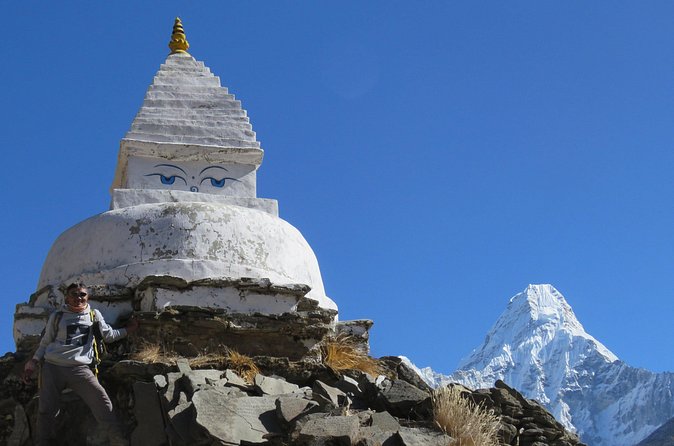
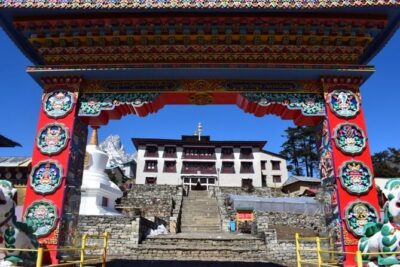
Tengboche is one of the most meaningful stops on the trek because of its monastery. On Day 6, you have time to visit Tengboche Gompa in the morning before continuing toward the Imja River and Pangboche.
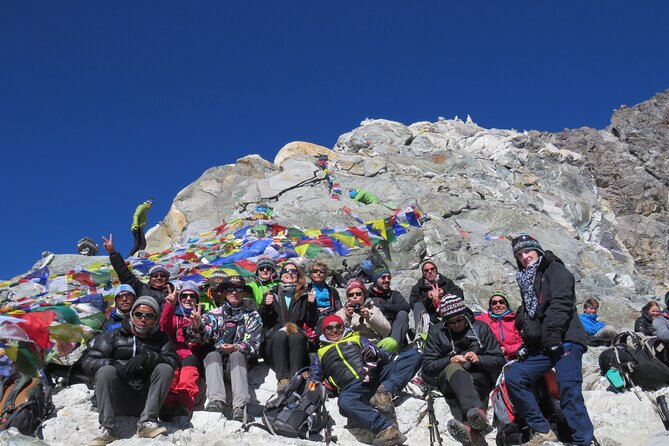
The monastery visit adds cultural depth to what could otherwise become a sequence of uphill walks and mountain photographs. Prayer flags, Buddhist practice, and the setting above the river give this section a clear sense of place. You are not simply moving between lodges. You are passing through the religious and social world of the Khumbu.
The route beyond Tengboche includes a descent to the river and a walk through Pangboche village. Descents can be welcome after a long climb, but they also cost energy because you must climb again later. Keep your pace steady rather than trying to make up time.
A completely different sort of day in Kathmandu:
- Private Kathmandu Sightseeing Tour | UNESCO World Heritage sites
★ 5.0 · 756 reviews - Everest Base Camp Helicopter Tour landing at Everest View Hotel
★ 5.0 · 668 reviews - Half day cooking class in Thamel kathmandu
★ 5.0 · 607 reviews - Kathmandu: Full Day 7 UNESCO Tour with Lunch – Private/Group
★ 5.0 · 415 reviews
Day 7: Nangkartshang Peak and a useful pause
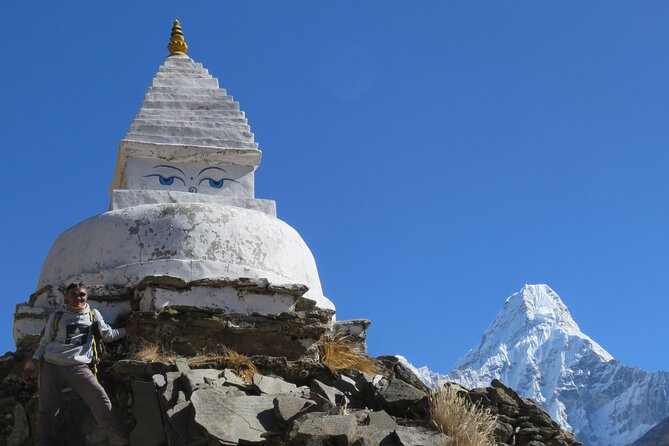
The second planned rest day takes place around Dingboche, with a short hike toward Nangkartshang Peak. The listed hike is about one hour, making this a lighter acclimatization outing than the Namche day.
Dingboche is an important pause because the route now feels more exposed and the air is thinner. You are gaining height toward the glacier and the base camp, so the day is less about sightseeing than giving your body time to respond.
A short hike still has value. You move, test your breathing, see the surrounding mountain terrain, and return to the guesthouse rather than pushing onward. If you feel unwell, tell the guide. Skipping a side walk is far better than turning a warning sign into a serious problem.
Day 8: Across bare ground toward Lobuche
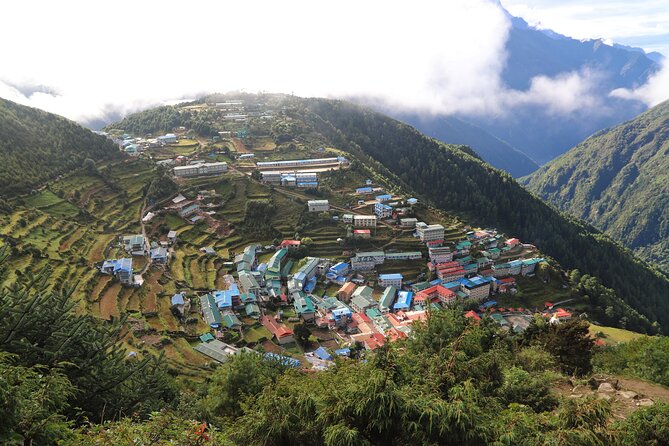
Leaving Dingboche, the route crosses increasingly bare fields and gradually becomes steeper. You walk toward Dughla and then follow a glacial route toward Lobuche.
This is where the trek begins to feel stark. Trees and thick vegetation fade, while rock, ice, and open mountain ground dominate the view. The physical challenge is not only the slope. The altitude makes ordinary tasks slower, and you need to manage your breathing and water intake carefully.
Lobuche is a staging point for the base camp push. The itinerary does not give a fixed duration for this day, so expect the pace to depend on trail conditions, group speed, and how everyone is handling the altitude.
Day 9: Gorak Shep and Everest Base Camp
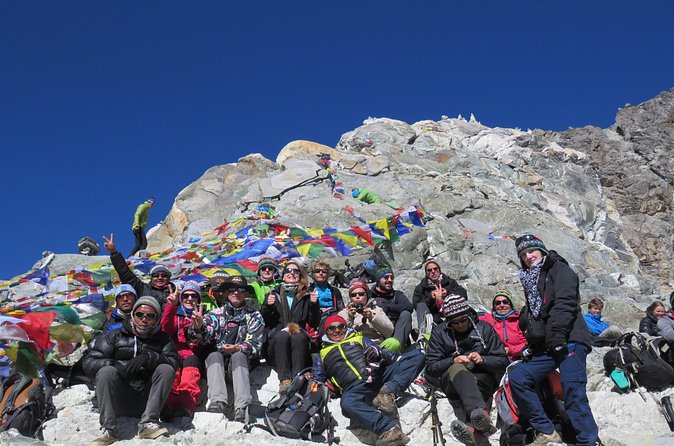
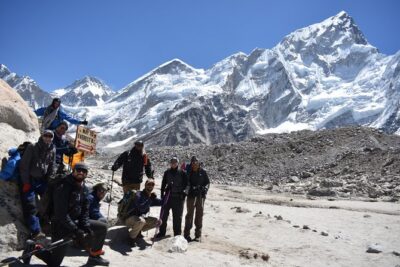
From Lobuche, the path climbs along the Khumbu Glacier toward Gorak Shep. The trail is steep in sections, and the glacier route can feel rough underfoot. This is a serious day, even if the listed stop at Everest Base Camp is shown as two hours.
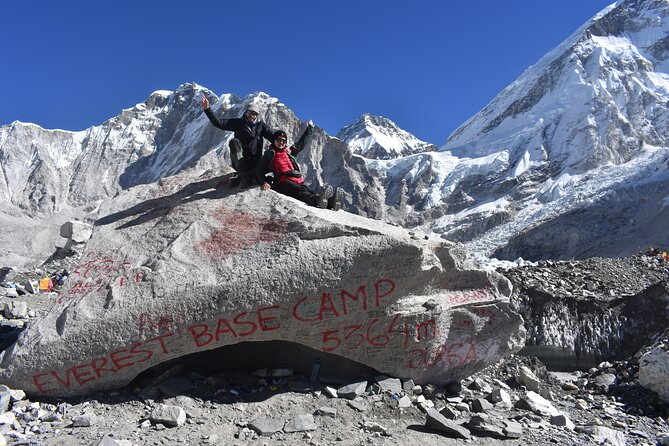
Gorak Shep was once used as Everest Base Camp. From there, you continue toward the current base camp area beside the Khumbu Glacier. The base camp is a major goal, but it is important to set expectations. You do not arrive at a permanent city or a high viewing platform. You reach a rugged mountaineering area shaped by glacier ice, rock, and seasonal expedition activity.
The emotional reward comes from knowing how far you have walked from Lukla. The physical reward is the huge setting around you. After reaching base camp, you return to Gorak Shep for the night, where rest matters more than a late celebration.
This is also one of the coldest and most tiring portions of the trip. Pack your warmest layers in an easy-to-reach place. Your porter carries the main luggage, but your daypack should hold everything you need during the walk.
Day 10: Kala Patthar before sunrise
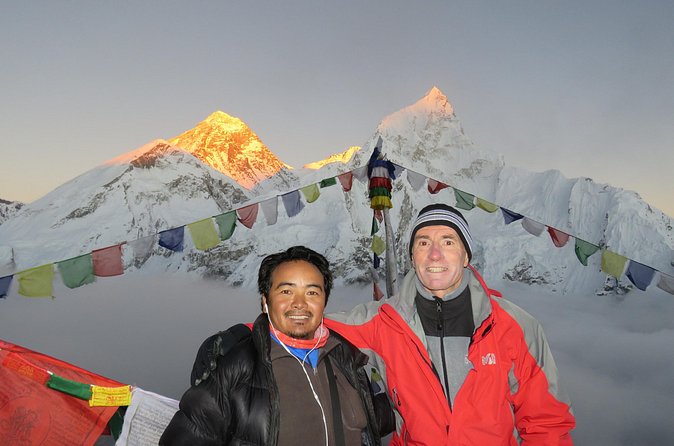
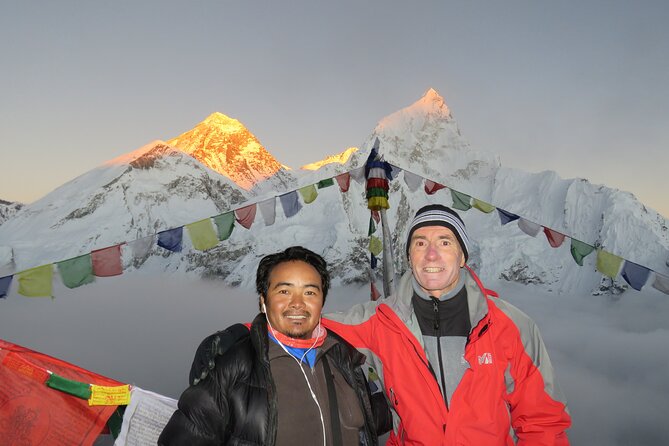
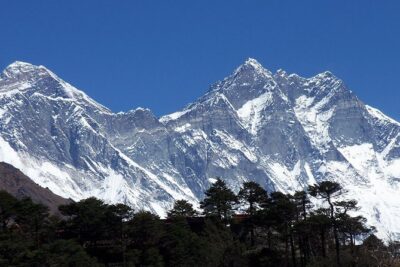
The pre-sunrise climb to Kala Patthar is one of the strongest parts of the entire route. Kala Patthar sits above Gorak Shep and offers the closest view of Mount Everest on this itinerary.
The walk is listed at about two hours. Starting before sunrise means you need warm clothing, a headlamp if required by your guide, and patience with the cold. The reward is the changing light across Everest and the surrounding peaks as morning arrives.
Base Camp gives you the destination. Kala Patthar gives you the view. The two stops serve different purposes, and it is good that both are included rather than choosing one.
After the viewpoint, you return for breakfast and begin the descent. Going down is usually easier on breathing, but it can be hard on knees and legs. Trekking poles can be useful, though they are not listed as included equipment.
Days 11 and 12: Retracing the trail to Namche and Lukla
Day 11 takes you back toward Namche along the route you used earlier. You pass Pangboche and Tengboche, cross a suspension bridge, and continue through the familiar mountain corridor.
The return walk is not a throwaway section. Downhill views can look completely different from those you saw while climbing, and you now understand how much ground you covered. Still, the repeated route means this trek focuses on reaching Everest Base Camp rather than creating a different loop on the return.
Day 12 continues from Namche toward the lower villages. The trail drops steeply at first along a hillside, then enters a more densely forested section and passes small settlements. You cross the Dudh Kosi River several times on suspension bridges.
This change from open high ground to forest is one of the satisfying transitions of the trek. Your breathing should feel easier, but tired legs can make the long descent deceptively demanding. Keep your footwear secure and avoid racing downhill.
Days 13 and 14: Back to Kathmandu and departure
On Day 13, you fly from Lukla back to Kathmandu early in the morning. The flight offers aerial views of the mountain region before returning you to the city.
The package includes a hotel night in Kathmandu, so you have time to shower, eat, and rest after the trek. Meals in Kathmandu beyond breakfast are not included, giving you freedom to choose your own restaurants in Thamel.
Day 14 is the departure day. A representative takes you to the airport according to your flight time. The airport transfers are included, which is helpful after a long trek when you may be carrying extra purchases or simply feeling worn out.
The schedule is tight but logical. It gives you two nights in Kathmandu, 11 nights in the Everest region, two acclimatization pauses, a base camp day, and a Kala Patthar morning before the return.
Who should choose this Everest Base Camp trek?
I would choose this trip if you want a private arrangement with the main logistics bundled together. The guide, porters, permits, flights, meals during the trek, and airport transfers remove much of the planning work.
It suits people with moderate physical fitness who are ready for steep climbs, long walking days, basic guesthouse accommodation, and changing flight plans. It is not a casual mountain holiday, and the word private does not mean effortless. Your group still has to manage altitude, cold, uneven paths, and suspension bridges.
The twin-sharing guesthouses are described as tourist standard, not luxury accommodation. Be ready for simple rooms and a trekking routine built around walking, eating, resting, and starting early. Drinks and water are extra, so budget for them.
Because the trip is private, it may work well for couples, families with suitable fitness, or friends who want to travel at their own pace. Group discounts are offered, though the amount is not specified.
You can cancel up to 24 hours before the experience for a full refund. Confirmation is received at booking, and the activity operates daily during the stated period from July 1, 2024, through August 12, 2026.
Should you book it?
Book this trek if the $1,650 price fits your budget and you want a straightforward Everest Base Camp plan with strong logistical support. The included Lukla flights, permits, food during the trek, porters, and acclimatization days give it practical value.
Before booking, confirm the current Lukla flight arrangements, ask exactly what porter luggage allowance applies, and buy travel insurance with high-altitude emergency evacuation coverage. If you are comfortable with basic guesthouses and a demanding 14-day schedule, this is a well-organized route to Everest Base Camp and Kala Patthar. If you want flexible rest days, luxury lodging, or an easier walk, choose a longer itinerary instead.
FAQ
Where does the Everest Base Camp trek begin?
The trip begins with pickup at Tribhuvan International Airport in Kathmandu, Nepal. The tour team transfers you to Thamel for the first night.
Are flights between Kathmandu and Lukla included?
Yes. Round-trip airfare between Kathmandu and Lukla is included. Depending on flight status during your trip, the departure may be from Kathmandu Airport or Manthali Airport.
How many nights are spent in Kathmandu?
The package includes two nights in Kathmandu in a tourist standard hotel, with breakfast included.
What accommodation is provided during the trek?
You receive twin-sharing guesthouse accommodation for 11 nights in the Everest region.
Are meals included?
Breakfast is included for all 14 days. The package also includes 11 lunches and 11 dinners during the trek. Lunch and dinner in Kathmandu, beverages, bottled water, and boiled water are not included.
Is travel insurance included?
No. You need to arrange your own travel insurance, including high-altitude emergency evacuation coverage. Tips for the trekking staff and driver are also not included.
Recently added around Kathmandu
- Kathmandu : Swambhunath & Durbar Square Guided Half Day Tour★ 3.3 · 3 reviews
- Private Day Tour in Kathmandu Valley Rim with Bhaktapur Sightseeing★ 5.0 · 3 reviews
- From Kathmandu / Pokhara / Chitwan: River Rafting – 1 Day★ 4.6 · 3 reviews
- Nepali Cooking training & Cultural Homestay Experience★ 5.0 · 3 reviews
- Private 3-Hour Nagarkot Sunset Tour from Kathmandu★ 3.5 · 3 reviews
- From Kathmandu: Everest Base Camp Landing Helicopter Tour★ 5.0 · 3 reviews
- 4 UNESSCO World heritage sites of Kathmandu-private tour★ 5.0 · 3 reviews
- From Kathmandu Budget: 15 Day Everest Base Camp Trek★ 5.0 · 3 reviews
Hiking & Trekking, compared.
Nagarkot Sunrise View and Day Hiking from Kathmandu
Read our review →
Browse the lists this tour appears in