
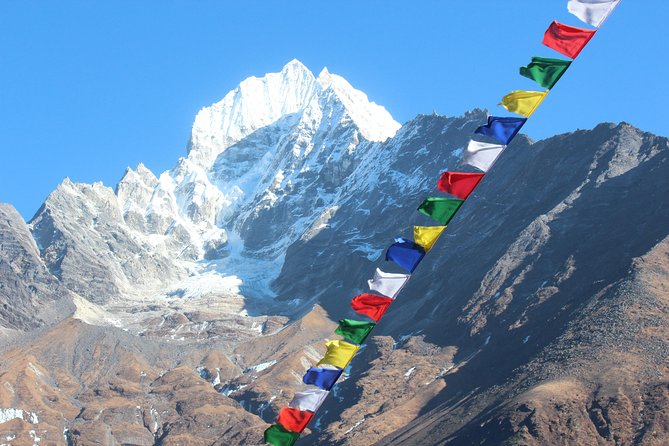
Reviewed · HIKING & TREKKING
Everest Three Pass Trek
The Everest Three Pass Trek earns its reputation by linking Kongma La, Cho La, and Renjo La, three high crossings above 5,000 meters. You also get Kala Patthar, Gokyo Lakes, Everest views, Sherpa villages, prayer-flag bridges, and the famous flight between Kathmandu and Lukla.
I like the clear acclimatization plan, especially the Namche rest day and the time spent around Gokyo. I also like that the $1,800 price includes domestic flights, meals, permits, porters, a licensed guide, a sleeping bag, a down jacket, and staff insurance. The catch is simple: this is a hard trek at serious altitude, and the schedule leaves little room for a weak day or poor weather.
In This Review
- Key points at a glance
- What the Everest Three Pass Trek is really like
- Days 1 to 3: Lukla, river trails, and Namche
- Days 4 and 5: Tengboche monastery and Dingboche
- Day 6: Chhukung prepares you for Kongma La
- Day 7: Kongma La, the highest of the three passes
- Days 8 and 9: Gorakshep and Kala Patthar sunrise
- Day 10: Cho La and the route to Gokyo
- Day 11: Gokyo Lakes and Gokyo Ri
- Day 12: Renjo La completes the circuit
- Days 13 to 15: Back to Namche and Lukla
- What the $1,800 price includes
- Guide support and the private format
- Who should book this trek
- Practical things to settle before departure
- Should you book the Everest Three Pass Trek?
- FAQ
- How long is the Everest Three Pass Trek?
- What are the three passes on the route?
- Is the trek suitable for beginners?
- Is this a private tour?
- Are meals included?
- Are flights between Kathmandu and Lukla included?
- Is trekking equipment provided?
- What happens if bad weather cancels the trip?
Key points at a glance
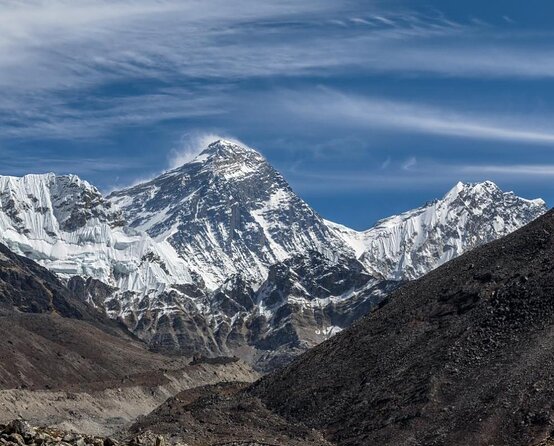
- Three major passes: Kongma La reaches 5,535 meters, Cho La reaches 5,420 meters, and Renjo La reaches 5,360 meters.
- A private trekking party: Only your group takes part, with an English-speaking licensed guide and porters carrying luggage.
- Two famous viewpoints: Kala Patthar offers an early sunrise view of Everest, while Gokyo Ri looks across the Gokyo valley and lakes.
- Strong value at $1,800: The price covers Kathmandu to Lukla flights, return airfare, meals, accommodation, permits, guide services, porters, and some cold-weather gear.
- A carefully staged route: Namche provides acclimatization, Chhukung prepares you for Kongma La, and Gokyo gives you a rest day before Renjo La.
- Weather matters: Lukla flights and high-pass crossings depend on conditions, so flexibility is important.
What the Everest Three Pass Trek is really like
This is not simply a longer walk to Everest Base Camp. It is a high mountain circuit that crosses three difficult passes and moves through several distinct parts of the Khumbu region. You follow river valleys, climb through rhododendron forest, cross suspension bridges, pass Buddhist monasteries, and then reach rough, snowy ground where the route becomes much more demanding.
The itinerary lasts about 15 days and begins and ends in Kathmandu. The first and last days depend on the short domestic flight between Kathmandu and Lukla. That flight is part of the adventure, but it also makes weather a practical concern. A poor-weather cancellation offers a different date or a full refund, but you should still avoid booking tight onward connections.
The tour is private, so you are not placed into a large mixed group. That matters on a route like this. Your pace, rest stops, and decisions around difficult sections can be handled within your own party, though the exact group size and porter arrangement should be confirmed before departure.
More treks starting in Kathmandu:
- Everest Base Camp Trek – 14 Days
★ 5.0 · 1,499 reviews - Everest Base Camp Trekking
★ 5.0 · 485 reviews - Nagarkot Sunrise View and Day Hiking from Kathmandu
★ 5.0 · 471 reviews
Days 1 to 3: Lukla, river trails, and Namche
Your first morning begins at 6:15 am in Kathmandu, followed by a flight to Lukla. The approach passes over green hills and snow-covered peaks before landing at Tenzing-Hillary Airport. Lukla is the gateway to the Khumbu, and the airfield’s mountain setting gives the trip an immediate sense of place.
From Lukla, the trail follows the Dudh Koshi River. You cross suspension bridges decorated with prayer flags and enter Sagarmatha National Park. The route climbs toward Namche Bazaar, the main Sherpa town in the region and an important place to slow down before gaining more height.
Day 3 is set aside for acclimatization in Namche. That is not wasted time. Your body needs a chance to adjust, and the scheduled walk toward Everest View Hotel gives you a useful climb without moving your sleeping altitude too quickly.
From the viewpoint, you can see peaks including Nuptse, Thamserku, and Everest. Namche itself is also one of the more comfortable places on the route for exploring, though you should resist the temptation to treat the rest day as a full day off. A gentle uphill walk is part of the acclimatization plan.
Days 4 and 5: Tengboche monastery and Dingboche
Leaving Namche, you follow the Dudh Koshi upstream to Phunke Tenga. Prayer wheels powered by flowing water add a memorable detail to this section. From there, the route climbs above the Imja Khola toward Tengboche.
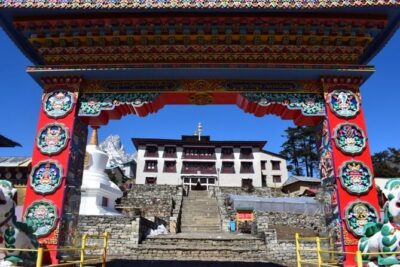
Tengboche is known for its monastery and for its broad mountain views. The stop is brief, but it gives you a chance to pause in one of the Khumbu’s most important religious settings. The trail then continues through rhododendron forest and past Pangboche before reaching Dingboche.
The views become more severe and more impressive as you approach Dingboche. Ama Dablam, Lhotse, and Everest accompany much of the route. You are now leaving the lower forested country behind, and the air feels thinner.
This itinerary does not use an extra acclimatization day in Dingboche. Instead, it takes you to Chhukung on Day 6. That is a smart route choice for the planned pass crossing, since Chhukung shortens the following day’s approach to Kongma La. Still, it means you should take the early days seriously. Do not spend them racing ahead simply because the trail feels manageable.
Day 6: Chhukung prepares you for Kongma La
The walk from Dingboche to Chhukung is relatively short but climbs steadily. Chhukung sits in a high valley surrounded by large peaks, and its position makes it a useful staging point for the first pass.
The value of this day is not sightseeing alone. It breaks up the climb and avoids making the Kongma La day even longer. You should use the afternoon to organize your pack, check clothing, and follow your guide’s advice about the next morning.
This is also a good point to be honest with yourself. The three-pass route is not a place to hide poor preparation. You need strong physical fitness, mental patience, and comfort with rough terrain. The altitude can turn an ordinary uphill walk into a slow test of concentration.
A completely different sort of day in Kathmandu:
- Private Kathmandu Sightseeing Tour | UNESCO World Heritage sites
★ 5.0 · 756 reviews - Everest Base Camp Helicopter Tour landing at Everest View Hotel
★ 5.0 · 668 reviews - Half day cooking class in Thamel kathmandu
★ 5.0 · 607 reviews - Kathmandu: Full Day 7 UNESCO Tour with Lunch – Private/Group
★ 5.0 · 415 reviews
Day 7: Kongma La, the highest of the three passes
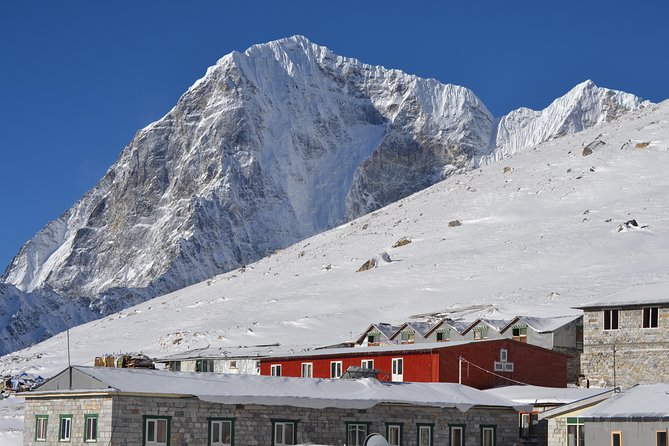
Kongma La is the highest crossing on the route at 5,535 meters. The approach is steep and difficult, with rough ground and, depending on conditions, snow. This is one of the trek’s hardest days, so an early start and careful pacing matter.
At the top, the reward is a wide view of the Mahalangur Himalayan range, including Everest and other major peaks. You also get the satisfaction of completing the highest pass first, although the route is not finished by any means.
The challenge here is more than the elevation. Snow-covered sections, uneven footing, and the sustained climb demand attention. Your guide and porter team are especially important on this kind of day, but support does not remove the need for your own fitness.
Days 8 and 9: Gorakshep and Kala Patthar sunrise
After Kongma La, the route continues toward Gorakshep across stony tracks. The walk is rewarding but not easy, and the exposed surroundings bring you deeper into the high mountain zone. Snow-covered peaks and glaciers dominate the views.
On Day 9, you rise early for Kala Patthar at 5,550 meters. The aim is to see sunrise over Everest, when the first light reaches the summit and the surrounding valleys. This is one of the classic viewpoints in the Everest region, and it provides a particularly direct visual connection with the mountain.
The day is not only about the viewpoint. Hiking uphill before breakfast at this height is tiring, and the descent still requires energy. You should keep your expectations practical: clear skies are not guaranteed, and high-altitude mornings can be cold. Even so, the early start is worthwhile when weather gives you a clean view.
Day 10: Cho La and the route to Gokyo
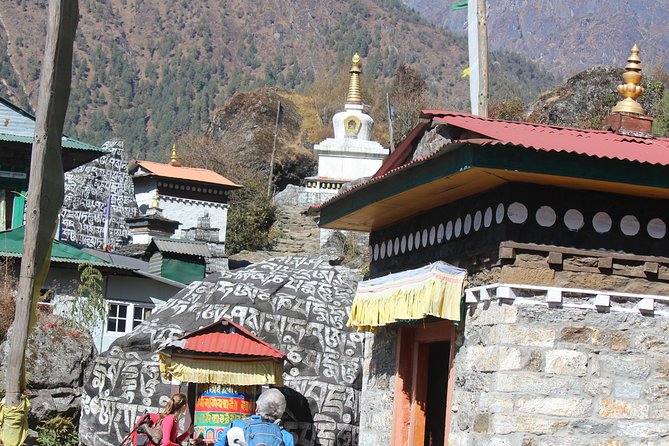
Cho La reaches 5,420 meters and brings another tough crossing. The trail climbs steeply toward an ice-covered section, making this a day when sturdy footwear, warm layers, and slow movement are essential.
The pass leads toward the Gokyo Lakes, one of the route’s great changes of scenery. After the stark slopes around Gorakshep, the lakes and surrounding peaks create a different kind of mountain setting. The route is still demanding, but arriving in Gokyo gives you a clear sense that the circuit is opening into new country.
Cho La may be the most technically uncomfortable pass for some hikers because of its icy trail. Conditions can change, and the exact feel of the crossing will depend on snow and weather. Your guide should explain the day’s conditions before you leave, and you should not treat the pass as a routine walk.
Day 11: Gokyo Lakes and Gokyo Ri
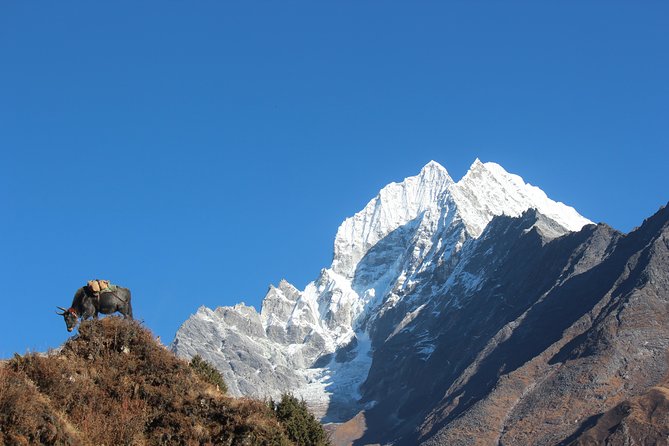
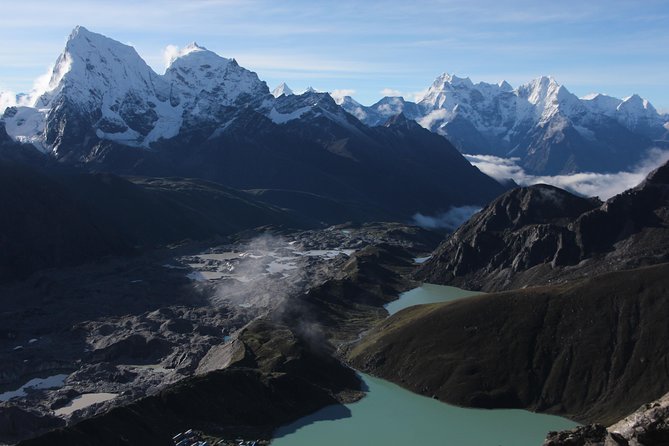
Gokyo is scheduled as a rest stop, with a morning hike to Gokyo Ri at 5,360 meters. The climb gives you views over the Gokyo valley, its smaller lakes, surrounding peaks, and nearby glaciers.
This is an excellent recovery day in theory because you sleep in the same place rather than packing up for another long move. The Gokyo Ri climb is still a real uphill effort, so you should pace yourself and save energy for the final pass.
I like this part of the plan because it prevents the trek from becoming a simple sequence of hard crossings. You get time to appreciate the high valley and see a different side of the Everest region. It also gives your guide a chance to watch how you are handling the altitude before Renjo La.
Day 12: Renjo La completes the circuit
Renjo La is the final pass, at 5,360 meters. The trail rises gradually on a snow-filled path before reaching the top. After Kongma La and Cho La, you may be tired, but completing the third crossing gives the trek its defining sense of achievement.
From Renjo La, the views include Cho Oyu, Everest, and other high peaks. The pass also provides a strong feeling of geographical connection, since you have crossed from one major part of the Khumbu to another rather than simply retracing a popular route.
This is another early and demanding day. The word rest should not appear anywhere in your plan for it. You will need food, warm clothing, water, and patience. The final pass can feel psychologically harder than the first because fatigue has accumulated over many days.
Days 13 to 15: Back to Namche and Lukla
After Renjo La, the route heads toward Namche on a more relaxed trail. You can enjoy distant views of Everest and other peaks without another major pass immediately ahead.
Returning to Namche is useful for more than comfort. It marks the shift from high-pass trekking to the lower trail system, where forests, villages, rivers, and suspension bridges become more prominent again. It is a chance to look back at what you have crossed.
Day 14 takes you from Namche to Lukla through villages, woodland, and river crossings. The final trail day can feel surprisingly long because your body is tired, even though the route is easier than the high passes. In Lukla, there is time to rest and explore the market before the flight.
Day 15 brings the flight back to Kathmandu. From the air, you see the contrast between the green hills and the snow-covered mountains. The activity ends at the Kathmandu meeting point, at Base Camp Adventure Pvt. Ltd. on Tridevi Sadak.
What the $1,800 price includes
At $1,800 per person, this trek offers solid value if you would otherwise need to arrange each service separately. The price includes:
- Domestic airfare between Kathmandu and Lukla, including airport tax
- Best available guesthouses, mainly in twin-sharing rooms
- Breakfast, lunch, and dinner for 14 days
- A licensed English-speaking local guide
- Porters and the required trekking staff
- Staff food, accommodation, salaries, insurance, and equipment
- Sagarmatha National Park entry permit
- TIMS permit
- Down jacket, sleeping bag, and duffel or kit bag
- First-aid medical kits
- Necessary land transport
That list covers the expensive and complicated parts of a Himalayan trek. The staff costs are especially important because porters and guides are not an optional luxury on a route with three high passes.
You still pay separately for international flights, departure tax, alcoholic drinks, hot and cold drinks, laundry, hot showers, personal trekking equipment, tips, and anything not listed as included. The phrase best available guesthouses also leaves some room for variation, so ask what standard of lodging is expected in each stop.
Guide support and the private format
The operator supplies a local government licensed English-speaking guide and porters. That is a useful level of support on a route where navigation, pace, weather, and altitude all matter.
The company has organized Everest-area trips with guides and staff including Shiva, Jwala, Nabracht, Bhim, and Ram. Because guide assignments can change, confirm who will lead your specific Three Pass Trek before you pay.
Past service accounts connected with the operator repeatedly highlight careful organization and helpful guides. That is encouraging, but you should still ask direct questions about acclimatization decisions, pass conditions, porter loads, emergency procedures, and what happens if a flight is delayed.
A private group is a good fit if you value flexibility and personal attention. It can be less ideal if you prefer the social ease of a larger trekking group or want a lower price through shared arrangements.
Who should book this trek
You should consider this route if you already have strong hiking fitness and want more than the standard Everest Base Camp journey. It suits hikers who enjoy demanding days, rough trails, high passes, and a sense of progress through changing mountain country.
You should be cautious if you have limited mountain experience, dislike cold conditions, or are uncomfortable with steep snow-covered trails. The itinerary specifically requires strong physical fitness, and that warning deserves respect.
The route offers great variety, but it is not forgiving. You have three passes above 5,000 meters, an early Kala Patthar climb, and several long or strenuous days. Training should focus on sustained uphill walking and carrying at least a daypack, though porters carry your main luggage.
Practical things to settle before departure
Your meeting point is in Kathmandu, with pickup offered and all land transport included. The stated start time is 6:15 am, so plan for an early morning and have your essential items ready the night before.
Book as early as practical. The trek is booked, on average, 39 days ahead, which suggests that last-minute planning may not be ideal, particularly when domestic flights and high-altitude rooms are involved.
Cancellation is free up to 24 hours before the start time for a full refund. Changes made inside that window are not accepted, and weather-related cancellations offer a different date or full refund. Since Lukla flights depend on conditions, give yourself breathing room after the trek before any international departure.
Should you book the Everest Three Pass Trek?
I would book this trek if your main goal is a serious, varied Everest-region adventure rather than the easiest route to Base Camp. The combination of Kongma La, Cho La, Renjo La, Kala Patthar, Gokyo Ri, Sherpa villages, monasteries, and Himalayan views gives you a fuller mountain circuit.
The $1,800 cost is attractive because it includes the flights, permits, meals, staff, lodging, and useful cold-weather gear. The main question is not value. It is fitness, altitude tolerance, and your willingness to accept uncertain mountain weather.
Choose it with confidence if you are prepared for the physical demands and want a private, well-supported trek. Choose a less demanding itinerary if you need more recovery time or if the three high passes are more intimidating than exciting.
FAQ
How long is the Everest Three Pass Trek?
The trek lasts approximately 15 days, beginning and ending in Kathmandu.
What are the three passes on the route?
The route crosses Kongma La at 5,535 meters, Cho La at 5,420 meters, and Renjo La at 5,360 meters.
Is the trek suitable for beginners?
The tour information says hikers should have a strong physical fitness level. The route includes rough terrain, steep climbs, snow-filled paths, and three passes above 5,000 meters.
Is this a private tour?
Yes. Only your group participates in the activity.
Are meals included?
Yes. Breakfast, lunch, and dinner are included for 14 days.
Are flights between Kathmandu and Lukla included?
Yes. Domestic airfare between Kathmandu and Lukla, return airfare, and airport tax are included.
Is trekking equipment provided?
A down jacket, sleeping bag, and duffel or kit bag are provided and must be returned after the trek. Personal trekking equipment is not included.
What happens if bad weather cancels the trip?
If poor weather causes cancellation, you are offered a different date or a full refund. You can also cancel up to 24 hours before the start time for a full refund.
Recently added around Kathmandu
- Kathmandu : Swambhunath & Durbar Square Guided Half Day Tour★ 3.3 · 3 reviews
- Private Day Tour in Kathmandu Valley Rim with Bhaktapur Sightseeing★ 5.0 · 3 reviews
- From Kathmandu / Pokhara / Chitwan: River Rafting – 1 Day★ 4.6 · 3 reviews
- Nepali Cooking training & Cultural Homestay Experience★ 5.0 · 3 reviews
- Private 3-Hour Nagarkot Sunset Tour from Kathmandu★ 3.5 · 3 reviews
- From Kathmandu: Everest Base Camp Landing Helicopter Tour★ 5.0 · 3 reviews
- 4 UNESSCO World heritage sites of Kathmandu-private tour★ 5.0 · 3 reviews
- From Kathmandu Budget: 15 Day Everest Base Camp Trek★ 5.0 · 3 reviews
Hiking & Trekking, compared.
Nagarkot Sunrise View and Day Hiking from Kathmandu
Read our review →
Browse the lists this tour appears in