
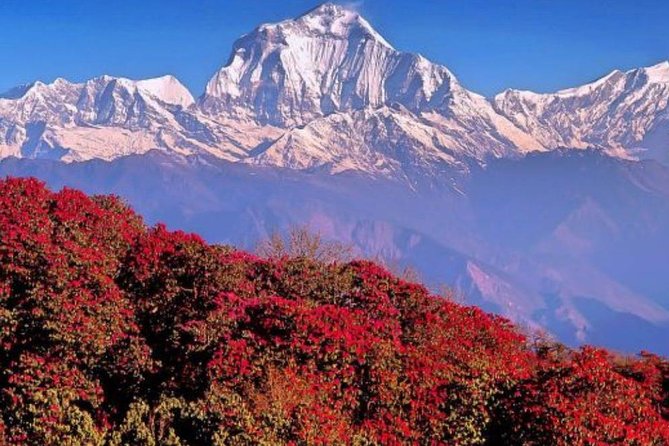
Reviewed · HIKING & TREKKING
Ghorepani Poonhill Trek -8 Days
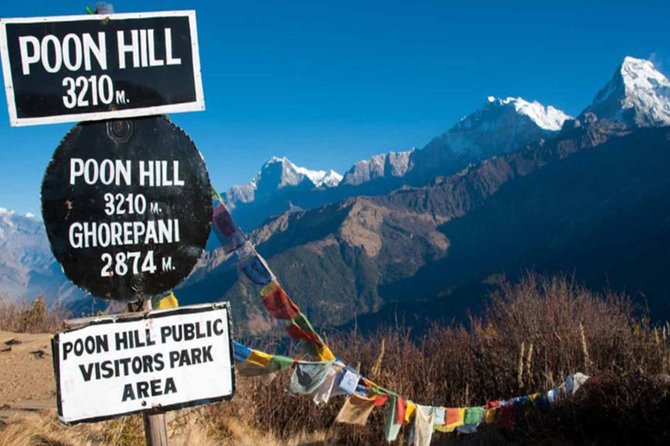
The best part of this trip is the early climb to Poon Hill at 3,210 meters, where sunrise reaches across the Annapurna and Dhaulagiri ranges. You also get a close look at Gurung village life, with tea-house stays, stone paths, forest walks, and time in Ghandruk.
I like the useful mix of city and mountain time: Kathmandu’s major heritage sites are part of the wider plan, while Pokhara gives you a gentler pause before the trek. I also like that the price includes permits, lodging, meals on the trail, a guide, and one porter for every two people.
The main point to check is the schedule. It is sold as an eight-day trip, but the description also refers to ten days, and the Kathmandu sightseeing day is not clearly placed in the day-by-day program. Ask for the final schedule before paying.
In This Review
- Key details that shape the trip
- Why this route works for a first Himalayan trek
- Day 1: Arriving at Tribhuvan International Airport
- Day 2: The road from Kathmandu to Pokhara
- Day 3: Nayapul, Birethanti, and the first climb
- Day 4: Ulleri to Ghorepani through rhododendron forest
- Day 5: The Poon Hill sunrise and the best mountain views
- Day 6: Descending through forest to Ghandruk
- Day 7: Returning by road to Kathmandu
- Day 8: Airport transfer and the end of the trip
- What the $800 price really covers
- Guides, porters, and the human side of the trek
- Food, lodging, and small costs to plan for
- Who should book this route
- Should you book the Ghorepani Poon Hill Trek?
- FAQ
- How long is the Ghorepani Poon Hill Trek?
- What is included in the $800 price?
- Is the tour private?
- Is the Kathmandu sightseeing tour included?
- Are vegetarian meals available?
- What costs are not included?
Key details that shape the trip
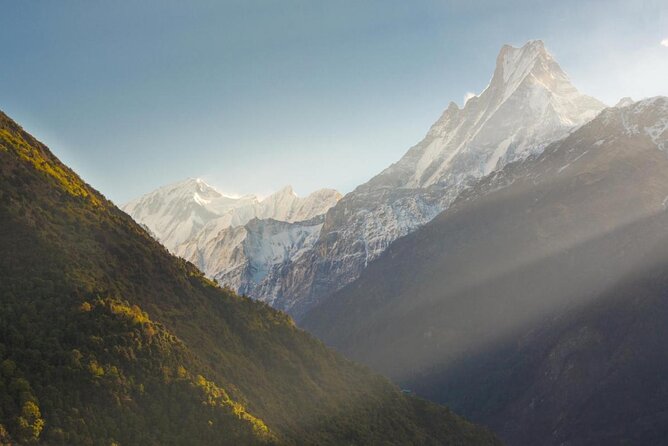
- Poon Hill sunrise at 3,210 meters: The early climb is the trip’s main reward, with views toward Annapurna, Dhaulagiri, Machhapuchhre, Mardi Himal, and Lamjung Himal.
- A short, beginner-friendly Himalayan route: The trek lasts about four walking days, though Day 4 includes a serious uphill push from Ulleri to Ghorepani.
- Gurung culture in villages and tea houses: Ghandruk and the smaller settlements offer a more personal look at local life than a quick mountain viewpoint alone.
- Private arrangements for your group: Only your party participates, with an experienced guide and one porter shared by every two clients.
- A strong package at $800 per person: Permits, hotels, tea houses, selected meals, airport transfers, and basic rescue arrangements are included.
- Guides with a personal touch: Badri and Prakash are singled out for patience and care, while Gomboo Sherpa is also praised for helpful trail support.
Why this route works for a first Himalayan trek
The Ghorepani Poon Hill route is popular for a sensible reason: you get high mountain views without committing to a long, remote expedition. The walking days are manageable for many people, and the trail passes through villages where you can stop for food, sleep, and a warm drink.
That does not make it effortless. The climb from Ulleri to Ghorepani gains about 1,033 meters and takes roughly five to six hours. The trail rises through rhododendron forest, with Banthanti and Nangethanti along the way. If your knees dislike stairs or you rarely exercise, this will feel like a real trek, not a casual stroll.
I see this as a good choice if you want Nepal in a compact package. You get Kathmandu, Pokhara, mountain villages, sunrise views, and a taste of tea-house trekking without spending two weeks on the trail. Families can also consider it, since one report describes a successful trip with a ten-year-old child, though fitness and pacing still matter.
The route is also useful for people short on time. The itinerary gives you two nights in Kathmandu and two nights in Pokhara, with four main trekking days between them. The exact placement of Kathmandu sightseeing needs clarification, but the overall design aims to give you both Nepal’s cities and its mountain foothills.
More treks starting in Kathmandu:
- Everest Base Camp Trek – 14 Days
★ 5.0 · 1,499 reviews - Everest Base Camp Trekking
★ 5.0 · 485 reviews - Nagarkot Sunrise View and Day Hiking from Kathmandu
★ 5.0 · 471 reviews
Day 1: Arriving at Tribhuvan International Airport
Your trip begins at Tribhuvan International Airport in Kathmandu. A representative from Himalayan Adventure Treks and Tours meets you and takes you to your hotel by private vehicle.
That private transfer is a small but worthwhile convenience after a long international flight. Kathmandu traffic can be confusing, and having someone waiting at the airport means you can focus on checking in and getting settled.
You stay in a three-star Kathmandu hotel with breakfast. The evening is described as a preparation period, so use it to meet your guide, check your gear, and confirm the walking plan. The company provides a duffle bag for the trek, returned after the trip, which can help you separate mountain equipment from city luggage.
The package also includes a company T-shirt, though that is a minor extra rather than a reason to book. The more useful inclusions are the paperwork, permits, and help with arrangements before you start walking.
Day 2: The road from Kathmandu to Pokhara
After breakfast, you drive toward Pokhara. The journey takes most of the morning, leaving part of the afternoon to see the Pokhara Valley and settle into your second hotel.
Pokhara is the relaxed counterpoint to Kathmandu. The program describes it as a place of natural beauty and a base for the trek. You spend the night in a three-star hotel with breakfast included.
The main drawback is the road time. This is not a walking day, and the drive can use up much of your morning. Still, putting the long transfer near the beginning keeps the mountain days focused on the trek rather than on repeated transport.
The description says the route heads north toward the Annapurna region, but the detailed program begins the trek from Nayapul on Day 3. Ask the company to confirm the exact vehicle departure time and the final Pokhara plan, especially if you want free time before the trek.
Day 3: Nayapul, Birethanti, and the first climb
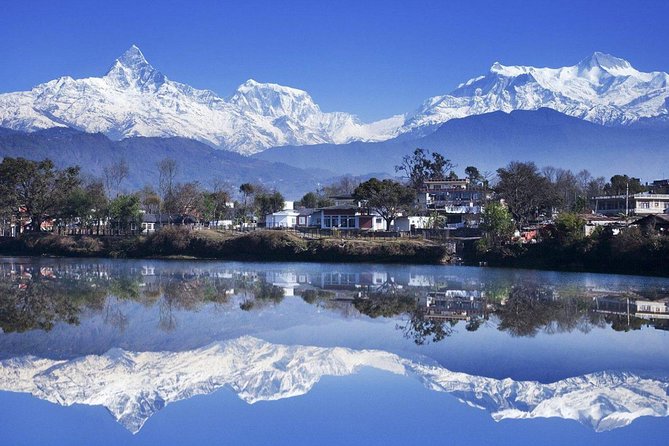
The walking section starts with a roughly 1.5-hour drive from Pokhara to Nayapul at about 1,050 meters. The road provides views of the Annapurna range and countryside before you reach the trailhead.
From Nayapul, you walk for about four to five hours. The first section is gentler, passing through Birethanti at approximately 1,025 meters. The day then leads toward Ulleri, listed at about 1,827 meters.
This is a good first walking day because the elevation gain is spread across several hours rather than saved for one punishing push. It also gives your guide a chance to judge your pace and help organize the load between you and the porter.
The porter arrangement is one porter for two clients. That keeps your daypack lighter, but you still need to carry essentials such as water, rain protection, medication, and anything you want during the day. Personal costs for extra porters, bottled or boiled water, hot showers, battery charging, and laundry are not included.
A completely different sort of day in Kathmandu:
- Private Kathmandu Sightseeing Tour | UNESCO World Heritage sites
★ 5.0 · 756 reviews - Everest Base Camp Helicopter Tour landing at Everest View Hotel
★ 5.0 · 668 reviews - Half day cooking class in Thamel kathmandu
★ 5.0 · 607 reviews - Kathmandu: Full Day 7 UNESCO Tour with Lunch – Private/Group
★ 5.0 · 415 reviews
Day 4: Ulleri to Ghorepani through rhododendron forest
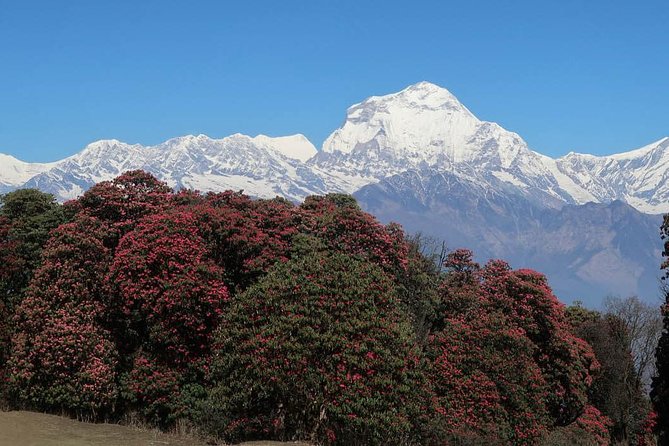
Day 4 is the physical center of the trip. You climb from Ulleri to Ghorepani, rising from about 1,827 meters to 2,860 meters over five to six hours.
The trail passes through oak, rhododendron, and other forested sections, with Banthanti and Nangethanti on the way. In the right season, rhododendron flowers can add color to the walk, but the chief pleasure here is the changing forest and the steady move into higher country.
This day deserves respect. A gain of more than 1,000 meters is substantial, especially on stone steps and an uneven mountain path. Start slowly, drink regularly, and do not let a fast guide or fitter companion set your pace.
Ghorepani is important because it puts you close to Poon Hill. The early rise the next morning works only because you sleep nearby. Tea-house accommodation is included, but you should expect simple mountain lodging rather than city-hotel comfort.
Day 5: The Poon Hill sunrise and the best mountain views
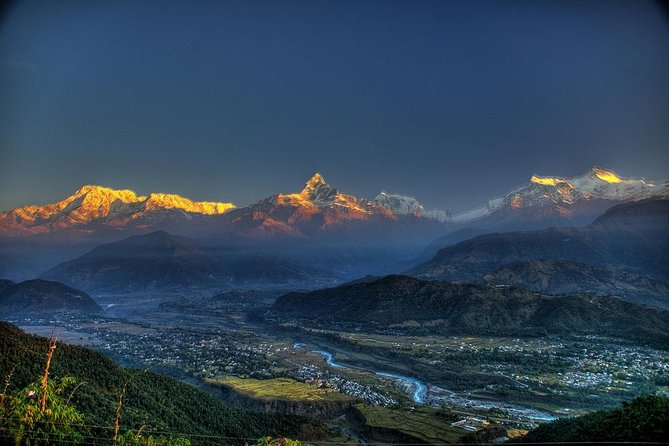
Day 5 is the highlight. You leave early for Poon Hill at 3,210 meters to watch the sun reach the Annapurna and Dhaulagiri ranges.
The viewpoint gives you a broad mountain panorama. The named peaks include Machhapuchhre at 6,997 meters, Mardi Himal at 5,553 meters, and Lamjung Himal at 7,454 meters, along with the Annapurna and Dhaulagiri ranges.
The sunrise requires an early start, and the viewpoint can be cold before daylight. Bring warm layers in your daypack even if the lower village felt mild. The effort is worthwhile because this is the clearest, most concentrated mountain moment in the itinerary.
The full day takes about six to seven hours. After Poon Hill, you continue along the route toward the next overnight area, with the program leading into the Ghandruk section on the following day. Exact overnight village details should be confirmed, since the supplied schedule gives the walking times and highlights but does not spell out every lodging stop.
This is also the day when weather matters most. The mountains can be hidden by cloud, and no tour operator can guarantee a clear sunrise. The route still has value in poor visibility, but you should book for the walk and culture as well as for a perfect photograph.
Day 6: Descending through forest to Ghandruk
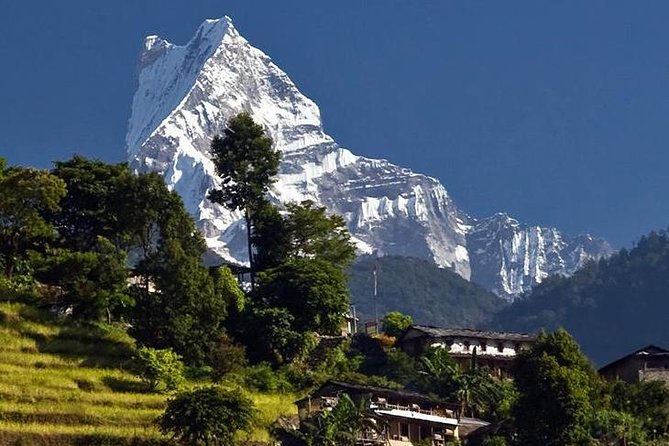
The route descends through oak, rhododendron, and fir forest before reaching Ghandruk. The program describes this as an easy and short walking day, leaving time to explore the village during daylight.
Ghandruk is one of the most appealing stops because it brings the trek back to daily village life. The trip emphasizes Gurung culture, and overnight stays in local lodges or homestays give you a chance to see more than mountain scenery.
The slower pace is welcome after Poon Hill. Use it to walk around rather than treating the village only as a bed for the night. You may find that this cultural part of the trip stays with you longer than another hour of panoramic views.
The supplied plan does not give the exact walking distance or altitude for this day. That is another detail worth confirming, especially if you want to know how much time you will have in Ghandruk.
Day 7: Returning by road to Kathmandu
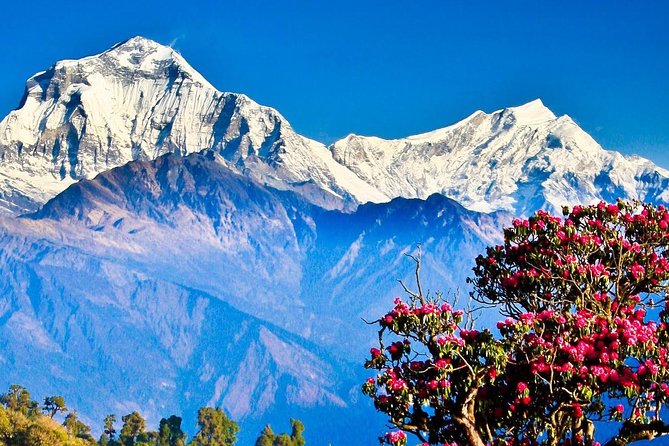
After the mountain section, you return toward Kathmandu by road. The route passes Damauli, Dumre, Muglin, Kurintar, Naubise, and Thankot before reaching the capital.
Kurintar is noted as the point where Nepal’s first cable car connects with Manakamana Temple. The itinerary does not say that a cable-car ride or temple visit is included, so treat this as a route landmark rather than a guaranteed stop.
The drive can be long, but it avoids adding another trekking day to the trip. You return to a three-star Kathmandu hotel, with the package listing two Kathmandu hotel nights in total and breakfast included.
The final evening includes a farewell dinner at an authentic Nepalese restaurant with cultural performance. Four lunches and four dinners are included during the trip, along with seven breakfasts. Check which meals are covered on each day, since the meal list is broad rather than broken down line by line.
Day 8: Airport transfer and the end of the trip
A company representative takes you to the airport about three hours before your scheduled flight. The activity ends back at Tribhuvan International Airport.
That early transfer is practical for an international departure. The plan leaves you with the final part of the day for your onward journey, though you should not schedule a last-minute sightseeing activity unless your flight time clearly allows it.
The program refers to a Kathmandu day tour featuring Pashupatinath, Boudhanath, Swayambhunath, and Kathmandu Durbar Square. These are major cultural sites, but the eight-day schedule provided here does not clearly assign them a full day. Confirm whether the city tour is included in your exact booking or is part of a longer version of the itinerary.
There is also a small inconsistency in the description: one section calls the trip eight days, while another calls it ten days. The day-by-day schedule runs from Day 1 through Day 8, so use eight days as the working length, then get written confirmation.
What the $800 price really covers
At $800 per person, the value is strongest if you want a supported private trip rather than arranging each piece yourself. You receive airport pickup and departure transfer, two hotel nights in Kathmandu, two hotel nights in Pokhara, tea-house lodging during the trek, a guide, shared porter service, TIMS, ACAP permits, paperwork, a duffle bag, basic medical supplies, travel and rescue arrangements, and selected meals.
You are also paying for coordination. The company handles the transport between Kathmandu, Pokhara, Nayapul, and the capital, while the guide helps manage the walking days. For a first visit to Nepal, that can remove a lot of guesswork.
The price does not include your Nepal visa, international flights, travel or rescue insurance, personal drinks, water, hot showers, phone calls, laundry, charging, extra porters, or tips. Insurance is especially important to arrange yourself because the package’s travel and rescue arrangements are not a replacement for your own policy.
The fare is less attractive if you already have Nepal transport, permits, lodging, and guiding arranged. For a private eight-day package with city hotels and mountain support, though, it is a reasonable bundled price. Ask what room setup is included, what meals apply on transfer days, and how luggage storage works while you trek.
Guides, porters, and the human side of the trek
The most consistent strength of this experience is personal support. Badri is described as patient, helpful, honest, and good with a family group. Prakash is praised for being humble, friendly, patient, and able to explain the trail, while Gomboo Sherpa is noted for helpful guiding and porter coordination.
These names come from past trips and do not guarantee who will lead your departure. Ask whether Badri, Prakash, Gomboo Sherpa, or another guide is available for your dates.
The guide is not just there to point at mountains. On a short trek, good pacing and clear advice matter. You want someone who notices when the Ulleri climb is taking too much out of you, explains local customs, and helps you make sensible choices about food, water, and rest.
The porter carries the main load for two clients, but fair packing remains your responsibility. Keep your duffle compact and do not assume every personal item belongs in it. Tips are excluded, so budget separately for the guide and porter.
Food, lodging, and small costs to plan for
Tea-house lodging gives the route its social feel, but you should set realistic expectations. The included accommodation is in lodges or tea houses during the trek, while the city stays are three-star hotels. The mountain rooms will likely be simpler than your Kathmandu and Pokhara rooms, and the itinerary does not promise private bathrooms or heating.
Breakfast is included for seven mornings. Four lunches and four dinners are included, apparently covering the main trekking days, but you should confirm the exact meal schedule. A vegetarian option is available if you request it at booking, and you should give the company any other dietary needs at the same time.
Budget for extras. Bottled or boiled water, hot showers, charging, laundry, phone calls, bar bills, and personal purchases are not included. Carry some local cash for these costs, though the information provided does not specify amounts or payment methods.
The farewell meal adds a cultural touch at the end, but it should not distract from the practical question of what you will eat on transfer days. Get a clear meal list before departure.
Who should book this route
I would recommend this trek to a first-time visitor who wants mountain scenery and village culture in one organized trip. It also suits families with an active child, couples, and small private groups that prefer their own guide rather than a large shared departure.
The route is a good match if you have about a week and want a moderate introduction to Nepal. You do not need to carry a full load, and the walking days are shorter than on many major Himalayan routes.
I would be more cautious if you dislike early starts, steep uphill walking, basic tea-house lodging, or long road journeys. The Ulleri to Ghorepani day is the test, and Poon Hill requires a pre-dawn climb. You should also avoid treating the route as entirely easy simply because it is often recommended for beginners.
Should you book the Ghorepani Poon Hill Trek?
Book it if you want a compact Nepal experience with a strong sunrise payoff, Gurung villages, private guiding, and most major costs bundled into one price. The best reasons are the Poon Hill viewpoint, the Ghandruk cultural stop, and the attentive guide style associated with Badri and Prakash.
Before booking, resolve the eight-day versus ten-day wording and confirm whether the Kathmandu heritage tour is included. If those details match your expectations, the $800 package offers a practical introduction to the Annapurna foothills without requiring you to organize permits, transfers, lodging, and porters yourself.
Cancellation is free if you cancel at least 24 hours before the local start time. After that cutoff, the payment is not refunded.
FAQ
How long is the Ghorepani Poon Hill Trek?
The day-by-day itinerary runs for eight days, starting and ending at Tribhuvan International Airport in Kathmandu. The description also mentions ten days, so confirm the exact duration before booking.
What is included in the $800 price?
The price includes airport transfers, two nights in a three-star Kathmandu hotel, two nights in a three-star Pokhara hotel, tea-house lodging during the trek, a guide, one porter for every two clients, TIMS and ACAP permits, paperwork, a duffle bag, basic medical supplies, travel and rescue arrangements, selected meals, and a farewell dinner with cultural performance.
Is the tour private?
Yes. Only your group participates in the activity.
Is the Kathmandu sightseeing tour included?
The wider description lists Pashupatinath, Boudhanath, Swayambhunath, and Kathmandu Durbar Square. The detailed eight-day schedule does not clearly place this city tour, so ask the provider to confirm whether it is included in your booking.
Are vegetarian meals available?
Yes. Vegetarian food is available, but you need to request it when booking. You should also provide any other dietary requirements at that time.
What costs are not included?
You pay separately for your Nepal visa, international airfare, travel and rescue insurance, phone calls, laundry, bar bills, battery charging, extra porters, bottled or boiled water, hot showers, and tips for the guide and porter.
Recently added around Kathmandu
- Kathmandu : Swambhunath & Durbar Square Guided Half Day Tour★ 3.3 · 3 reviews
- Private Day Tour in Kathmandu Valley Rim with Bhaktapur Sightseeing★ 5.0 · 3 reviews
- From Kathmandu / Pokhara / Chitwan: River Rafting – 1 Day★ 4.6 · 3 reviews
- Nepali Cooking training & Cultural Homestay Experience★ 5.0 · 3 reviews
- Private 3-Hour Nagarkot Sunset Tour from Kathmandu★ 3.5 · 3 reviews
- From Kathmandu: Everest Base Camp Landing Helicopter Tour★ 5.0 · 3 reviews
- 4 UNESSCO World heritage sites of Kathmandu-private tour★ 5.0 · 3 reviews
- From Kathmandu Budget: 15 Day Everest Base Camp Trek★ 5.0 · 3 reviews
Hiking & Trekking, compared.
Nagarkot Sunrise View and Day Hiking from Kathmandu
Read our review →
Browse the lists this tour appears in