
Reviewed · ANNAPURNA TREKS
Kathmandu: 10-Day Annapurna Circuit Trek via Thorong La Pass
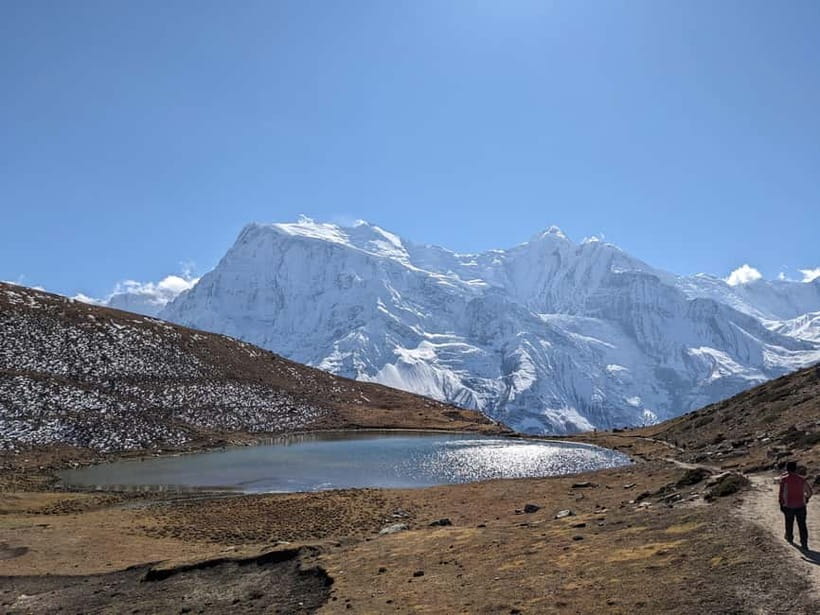
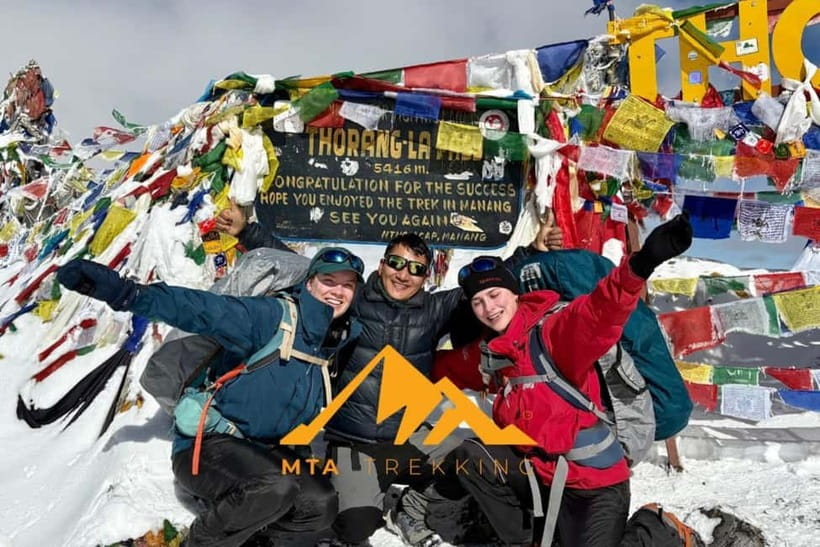
Thorong La Pass is the main event here: at 5,416 meters, it turns a scenic Himalayan walk into a serious high-altitude test. You move from green valleys and pine forests to dry Mustang country, passing Buddhist villages and big views of Annapurna, Dhaulagiri, and Machapuchare along the way.
I like the built-in acclimatization day in Manang, which gives your body a better chance to adjust before the pass. I also like the care built into the guiding, with guides such as Ghanshyam, Prakash, Ganesh, and Chakra praised for slow pacing, hydration, food advice, and practical support.
The main drawback is the tight 10-day schedule. Long road transfers bookend the walk, and the pass day is demanding even for fit hikers. This is not a casual mountain holiday, and insurance with helicopter evacuation cover up to about 5,400 meters is essential.
In This Review
- Key points to know before you book
- What the 10-day route is really like
- Days 1 and 2: Kathmandu to Dharapani, then Chame
- Day 3: Apple orchards and the approach to Upper Pisang
- Day 4: Upper Pisang to Manang through the Marsyangdi Valley
- Day 5: Why the Manang acclimatization day matters
- Days 6 and 7: Yak Kharka and Thorong Phedi
- Day 8: Crossing Thorong La to Muktinath
- Day 9: Muktinath, Kagbeni, and Jomsom
- Day 10: The long public bus to Pokhara
- The guides make a real difference at altitude
- What the $447 price includes, and what it does not
- Safety, fitness, and altitude limits
- Who should book this Annapurna Circuit trek?
- FAQ
- How high does the trek go?
- Is an acclimatization day included?
- What languages does the guide speak?
- Are meals included during the trek?
- Is transport included?
- Is travel insurance included?
Key points to know before you book
- Thorong La reaches 5,416 meters: The pass crossing is the hardest and most memorable day of the route.
- Manang provides a useful rest day: You can explore the village, walk to a stupa, or take an optional hike toward Gangapurna Glacier Lake or an icefall.
- The scenery changes every few days: Expect forests, apple orchards, Tibetan-style villages, high mountain views, and dry Mustang terrain.
- Guiding is a major strength: English and Hindi-speaking local guides handle route decisions, meals, pacing, and altitude concerns.
- The $447 price covers the basics well: Permits, meals, tea house lodging, transport, a Pokhara hotel night, and a guide are included.
- You need to bring more than hiking shoes: Warm clothing, trekking equipment, sunscreen, sunglasses, and a waterproof bag are all practical necessities.
What the 10-day route is really like
This trek follows the classic Annapurna Circuit pattern, but in a compressed 10-day form. You begin with roads and finish with a long public bus ride, while the middle section is a steady walk toward one of Nepal’s highest pass crossings.
The route is appealing because the scenery does not stay the same for long. Lower sections bring forests, rivers, fields, and villages. Higher sections feel drier, colder, and more open. That change gives the trip its character, but the quick pace means you need to pay attention to your body rather than treating the schedule as a race.
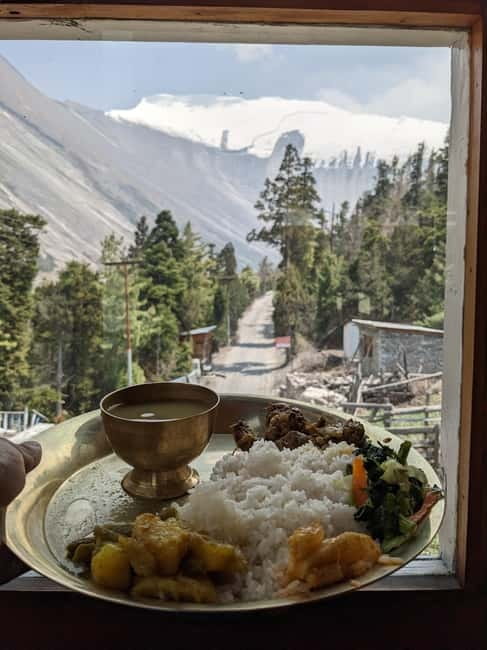
You stay in tea houses and lodges during the trek. These are practical mountain accommodations, not luxury hotels. Meals are included, which keeps daily planning simple, but drinks, bottled or boiled water, showers, battery charging, laundry, and bar bills cost extra.
More Annapurna treks:
- Annapurna Circuit Trek with Tilicho Lake
★ 5.0 · 368 reviews - Annapurna base camp trek 5 Days
★ 5.0 · 252 reviews - Annapurna Base Camp Trek
★ 5.0 · 111 reviews
Days 1 and 2: Kathmandu to Dharapani, then Chame
The first day is mostly about getting into the mountains. A public bus takes you from Kathmandu to Besisahar, a journey of roughly seven to eight hours, followed by a shared jeep to Dharapani.
This is a long travel day, and road conditions can affect how tiring it feels. Still, the ride gives you a useful first look at Nepal beyond Kathmandu, with countryside, forests, hills, and changing views along the way. You sleep at Dharapani, at about 1,850 meters according to one detailed account of the route, so the walk begins at a reasonable altitude rather than throwing you straight into thin air.
On day two, you walk from Dharapani to Chame for about six hours, reaching roughly 2,670 meters. The trail passes grassy fields, oak and pine forests, and the village of Bagarchhap, where you can see a Buddhist temple and Bhote cultural influences.
The approach to Timang brings views toward Lamjung Himal. The path then levels out as you continue toward Chame. This is a good opening walking day: long enough to feel like a trek, but still low enough for your body to begin adjusting.
Day 3: Apple orchards and the approach to Upper Pisang
The walk from Chame to Upper Pisang takes about five to six hours, with the overnight point at roughly 3,200 meters. You pass through Bhratang Valley and an apple orchard, then continue toward Pisang.
This section gives you a clear sense that the trip is moving into high mountain country. Lamjung Himal remains part of the view, while the forests gradually give way to more exposed terrain. Upper Pisang is especially useful as a stop because it places you close to the dramatic Manang Valley for the following day.
You may be offered a choice between the lower and upper route in this area, depending on conditions and the guide’s judgment. The upper route can take longer, but it offers better mountain views. Prakash was praised for selecting routes with stronger scenery even when they added some distance, an approach that suits people who value views more than the shortest possible walking day.
Day 4: Upper Pisang to Manang through the Marsyangdi Valley
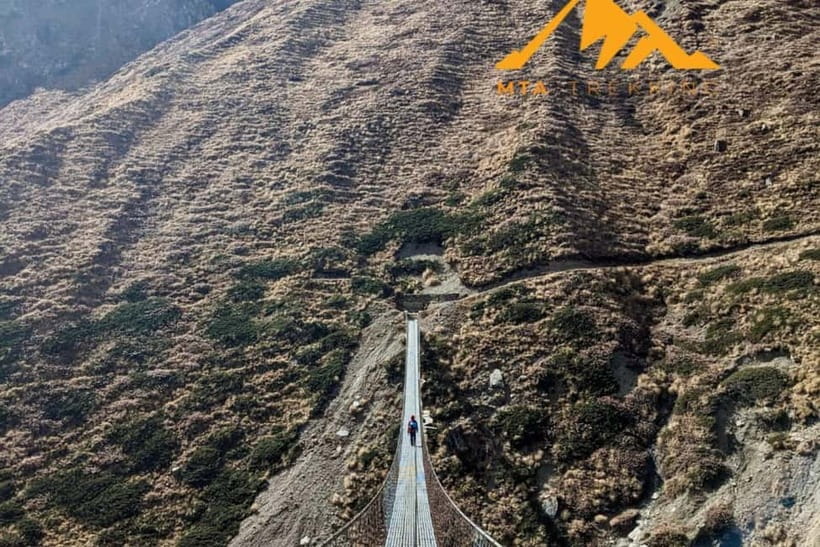
The five to six hour walk to Manang is one of the most rewarding days before the pass. You cross the Marsyangdi River on a wooden bridge and pass villages such as Mungji and Braga.
The views open toward Tilicho Peak, Annapurna III, and Annapurna IV. This is also where the village architecture and Buddhist character become more noticeable. Braga, in particular, is a good place to slow down and look around rather than simply treating it as a point on the route.
Manang sits at about 3,540 meters, so this overnight stop matters as much for altitude management as it does for scenery. You are high enough for the thin air to be noticeable, but you still have a rest day before climbing farther.
More treks starting in Kathmandu:
- Everest Base Camp Trek – 14 Days
★ 5.0 · 1,499 reviews - Everest Base Camp Trekking
★ 5.0 · 485 reviews - Nagarkot Sunrise View and Day Hiking from Kathmandu
★ 5.0 · 471 reviews - Everest Base Camp Trekking – 13 Day
★ 5.0 · 365 reviews
Day 5: Why the Manang acclimatization day matters
The rest day in Manang is one of the smartest parts of this schedule. You do not simply spend the day in bed. The plan includes exploring Manang village and hiking to a stupa, with optional walks toward Gangapurna Glacier Lake or an icefall across the river.
The listed maximum altitude for the optional hikes is about 4,050 meters. That gives you a chance to climb higher during the day and return to sleep lower, a useful pattern for adjustment. You should still keep the effort gentle. A rest day at this height is for helping your body adapt, not for proving how far you can walk.
The guides receive especially strong praise for this part of the trip. Ghanshyam was described as an experienced guide who adjusted the route and rest periods to match the group. Chakra also advised a careful pace, enough rest, and avoiding junk food and meat at higher elevations. These are small decisions, but they matter more than heroic speed when you are heading toward Thorong La.
Days 6 and 7: Yak Kharka and Thorong Phedi
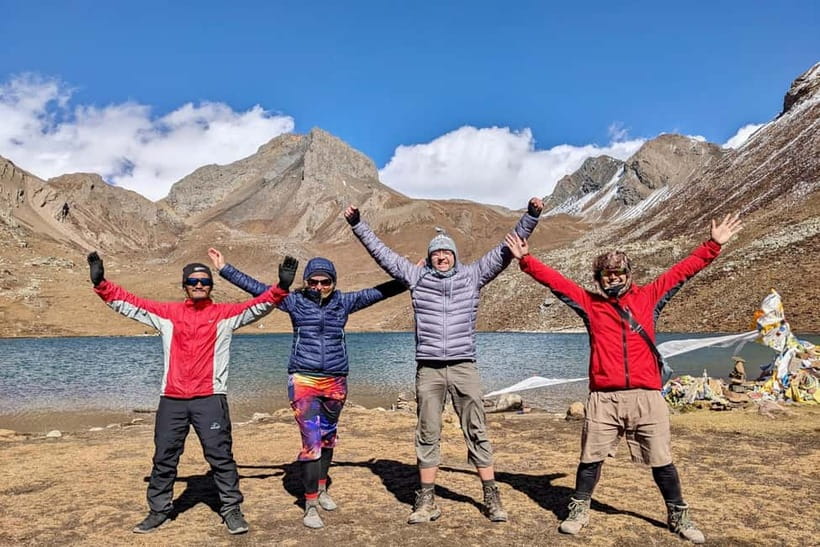
From Manang, you walk to Yak Kharka in about four hours. The route is shorter than earlier days, but the altitude makes it harder. Yak Kharka reaches about 4,050 meters, and breathing can feel noticeably more difficult.
This is the point where a strong guide earns their fee. Walk slowly, drink regularly, and do not hide symptoms to keep the schedule. The guide can adjust the pace or recommend extra rest, but you must report how you feel honestly.
The next day takes four to five hours to Thorong Phedi, at around 4,450 meters. The trail rises gradually to a hilltop, drops toward the headwaters of the Marsyangdi, crosses a small wooden bridge, and then climbs again along the river’s right bank.
Thorong Phedi is a functional overnight stop before the pass, not a place to expect comfort or entertainment. The purpose is to position you for an early start. Cold, altitude, and a basic lodge can make this night feel long, so warm clothing and a good sleeping bag are important. Trekking gear is not included, and one pair of trekkers found renting extra sleeping bags in Kathmandu useful.
Day 8: Crossing Thorong La to Muktinath
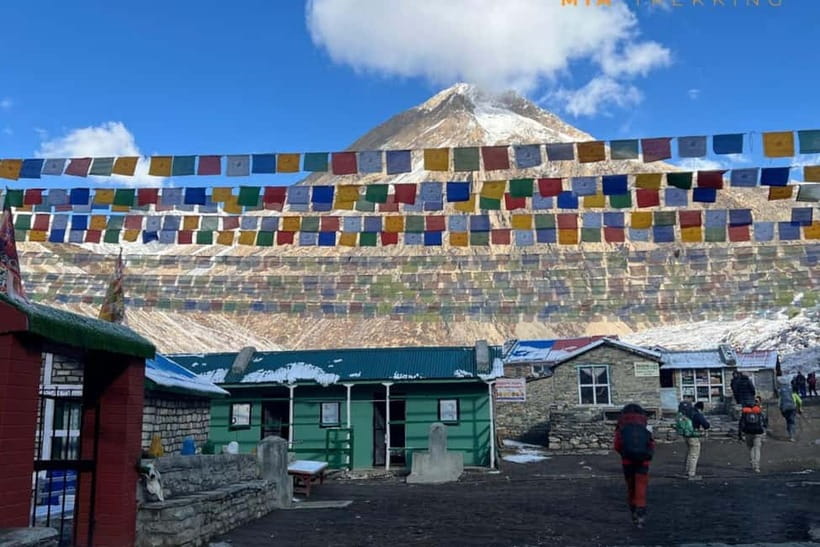
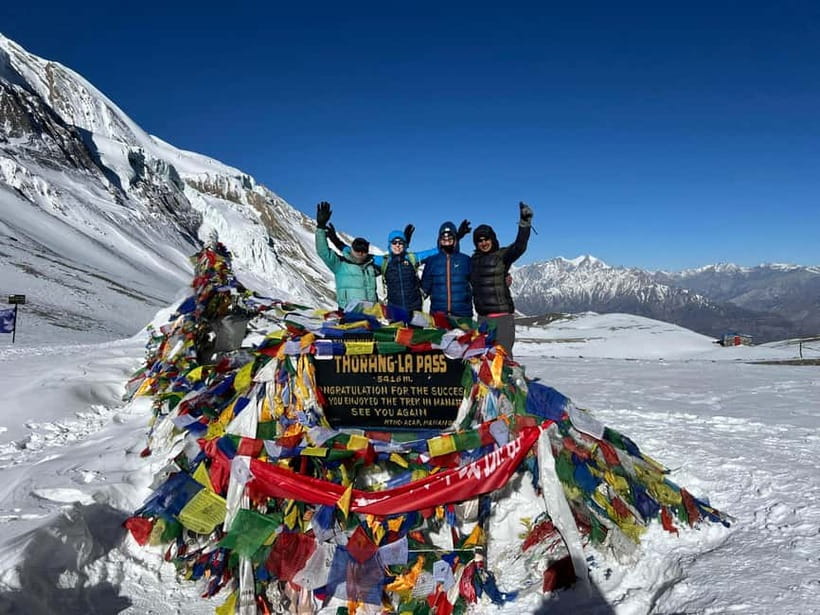
The pass day is the reason most people choose this route. You leave Thorong Phedi early and climb toward Thorong La, reaching 5,416 meters before descending toward Muktinath.
The walking time is listed at seven to eight hours, but the clock matters less than the conditions and your pace. The ascent can feel slow because the air is thin. Early starts are common for this crossing because wind and weather can worsen later in the day, and the guide will make the final pacing decisions.
At the top, you get the high point of the trek and wide views across Mustang toward Dhaulagiri. The descent to Muktinath is a major relief, but do not assume the day becomes easy once you leave the pass. Going downhill for hours can be hard on tired knees.
Muktinath is also important beyond the pass itself. It is a well-known religious place, and the shift from the Annapurna side into Mustang gives the scenery a noticeably drier, more Tibetan feel. This change is one of the route’s best features: you are not simply walking up and back down the same kind of valley.
Day 9: Muktinath, Kagbeni, and Jomsom
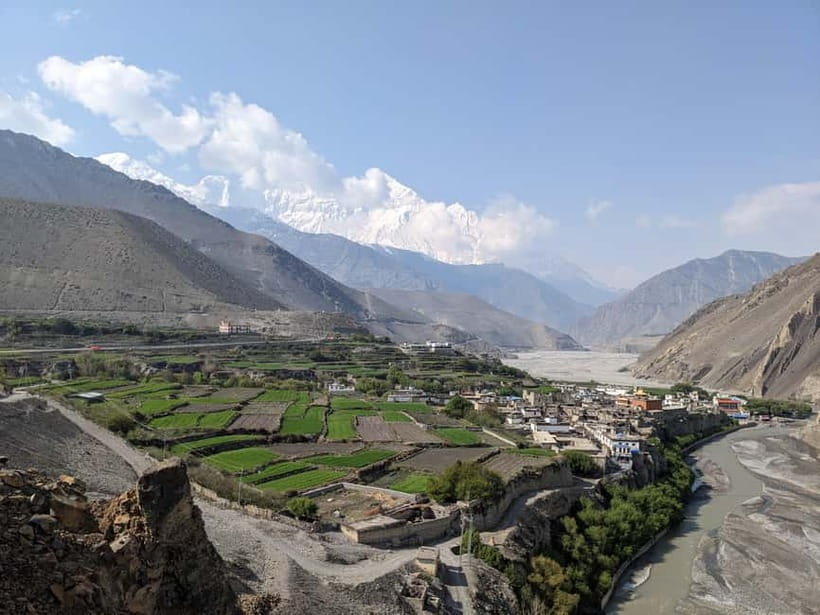
The route from Muktinath to Jomsom via Kagbeni takes about seven to eight hours. Kagbeni is the day’s main cultural stop, with an old village setting and a strong connection to the dry Mustang region.
This is a scenic walking day, but it comes after the pass, so your legs may still be tired. If you prefer a relaxed finish, ask how much time will be available to explore Kagbeni before continuing to Jomsom. The itinerary includes the walk rather than a separate extended sightseeing visit, so timing may be practical and fairly brisk.
Jomsom marks the end of the main trekking section. It also prepares you for the final transport day, when you leave the mountains by public bus rather than private vehicle or flight.
Day 10: The long public bus to Pokhara
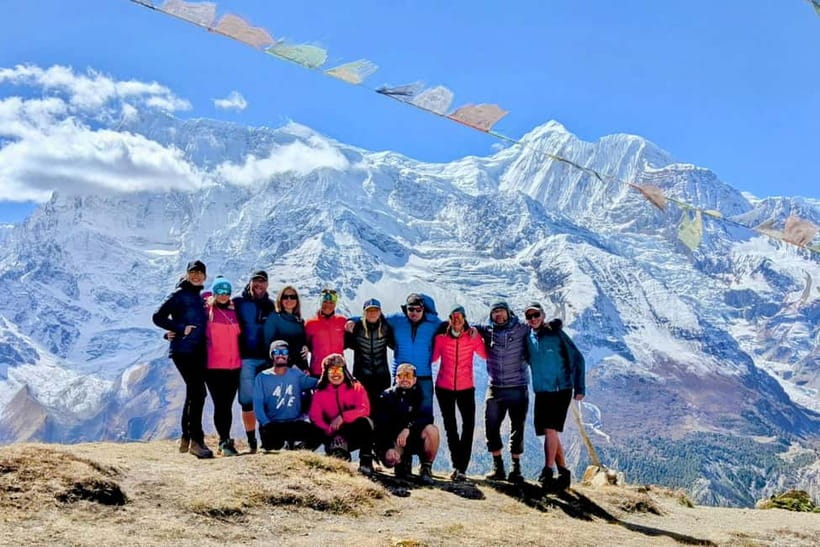
The final day is an approximately eight-hour public bus ride from Jomsom to Pokhara. This keeps the price down, but it is not the most comfortable way to finish a demanding trek.
I see this as a fair trade for a $447 package, provided you know what you are choosing. The ride gives you a last look at the changing valleys and roads, but you should expect a full travel day rather than a restful transfer. A night at Hotel Orchid in Pokhara is included after the trek, along with a farewell dinner, which gives you time to shower, recover, and enjoy a proper city evening.
Pickup and drop-off are included for hotels in Kathmandu’s Thamel area and Pokhara’s Lakeside area. If your hotel is outside those zones, confirm the arrangement before booking.
The guides make a real difference at altitude
The strongest part of this experience is the local guiding. The named guides connected with the trip include Ghanshyam, Prakash, Ganesh, and Chakra. Their role is not limited to showing the trail.
You can expect the guide to watch your pace, help with meal choices, encourage hydration, and advise when to rest. Ghanshyam received particular praise for adapting the route to conserve energy before the pass. Prakash was also appreciated for explaining Nepalese culture, religion, daily life, and the mountain environment.
Language support is available in English and Hindi. Prakash even knew some Polish, which helped make explanations more personal for Polish-speaking walkers. Your exact guide may vary, so treat the names as examples rather than a guarantee.
A porter is not clearly included in the package. Extra porters are listed as a personal expense, so budget for one if you do not want to carry your own load. One pair found porter support invaluable when carrying two bags of about 10 kilograms each. That is a useful warning: keeping your pack light can make the high sections much more manageable.
What the $447 price includes, and what it does not
At $447 per person, the package offers good value for a guided high-altitude trek. It includes the Kathmandu to Besisahar bus, the shared jeep to Dharapani, tea house and lodge accommodation, all breakfasts, lunches, and dinners during the trek, permits, a TIMS card, a government-registered local guide, transport to the included activities, emergency rescue assistance, a Pokhara hotel night, and a farewell dinner.
That is a substantial set of essentials. You do not need to arrange permits, daily meals, or each night’s basic lodging yourself.
The extras can add up. You pay for drinks, bottled or boiled water, phone use, laundry, showers, battery charging, bar bills, personal purchases, trekking gear, extra porters, international flights, insurance, and the Nepal visa fee.
The package also does not include trekking equipment. Bring or rent warm clothes, proper hiking shoes, long pants, sunglasses, sunscreen, and a waterproof bag. A passport or ID card is required, and you should also have clothing suitable for cold nights near Thorong Phedi and the pass.
Safety, fitness, and altitude limits
This is a high-altitude trek with a real risk of Acute Mountain Sickness. The route’s built-in rest day helps, but it cannot remove the risk. You should buy comprehensive travel insurance that covers medical care and helicopter evacuation to an altitude of at least 5,400 meters.
The experience is not suitable for children under 15, people with altitude sickness, people over 70, people with respiratory problems, or pregnant women. These limits are sensible for a schedule that reaches 5,416 meters in only eight walking days after the road transfer.
I would choose this trek only if you are comfortable with sustained walking, cold conditions, basic tea house lodging, and a long pass day. You do not need to be an elite athlete, but you do need to prepare properly and accept that the mountain controls the schedule.
Who should book this Annapurna Circuit trek?
I would recommend it to you if you want the main Annapurna Circuit experience in a short, organized package and you value having a local guide handle the practical details. The mix of villages, Buddhist culture, changing scenery, and Thorong La gives you much more than a single mountain viewpoint.
It suits people who want private-group arrangements and flexible booking, but it is still a physically demanding trip. The $447 price is attractive because it covers permits, food, lodging, transport, guiding, and a Pokhara night. Just allow extra money for gear, water, charging, showers, insurance, and possibly a porter.
I would hesitate if you want a slow itinerary, private transport, upscale accommodation, or lots of spare days for weather delays. A longer version would give you more breathing room, while this 10-day plan works best for fit hikers who are prepared to follow a careful pace.
FAQ
How high does the trek go?
The route crosses Thorong La Pass at 5,416 meters above sea level.
Is an acclimatization day included?
Yes. Day five is an acclimatization day in Manang, with options including a stupa walk, Gangapurna Glacier Lake, or an icefall hike.
What languages does the guide speak?
Guiding is available in English and Hindi.
Are meals included during the trek?
Yes. Breakfast, lunch, and dinner are included during the trekking portion.
Is transport included?
Yes. The package includes the bus from Kathmandu to Besisahar, a shared jeep from Besisahar to Dharapani, transport between included activities, and the public bus from Jomsom to Pokhara.
Is travel insurance included?
No. You must arrange your own travel and rescue insurance. The operator strongly recommends coverage for medical care and helicopter evacuation up to about 5,400 meters.
Recently added around Kathmandu
- Kathmandu : Swambhunath & Durbar Square Guided Half Day Tour★ 3.3 · 3 reviews
- Private Day Tour in Kathmandu Valley Rim with Bhaktapur Sightseeing★ 5.0 · 3 reviews
- From Kathmandu / Pokhara / Chitwan: River Rafting – 1 Day★ 4.6 · 3 reviews
- Nepali Cooking training & Cultural Homestay Experience★ 5.0 · 3 reviews
- Private 3-Hour Nagarkot Sunset Tour from Kathmandu★ 3.5 · 3 reviews
- From Kathmandu: Everest Base Camp Landing Helicopter Tour★ 5.0 · 3 reviews
- 4 UNESSCO World heritage sites of Kathmandu-private tour★ 5.0 · 3 reviews
- From Kathmandu Budget: 15 Day Everest Base Camp Trek★ 5.0 · 3 reviews
Annapurna Treks, compared.
Kathmandu to Annapurna Base Camp (ABC) 5-Day Trek
Read our review →
Browse the lists this tour appears in