
Reviewed · ANNAPURNA TREKS
Kathmandu: 9-Day Annapurna Circuit Trek via Thorong La Pass
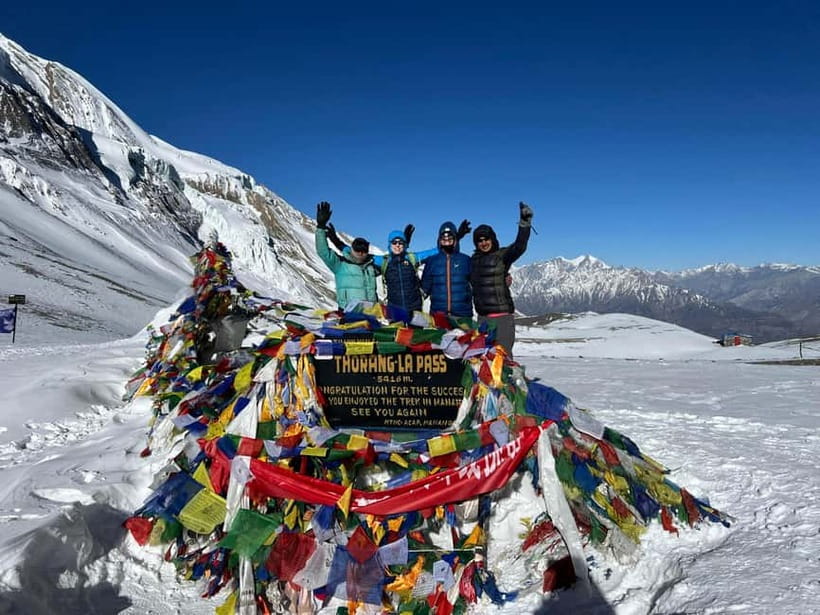
Crossing Thorong La Pass at 5,416 meters is the heart of this nine-day Annapurna Circuit trek. I like the careful pause in Manang for acclimatization and the chance to see the scenery change from green valleys to dry, Tibetan-style mountain villages. I also like the small-group format, which lets your guide adjust the pace and answer questions along the way.
The main caution is simple: this is a serious high-altitude trek, not a long sightseeing walk. The pass day is tough, with a 4:00 AM start, a steep climb, thin air, and a long descent to Muktinath. Tea houses are basic, food is repetitive, and cold nights call for a proper sleeping bag.
In This Review
- Key points to know before booking
- Why Thorong La makes this trek special
- Day 1: Kathmandu or Pokhara to Dharapani
- Day 2: Dharapani to Chame, 13 kilometers
- Day 3: Chame to Upper Pisang, 15 kilometers
- Day 4: Upper Pisang to Manang, 16 kilometers
- Day 5: Acclimatization around Manang
- Day 6: Manang to Yak Kharka, 7 kilometers
- Day 7: Yak Kharka to Thorong Phedi, 6 kilometers
- Day 8: Thorong La to Muktinath
- Day 9: Muktinath toward Pokhara
- Guides, pace, and group style
- What is included, and where extra costs appear
- Food, lodging, and cold-weather preparation
- Best seasons for the crossing
- Should you book this trek?
- FAQ
- How high is Thorong La Pass?
- How long does the trek last?
- Is there an acclimatization day?
- What languages do the guides speak?
- What accommodation is included?
- Are meals included?
- Is porter service included?
- What happens on the final day?
Key points to know before booking
- Thorong La Pass reaches 5,416 meters, making the crossing the hardest and most rewarding part of the trip.
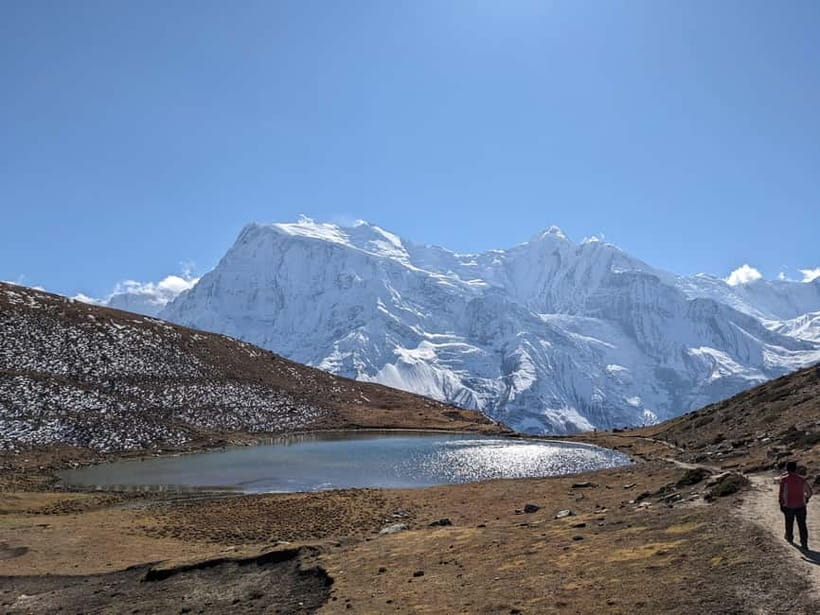
- Manang provides a full acclimatization day, with an optional hike to Gangapurna Glacier Lake or nearby icefalls.
- Upper Pisang offers one of the finest village stops, with open mountain views and a chance to meet local residents.
- The scenery changes sharply, from terraced hills and forest to high alpine pastures, dry valleys, and Himalayan peaks.
- The trip uses public and local transport, including a bus to Besisahar, a shared jeep to Dharapani, and a bus from Muktinath or Jomsom toward Pokhara.
- English and Hindi-speaking guides lead private groups, with porter service available for an extra cost.
Why Thorong La makes this trek special
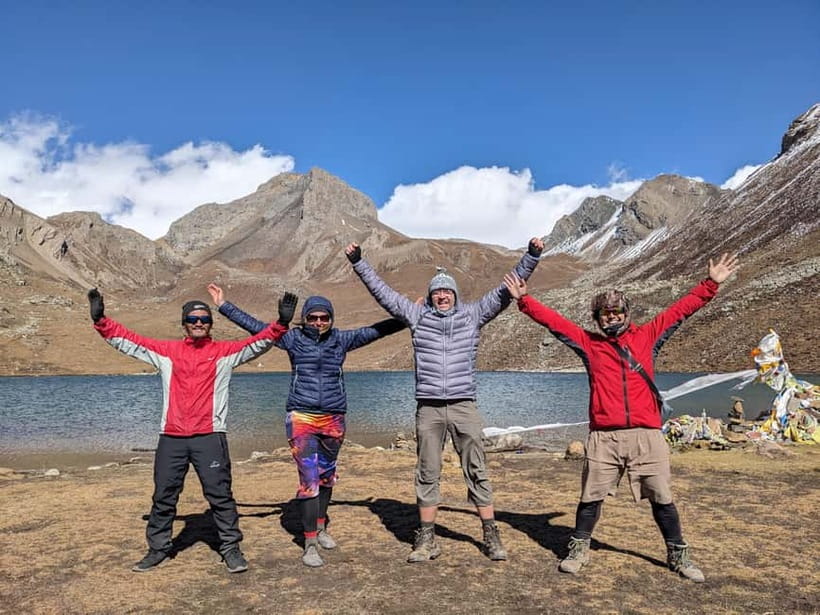
The Annapurna Circuit is famous because it packs several worlds into one route. You begin among terraced fields, streams, and village roads. Higher up, pine and oak forest gives way to open pasture, stone settlements, and a colder, drier mountain setting.
The route crosses Thorong La between Manang and Muktinath. That pass is not a quick photo stop. You begin before dawn, walk by headlamp or early morning light, and gain height slowly across rocky ground. Prayer flags mark the top, where the view opens across a broad wall of Himalayan peaks.
I like that the trek does not rush straight upward. Manang comes before the highest walking days, and the shorter walk to Yak Kharka gives you another chance to adjust. Those details matter at altitude. A nine-day schedule is still brisk, but it is more sensible than trying to force the crossing into eight days.
You should also keep your expectations practical. A tea house is a simple mountain lodge, not a resort. Rooms and meals are basic, showers may cost extra, and charging a phone or battery can also involve a fee. The scenery is the luxury here.
More Annapurna treks:
- Annapurna Circuit Trek with Tilicho Lake
★ 5.0 · 368 reviews - Annapurna base camp trek 5 Days
★ 5.0 · 252 reviews - Annapurna Base Camp Trek
★ 5.0 · 111 reviews
Day 1: Kathmandu or Pokhara to Dharapani
The first day is mostly about getting into the mountains. You travel roughly 175 kilometers over seven to eight hours, taking a bus to Besisahar and then a shared local jeep to Dharapani.
The road journey gives you an early look at rural Nepal. You pass rolling valleys, terraced fields, and small settlements, with Himalayan peaks appearing in the distance when conditions allow. It is a useful introduction to the country beyond Kathmandu and Pokhara, but it is also a long day in a vehicle.
Dharapani is your first tea house stop. Do not expect much time to explore. The purpose of this day is to reach the trailhead and settle in before walking begins in earnest.
Hotel pickup is included, and the guide meets you for a detailed briefing the day before the trek. That briefing is worth taking seriously. Use it to check your gear, ask about the next day’s pace, and confirm how luggage will be handled.
Day 2: Dharapani to Chame, 13 kilometers
The first walking day takes about six hours and reaches Chame at 2,670 meters. The route passes through pine and oak forest, open fields, streams, and Bhote villages.
This is where the Annapurna Circuit starts to feel like a trek rather than a road journey. The path moves through changing vegetation, and the mountain air becomes cooler as you gain height. Chame has an alpine feel, making it a pleasant place to end the day.
The distance is moderate, but you should not judge the whole trek by this stage. At 2,670 meters, most people still have energy to spare. The real test comes after Manang, when the air gets thinner and the trail becomes more exposed.
Your guide is especially useful here for setting a steady pace. Guides connected with this departure include Sishir, Parkash, Ramit, Chakra, Binod, and Ghanashyam. The strongest personal accounts praise guides who checked hydration, rest, and altitude symptoms rather than simply pushing the group onward.
Day 3: Chame to Upper Pisang, 15 kilometers
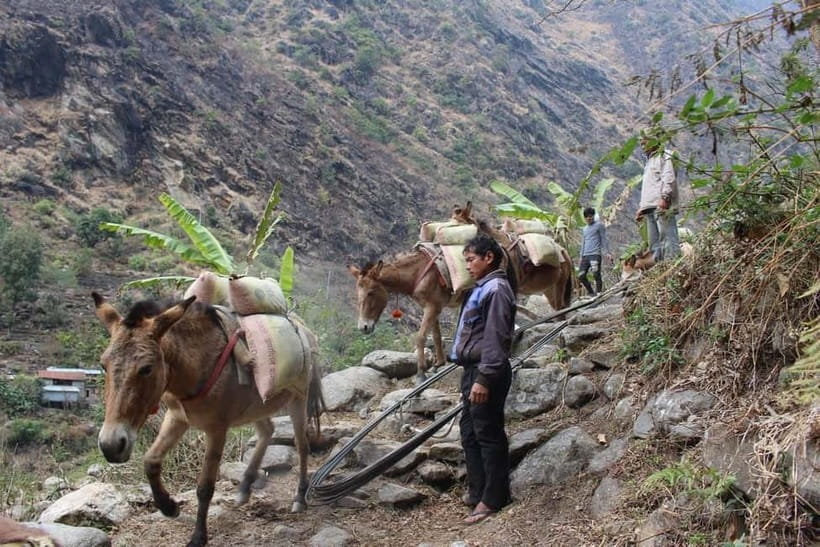
The walk to Upper Pisang takes about five to six hours and climbs to roughly 3,200 meters through the Bhratang Valley.
This is one of the most attractive parts of the lower circuit. You gain height gradually, with views toward Lamjung Himal and surrounding peaks. Upper Pisang is more than a place to sleep. It gives you a chance to see a mountain village setting, meet local residents, and notice the shift toward Tibetan-influenced architecture and culture.
The stop is also valuable for the views. Upper Pisang is known for its mountain setting, and the open sightlines make it a good place to take stock of how quickly the scenery has changed since Dharapani.
Fifteen kilometers is a fair walk, though the actual difficulty depends on trail conditions and your pace. Keep your daypack light and carry only what you need for water, layers, sun protection, and personal items.
More treks starting in Kathmandu:
- Everest Base Camp Trek – 14 Days
★ 5.0 · 1,499 reviews - Everest Base Camp Trekking
★ 5.0 · 485 reviews - Nagarkot Sunrise View and Day Hiking from Kathmandu
★ 5.0 · 471 reviews - Everest Base Camp Trekking – 13 Day
★ 5.0 · 365 reviews
Day 4: Upper Pisang to Manang, 16 kilometers
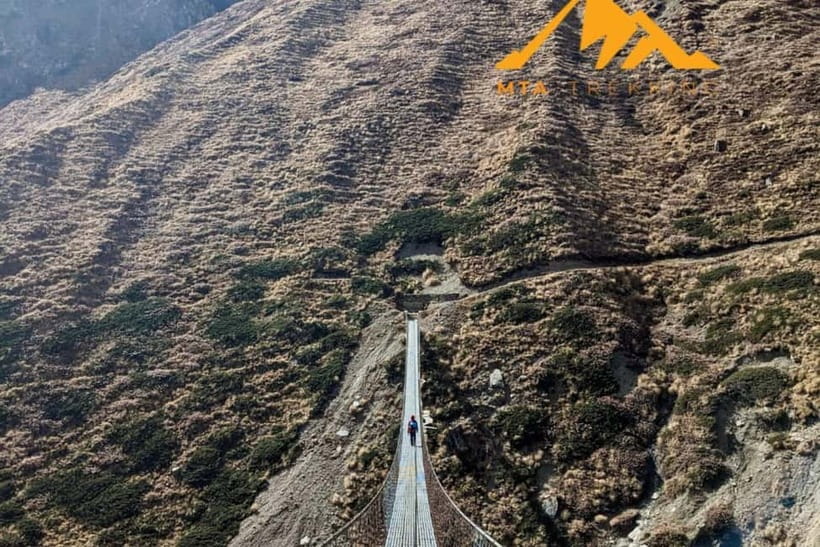
The route to Manang takes another five to six hours and reaches about 3,540 meters. Forest and valley sections lead toward wide views of Tilicho Peak, Annapurna III, and Annapurna IV.
This is a key day because Manang is the main acclimatization stop. The village has a higher, drier feel than the lower sections, and you can begin to sense that the next few days will be more demanding.
The schedule calls for an overnight stay in Manang, followed by a full acclimatization day. That is one of the strongest features of this trip. You may be tempted to save time and walk onward, but the rest day gives your body a better chance to adjust before the pass.
Day 5: Acclimatization around Manang
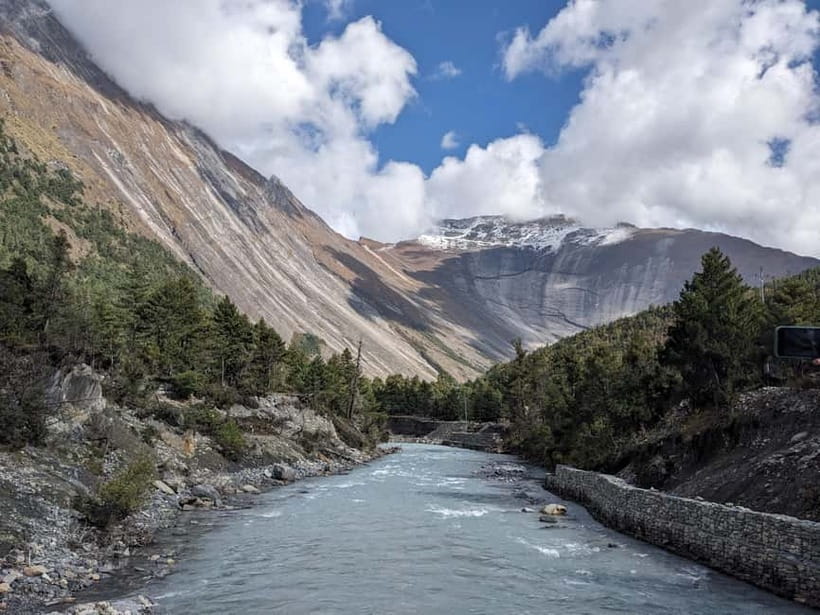
The acclimatization day is not necessarily a day of doing nothing. An optional hike leads toward Gangapurna Glacier Lake or nearby icefalls, giving you mountain views without moving your sleeping altitude to a new village.
The point is to stay active without overdoing it. Walk slowly, drink often, eat properly, and tell your guide if you develop a headache, nausea, unusual tiredness, or other signs of altitude trouble. The guide’s role here matters more than any sightseeing detail.
Some people find this day difficult because they feel fit and want to continue. I would treat it as essential rather than wasted time. The Thorong La crossing is high enough that poor acclimatization can turn a hard day into an unsafe one.
Manang is also a good place to enjoy the human side of the trek. The route passes through settlements where hospitality, local food, and everyday mountain life are part of the experience. Keep your expectations modest, and you will appreciate the simplicity.
Day 6: Manang to Yak Kharka, 7 kilometers
The walk to Yak Kharka takes about four hours and reaches 4,050 meters. It is a short day by distance, but the altitude makes it more serious than the numbers suggest.
The trail moves through alpine pasture, with broad views and a colder, thinner atmosphere. You will notice that trees become less prominent as the route rises. The village stop is mainly practical: reach the lodge, eat, rest, and prepare for Thorong Phedi.
This shorter schedule is a good choice. At this height, speed is not the goal. A slow walk gives you time to watch your breathing and spot any symptoms before the pass day.
Day 7: Yak Kharka to Thorong Phedi, 6 kilometers
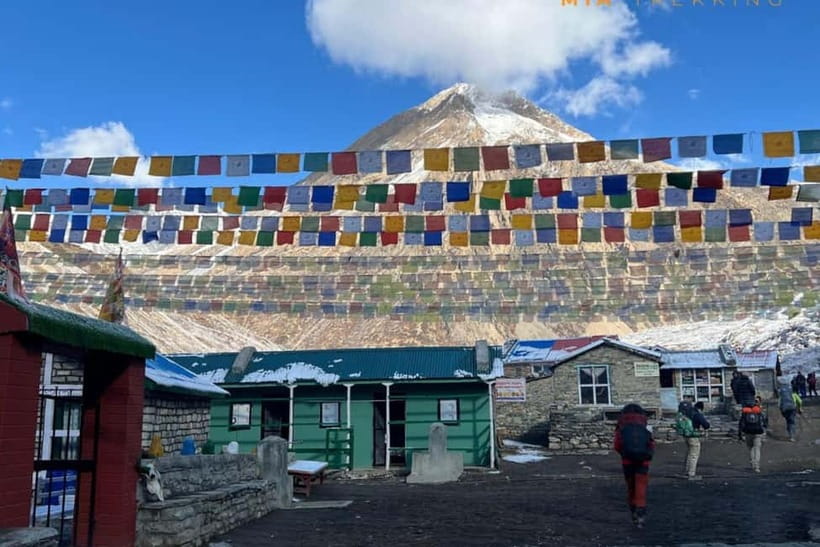
The four to five-hour walk to Thorong Phedi covers about six kilometers and reaches 4,450 meters. Rocky paths and suspension bridges lead toward the base camp for Thorong La.
Do not let the short distance fool you. The combination of altitude, uneven ground, and cold can make this a tiring day. The best plan is to arrive with enough time to eat, organize your clothing, fill your water, and sleep.
The tea house here is likely to feel basic and crowded compared with lower villages. That is part of the price of being close to the pass. Keep your sleeping bag ready. Cold is a recurring concern on this trek, and one departure found a proper sleeping bag essential.
You should also prepare for an early breakfast or departure arrangement with your guide. The next morning starts around 4:00 AM, partly to reach the pass before strong winds develop.
Day 8: Thorong La to Muktinath
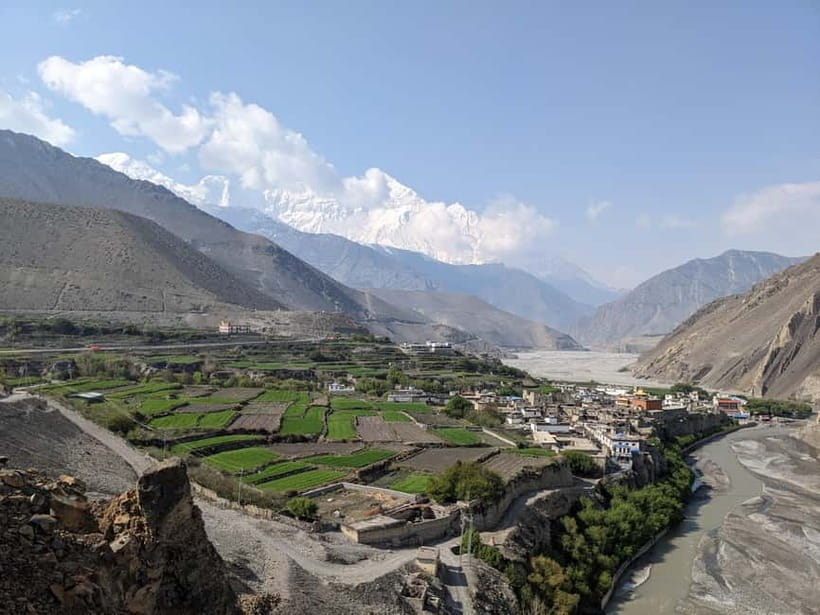
This is the defining day. You leave Thorong Phedi before dawn and spend seven to eight hours crossing Thorong La and descending to Muktinath.
The climb is slow and demanding. The air is thin, the ground is rocky, and the cold morning can make your hands and feet uncomfortable. Break the climb into small sections, keep your pace steady, and do not treat the person ahead of you as a target to catch.
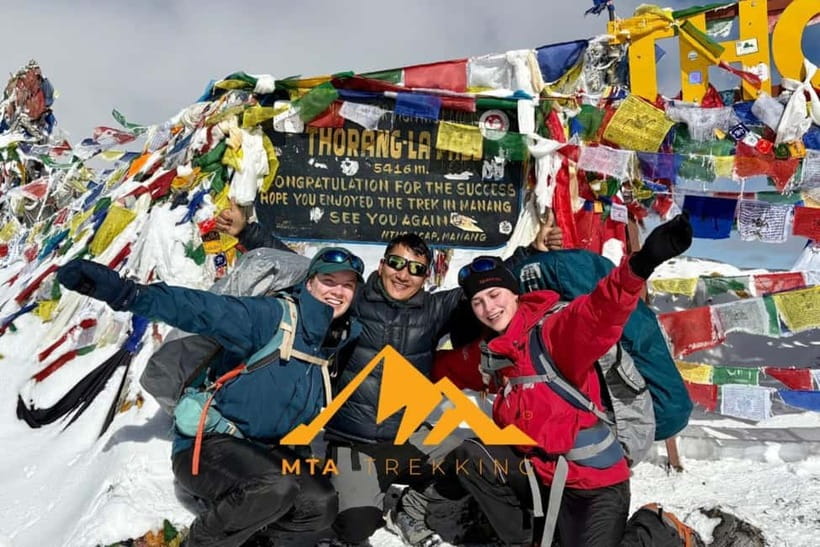
At 5,416 meters, the pass is marked by prayer flags and wide Himalayan views. Reaching the top feels like a real achievement because the difficult part is physical, not merely scenic. The descent to Muktinath is also long. In fact, you may find it harder than expected because tired legs take repeated impact on the way down.
Muktinath is a sacred site for both Hindus and Buddhists. After the stark high pass, arriving at this pilgrimage center gives the day a strong cultural finish, not just a physical one. You have lunch there and spend the night.
There is an optional trip to the Tatopani hot springs after the pass. Taxi costs are not included and are listed at about USD 50, payable by the participants. Confirm the plan and cost with your guide before committing, since you may be too tired to want another transfer.
Day 9: Muktinath toward Pokhara
The final transfer takes about five to six hours by bus and covers roughly 110 kilometers. The transport details identify the route from Muktinath or Jomsom to Pokhara, so confirm the exact pickup point with your guide.
After the pass, a bus ride can feel long, but it saves you from another day on foot. The changing scenery provides a final look at the region as you leave the high mountains.
The package includes one night at Hotel Orchid in Pokhara, described as a tourist-standard luxury hotel. That upgrade is well timed after eight nights in tea houses. It also includes a farewell dinner with traditional Nepali food in Lakeside, giving you a comfortable place to relax and reflect on the crossing.
A luxury tourist air-conditioned sofa-seater bus from Pokhara to Kathmandu is also included for the onward journey. If your plans end in Pokhara, that part may not matter to you, but it adds value for people returning to the capital.
Guides, pace, and group style
The trek is run as a private group with an English or Hindi-speaking guide. That arrangement suits you if you want more flexibility than a large fixed group can offer.
The most useful guide behavior on this route is practical rather than theatrical. You need someone who watches your pace, encourages hydration, makes room for rest, and knows when altitude symptoms deserve attention. Sishir is especially associated with careful acclimatization and a friendly manner, while Parkash is noted for checking in often and offering help with a heavy bag on the hardest day.
Porters are available at an additional cost. If you are unsure about carrying your own pack for nine days, budget for one. The high point of this trek is challenging enough without turning your daypack into an unnecessary burden.
All staff-related costs are included, including staff meals, accommodation, salaries, equipment, insurance, and transport. The guide also has full insurance coverage. Your own travel and rescue insurance is not included, and it should specifically cover high-altitude trekking.
What is included, and where extra costs appear
The package includes hotel pickup and drop-off, permits, paperwork, TIMS fees, government taxes, eight nights in tea houses, meals during the trek for Full Package bookings, and the listed transport.
The biggest value comes from having the difficult logistics handled. You do not need to arrange the permits, find a shared jeep at Besisahar, or negotiate every mountain transfer yourself. The included Pokhara hotel and farewell meal also make the package feel more complete than a simple guided walk.
You should still budget for:
- Soft and hard drinks
- Bottled or boiled water
- Showers
- Phone calls and laundry
- Battery charging
- Extra porters
- Personal bar bills
- The optional Tatopani taxi
- Travel and rescue insurance
- Any extra hotel nights caused by early arrival, late departure, or an unscheduled return
The package does not include international flights or the Nepalese visa fee. Meals are included during the trek only for Full Package bookings, so check your selected booking option carefully before paying.
Food, lodging, and cold-weather preparation
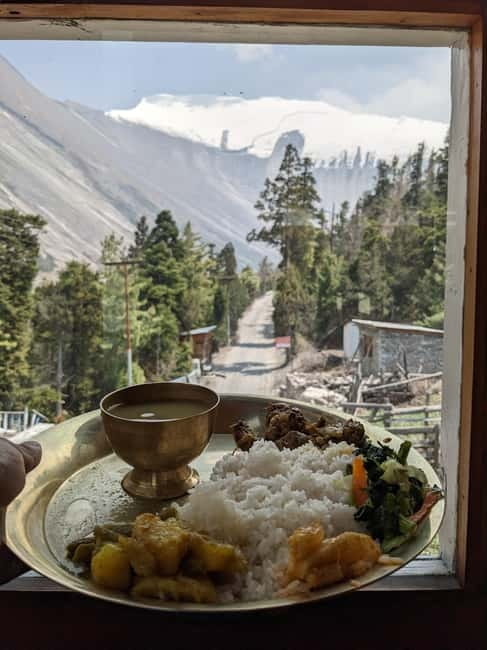
Tea house accommodation keeps you close to local mountain life, but comfort is limited. Rooms are basic, and the menu can become similar from day to day. Food is generally described as tasty, yet you should expect repetition rather than a wide selection.
Bring a serious sleeping bag. Cold is a concern, especially around Thorong Phedi and at higher villages. Pack layers, quick-dry clothing, comfortable trekking shoes, sunglasses, a sun hat, and sunscreen.
The sun can feel strong at altitude even when the air is cold. Sunglasses and sunscreen are not optional extras. Your passport or an accepted copy is also required for the trek.
Good fitness and previous trekking experience are important. The route includes several days of five to six hours, a demanding pass crossing, and a long descent. This trek is not suitable for children under seven, pregnant women, people with altitude sickness, or people with high blood pressure.
Best seasons for the crossing
Spring, from March through May, brings warmer conditions and blooming flowers. Autumn, from September through November, usually offers the clearest skies and mild temperatures, making it the safest choice for sharp mountain views.
Winter can be cold and snowy, with possible trail closures. The monsoon period from June through August brings heavy rain and slippery trails, so it is not the preferred season for this route.
Weather can change quickly at high altitude in any season. Your guide may adjust the pace or timing if conditions require it, and you should be ready for that possibility.
Should you book this trek?
Book it if you want a compact, demanding Himalayan trek with a major pass crossing, varied scenery, local village life, and a built-in acclimatization day. The private group format, included permits, guide, transport, tea houses, and Pokhara finish offer solid practical value, especially if you prefer not to arrange mountain logistics yourself.
Do not book it simply because nine days sounds short and manageable. The Thorong La day is strenuous, the accommodation is basic, and the altitude is serious. If you are fit, prepared for cold, insured for high-altitude trekking, and willing to walk at your guide’s pace, this route gives you a powerful taste of the Annapurna Circuit without requiring a much longer schedule.
FAQ
How high is Thorong La Pass?
Thorong La Pass reaches 5,416 meters above sea level.
How long does the trek last?
The experience lasts nine days, including transport from the Kathmandu or Pokhara area, the trek to Muktinath, and the bus journey toward Pokhara.
Is there an acclimatization day?
Yes. Day 5 is set aside for acclimatization in Manang, with an optional hike to Gangapurna Glacier Lake or nearby icefalls.
What languages do the guides speak?
The available live tour guide languages are English and Hindi.
What accommodation is included?
The trek includes eight nights in tea house or lodge accommodation. One night in Pokhara is included at Hotel Orchid.
Are meals included?
Breakfast, lunch, and dinner during the trek are included for Full Package bookings. Drinks and personal food expenses are not included.
Is porter service included?
No. A porter is available at an additional cost.
What happens on the final day?
You travel by bus from Muktinath toward Pokhara, a journey of about five to six hours and approximately 110 kilometers. The transport details also refer to the Muktinath or Jomsom to Pokhara section, so confirm the exact departure point with your guide.
Recently added around Kathmandu
- Kathmandu : Swambhunath & Durbar Square Guided Half Day Tour★ 3.3 · 3 reviews
- Private Day Tour in Kathmandu Valley Rim with Bhaktapur Sightseeing★ 5.0 · 3 reviews
- From Kathmandu / Pokhara / Chitwan: River Rafting – 1 Day★ 4.6 · 3 reviews
- Nepali Cooking training & Cultural Homestay Experience★ 5.0 · 3 reviews
- Private 3-Hour Nagarkot Sunset Tour from Kathmandu★ 3.5 · 3 reviews
- From Kathmandu: Everest Base Camp Landing Helicopter Tour★ 5.0 · 3 reviews
- 4 UNESSCO World heritage sites of Kathmandu-private tour★ 5.0 · 3 reviews
- From Kathmandu Budget: 15 Day Everest Base Camp Trek★ 5.0 · 3 reviews
Annapurna Treks, compared.
Kathmandu to Annapurna Base Camp (ABC) 5-Day Trek
Read our review →
Browse the lists this tour appears in