
Reviewed · PASHUPATINATH TEMPLE TOURS
Kathmandu Spiritual Sites: Bodhnath & Pashupatinath Tour
The most powerful part of this four-hour tour comes at sunset, when crowds gather beside the Bagmati River for the aarti, a Hindu offering of light at Pashupatinath. Earlier, you circle Boudhanath Stupa with prayer wheels turning under your hand. Two faiths, two grand sites, and one evening give you a useful first look at Kathmandu’s spiritual life.
I like the way the tour uses public transport, rather than keeping you sealed inside a private vehicle. I also like the small maximum of 12 people, which gives your guide room to explain Hindu and Buddhist customs, keep the group together in the evening crowd, and answer real questions.
The main consideration is the pace. You walk about 2 kilometers, including roughly 15 minutes between the two sites, and Pashupatinath can be crowded and emotionally intense. Cremations take place beside the river, so you need to approach that part with quiet respect.
In This Review
- Key points at a glance
- Why this evening tour works in Kathmandu
- Boudhanath Stupa and the rhythm of the kora
- The walk from Boudhanath to Pashupatinath
- Pashupatinath, sadhus, and the Bagmati River
- The Pashupatinath aarti after dark
- What the guide adds to the visit
- Is $60.56 a fair price?
- Practical advice before you go
- Who should book this Kathmandu tour?
- FAQ
- How long does the Kathmandu spiritual sites tour last?
- Where does the tour begin?
- Where does the tour end?
- Which sites are included?
- Is transportation included?
- How large is the group?
- Is the aarti ceremony included?
- Are palm reading and payments to sadhus included?
- Can children join the tour?
Key points at a glance
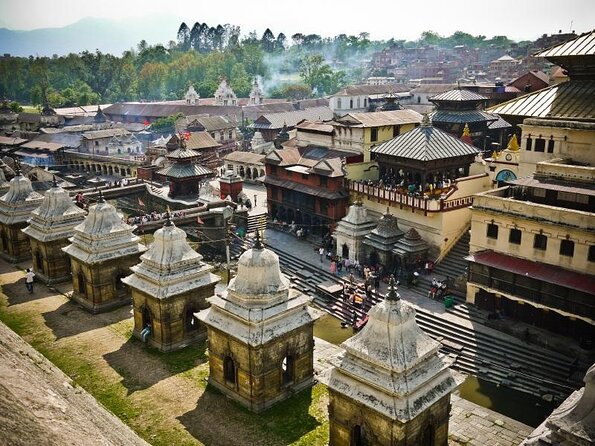
- Sunset aarti at Pashupatinath: Watch an evening offering of lights beside the Bagmati River.
- Boudhanath prayer circuit: Walk around one of Nepal’s largest Buddhist stupas and turn the prayer wheels with local worshippers.
- A local way to move: Public transport connects the stops, adding a genuine slice of everyday Kathmandu.
- Small groups: The maximum group size is 12, though private departures may also be available.
- Two religions in four hours: Learn about Tibetan Buddhism, Hindu beliefs, sadhus, cremation customs, and temple practice.
- Optional local encounters: Palm reading and photographs or conversations with sadhus cost extra.
Why this evening tour works in Kathmandu
Kathmandu has more temples, shrines, courtyards, and monasteries than you can absorb in a short stay. This tour makes a sensible choice for your first evening because it joins two UNESCO World Heritage sites that represent different religious traditions.
Boudhanath is a major center of Tibetan Buddhism. Pashupatinath is one of the most sacred Hindu temple complexes in Nepal. Seeing them together helps you notice the differences between prayer wheels, butter lamps, stupas, river cremation platforms, sadhus, and aarti ceremonies.
The tour begins at 3:00 pm outside Hotel Marshyangdi on Chaksibari Marg in Thamel. It ends back at the same meeting point. That arrangement is useful if you are staying in or near Thamel, though you should allow time to reach the hotel before the start. One poor experience reported a missed pickup, so I would confirm the meeting point and arrive early rather than relying on a last-second arrival.
The four-hour length suits you if your Kathmandu schedule is tight. It also works well as a first orientation before you return to either site on your own. You should not expect a slow, private meditation session. This is a guided introduction, with walking, transport, crowds, and a fixed evening program.
More visits to Pashupatinath:
- Kathmandu: Pashupatinath Temple Evening Aarati Tour
★ 5.0 · 36 reviews - Kathmandu: Pashupatinath Temple Aarti Night Tour
★ 4.8 · 29 reviews - Pashupatinath Temple, Hindu Crematorium and Aarati in-depth Tour
★ 5.0 · 25 reviews
Boudhanath Stupa and the rhythm of the kora
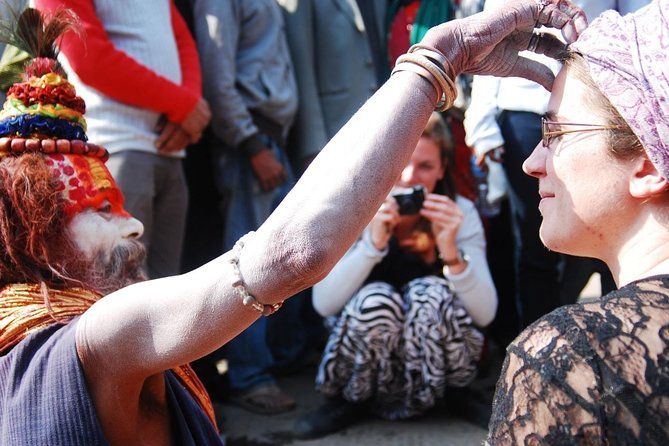
The first major stop is Boudhanath Stupa, with about 1 hour and 25 minutes set aside for the visit. The white dome and watchful Buddha eyes make it one of Kathmandu’s most recognizable sights, but the real pleasure comes from walking around it at ground level.
Your guide introduces the basic practices of Tibetan Buddhism, then you can join the clockwise circuit around the stupa. Turn the prayer wheels as you go, and watch local Buddhists make their own rounds. This is not simply a photo stop. The value lies in seeing how the monument functions as a place of daily prayer.
You can also light a traditional butter lamp and offer a prayer to Lord Buddha. Butter lamps are optional, and any related cost is not included. If you want to take part, ask your guide about the price before paying.
Boudhanath can feel especially active when a religious holiday brings extra worshippers to the square. That makes the visit more atmospheric, but it can also make walking and regrouping harder. Keep your guide in sight, particularly if you stop for photographs.
The stupa is also a good place to ask questions. You can learn what the prayer wheels represent, how the circular walk fits Buddhist practice, and how Tibetan Buddhist customs differ from the Hindu rituals you will see later. A strong guide makes this stop much more than a monument visit.
The walk from Boudhanath to Pashupatinath
The tour includes a walk of about 15 minutes between Boudhanath and Pashupatinath. The total walking distance is approximately 2 kilometers, so comfortable shoes matter more than stylish ones.
This short connection is part of the appeal. You are not rushing from one attraction to another in an air-conditioned bubble. The route and public transport give you a glimpse of ordinary Kathmandu movement, including the small challenge of navigating busy streets and crowded areas.
Public transport is included from the Thamel meeting point to Boudhanath and from Pashupatinath back to the endpoint. Transport conditions can affect the pace, so keep a little flexibility in your evening plans. If you prefer a completely private ride and a tightly controlled schedule, this may not be your ideal outing.
I would also avoid booking anything that begins immediately after the advertised end time. The tour lasts about four hours, but public transport, crowds, and the aarti gathering can make the finish feel less exact.
Pashupatinath, sadhus, and the Bagmati River
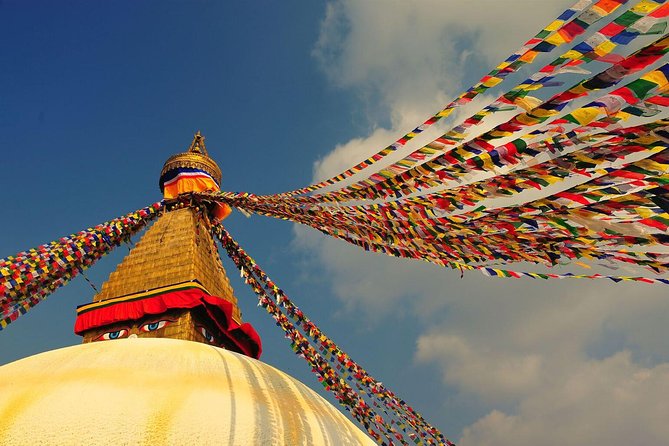
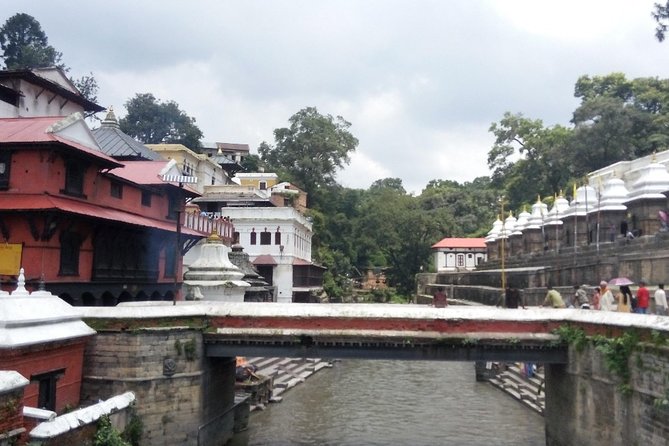
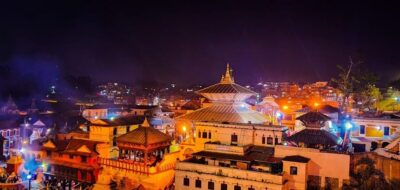
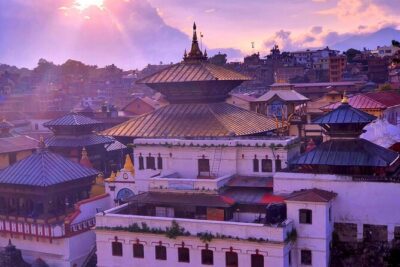
Pashupatinath receives about 2 hours and 20 minutes of the scheduled visit, making it the longer and more layered stop. The temple is dedicated to Shiva and dates in its present form to the 17th century. It is one of Hinduism’s most important shrines in Nepal.
Your guide explains Hindu ideas about birth, death, and rebirth while leading you through the complex and its surrounding areas. The site is not only about carved buildings. It is a working religious center, and you will see people praying, gathering, making offerings, and carrying out ceremonies.
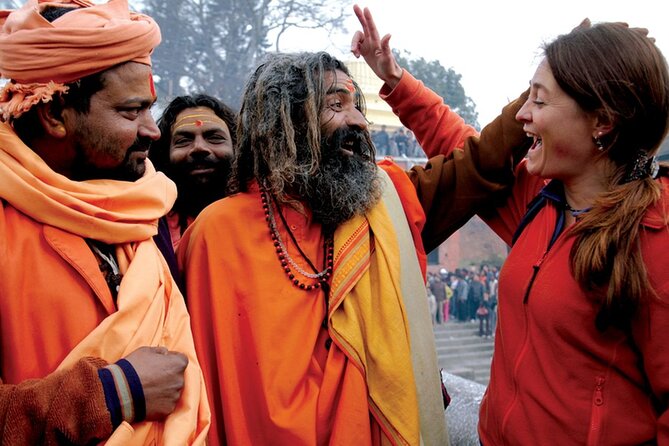
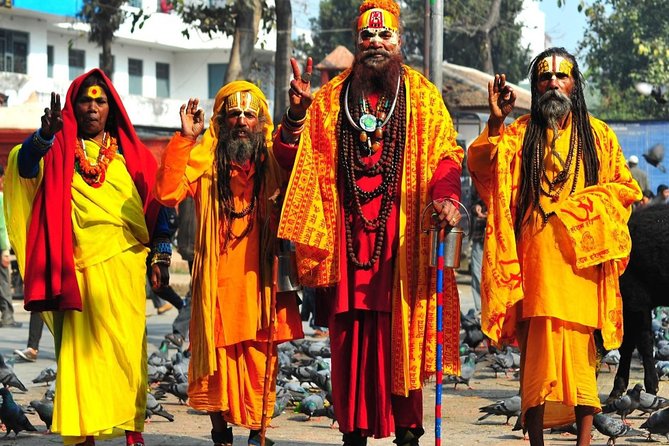
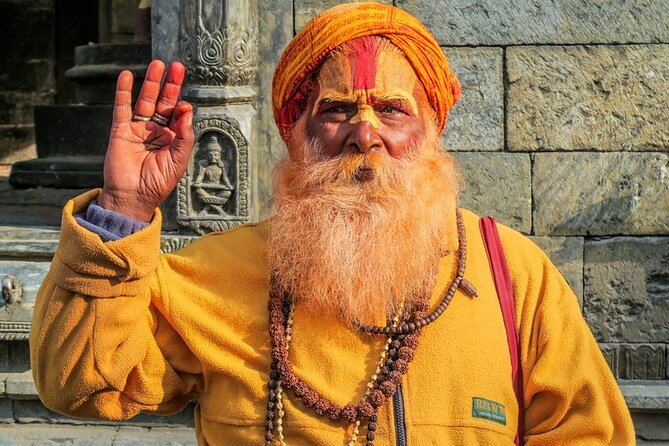
Sadhus are part of the visual character of Pashupatinath. These Hindu holy men are known for giving up material possessions as an expression of devotion. Their bright clothing, painted faces, and long hair can draw attention, but treat them as religious figures rather than performers.
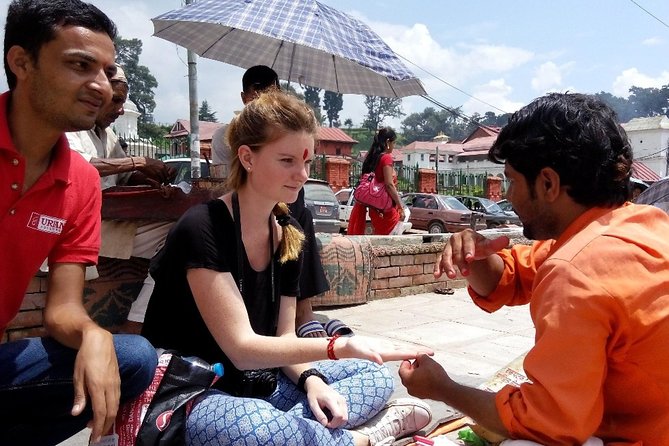
Photographs or interaction with sadhus may involve a payment of about $7.50. Alms to sadhus and monks are not included. Your guide can help negotiate, but you should decide in advance how much you want to participate. You are not required to pay for a posed photograph.
The Bagmati River area is also where cremation ceremonies take place. This is one of the most serious parts of the tour. You may see funeral activity across the river, but you should not take photographs or watch in a way that intrudes on grieving families. The guide’s explanation can help you understand the religious meaning, yet the families’ privacy comes first.
This setting may be difficult for some people, especially children or anyone uncomfortable around death rituals. The tour is child-friendly, and children under six may join free, but parents should decide if the cremation area and crowded evening ceremony are suitable for their children.
A completely different sort of day in Kathmandu:
- Everest Base Camp Trek – 14 Days
★ 5.0 · 1,499 reviews - Private Kathmandu Sightseeing Tour | UNESCO World Heritage sites
★ 5.0 · 756 reviews - Everest Base Camp Helicopter Tour landing at Everest View Hotel
★ 5.0 · 668 reviews - Half day cooking class in Thamel kathmandu
★ 5.0 · 607 reviews
The Pashupatinath aarti after dark
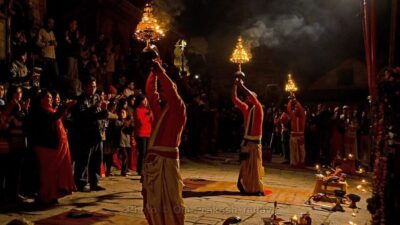
The final major experience is the evening aarti. As daylight fades, people gather along the eastern side of Pashupatinath beside the Bagmati River. Priests offer lights in a coordinated ritual to Lord Pashupatinath, while the crowd watches and participates.
This is the moment that gives the tour its shape. Boudhanath offers a calmer pattern of circular prayer. Pashupatinath ends with sound, movement, lamps, and a large local gathering. You get to see worship as a public event rather than only as temple architecture.
The crowd can become thick, so stay near your guide and group. This is not the time to wander off for a better photograph. Your guide’s job is especially useful here, both for keeping the group together and for explaining what is happening without turning the ceremony into a staged show.
Bring patience. You may not have a clear view at every moment, and the experience is less about securing one perfect image than about observing a shared act of worship. Photography should be handled carefully, particularly near religious ceremonies and the river.
What the guide adds to the visit
The tour includes a local English-speaking Nepali guide. The strongest part of the experience depends on that person’s ability to explain beliefs, manage the group, and make sense of unfamiliar customs.
Several guides have been singled out by name in past bookings, including Rita, Rozit, Amit, Subash, Bipin, Ramhavi, and others. The praise has focused on clear explanations, kindness, patience, local knowledge, and an ability to adjust the pace. One guide, Amit, was also praised for helping with phone photography. Bipin was valued for knowing side streets and useful photo locations.
You should not assume you will receive a particular guide unless that is confirmed when booking. Still, the pattern is encouraging: the guide is not merely there to point out buildings. You can expect help understanding Hindu and Buddhist practice, staying safe in crowds, and getting more from the limited time.
A private departure can give you more room for questions and a pace shaped around your interests. In a shared group, the maximum of 12 is still small enough for personal attention, but the group dynamic is less predictable. If you are hoping to meet fellow backpackers, that can be a plus. If you want total control, choose the private option if available.
Is $60.56 a fair price?
At $60.56 per person, the tour is not the cheapest way to see Boudhanath and Pashupatinath. The price includes entrance fees, public transport between the meeting point and the sites, a guide, and the aarti experience. It also buys you interpretation at places where the details and customs can be hard to understand alone.
The value is strongest if you have only one free evening in Kathmandu. You cover two UNESCO-listed sites, receive cultural context, and avoid having to work out the route and timing yourself. A guide is particularly useful at Pashupatinath, where the religious activity, cremation grounds, and crowd behavior require tact.
The value is weaker if you are already comfortable using local transport, have a strong interest in independent photography, or plan to spend a full day at each site. You could visit independently for less, but you would give up the explanations and the help with local customs.
Extra costs include lunch or dinner, butter lamps if you choose to offer them, palm reading, and any alms or payments to sadhus and monks. A palm reading may cost about $7.50 to $9 per person. Carry some local currency if you want these optional encounters, but do not feel pressured to add them.
The entrance fees also support the upkeep of the two UNESCO sites. The visited areas have been renovated following earthquake damage from 2015, though some parts of the sites may still show the effects of that history.
Practical advice before you go
Wear shoes suitable for about 2 kilometers of walking and streets that may be uneven or crowded. Start with water and keep your belongings close when moving through busy areas.
Arrive early at Hotel Marshyangdi in Thamel. The listed start is 3:00 pm, and the tour returns there after the aarti. Since the activity uses public transport, do not plan a strict dinner reservation right after the expected finish.
Keep your camera away during cremation activity unless your guide clearly says a photograph is appropriate. Do not treat sadhus or mourners as scenery. At the aarti, stay close to the group and follow your guide’s instructions.
The experience is suitable for most people, and children under six can join free. The main physical issue is the walking and time spent standing in crowds. If that will be difficult, ask about the private option before booking.
Free cancellation is available when you cancel at least 24 hours before the local start time. Changes or cancellations within 24 hours are not accepted for a refund.
Who should book this Kathmandu tour?
I would choose this tour if you have limited time, want a cultural introduction, or feel unsure about visiting religious sites alone. It suits first-time visitors who want clear explanations and an evening event with genuine local participation.
It is also a good match for solo visitors. A small group gives you company without the feel of a large coach tour, and a guide can help you manage public transport and the packed aarti crowd.
I would think twice if you want a quiet temple visit, dislike public transport, or feel uneasy around cremation ceremonies. The tour presents real religious life, not a polished attraction designed only for sightseeing.
With a 4.9 rating from 185 reviews and 98 percent recommendation, the experience has a strong record. The one practical warning is pickup: confirm the meeting point and arrive early. If you accept the walking, crowds, and serious subject matter, this is a useful, fairly efficient way to meet two of Kathmandu’s most important spiritual places.
FAQ
How long does the Kathmandu spiritual sites tour last?
The tour lasts approximately four hours, beginning at 3:00 pm and returning to the meeting point in Thamel.
Where does the tour begin?
It begins at Hotel Marshyangdi on Chaksibari Marg in Kathmandu’s Thamel area.
Where does the tour end?
The activity ends back at the starting meeting point, Hotel Marshyangdi.
Which sites are included?
The tour visits Boudhanath Stupa and Pashupatinath Temple, both UNESCO World Heritage sites.
Is transportation included?
Yes. Transportation costs from the Thamel meeting point to Boudhanath and from Pashupatinath to the endpoint are included. The tour uses public transport.
How large is the group?
The maximum group size is 12 people. A private tour option may also be available.
Is the aarti ceremony included?
Yes. The evening aarti, an offering of lights to Lord Pashupatinath, is included at Pashupatinath Temple.
Are palm reading and payments to sadhus included?
No. Palm reading fees, alms to sadhus and monks, and optional payments for photographs or interaction with sadhus are not included. Palm reading may cost about $7.50 to $9 per person.
Can children join the tour?
Yes. The tour is child-friendly, and children under six may join free of charge. Parents should consider whether the cremation ceremonies and large evening crowds are suitable for their children.
Recently added around Kathmandu
- Kathmandu : Swambhunath & Durbar Square Guided Half Day Tour★ 3.3 · 3 reviews
- Private Day Tour in Kathmandu Valley Rim with Bhaktapur Sightseeing★ 5.0 · 3 reviews
- Private 3-Hour Nagarkot Sunset Tour from Kathmandu★ 3.5 · 3 reviews
- From Kathmandu / Pokhara / Chitwan: River Rafting – 1 Day★ 4.6 · 3 reviews
- Nepali Cooking training & Cultural Homestay Experience★ 5.0 · 3 reviews
- From Kathmandu: Everest Base Camp Landing Helicopter Tour★ 5.0 · 3 reviews
- 4 UNESSCO World heritage sites of Kathmandu-private tour★ 5.0 · 3 reviews
- From Kathmandu Budget: 15 Day Everest Base Camp Trek★ 5.0 · 3 reviews
Pashupatinath Temple Tours, compared.
Pashupatinath Temple, Hindu Crematorium and Aarati in-depth Tour
Read our review →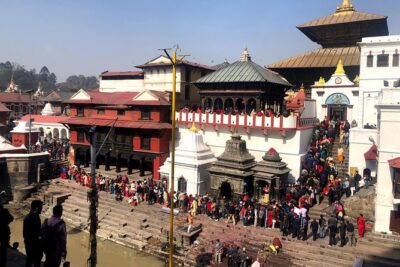
Pashupatinath Evening Aarati: Few Divinely Hours in Kathmandu
Read our review →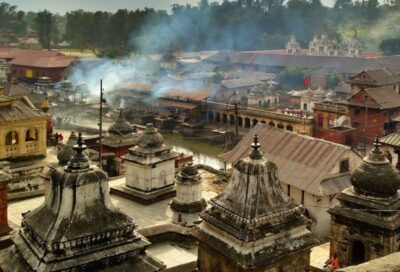
Sacred Pashupatinath: Aarati,Cremation Rites & Boudha Stupa
Read our review →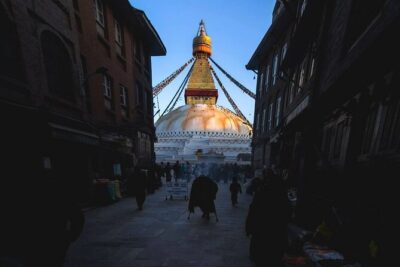
PashupatiNath and BoudhaNath – Private/Small Group
Read our review →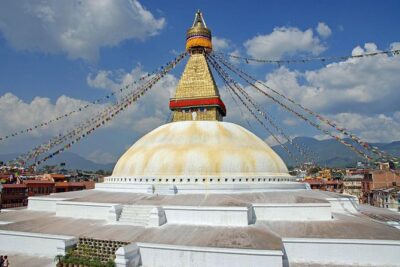
Private Half-Day Tour of Boudhanath and Pashupatinath Temples in Kathmandu
Read our review →Browse the lists this tour appears in