
Reviewed · HIKING & TREKKING
Upper Mustang Trek 14 Days
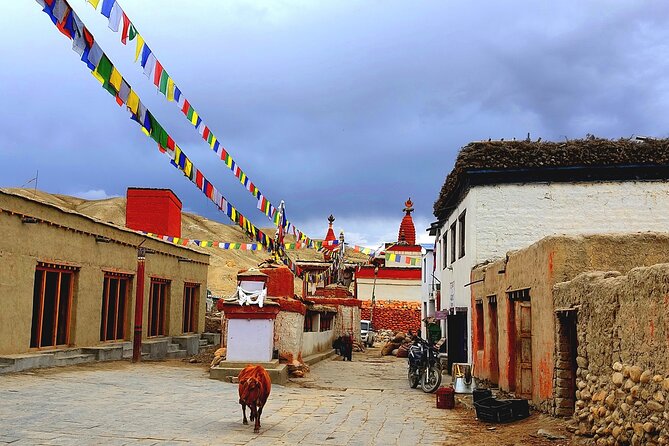
Upper Mustang feels like Nepal turned inside out: bare cliffs, red rock walls, mud villages, and Tibetan-style monasteries replace the green foothills many people expect. The prize is Lo Manthang, a walled town reached by a demanding route through one of the country’s most unusual regions.
I like the careful route design, which gives you time in Kagbeni, Lo Manthang, and Chhoser rather than rushing straight through. I also like the private format and the connection with guide Devaraj, whose clear communication and personal attention are repeatedly praised. The main catch is cost clarity: at $1,212 per person, meals, trekking accommodation, porters, insurance, and rescue costs are not included.
In This Review
- Key points to know before booking
- Why Upper Mustang feels unlike other Nepal treks
- Days 1 and 2: Kathmandu, Pokhara, and a long road south
- Day 3: Flying to Jomsom and walking into Kagbeni
- Days 4 to 7: Chele, Syanboche, Ghami, and Tsarang
- Day 8: Entering Lo Manthang
- Day 9: Thubchen Gompa and the caves of Chhoser
- Days 10 and 11: Returning through Dhakmar and Kagbeni
- Days 12 to 14: Jomsom, Pokhara, Kathmandu, and departure
- What the $1,212 price really covers
- Guide support, group size, and the practical setup
- Fitness, weather, and comfort concerns
- Who this trek suits best
- Should you book the Upper Mustang Trek?
- FAQ
- How long is the Upper Mustang Trek?
- Where does the activity start?
- Does the tour provide airport pickup?
- Is this a private tour?
- Who provides the guide?
- Is the Upper Mustang permit included?
- Are meals included?
- Is trekking accommodation included?
- Are porters included?
- What happens if I need to cancel?
Key points to know before booking
- The route reaches Lo Manthang, the walled capital of Upper Mustang, with time to explore its lanes and monasteries.
- Chhoser Cave and Thubchen Gompa give the trek its strongest cultural stops, not just mountain views.
- A private group and licensed English-speaking guide allow for more direct support than a large departure.
- The restricted-area permit covers 10 days, while the full trip lasts about 14 days.
- Pokhara breaks up the trek, with Phewa Lake and Tal Barahi Temple added on the way in.
- Meals and trekking rooms are extra, so your real budget will be higher than the headline price.
Why Upper Mustang feels unlike other Nepal treks
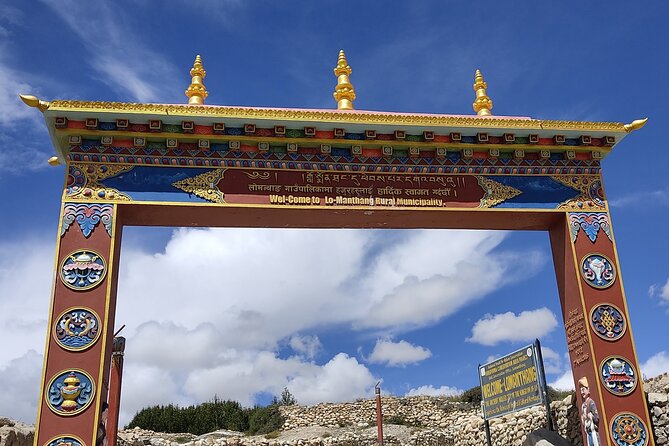
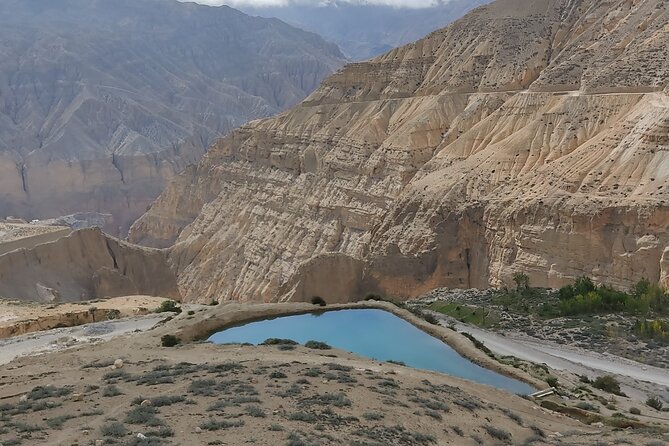
Upper Mustang is a high, dry region shaped by wind, rock, and old Tibetan Buddhist traditions. The route follows the Kali Gandaki area from Jomsom toward Lo Manthang, passing through villages built from mud brick and stone.
The appeal is not a single viewpoint. It is the steady change in texture: ancient cave dwellings, narrow lanes, stark valleys, old forts, and monasteries with a strong Tibetan influence. You get a sense of a place that developed apart from Nepal’s busier trekking corridors.
This is also a cultural trip with walking attached. If you want forest trails and large snow peaks every morning, the scenery may feel severe. If you enjoy old settlements, religious buildings, unusual architecture, and remote high-altitude terrain, the route offers plenty to study.
More treks starting in Kathmandu:
- Everest Base Camp Trek – 14 Days
★ 5.0 · 1,499 reviews - Everest Base Camp Trekking
★ 5.0 · 485 reviews - Nagarkot Sunrise View and Day Hiking from Kathmandu
★ 5.0 · 471 reviews
Days 1 and 2: Kathmandu, Pokhara, and a long road south
The trip begins at Hotel Chhimeki in Kathmandu, with airport pickup and transfer included. Day one is deliberately light. After arrival, you can rest, adjust to Nepal, and walk around Thamel, a convenient place to handle last-minute shopping and get your first feel for the capital.
Day two shifts to Pokhara by road. The drive takes about 12 hours, so you should treat it as a full transport day rather than a quick transfer. You pass countryside, rivers, and terraced fields, but the road time can be tiring after an international flight.
Pokhara adds a pleasant change of pace. A short visit to Phewa Lake gives you time beside the water, and boat hire is available if you want to look back toward the Annapurna and Machapuchare peaks. Tal Barahi Temple sits on a small island and is reached by a brief boat ride.
I like this opening because it gives you a gentle cultural start before the serious walking begins. Still, the long drive from Kathmandu is one of the trip’s less comfortable elements, and you should not mistake the free time in Pokhara for an extra full sightseeing day.
Day 3: Flying to Jomsom and walking into Kagbeni
The flight from Pokhara to Jomsom is listed at about 15 minutes. Jomsom is the practical gateway for Upper Mustang and sits in the Kali Gandaki Valley, a dramatic setting known for strong winds.
From Jomsom, you begin walking toward Kagbeni. The village is one of the most atmospheric stops on the route, with mud-brick houses, tight alleyways, and old Buddhist monasteries. It feels like a proper threshold between the more familiar lower valley and the restricted Upper Mustang region ahead.
This day combines a short flight with a long trekking day, listed at around 12 hours for the stop. Actual walking and sightseeing time may vary, but you should expect a demanding start. The included first-aid medical box is useful, though it is not a substitute for travel insurance or evacuation cover.
Days 4 to 7: Chele, Syanboche, Ghami, and Tsarang
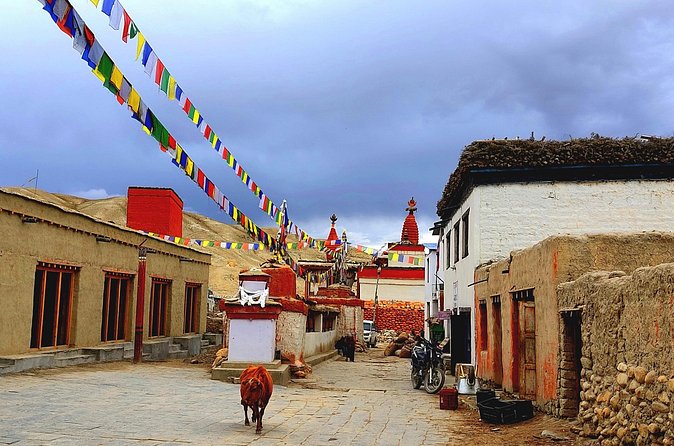
From Kagbeni, the route turns into the dry country that defines Mustang. Day four takes you toward Chele through arid terrain, old caves, and traditional villages. The scenery is stark rather than soft, with broad views and exposed rock replacing dense vegetation.
Day five reaches Syanboche. Here, the route crosses high-altitude desert and rugged ground. The silence is part of the attraction, but it also tells you something practical: there is little shade and limited comfort between settlements.
Day six leads to Ghami, a larger village with monasteries and a stronger feeling of local community. It is one of the places where the trek moves beyond scenery. You can look at old religious buildings and see how homes and village lanes fit into the dry terrain.
On day seven, you walk to Tsarang. The village is known for its ancient monastery and Tsarang Fort, which add historical weight to the route. These stops reward a slower pace. Rather than rushing in, taking a little time to look at the construction, religious spaces, and village layout will make the day more meaningful.
The four-day sequence is one of the trek’s strongest sections, but the repeated 12-hour activity blocks deserve attention. You need moderate physical fitness, and you should be ready for long days at altitude. The schedule may look manageable on paper, yet the combination of walking, wind, dry air, and uneven trails can wear you down.
A completely different sort of day in Kathmandu:
- Private Kathmandu Sightseeing Tour | UNESCO World Heritage sites
★ 5.0 · 756 reviews - Everest Base Camp Helicopter Tour landing at Everest View Hotel
★ 5.0 · 668 reviews - Half day cooking class in Thamel kathmandu
★ 5.0 · 607 reviews - Kathmandu: Full Day 7 UNESCO Tour with Lunch – Private/Group
★ 5.0 · 415 reviews
Day 8: Entering Lo Manthang
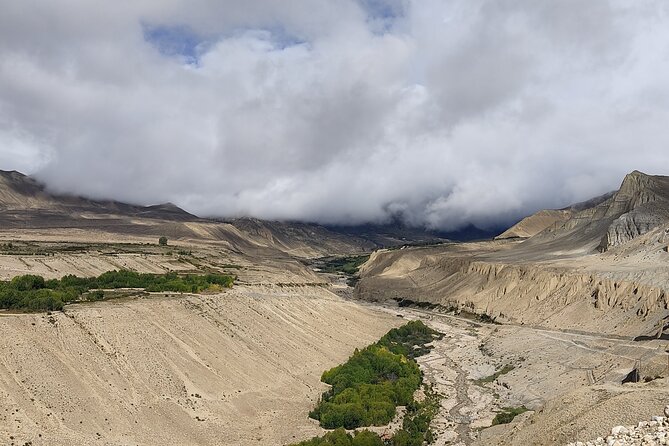
The route reaches Lo Manthang on day eight. This is the central payoff of the trek, a walled town with narrow lanes, traditional homes, and a strong Tibetan cultural character.
Lo Manthang is not simply a place to sleep before turning back. Its walls and dense old-town layout give it a very different feel from the scattered villages along the route. You will want time to walk slowly, look at the mud-brick architecture, and notice how the town is arranged.
The itinerary gives you a full day around Lo Manthang on day nine as well, which is important. A brief arrival followed by an immediate departure would undersell the place. Here, you have room to see major sites and still enjoy the town itself.
Day 9: Thubchen Gompa and the caves of Chhoser
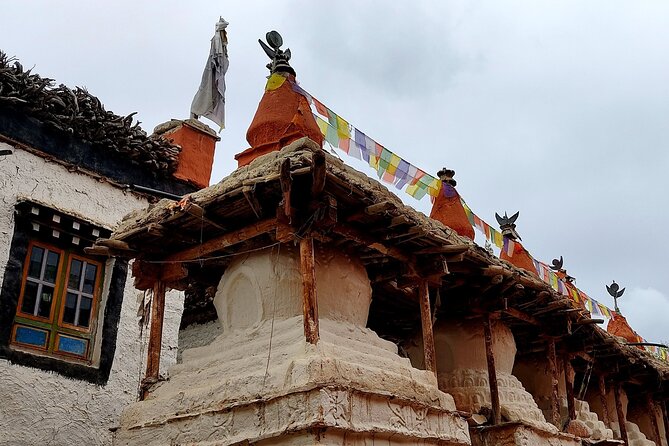
Thubchen Gompa is one of the oldest and most significant monasteries in Lo Manthang. The visit is scheduled for about 30 minutes, enough for an introduction but not a long study session. Your guide’s explanations matter here, since the value of a monastery visit often lies in understanding its purpose and setting, not just taking a quick look inside.
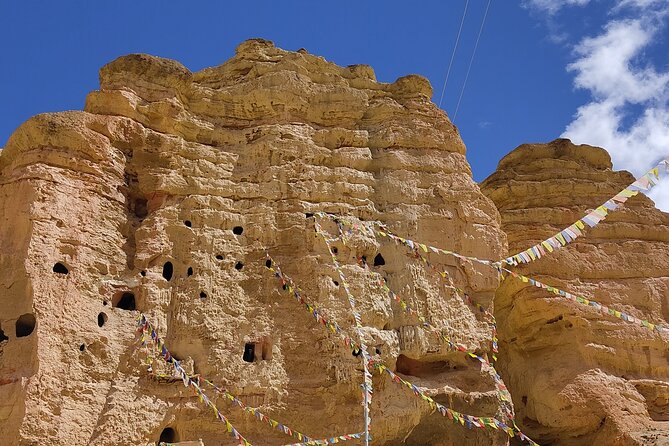
Chhoser Cave is another major stop. The cave complex has been used for centuries and is linked with the old settlement patterns of the region. Its setting and unusual construction make it one of the most memorable parts of the trip.
The listed visit lasts around 45 minutes. That is a short period for a site with this much atmosphere, so ask your guide to explain what is known about the caves and how they fit into Mustang’s past. The schedule also returns you to Lo Manthang for the rest of the day, giving you a second chance to explore the walled town at an easier pace.
This is where the tour earns more than a standard mountain walking itinerary. You are not only crossing high country. You are seeing places shaped by religion, trade, settlement, and adaptation to a harsh climate.
Days 10 and 11: Returning through Dhakmar and Kagbeni
The return route begins with a trek from Lo Manthang to Dhakmar. Coming back over familiar ground can sound repetitive, but the views change when you walk in the opposite direction. Rock formations, valleys, and village approaches take on a different shape from the return trail.
Dhakmar is known for its distinctive setting and red-toned rock surroundings. The stop gives the return journey its own character instead of making it feel like a simple retracing of steps.
Day 11 continues to Kagbeni. This is another long trekking day, and fatigue may be more noticeable now than on the way north. The benefit of a private trip is that you can communicate directly with your guide about your pace and condition, although the exact flexibility of the schedule should be confirmed before departure.
Days 12 to 14: Jomsom, Pokhara, Kathmandu, and departure
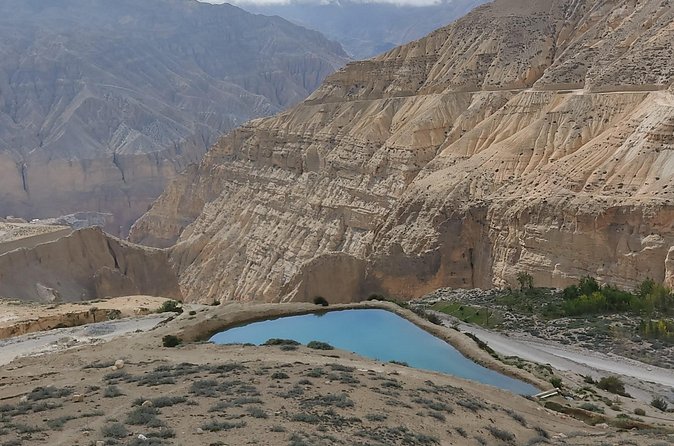
From Jomsom, you fly back to Pokhara. The flight is listed at about 30 minutes, and Jomsom’s mountain setting provides a final look at the gateway town before you leave the Mustang route.
Pokhara gives you a recovery period after the trek. You can rest, return to the lake, or simply enjoy a quieter evening before the next road journey. The following day brings another drive of about 12 hours back to Kathmandu, so the final transfer is not a small detail.
Day 14 ends with transport to Tribhuvan International Airport. Airport pickup and drop-off are included, which is useful after a trip with several moving parts. The activity ends back at the original Kathmandu meeting point, Hotel Chhimeki.
What the $1,212 price really covers
The advertised price has real value, especially for a private 14-day route into a restricted region. It includes airport transfers, Kathmandu accommodation for two nights at Hotel Chhimeki, transport listed in the schedule, a licensed English-speaking trekking guide, the Upper Mustang Restricted Area Permit for 10 days, the Annapurna Conservation Area Permit, a first-aid box, a duffel bag, a map, a T-shirt, and taxes.
The permits are a major part of the value. Upper Mustang is not an ordinary open trekking zone, and arranging the restricted-area paperwork through a licensed operator makes the trip simpler than handling every requirement alone.
But you need to budget beyond the headline number. Trekking accommodation is not included, and neither are meals, despite dinner appearing in the included section. The exclusions specifically list all meals, drinks, porters, personal expenses, tips, travel insurance, and rescue operation costs.
This is the point to clarify before paying. Ask exactly which dinner is included, what transport costs are covered, and how accommodation is arranged during the trek. A duffel bag is supplied, but porters are not, so you may need to carry your own gear unless you hire porter support separately.
Guide support, group size, and the practical setup
This is a private activity, so only your group participates. That suits you if you prefer direct contact with one guide rather than a large mixed group. The company provides a government-licensed English-speaking trekking guide, and Devaraj is the named guide associated with the experience.
The strongest praise attached to the operator centers on organization, fast communication, and Devaraj’s guidance. His daughter is also involved in pre-trip communication, which can be helpful when you are arranging a complicated route from abroad.
The tour confirms at booking, offers pickup, and is available every day during the stated operating period from April 29, 2025, through December 22, 2026. The meeting point is Hotel Chhimeki at 17 Purano Dhalko Marga in Kathmandu, near public transport.
The broad operating hours shown for the activity are not a promise that every transfer runs at any hour. They mainly indicate daily availability. Confirm your pickup time, flight details, hotel nights, and trekking room arrangements in writing.
Fitness, weather, and comfort concerns
The operator recommends moderate physical fitness. That is a useful baseline, but the schedule remains serious. Many days are listed at around 12 hours, and high-altitude walking on dry, exposed trails can feel harder than the distance suggests.
You should be comfortable walking for long periods and handling simple conditions. The trip promises handpicked teahouses in its description, but trekking accommodation is excluded from the formal inclusions, so comfort levels and room costs should be checked before departure.
The route also depends on flights between Pokhara and Jomsom. Strong winds are part of Jomsom’s character, and flight schedules can be affected by mountain conditions. The itinerary does not state a detailed contingency plan, so travel insurance is especially important. Extra Kathmandu nights caused by schedule changes are also excluded.
Pack for changing conditions, but do not assume the operator supplies every personal item. The provided duffel and map are useful, while drinks, insurance, rescue, and personal spending remain your responsibility.
Who this trek suits best
I would recommend this trip to you if you want a private, guided route with a strong cultural focus and are willing to accept long walking days and simple logistics. It suits people who value old villages, monasteries, caves, forts, and regional traditions as much as dramatic mountain scenery.
It is less suitable if you want a relaxed holiday with short walks, included meals, and predictable road transfers. The two long drives, several full trekking days, and extra costs require planning.
You should also be comfortable with a route where some attractions are brief visits. Thubchen Gompa and Chhoser Cave are important, but their listed stop times are limited. A good guide can add context, yet you should not expect long guided study at every site.
Should you book the Upper Mustang Trek?
Book it if Lo Manthang, Tibetan-style culture, ancient monasteries, and cave settlements are the reason you came to Nepal. The private format, permit handling, airport transfers, and guide support make a complicated region easier to reach, and the itinerary gives you proper time in Lo Manthang rather than treating it as a quick photo stop.
Before booking, get a written breakdown of trekking accommodation, meals, porters, flight coverage, and contingency arrangements. At $1,212, the trip can be good value, but only if you understand the extra costs. For a fit walker who wants a remote cultural route and accepts basic conditions, this is a strong choice. For comfort-first visitors, it may feel too demanding.
FAQ
How long is the Upper Mustang Trek?
The trip lasts approximately 14 days, including Kathmandu, Pokhara, the trek into Upper Mustang, the return route, and airport departure.
Where does the activity start?
The meeting point is Hotel Chhimeki, 17 Purano Dhalko Marga, Kathmandu 44600, Nepal.
Does the tour provide airport pickup?
Yes. Airport pickup and drop-off service are included.
Is this a private tour?
Yes. Only your group participates in this activity.
Who provides the guide?
Trek Mania Nepal provides a government-licensed English-speaking trekking guide. Devaraj is associated with the experience.
Is the Upper Mustang permit included?
Yes. The Upper Mustang Restricted Area Permit is included for 10 days, along with the Annapurna Conservation Area Permit.
Are meals included?
The inclusions list dinner, but the exclusions also state that all meals are not included. Confirm precisely which dinner is covered before booking.
Is trekking accommodation included?
No. Accommodation during the trek is listed among the exclusions. Kathmandu accommodation for two nights at Hotel Chhimeki is included.
Are porters included?
No. Porter services are not included, so you should arrange and budget for them separately if needed.
What happens if I need to cancel?
You can receive a full refund if you cancel at least three full days before the local start time. Cancellations or changes made less than three full days ahead are not accepted for a refund.
Recently added around Kathmandu
- Kathmandu : Swambhunath & Durbar Square Guided Half Day Tour★ 3.3 · 3 reviews
- Private Day Tour in Kathmandu Valley Rim with Bhaktapur Sightseeing★ 5.0 · 3 reviews
- From Kathmandu / Pokhara / Chitwan: River Rafting – 1 Day★ 4.6 · 3 reviews
- Nepali Cooking training & Cultural Homestay Experience★ 5.0 · 3 reviews
- Private 3-Hour Nagarkot Sunset Tour from Kathmandu★ 3.5 · 3 reviews
- From Kathmandu: Everest Base Camp Landing Helicopter Tour★ 5.0 · 3 reviews
- 4 UNESSCO World heritage sites of Kathmandu-private tour★ 5.0 · 3 reviews
- From Kathmandu Budget: 15 Day Everest Base Camp Trek★ 5.0 · 3 reviews
Hiking & Trekking, compared.
Nagarkot Sunrise View and Day Hiking from Kathmandu
Read our review →
Browse the lists this tour appears in