
Reviewed · ANNAPURNA TREKS
Pokhara: 5-Day Annapurna Base Camp (ABC) Trek
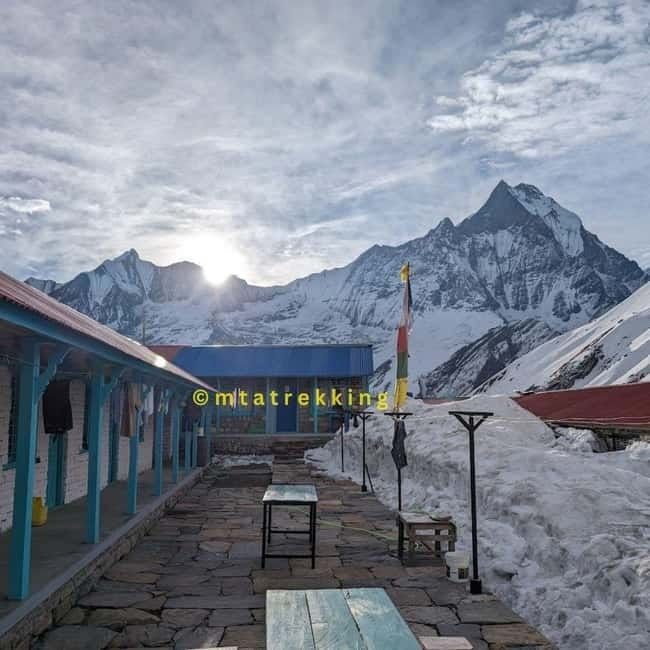
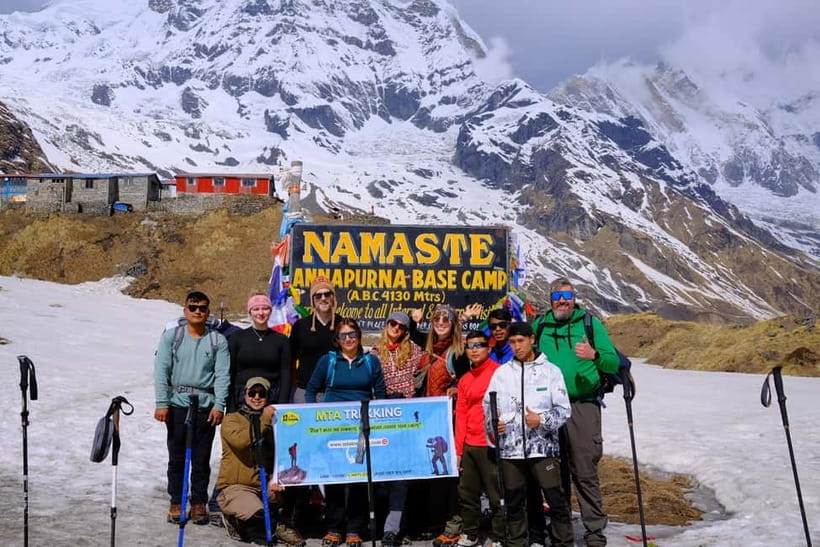
Annapurna Base Camp is the main prize here: a high Himalayan bowl ringed by huge peaks, reached on foot in just five days from Pokhara. You begin among rice terraces and forest, then climb through Deurali and Machhapuchhre Base Camp before sunrise at 4,130 meters.
I like the private format and the careful guide support. Guides such as Santosh, Prabit, and Ramit have been praised for clear communication, sensible pacing, and help with gear and rest stops. I also like the finish at Jhinu Hot Springs, a welcome way to ease tired legs.
The catch is the schedule. Five days leaves little room for a slow pace, and the climb will test your fitness. Altitude sickness is possible, the final approach is demanding, and monsoon rain can make lower trails wet and leech-prone.
In This Review
- Key points at a glance
- What this Annapurna Base Camp trek is really like
- Day 1: Pokhara to Lower Sinuwa through Jhinu
- Day 2: Lower Sinuwa to Deurali at 3,200 meters
- Day 3: Deurali to Machhapuchhre Base Camp and Annapurna Base Camp
- Day 4: Annapurna Base Camp down to Bamboo
- Day 5: Bamboo, Jhinu Hot Springs, and Pokhara
- Tea houses, meals, and what you pay for
- Guides, pacing, and organization
- Weather, leeches, and altitude
- Who should book this five-day route?
- Should you book the Annapurna Base Camp trek?
- FAQ
- How long is the Annapurna Base Camp trek?
- How high is Annapurna Base Camp?
- Where does the trek start?
- Is transport from Pokhara included?
- What type of accommodation is provided?
- Are meals included?
- Is a guide included?
- Is a porter included?
- Are permits included?
- What should I bring?
- Can I visit Jhinu Hot Springs?
- Is altitude sickness a concern?
- Can I cancel the booking?
Key points at a glance
- Reach 4,130 meters in only five days: This is a compact route to Annapurna Base Camp, not a leisurely mountain holiday.
- Sleep in local tea houses: Nights are spent in simple mountain lodges, giving you a closer look at trekking life and village hospitality.
- Walk through Gurung communities: The route passes traditional villages where you can see a different side of life in Nepal.
- Enjoy a private guided trek: Your English-speaking guide can adjust rest times and daily effort within the fixed route.
- Finish with Jhinu Hot Springs: The optional soak adds a pleasant final note before the drive back to Pokhara.
- Pay $136 for a bundled trip: Permits, tea-house accommodation, private transport, guide service, and luggage storage are included, but meals require attention when booking.
What this Annapurna Base Camp trek is really like
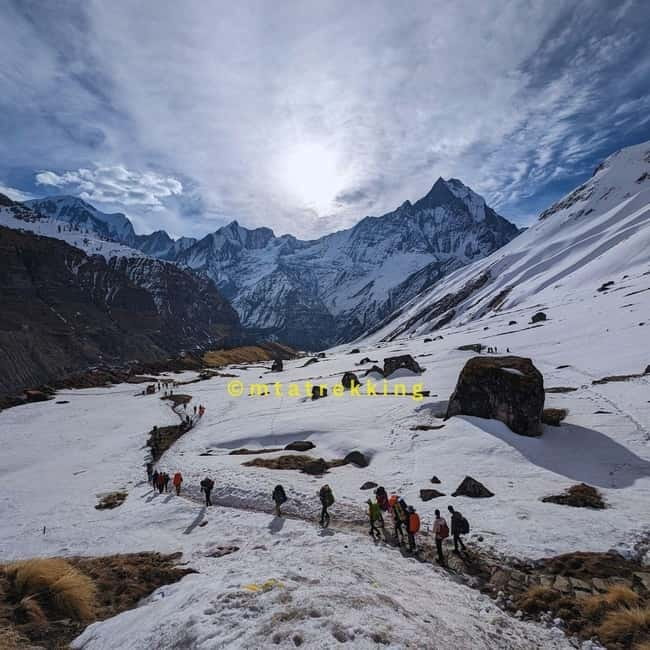
This is a four-night, five-day Himalayan trek from Pokhara, designed for people who want the Annapurna Base Camp achievement without committing to a longer route. You travel by road to the trailhead, hike uphill through changing scenery, sleep in tea houses, and return to Pokhara by a mix of walking and private vehicle.
The route gives you a lot in a short time. You see terraced fields, thick forest, mountain villages, river valleys, and high alpine views. The Gurung culture is part of the experience, not just background scenery, and your guide can explain local customs and mountain life along the way.
I would not treat this as an easy introduction to hiking. The listed walking days run roughly four to six hours, and the route rises quickly. One five-star assessment specifically noted that fitness was seriously tested even though the group completed the five-day plan. That is useful advice. You do not need to be an athlete, but you should be comfortable walking uphill for several hours on consecutive days.
The private-group setup helps. Your guide can slow the pace, add rests, and make small adjustments when someone is struggling. That flexibility helped one participant continue with confidence after the guide adjusted the effort. It cannot remove the altitude or shorten every climb, but it makes this better suited to mixed abilities than a rigid large group.
More Annapurna treks:
- Annapurna Circuit Trek with Tilicho Lake
★ 5.0 · 368 reviews - Annapurna base camp trek 5 Days
★ 5.0 · 252 reviews - Annapurna Base Camp Trek
★ 5.0 · 111 reviews
Day 1: Pokhara to Lower Sinuwa through Jhinu
Your day starts with pickup at a hotel in Lakeside Pokhara or at Pokhara International Airport. A private jeep or SUV takes about three hours toward Siwai, described as the last road point for this trip. From there, you begin walking toward Lower Sinuwa.
The day’s hike is listed at about five to six hours. Jhinu is the notable stop. The village is known for its natural hot springs, though the planned hot-spring visit is described more clearly on the final day. Think of Jhinu on day one as an important trail village and a marker that the walking has begun in earnest.
The route soon trades the city and road for terraced fields, forest, and mountain views. This is one of my favorite parts of the plan because you see the change in daily life with every uphill section. Near Lower Sinuwa, at about 2,300 meters, you spend the night in a tea house.
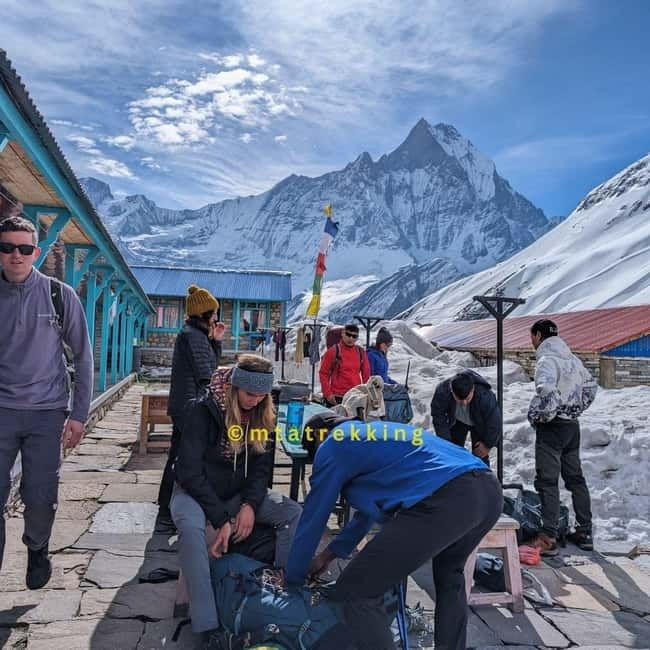
A tea house is practical rather than luxurious. You should expect a basic room, shared facilities in many cases, and simple mountain meals if you select the full-board meal option. Hot showers, Wi-Fi, drinks, mineral water, laundry, and other personal costs are not included, so carry cash.
The first day is not just a warm-up. The drive saves walking time, but the remaining trail still asks for steady effort after a long road transfer. Wear comfortable shoes from the start and keep a change of clothes easy to reach, especially during wet weather.
Day 2: Lower Sinuwa to Deurali at 3,200 meters
Day two is the longest listed walking day, at roughly six hours. You continue upward from Lower Sinuwa toward Deurali, reaching about 3,200 meters.
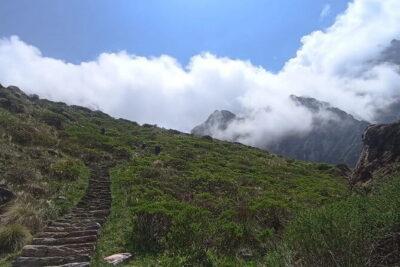
This section is important because the route begins to feel properly high-mountain. The lower terraces give way to denser forest and more exposed mountain scenery. You get changing views as the trail rises, with plenty of places for short photo stops and guided explanations.
Deurali is a useful overnight point because it puts you close to the high section on day three. The trade-off is altitude gain. You are sleeping higher than the night before, and your body may notice the difference through headache, tiredness, poor sleep, or shortness of breath.
Take your guide’s pacing seriously here. The best plan is not to race the strongest person in the group. Walk slowly enough to speak in short sentences, drink regularly, and tell the guide early if you feel unwell. The information for this trek notes that altitude sickness is possible at Annapurna Base Camp, even though it is described as rare.
Deurali also offers the chance to see the mountains at quieter times, with sunrise and sunset listed among the possible scenic moments. Weather controls what you actually see. The route is impressive even when clouds cover the peaks, but clear conditions make the next day far more memorable.
Day 3: Deurali to Machhapuchhre Base Camp and Annapurna Base Camp
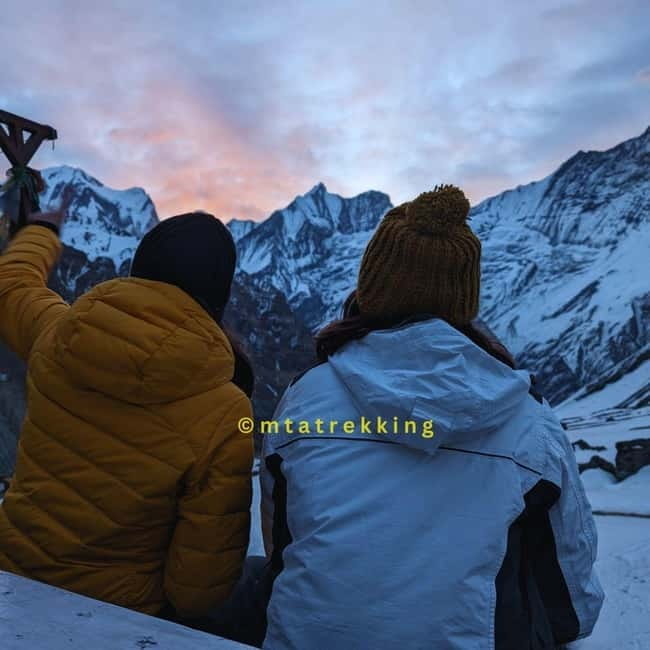
This is the emotional center of the trip. The walk from Deurali to Annapurna Base Camp is listed at around four to six hours, depending on how the route and stops are handled.
You first pass through Machhapuchhre Base Camp, also called Fishtail Base Camp. Machhapuchhre is one of Nepal’s most recognizable peaks, with its distinctive double summit. The stop gives you a major viewpoint before the route continues toward Annapurna Base Camp.
The final destination sits at 4,130 meters, or 13,550 feet. You are not climbing Annapurna itself. You are reaching the base area below the massif, surrounded by some of the finest high mountain views on the route.
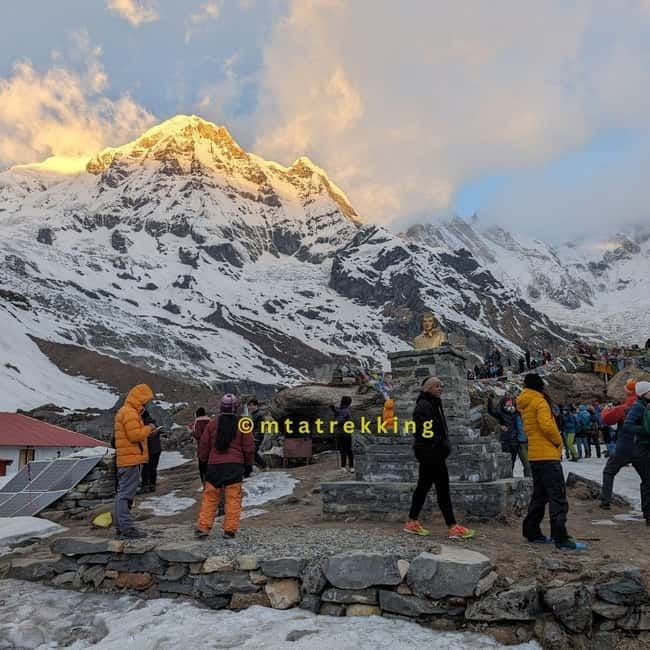
The setting is the reward for the harder days. The mountains rise around the base camp, and the open high-altitude surroundings feel very different from the forested trail below. Your guide can point out peaks and explain the natural features, while you take the inevitable photographs.
Plan this day with patience. The distance is not extreme on paper, but altitude slows everything down. A four-hour walk at low altitude does not feel like a four-hour walk here. The route can also be cold and exposed, so your warm layers should be in your day bag rather than buried in stored luggage.
The overnight stay at base camp is one of the trip’s biggest attractions and one of its basic-comfort moments. Tea houses at this height are about shelter and rest, not hotel service. You pay separately for hot showers, Wi-Fi, drinks, mineral water, and laundry, if available.
If conditions are clear, sunrise is especially worth protecting time for. One account described the sunrise in front of Annapurna South as an unforgettable part of the trek. I would agree with the priority, even if weather means your view is partly blocked. Keep your camera and warm clothing ready before bed.
More Pokhara trips from Kathmandu:
- From Kathmandu/Pokhara: 3-Day All-Inclusive Chitwan Safari
★ 4.6 · 133 reviews - Kathmandu/Pokhara: 3 Day Chitwan Jungle Safari Tour
★ 4.7 · 87 reviews - From Kathmandu/Pokhara: Private 3-Day Chitwan Safari Tour
★ 4.7 · 34 reviews - 2 Days Chitwan Jungle Safari Tour from Pokhara/Kathmandu
★ 4.5 · 27 reviews
Day 4: Annapurna Base Camp down to Bamboo
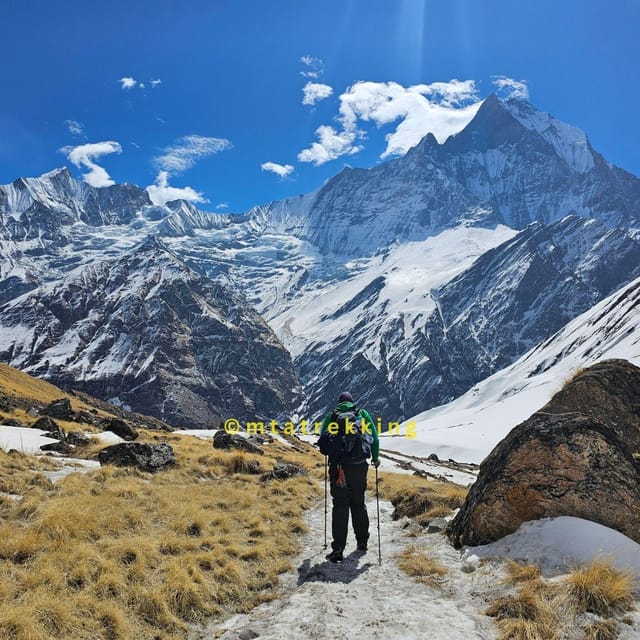
Day four changes the rhythm. After taking in the base camp views, you descend to Bamboo at approximately 2,400 meters. The walking time is listed around six hours.
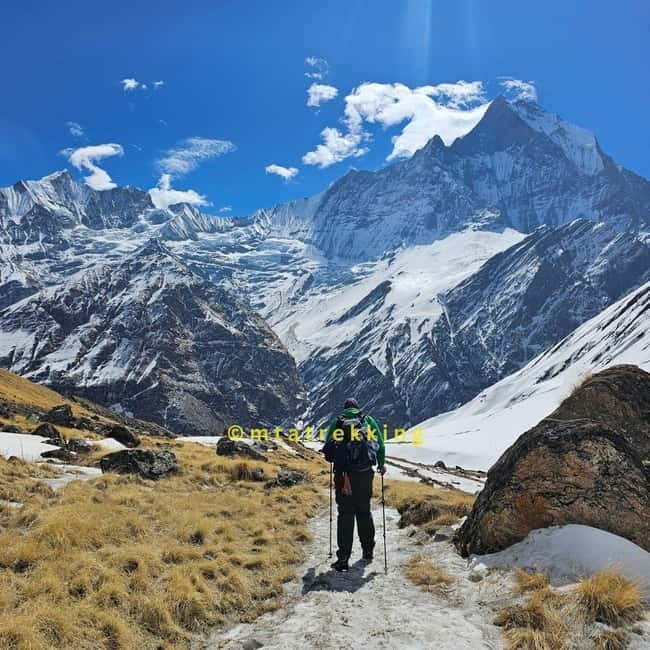
The drop in altitude should feel welcome, but downhill walking can be hard on knees and ankles. Trekking poles are not listed as included, so bring your own if you use them. Good shoes matter even more on the descent, when loose or wet sections can make every step less secure.
You retrace parts of the route through the high section and back toward forest. This gives you a second look at places that may have passed in a blur during the climb. The scenery also changes quickly as you lose height, from open mountain views to greener, enclosed trail sections.
Bamboo is a sensible place to stop because it brings you much lower than base camp. You spend the night in a tea house, with sunrise and sunset again listed as possible scenic moments. Keep some energy in reserve. The trek is not over until you reach the vehicle on day five.
This day may be physically easier for your lungs but tiring for your legs. Eat properly, refill water, and use the evening to dry wet clothing. Personal drinks and mineral water cost extra, so budget for them rather than expecting every expense to be covered by the $136 price.
Day 5: Bamboo, Jhinu Hot Springs, and Pokhara
The final walking section leads from Bamboo back toward Jhinu Danda. The day is listed at roughly six hours, followed by a private vehicle ride of about three hours to Lakeside Pokhara.
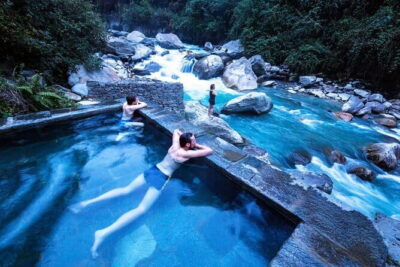
Jhinu is the trip’s best recovery stop. The natural hot springs are optional, so you can choose to soak or simply rest before the drive. After four nights on the trail, even the chance to sit in warm water can feel like a small luxury.
The road transfer closes the loop efficiently. You do not need to arrange a separate taxi from the trail end, since private transport from Pokhara to Siwai and back is included. Pickup and drop-off are also available at Lakeside hotels and Pokhara International Airport.
The final day still requires real walking. Do not assume the hot springs come immediately after a short stroll. The listed duration is about six hours, and tired legs can make the last trail feel longer than expected.
Once back in Pokhara, you return to the city’s lakeside setting, restaurants, and easier comforts. That contrast is part of the pleasure. The quiet of the mountains and the convenience of town feel very far apart, even though they are connected by the same short trip.
Tea houses, meals, and what you pay for
At $136 per person, this is a strong price for a private five-day trek if the listed inclusions match your booking choice. You receive tea-house accommodation, private road transport, a registered professional guide, Annapurna Conservation Area and government permits, TIMS, taxes, first-aid equipment, and luggage storage in Pokhara.
The meal wording deserves attention. Meals are included when you choose the full-board option, so check that option carefully rather than assuming every $136 booking automatically covers food. If meals are not part of your chosen package, you need to pay for them on the mountain.
A porter is also extra at $20 per day. That can be worthwhile if you do not want to carry your main bag while walking uphill, but it changes the total cost. Rescue and insurance are not included, and those are not items I would ignore on a high-altitude trek.
You should also carry cash. Wi-Fi, hot showers, drinks, bottled or mineral water, and laundry are personal expenses. The exact availability of these services can vary along the route, but the important point is that they are outside the included price.
The package’s value comes from combining the costly practical pieces. A private vehicle, permits, registered guide, accommodation, and luggage storage would be a nuisance to arrange separately. The low price is attractive, but only if you budget honestly for food, water, porter service, insurance, and small mountain purchases.
Guides, pacing, and organization
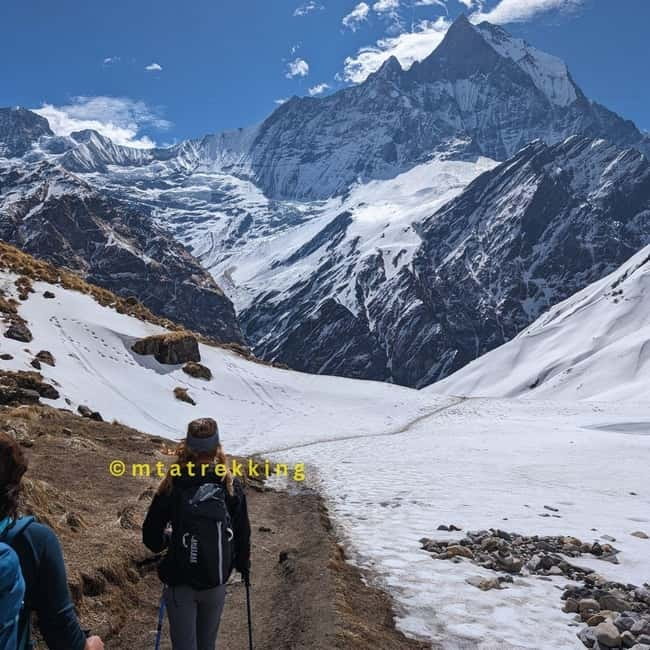
The guide service is the strongest part of this experience. Santosh was described as kind and easy to understand. Prabit was praised for staying on top of the route’s demands, explaining what to bring, and checking that the group was ready. Ramit was singled out for managing walking times and rest stops while explaining the area’s natural features and culture.
Those names may not be the guide assigned to your departure, so treat them as examples rather than a guarantee. What matters is the pattern of service: pickup communication, equipment checks, route explanations, and attention to pacing.
The English-speaking guide is government registered, and the group is private. That combination gives you a more personal day than a large fixed group. You can ask questions about Gurung culture, trail life, and the mountains without waiting for a whole busload of people.
Still, a guide cannot turn a five-day high-altitude trek into a gentle walk. You need to prepare your own clothing, shoes, cash, passport or accepted copy, and fitness. Tell the guide about problems early. Waiting until you are badly exhausted limits the options.
Weather, leeches, and altitude
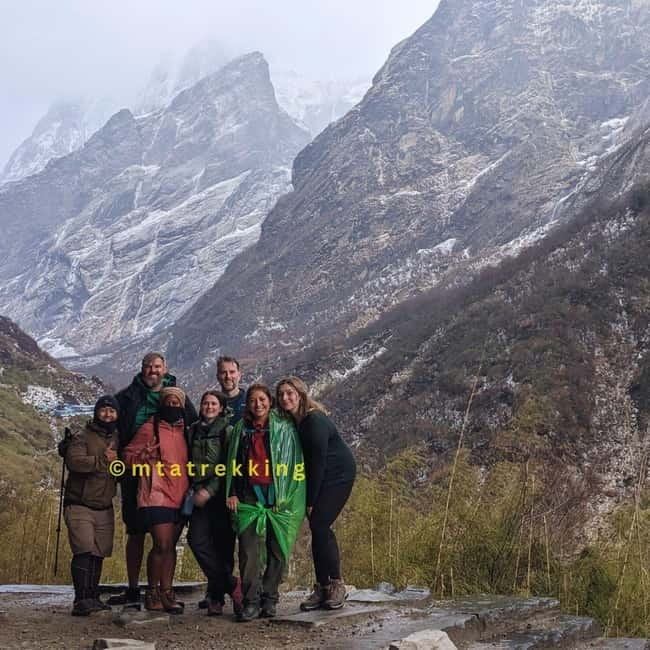
June through August brings the hardest conditions listed for this trek. Heavy rain can make the trail slippery and reduce mountain views. Leeches can be a nuisance on lower forest sections, especially during the monsoon.
Long pants tucked into gaiters and insect repellent can help. You should also carry clothing that handles rain, although the supplied information does not specify a full packing list. Your guide’s advice matters if weather changes during the route.
At 4,130 meters, altitude is the main health concern. The experience is not suitable for someone currently suffering from altitude sickness, and you should not hide symptoms to protect the schedule. Rest, hydration, and a slow pace help, but no itinerary can guarantee that your body will adjust well.
The trek is also not suited to pregnant women, people with mobility impairments, wheelchair users, or people with visual impairments. It is listed as unsuitable for people over 70. These limits are practical, not a judgment about fitness or age. The route includes long uphill and downhill sections on mountain trails.
Who should book this five-day route?
I would recommend it to you if you want a private, well-supported introduction to Annapurna trekking and have five days available. It suits hikers who value a guide, private transport, local tea-house stays, and a direct route to a major Himalayan goal.
It is especially good for someone who wants cultural contact as well as scenery. The Gurung villages and guide explanations add meaning to the walk, while Jhinu gives the trip a clear beginning and end point.
I would hesitate if you want relaxed days, hotel comfort, or a schedule with spare weather time. Five days is efficient, but it is also tight. A longer trek would likely feel less rushed, though that option is not part of this package.
Before booking, make three checks: confirm whether you selected the full-board meal option, decide if you need a porter at $20 per day, and arrange travel insurance that covers trekking and rescue. Also ask about current trail conditions if you plan to go during the monsoon.
Should you book the Annapurna Base Camp trek?
Book it if reaching Annapurna Base Camp is your priority and you can handle five consecutive days of serious walking. The package offers unusually broad practical coverage for $136, and the private guide format gives you a better chance of keeping a sensible pace.
Skip it if you are not prepared for altitude, long downhill sections, basic tea-house accommodation, or extra costs for meals, water, showers, Wi-Fi, and a porter. For a fit hiker who wants mountain views, Gurung culture, and a memorable sunrise without arranging every permit and transfer alone, this is a sensible and focused choice.
FAQ
How long is the Annapurna Base Camp trek?
The experience lasts five days and four nights. It includes trekking from the Siwai road end to Annapurna Base Camp and returning to Pokhara.
How high is Annapurna Base Camp?
Annapurna Base Camp is at 4,130 meters, or 13,550 feet.
Where does the trek start?
Pickup is available from hotels and locations within Lakeside Pokhara, as well as Pokhara International Airport. Private transport takes you toward Siwai, the last road point listed for the trek.
Is transport from Pokhara included?
Yes. Private transport from Pokhara to Siwai and back is included. The road journey is listed at about three hours each way.
What type of accommodation is provided?
You stay in tea houses during the trek. The information does not describe them as luxury accommodation.
Are meals included?
Meals are included when you select the full-board meal option. Check the option you choose when booking.
Is a guide included?
Yes. A professional, government-registered trekking guide who speaks English is included. The group type is private.
Is a porter included?
No. Porter service costs $20 per day.
Are permits included?
Yes. The Annapurna Conservation Area Permit, government permits, TIMS, and taxes are covered.
What should I bring?
Bring comfortable shoes, comfortable clothing, a change of clothes, cash, and your passport or an accepted copy of your passport or ID card.
Can I visit Jhinu Hot Springs?
Yes. The hot-spring visit at Jhinu Danda is optional on the final trekking day.
Is altitude sickness a concern?
Yes. Annapurna Base Camp reaches 4,130 meters, so altitude sickness is possible. People with altitude sickness are not suitable for this activity, and you should follow your guide’s advice.
Can I cancel the booking?
You can cancel up to 24 hours in advance for a full refund. Reserve now and pay later is also available.
More 5-Day Experiences in Kathmandu
- Kathmandu to Annapurna Base Camp (ABC) 5-Day Trek
★ 5.0 · 102 reviews - 5 Day Private Guided Trekking in Annapurna Base Camp
★ 5.0 · 25 reviews - 5-Day Sunrise Tour in Kathmandu Near Everest
★ 5.0 · 12 reviews - 5 Days Hiking, Tour, Meditation and Yoga Retreat in Kathmandu, Nepal
★ 5.0 · 10 reviews
More Treks Starting in Kathmandu
- Everest Base Camp Trek – 14 Days
★ 5.0 · 1,499 reviews - Everest Base Camp Trekking
★ 5.0 · 485 reviews - Nagarkot Sunrise View and Day Hiking from Kathmandu
★ 5.0 · 471 reviews - Everest Base Camp Trekking – 13 Day
★ 5.0 · 365 reviews
Recently added around Kathmandu
- Kathmandu : Swambhunath & Durbar Square Guided Half Day Tour★ 3.3 · 3 reviews
- Private Day Tour in Kathmandu Valley Rim with Bhaktapur Sightseeing★ 5.0 · 3 reviews
- From Kathmandu / Pokhara / Chitwan: River Rafting – 1 Day★ 4.6 · 3 reviews
- Nepali Cooking training & Cultural Homestay Experience★ 5.0 · 3 reviews
- Private 3-Hour Nagarkot Sunset Tour from Kathmandu★ 3.5 · 3 reviews
- From Kathmandu: Everest Base Camp Landing Helicopter Tour★ 5.0 · 3 reviews
- 4 UNESSCO World heritage sites of Kathmandu-private tour★ 5.0 · 3 reviews
- From Kathmandu Budget: 15 Day Everest Base Camp Trek★ 5.0 · 3 reviews
Annapurna Treks, compared.
Kathmandu to Annapurna Base Camp (ABC) 5-Day Trek
Read our review →
Browse the lists this tour appears in